
Will Miami-Dade abandon plans to treat the mentally ill instead of jailing them?
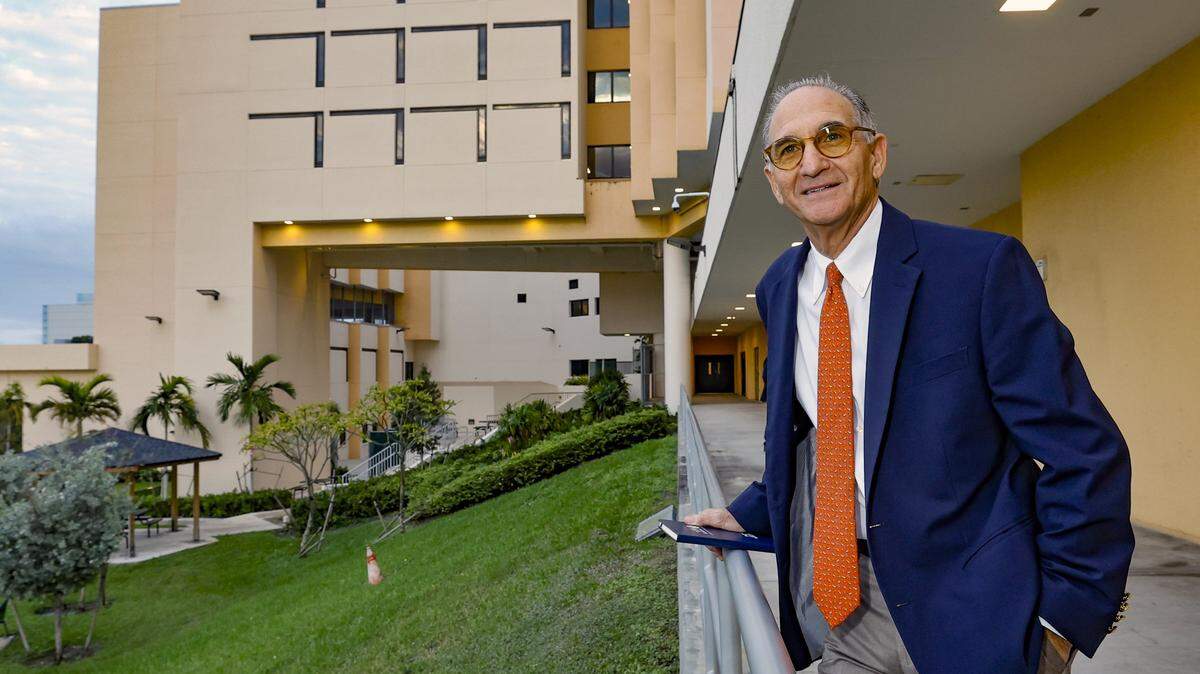
Miami-Dade County is one vote away from funding a mental-health center designed to lower jail costs, but budget strains could sink the decades-old project.
With the $50 million residential treatment facility built but still unoccupied in Miami’s Allapattah neighborhood, county commissioners are scheduled to vote Tuesday on legislation needed to operate the Miami Center for Mental Health and Recovery championed by retired County Court Judge Steven Leifman.
But the legislation barely advanced a vote last week by the Appropriations Committee, a group of five county commissioners that discusses budget items before they get voted on by the full 13-member County Commission. At the committee’s meeting on Dec. 10, multiple commissioners questioned whether Miami-Dade’s already strained budget could afford the extra $10 million a year the county expects it will cost to operate the facility once start-up funding runs out in two years.
“I completely buy into this concept,” Commissioner Danielle Cohen Higgins said. But she expressed concern over future funding. “Where is the $10 million going to come from? … Where are we going to get the $10 million we’re going to need in two years?”
If the full board of commissioners approves the funding legislation Tuesday, it will mean Leifman has cleared the last political hurdle in his two-decade quest to open a facility designed to treat people whose mental illnesses routinely land them in trouble with police.
Rather than sending them to jail on offenses minor enough to quickly put them back on the streets, the center would offer intense and round-the-clock treatment for severe mental illnesses like schizophrenia.
Combined with social services, including job-training classes and counseling after the clients move out, the center’s goal is to reduce the pool of people drifting between addiction, untreated mental illness and incarceration.
Leifman plan: Treat people to end costly jail cycle
“This is one of the most complex problems every community — particularly large urban communities — have in this country. They don’t know how to handle this population,” Leifman told the committee by video. “We will be the first community in the United States with an actual solution that we know works.”
While the current proposal has 75 beds funded for treatment, the plan is to expand capacity to house more than 200 people a day. Leifman has forecasts showing the center more than paying for itself in the savings from a smaller population in Miami-Dade jails as more lawbreakers wind up being treated at the facility.
The treatment center was part of a broad package of projects that Miami-Dade voters authorized in 2004 as part of the $2.9 billion Building Better Communities bond referendum. The project got $22 million from that referendum and raised the rest from a mix of private and public funds to cover the roughly $50 million cost to build the 160,000-square-foot facility ready to open on the 2200 block of Northwest Seventh Avenue.
Now Miami-Dade must authorize a funding and operating agreement for the center in order for it to open. WestCare, a national mental-health care provider, is signed up to administer the facility and the treatment programs inside. The administration of Mayor Daniella Levine Cava recommends that commissioners approve the agreements needed to open the facility, with enough start-up money to not impact the county’s budget through two full years of operations. In the third year, though, Miami-Dade is expected to contribute about $10 million a year to cover operating costs, according to the administration’s forecast.
The $10 million isn’t huge in a county budget nearing $13 billion, but Miami-Dade is already facing a projected $94 million budget deficit next year.
Levine Cava and commissioners have largely delayed addressing the budget problem and in September voted to avoid the austerity measures first proposed by the mayor to close gaps between tax revenues and growing expenses. Using one-time fixes, commissioners passed the $12.9 billion budget amid warnings by Levine Cava that even harder spending decisions are coming in 2026 and beyond.
Can Miami-Dade afford a center for mental health?
“A project like this needs to be self-sustaining,” Commissioner Roberto Gonzalez said at last week’s hearing on the mental-health center. “We can’t just OK an item on a maybe.”
At the heart of the cost debate is whether the treatment facility can quickly lower the $562 million that Miami-Dade plans to spend this year on its jail system. By offering supervised residential treatment for mental health and addiction, the center is designed to give judges an alternative to jail for nonviolent offenders who need those services.
Leifman and other champions of the facility say the savings will be significant once the county’s Corrections Department is burdened with fewer inmates needing mental-health services because federal Medicaid reimbursements aren’t available when someone is incarcerated. The new center wouldn’t be a detention facility, so the federal government would be covering much of the treatment expense for the expected population of people with low incomes.
In a memo released Monday, Leifman estimates the facility will save the Corrections Department more than 40,000 overnight jail stays per year — which would mean a $32 million reduction in detention costs.
But that argument was met with skepticism last week at the Appropriations Committee. Members took the unusual step to forward the legislation to the full board without a recommendation. Typically, legislation advances through committee with a recommendation that the full board pass it.
That sets up a potential showdown Tuesday when Leifman and his supporters will need a majority vote of the 13-member County Commission to keep the funding plan alive.
“After 22 years, I don’t want the headline to be that this was not funded,” Commissioner Raquel Regalado, sponsor of the center’s funding legislation, told committee members. “We know that the cost savings are there.”