
‘These lights are way too long.’ Bumpy debut for Miami-Dade’s new transit system
Miami-Dade’s $300 million rapid-transit bus system failed to fully deliver during its first morning rush hour Monday, with passengers facing delayed arrivals and crowded buses stalling at red lights that were supposed to turn green automatically.
“These lights are way too long,” Vernon Huggins, a 49-year-old cook, said from his seat on a northbound Metro Express electric bus shortly before 9 a.m. “The red lights take up a lot of time.”
Transit administrators acknowledged shortcomings with the Metro Express rollout and said the red-light issue is high on the list of glitches that need to be fixed. They described the problems causing passenger frustrations and delays as early-stage hiccups that can be smoothed over as Miami-Dade shifts from testing the 20-mile system to actually operating it.
“We knew it would take a little time to get it adjusted,” Stacy Miller, director of Transportation and Public Works, said during a brief interview at Dadeland South Metrorail Station, where the bus route connects with the county’s rail system.
The stakes are high for passengers to eventually celebrate the new BRT system, which stands for bus rapid transit. Miami-Dade pitched the modernized buses and 14 new stations on dedicated lanes parallel to U.S. 1 as giving commuters rail-like convenience between Florida City and Dadeland for a fraction of the cost to taxpayers.
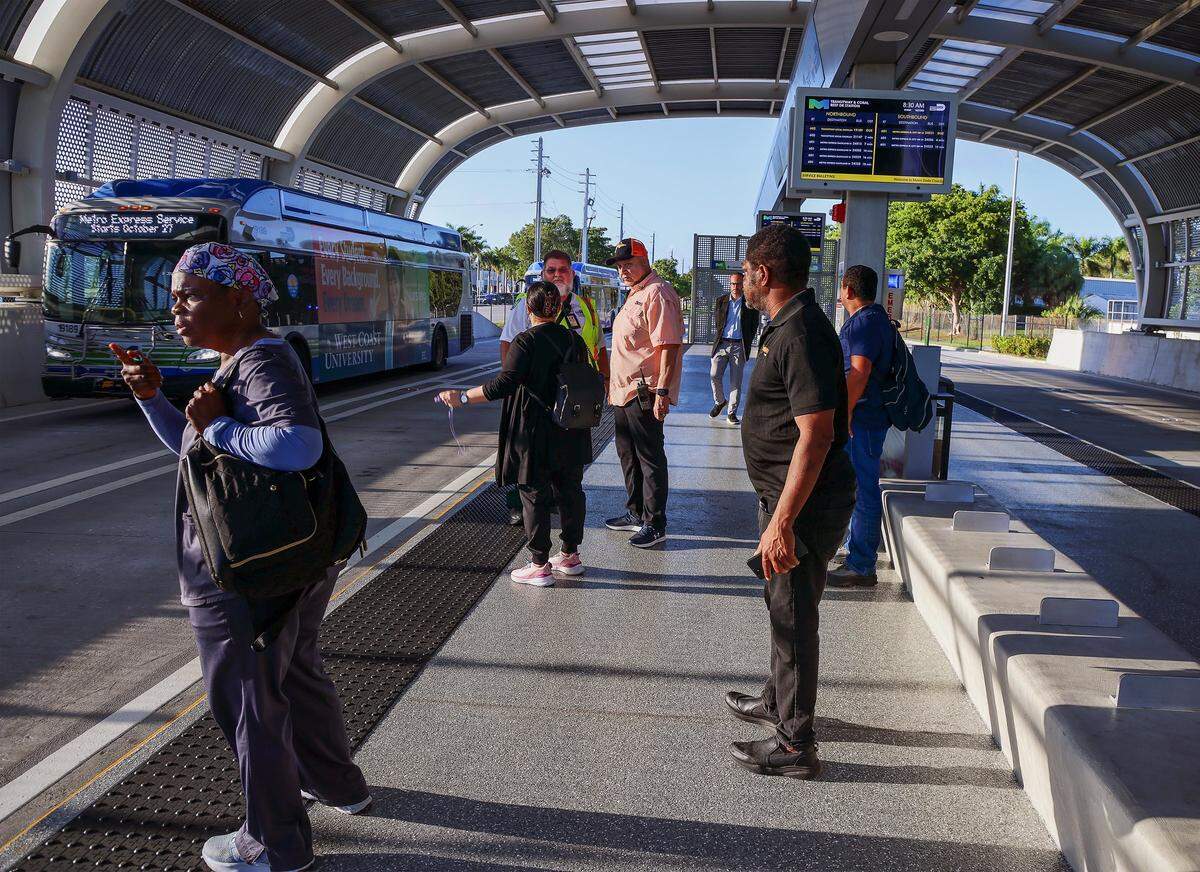
Monday’s rollout showed the infrastructure’s promise.
Instead of huddling around benches at bus stops with modest coverings above, the first Metro Express passengers waited at fully sheltered platforms at hangar-like BRT stations. Stations also have air-conditioned vestibules next to the platforms.
On their old bus lines, passengers paid one by one at the front entrance of the bus. For Metro Express, tickets are purchased at the station entrance, allowing everyone to board quickly through the front and rear doors of the buses.
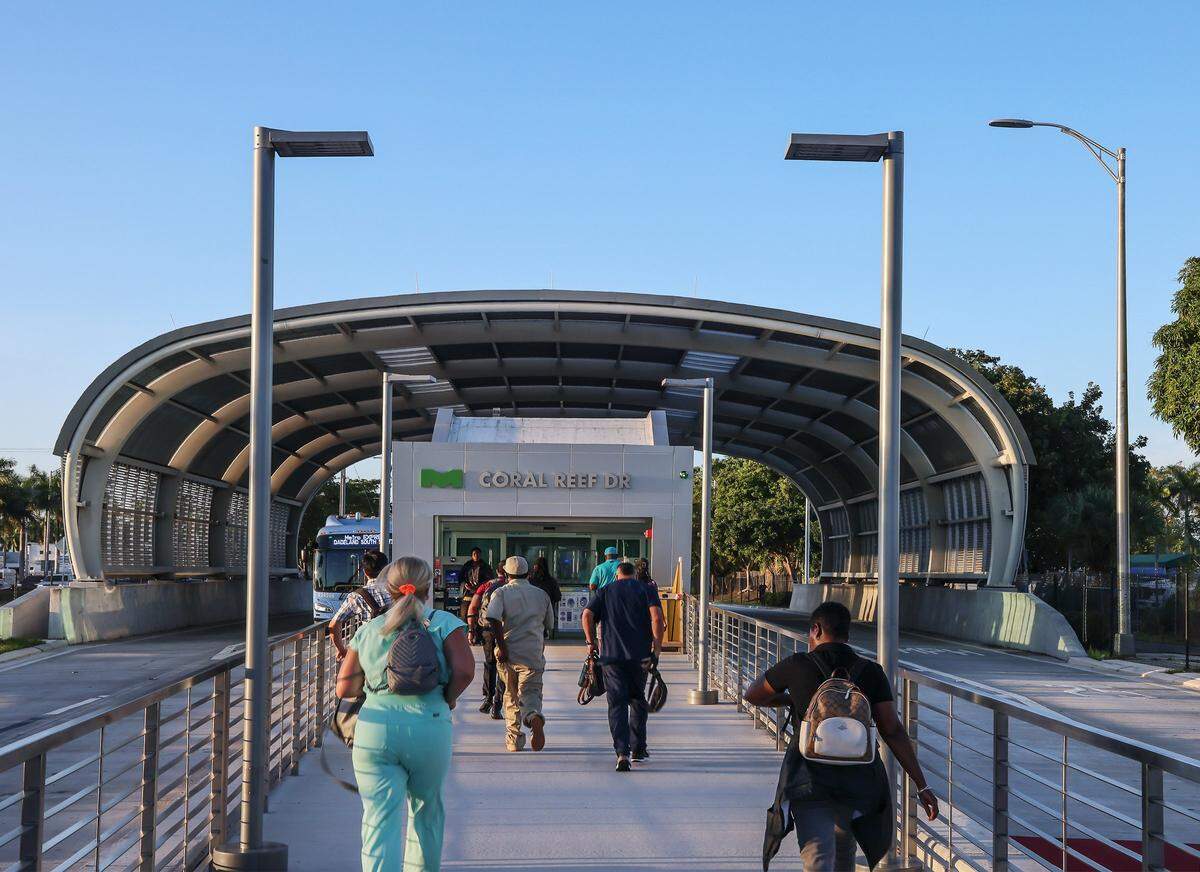
For decades, county buses have been using the dedicated lanes of the busway off U.S. 1. But construction of the Metro Express system brought a crucial upgrade: crossing arms at each intersection and technology that is supposed to give express buses uninterrupted green lights during rush hour.
In a statement issued Monday night, the Transportation and Public Works Department said administrators saw improvements throughout the day and asked for patience during the planned 90-day “optimization” period for Metro Express.
“While we planned and tested extensively before the launch, this morning was the first time all systems were live,” the statement said. “We saw a few mechanical issues with some buses early on that backed up northbound service a little in the morning -- but we quickly introduced additional buses to accommodate riders.
“Additionally, there were timing challenges triggered by different elements: some test programming still being cleared from the system, unauthorized vehicles on the [busway], and drivers ‘blocking the box’ (the intersection where gate arms come down) which disrupts the traffic signal cycles.”
Monday morning’s results initially impressed Alis Romero, a 32-year-old hospital worker who leaves her car at a Park-and-Ride station each day to use a busway bus and Metrorail for a commute from Florida City to Miami.
“Maybe I can set my alarm a little later,” she said shortly before 7 a.m. as her Metro Express bus crossed through the Cutler Bay area about 20 minutes quicker than what she was used to from her old bus line.
But while her usual 90-minute bus commute seemed to be shrinking on the first half of her Metro Express maiden voyage, extended stops at busway intersections started cutting into that found time. At the BRT station near the Falls shopping center, her bus waited as more than a dozen passengers transferred from another northbound Metro Express bus that had broken down. By the time Romero got to the Dadeland South station, it was 7:30 a.m. — an arrival time she said usually means she’s running a little late. “I was expecting a faster ride,” she said.
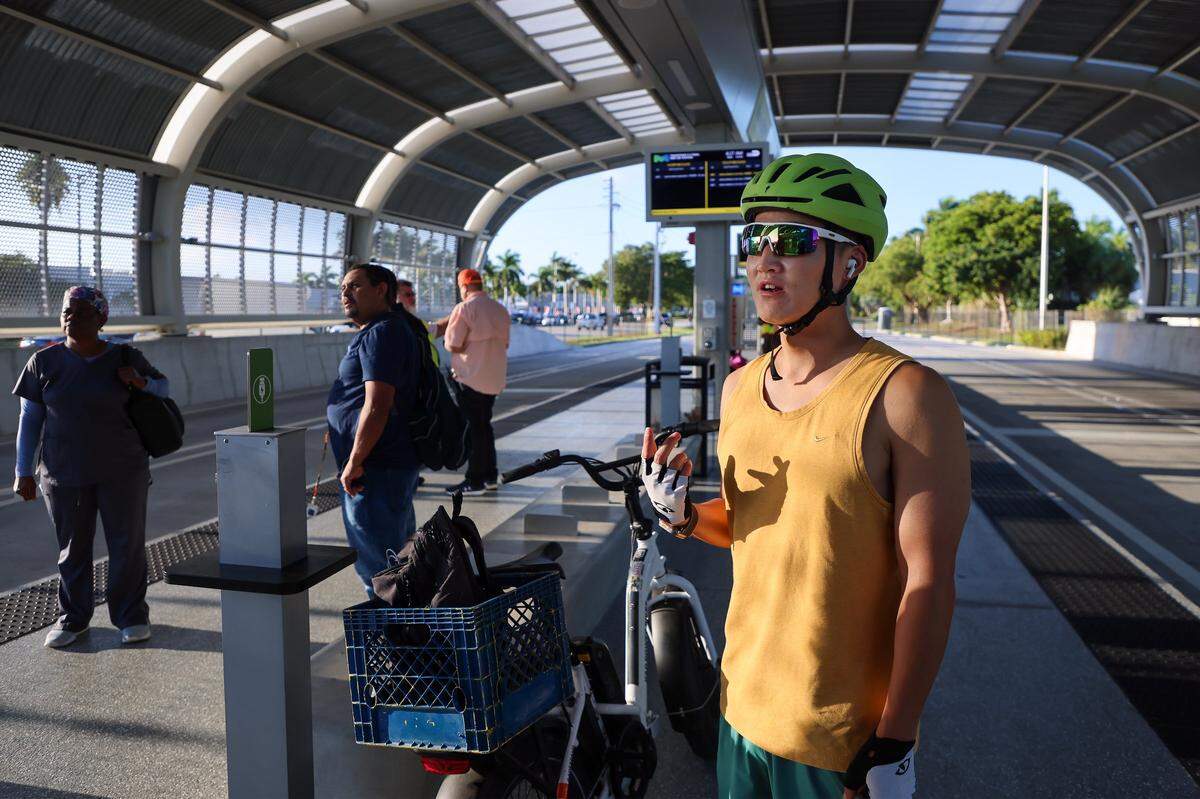
Kevin Larson, 28, entered the Palmetto BRT station with a collapsible electric bike by his side. After waiting about 10 minutes with no northbound bus arriving, the University of Miami doctoral student said it probably would have been more efficient just to travel the busway’s bike path up to Dadeland South.
“It’s always faster to bike,” he said.
But he had already paid the $2.25 one-way fare to get into the station. Plus, he wanted to try out the new Metro Express service.
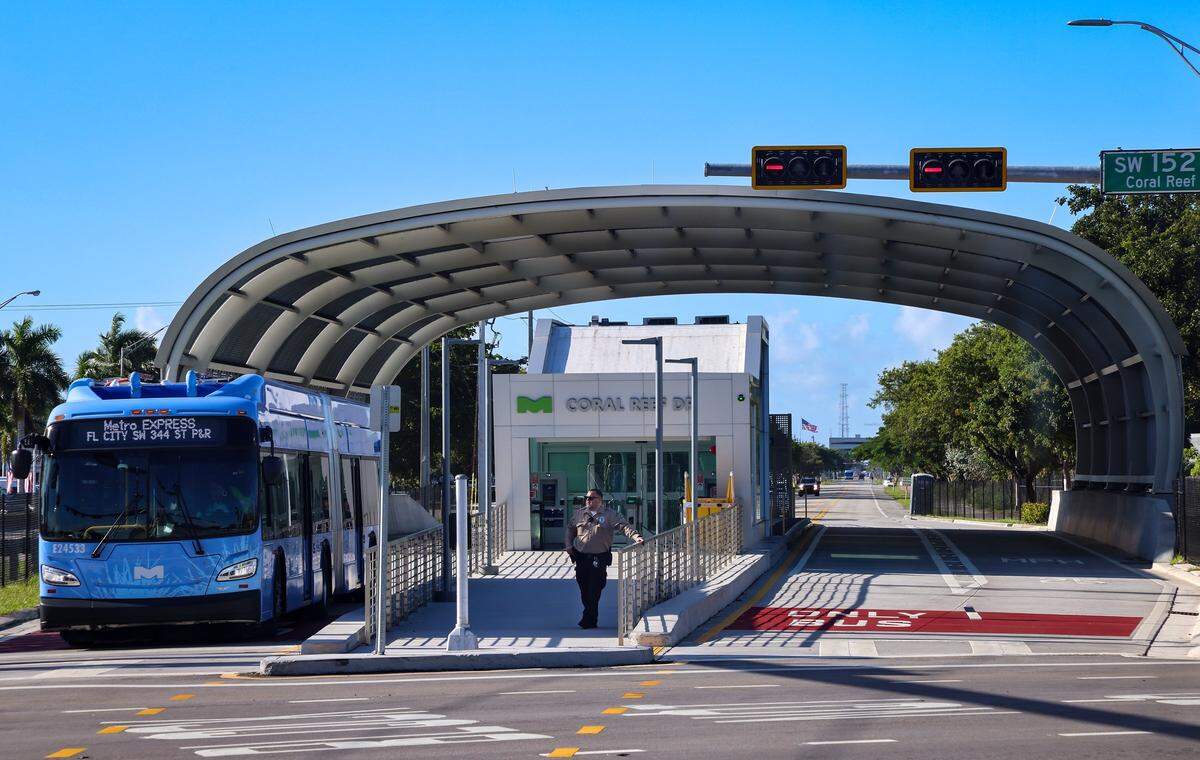
There was no room for him and his bike when the first bus arrived, but the next one that pulled into the platform about five minutes later had open seats and bike racks inside. The ride to Dadeland South took Larson 23 minutes — a little longer than the 20 minutes he said the old ride used to take.
Still, Larson said he’s ready to try again and start tracking some improvement.
“I’m reservedly optimistic,” he said after the trip. “I’m glad the county came through and got the system opened. There is definitely going to be an adjustment period.”
This story was originally published October 27, 2025 at 2:13 PM.