Miami ranks low for homeownership among big U.S. cities. Here’s why
Homeownership has long been a North Star for those seeking upward mobility.
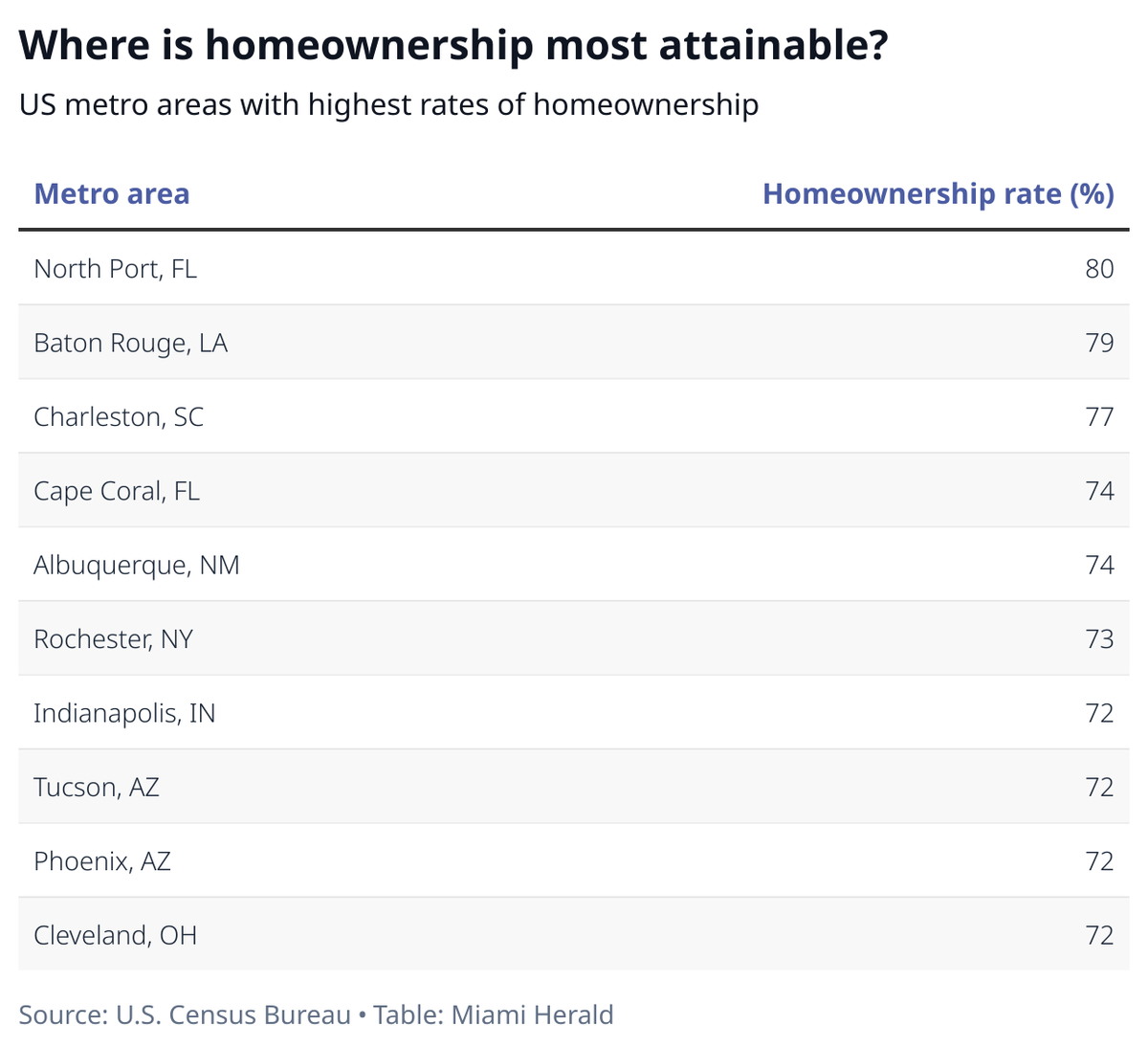
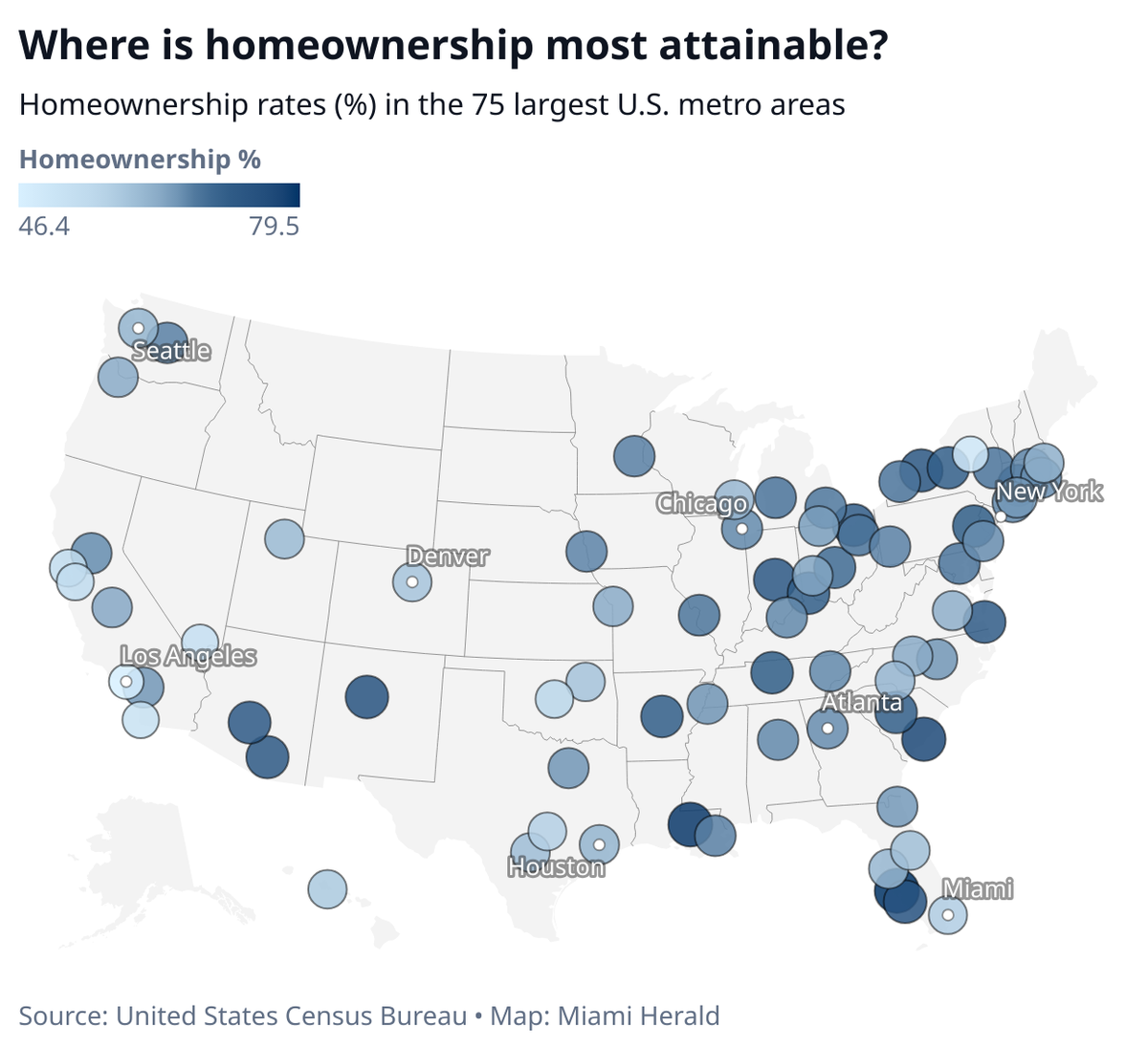
But Greater Miami has one of the lowest homeownership rates among the U.S.’s major metropolitan areas, according to a new study.
Roughly 58% of Miami metro area residents own the home they live in, down from 63% this time last year, data from the Census Bureau shows.
Of the country’s 75 largest metropolitan areas, only eight — including Los Angeles, New York and Austin — have lower rates of homeownership, according to an analysis from the real estate brokerage and technology company Redfin.
READ MORE: These are the U.S. cities with lowest homeownership rates. See where Miami ranks
Nationwide, homeownership rates dipped slightly year-over-year, the first such annual decrease in nearly a decade.
In Miami, fast-rising costs and lagging wages continue to push homeownership further out of reach for more and more Miamians, particularly younger residents, said Ned Murray, associate director of Florida International University’s Metropolitan Center and an expert in South Florida’s housing market.
“That should be worrisome,” cautioned Murray, warning that younger workers might leave South Florida in search of financial stability.
Why does Miami have a low rate of homeownership?
The crux of the problem is that most Miamians can barely make ends meet. An influx of high-earning out-of-staters moving to South Florida during and after the pandemic drove up local housing prices.
The average purchase price of single-family homes in Miami-Dade nearly doubled between mid-2020 and mid-2021, jumping from $583,094 to over $1 million in just one year, according to data from the Miami Association of Realtors. Local condo prices climbed 60% over the same period.
Local wages haven’t grown nearly as much. Data from the Census Bureau shows that local incomes only increased 30% between 2020 and 2024. Six in 10 greater Miamians spend at least 30% of their income on housing, while three in 10 spend at least half, making them the most cost-burdened metro-area residents in the country.
But the problem goes beyond wealthy transplants.
Especially in coastal Florida, insurance rates have gone up considerably, said Daryl Fairweather, chief economist at Redfin. And in the wake of the Surfside building collapse in 2021, that’s doubly impacted condos. Steep special assessments have financially punished owners, particularly those in older, ill-maintained buildings. Mounting insurance costs have pushed up homeowners association fees by more than 70% since 2016, according to the FIU Metropolitan Center. In the three years since 2022 alone, association fees for condo buildings with at least three stories increased by 42%.
As all those costs have risen, homeownership rates have declined. At the start of 2010, nearly 66% of Miami residents owned their homes, almost 8 percentage points higher than today, Census data shows. Even still, that number was well below what it had been at the start of 2005, when seven in 10 Miamians owned their homes.
Despite a drop in interest rates that could bring some new buyers into the market — and, potentially, more on the way later this year — Fairweather doesn’t think Miami’s homeownership rate will return to its early-2000s level any time soon.
And that could be a problem.
For starters, said Fairweather, putting your money toward a mortgage rather than rent can help build wealth. If you own your home, you can sell it and, ideally, recoup what you spent on it.
In that sense, homeownership is a kind of forced savings. “The psychology of saving is that lots of people tend to just have their housing budget,” said Fairweather. “They might be under-saving if that housing budget doesn’t actively build their wealth.”
And lack of wealth, be it in the form of stock holdings, real estate or cash savings, leaves people financially vulnerable in times of crisis — or come retirement.
The individual stability afforded by homeownership ripples out to the wider community, added Ellen Buckley, founder and CEO of Prospera Real Estate Collective, a Miami-based development firm. Owning a home can foster a sense of stake in the community, she said. Neighborhoods with higher rates of ownership are often more stable, safer and see greater investment in beautification and sustainability projects than neighborhoods dominated by more transient renters.
How to make homeownership more attainable
For many prospective homebuyers, monthly mortgage payments aren’t the main obstacle — it’s coming up with the down payment. Promoting, as well as targeting, Miami-Dade County’s down payment assistance resources toward middle-income earners can get would-be buyers over the initial lump-sum hump, said Buckley.
At the same time, a vacancy tax, which would require state approval, could both fund affordable housing initiatives and discourage the real estate speculation that has driven up local prices, noted Fairweather, the Redfin economist. “In Miami,” she said, “wealthy, foreign or out-of-state investors distort the market.”
And while some fear that Miami has little room to accommodate new construction, Buckley pointed to underutilized or vacant properties owned by local governments, nonprofits and religious organizations. Converting that land into affordable housing, she said, could benefit both residents and property owners.
Ultimately, making homeownership more accessible, especially to young people, is critical for the health of South Florida’s economy, stressed Murray, the FIU Metropolitan Center’s associate director. Since 2019, more than 35,000 workers in their 20s have left Miami-Dade, a crucial workforce demographic.
“They will follow the jobs, and they will follow the economies,” Murray said. “And, they’ll follow real estate markets.”
This story was produced with financial support from supporters including The Green Family Foundation Trust and Ken O’Keefe, in partnership with Journalism Funding Partners. The Miami Herald maintains full editorial control of this work.