
Freedom Tower to reopen after two years and a multi-million dollar restoration
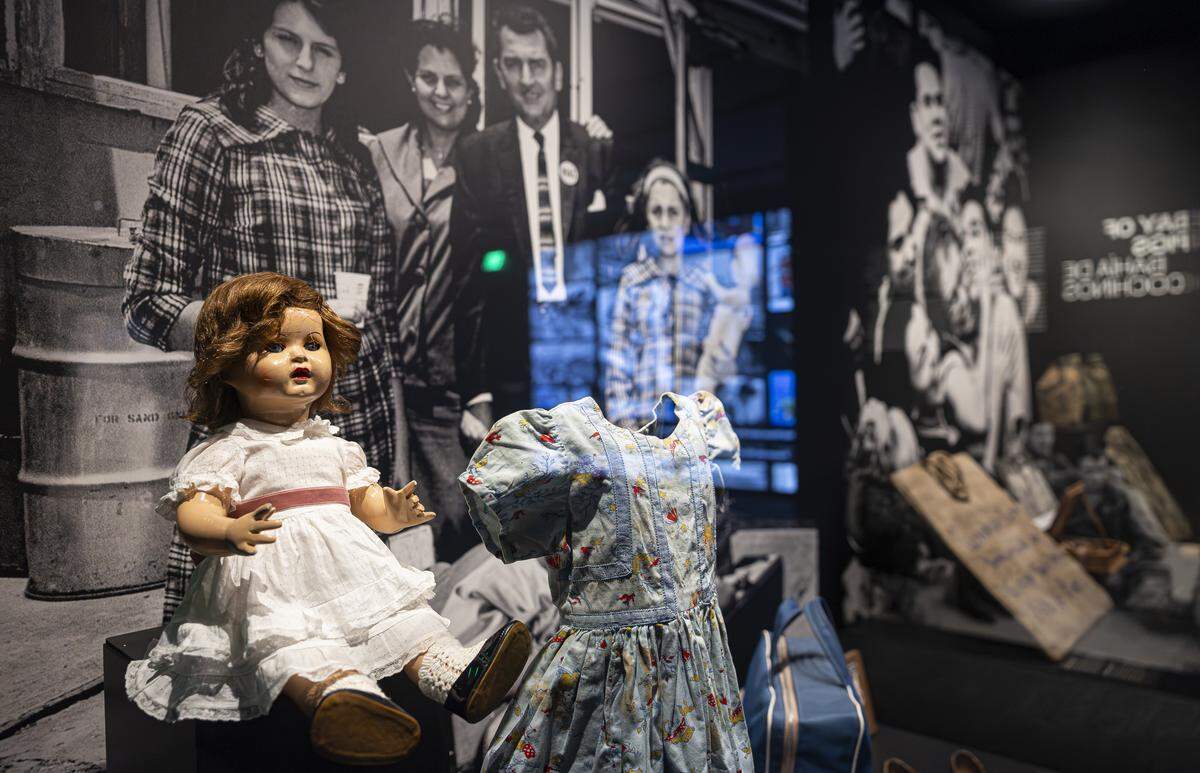
Hundreds of antique items — a wedding dress, a bag of marbles, guayaberas, a stuffed toy, a record player, a postcard, treasured photos, and a crucifix — are on display in collections that make up the permanent exhibitions inside downtown Miami’s newly restored Freedom Tower, which opened for general admission on Oct. 15. They are keepsakes and treasured items brought by some of the Cuban migrants that passed through the doors of what was once called the “Ellis Island of the South.”
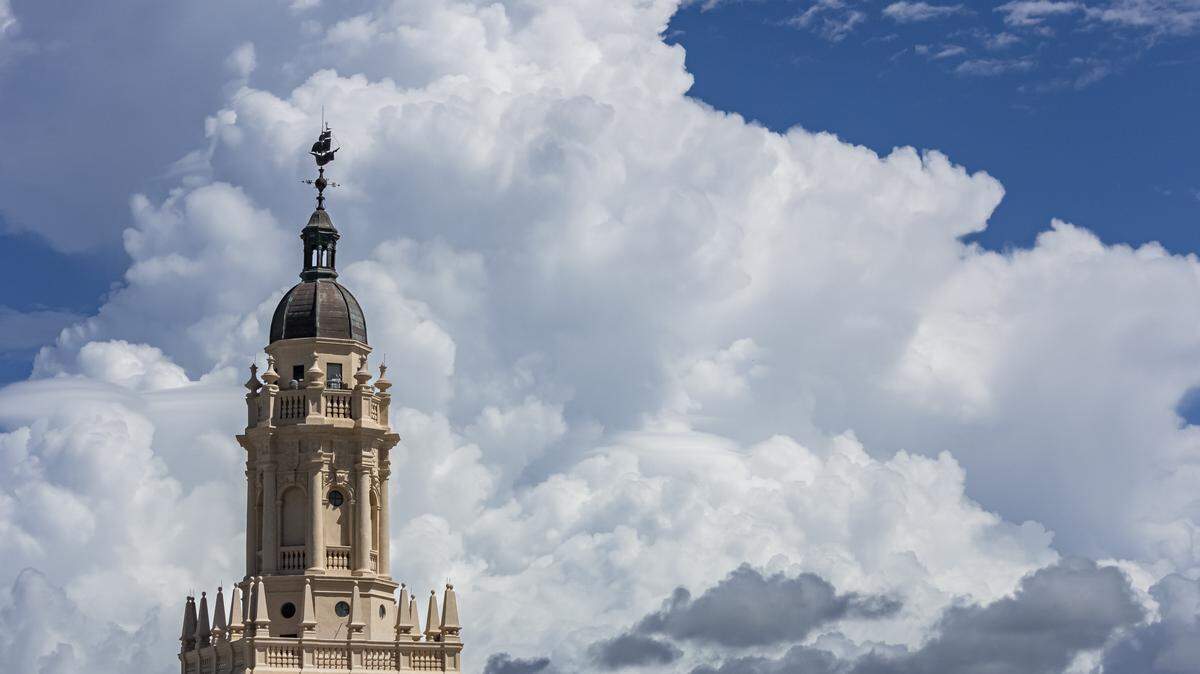
Historical memory and preservation are the cornerstones of the two-year, $25 million restoration of the 100-year-old Freedom Tower on Biscayne Boulevard. The project included extensive structural repairs and a full exterior restoration. The Freedom Tower was closed in 2023 to begin the undertaking of the property, which is designated a National Historic Landmark.
Decorative details and the exterior stucco of the façade of the Schultze and Weaver design were carefully refurbished, while inside, mechanical and electrical systems were updated, ADA compliance was brought up to code, as well as two floors of exhibition space and rooms that were redesigned to be used for community gatherings.
The 289-foot tower — once the largest skyscraper in Miami — was built in 1925 as the headquarters and printing facility for the Miami News. Miami Dade College, which took ownership of the building in 2005, launched the restoration campaign with support from state grants and philanthropic contributions.
The funding for the renovations included $25 million committed in 2021 from the state of Florida, separate $500,000 grants from the National Endowment for the Humanities and the State of Florida’s Cultural Facilities Program in 2023, and a $5 million donation from the Knight Foundation. Miami Dade College launched a fundraising campaign to build an endowment to help cover future maintenance and repair costs.
The project was overseen by Miami architectural firm MC Harry Associates in collaboration with preservation architect Richard Heisenbottle.
The footprint of those who became part of the building’s history are memorialized throughout. Exhibitions are dedicated to refugees who fled to Miami to escape communist regimes, along with information about the Tower’s origins, including its beginnings as the headquarters and printing facility for the Miami News.
Miami Dade College President Madeline Pumariega and Amy Galpin, the executive director of Miami Dade College’s Museum of Art and Design, walked the Miami Herald through the space as the rush of finishing touches was on to get everything ready and in place for the grand reopening, a ceremonial ribbon cutting, on Tuesday, Sept. 16.
The lobby has been carefully preserved to maintain its historical integrity with restoration efforts focusing on keeping the original look including the ceiling and tiles, which have been restored to their original form. One of the new additions to the lobby is a replica of a 1925 chandelier, recreated by artisans from photos that were discovered of the original ornate light fixture.
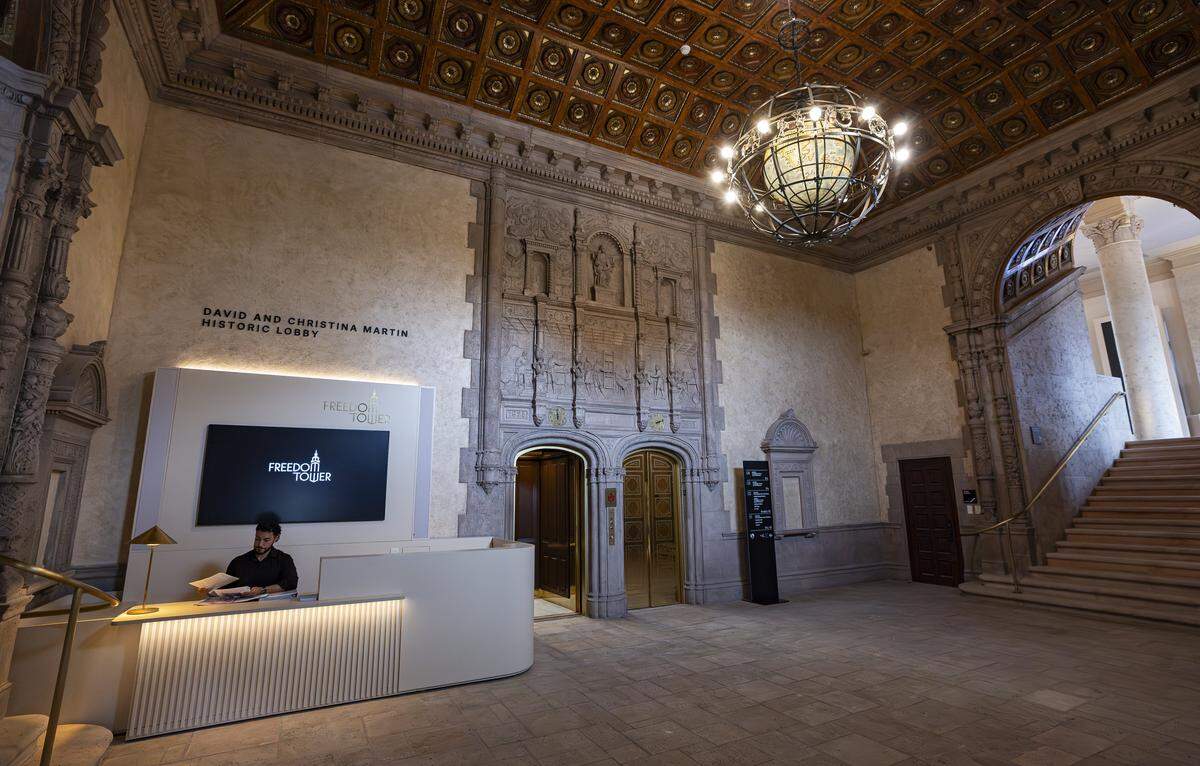
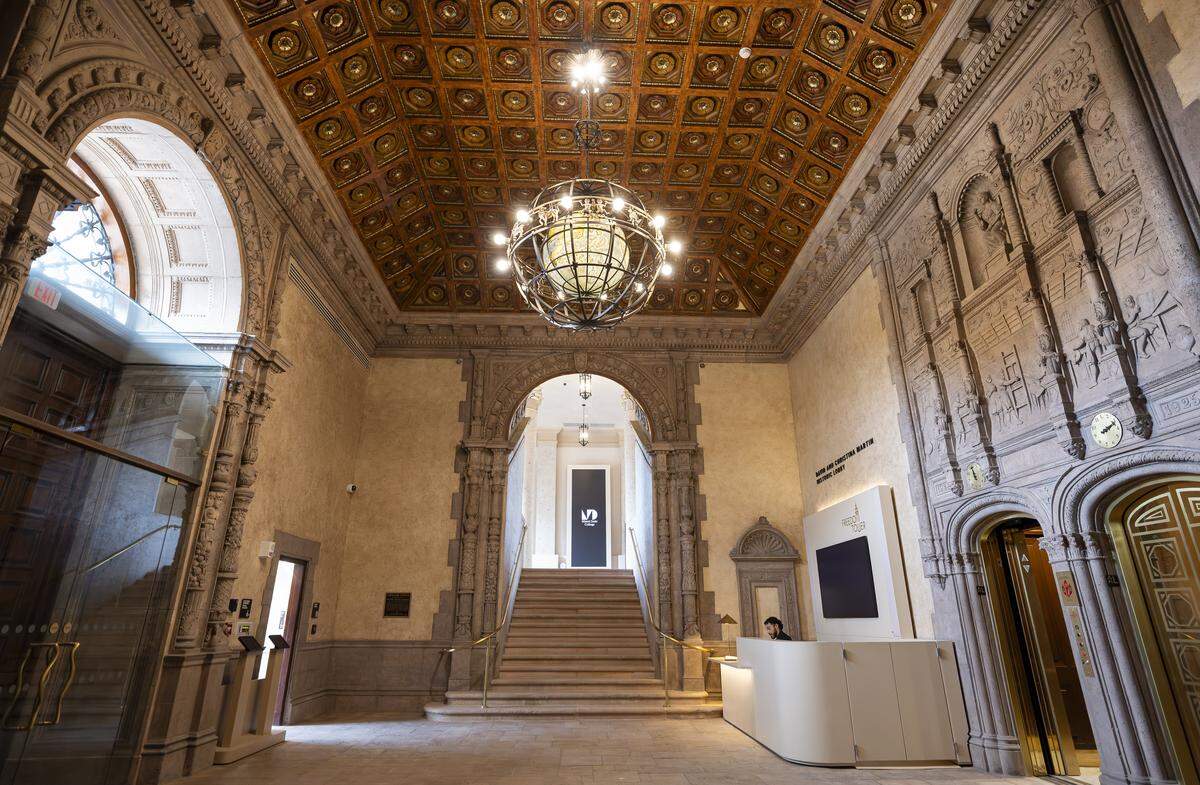
“We’ve worked within the historic preservation along with bringing it up to date to tell the story of the Freedom Tower,” said Pumariega. The architects even sourced tiles from Spain that replicated the original lobby floor from 1925.
While history is ever present throughout, the Freedom Tower’s installations are created to appeal to 21st century visitors, many through interactive exhibitions, digital content and detailed re-creations.
In what was once the typesetting room of the Miami Daily News, later called the Miami News, large scrolls of clippings can be viewed by visitors using hand cranks that mimic a newspaper rolling off the press.
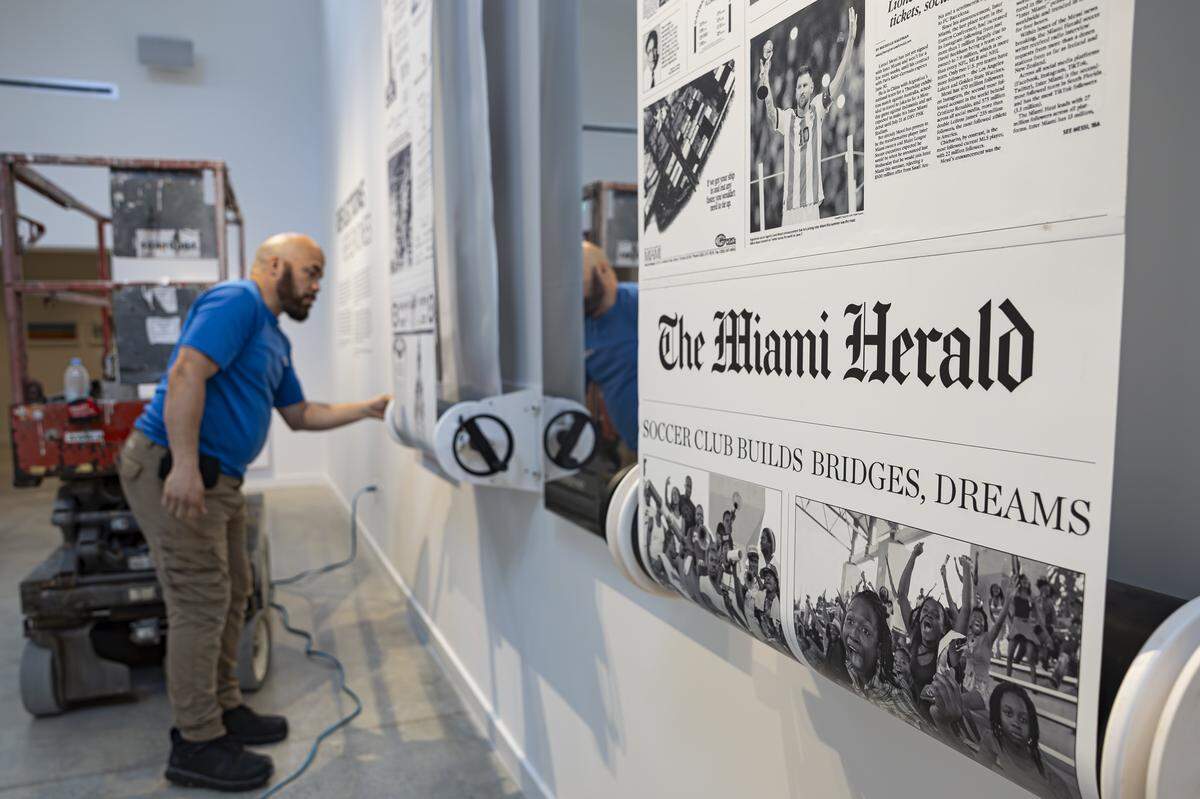
“The role of journalism in our society is so closely connected to the building. So we included the Miami Daily News, the Miami Herald, and we also chose Diario Las Americas because we really wanted to hit home the role of Miami as a hemispheric capital,” said Galpin. “And (the newspaper) played a big role in shaping how people understood migration and exile and Cubans in Miami.”
There are also historic photographs from the 1920s and a sculpture titled “Windows of Freedom Tower,” commissioned and created by New York-based artist Sharon Louden.
“We had a lot of conversations about this room early on. Maybe it would be a family room, maybe more about migration. And then we took a step back and decided that we would have this sculpture reflecting the beautiful brightness of the Magic City and not fill it up with artifacts but create a space where we could bring people together. The tower is just full of iconic spaces,” said Pumariega.
A recreation of the Refugee Center
Decades later, the building would take on a new significance when the federal government leased the site and repurposed it into a processing center for Cubans fleeing Fidel Castro’s communist regime in the early 1960s and 1970s. Nicknamed El Refugio by many exiles, the name became synonymous with the Freedom Tower.
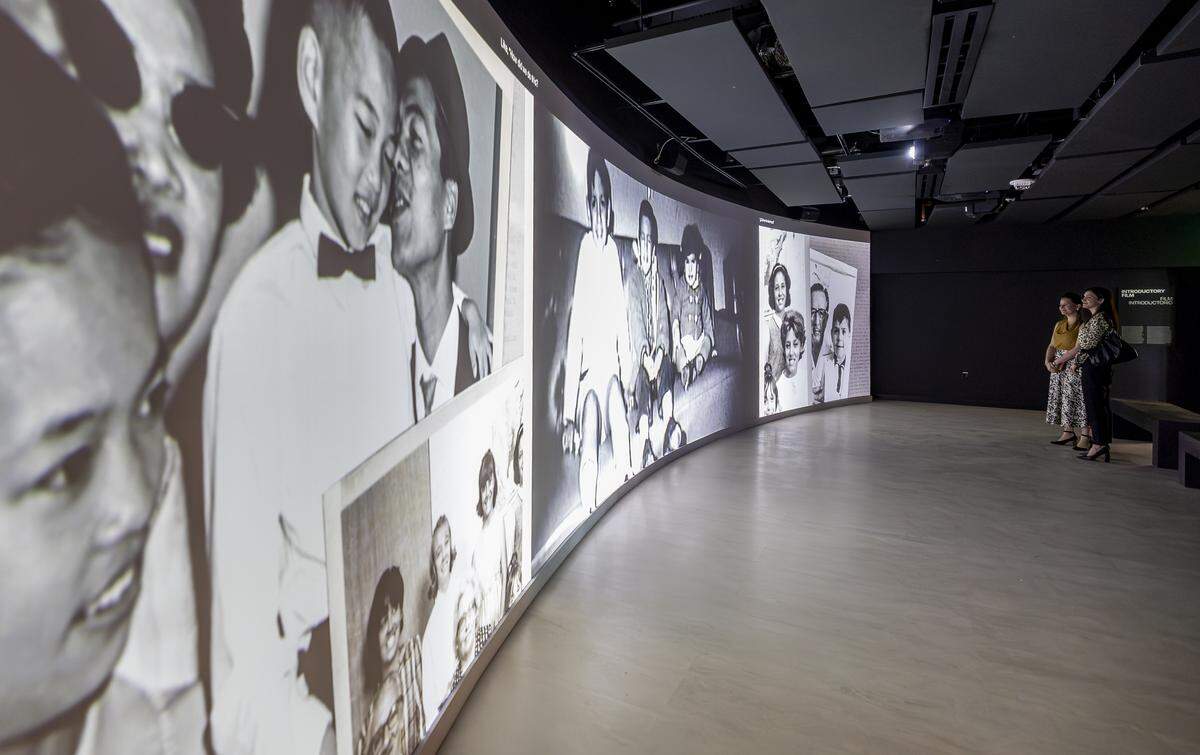
A re-creation of the Refugee Center, with its original tile floors and folding chairs, gives visitors a sense of what Cuban refugees encountered after they arrived at Freedom Tower for processing and to get job assistance, medical attention and relocation services as they began their new lives in the United States. The display is part of “El Refugio in Context,” which explores the historical backdrop of the Cuban refugee crisis that shaped the tower’s identity. It is one of the installations of the sweeping “Libertad” permanent exhibition, which spans the first and second floors.
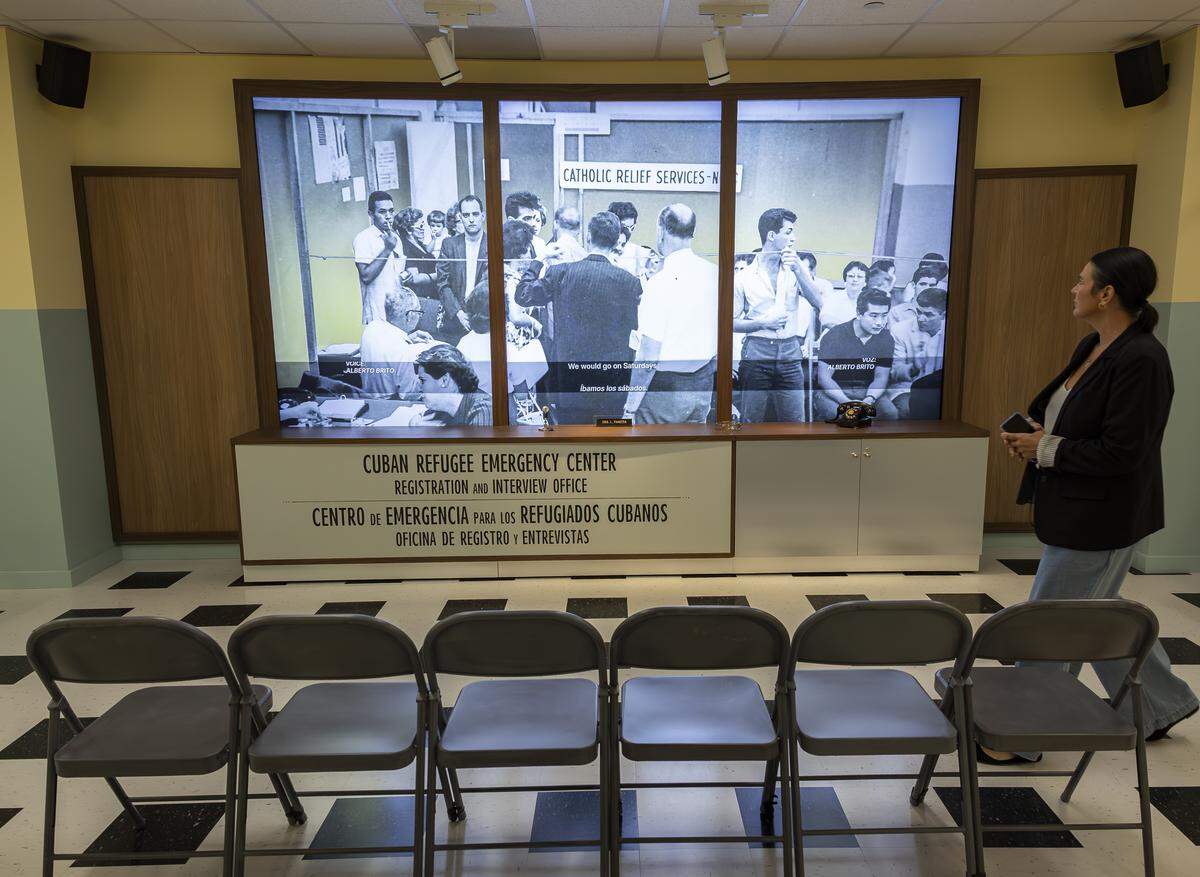
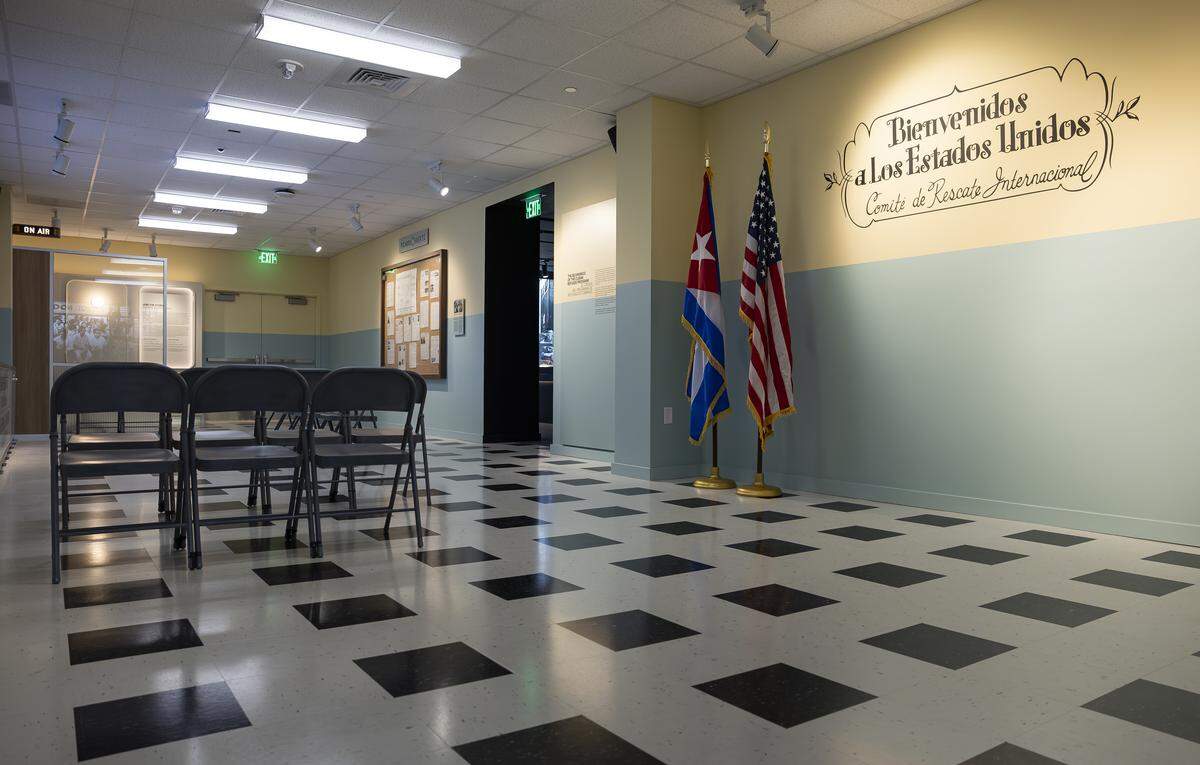
“This was the exact refugee center where my parents came through, my aunts and uncles and others. These are the exact colors, these are the chairs,” said Pumariega.
Digital screens with video from the era from MDC’s Wolfson Archives add to the experience, she said.
Pumariega pointed to a glass enclosed bulletin board with index-card job postings. “Here is where someone had an opportunity to find their first babysitting job for 33 cents. Or someone needed a seamstress. It was La Pizarra de la Suerte. It was the good luck wall, and it was the wall of opportunity.”
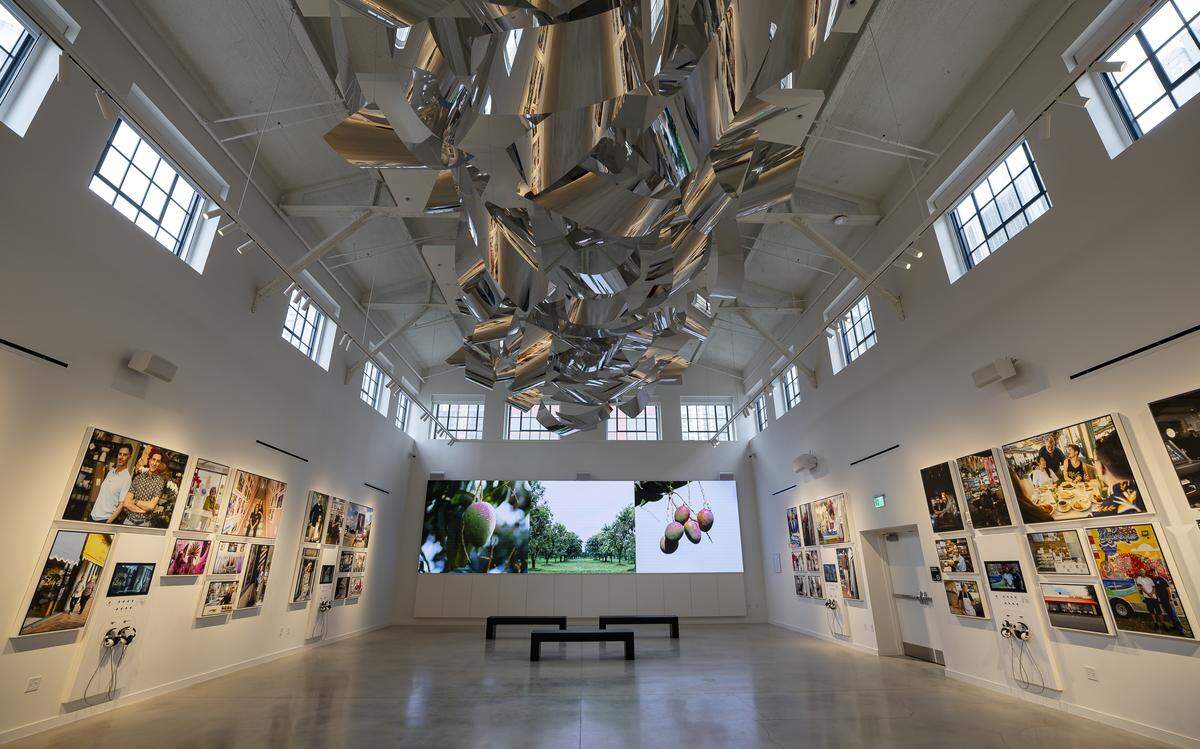
What Galpin calls the “punctuation point” of the “Libertad” permanent exhibit is “Voices of Miami,” a series of 350 floor-to-ceiling black and white photographs of everyday Miamians — along with notable names such as Gloria and Emilio Estefan, Willy Chirino, and tech entrepreneur Manny Medina. Miami photographer Clara Toro photographed her subjects over 16 months through a commission from MDC. The photos, which are part of an oral history project, are now part of The Freedom Tower Archive.
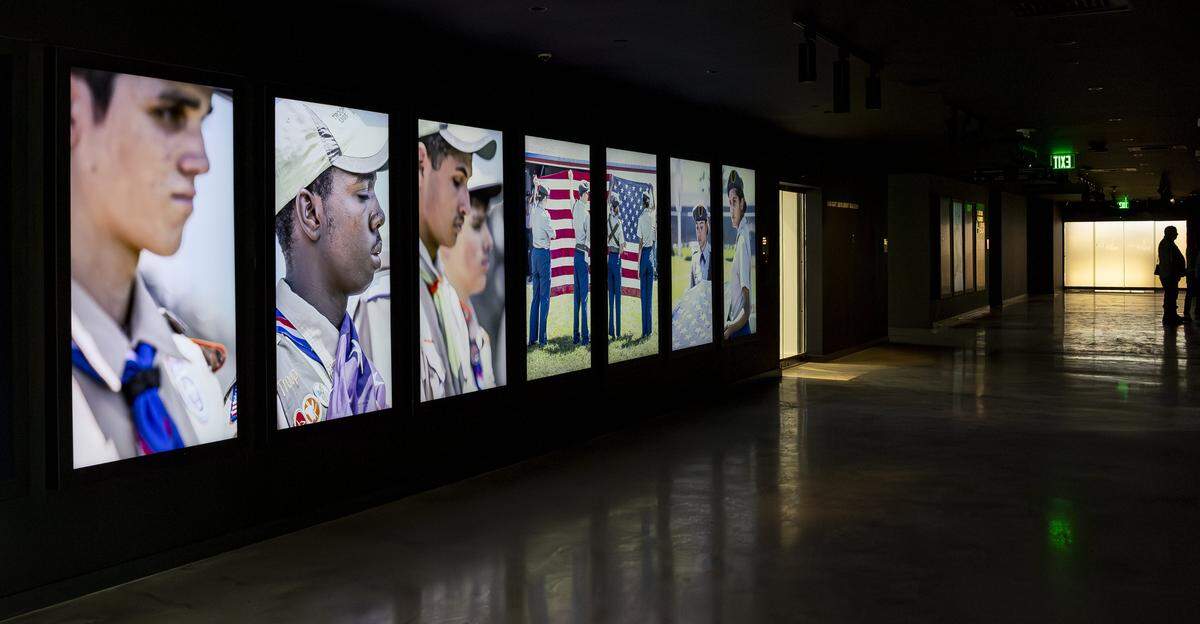
The other permanent exhibit “Languages of Migration” draws from the college’s Kislak Collection, and pairs rare ancient and colonial works with contemporary art.
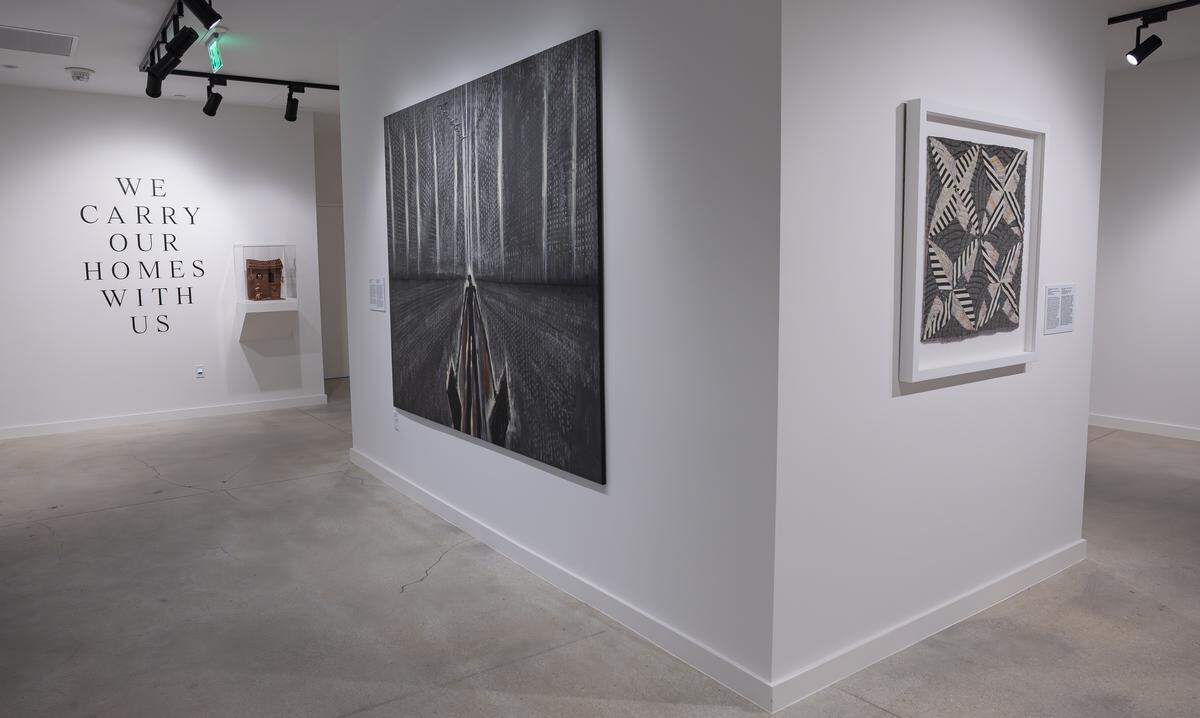
Galpin has curated a temporary exhibition on view through Jan. 11 that complements the two permanent exhibits. The title, “We Carry Our Homes With Us,” comes from a memoir by Marisella Vega, who was born in Havana, and whose family was resettled in St. Paul, Minn. She now lives in Miami. “She came through the Freedom Tower,” said Galpin. “This exhibition includes internationally renowned artists, many of whom call Miami home. José Bedia, Maria Martinez-Cañas, Félix González-Torres, Ana Mendieta, and Tomm El-Saieh.”
Also included is the first ever U.S. exhibition created in partnership with the FIFA Museum, “Unidad: The World’s Game,” just in time for Miami’s hosting of the FIFA World Cup from June 15 to July 18, 2026.

It is an interesting time for a reopening dedicated to immigration and exile amid the latest developments in the United States. In 2022, when the Freedom Tower was shut down for refurbishment, it was a different cultural environment.
“I think the timing is perfect to show the amazing contributions of people that come here looking for opportunity and looking for hope,” said Pumariega. “When we first started, it probably wasn’t the national conversation, but I hope that this does remind us all of the caring and compassionate country that we are in, the country that opened the doors for my parents and for so many wonderful generations who call the United States home and who have made enormous contributions to this county.”
.
This story was originally published September 13, 2025 at 4:30 AM.