
Prosecutors offer deal that would keep mom accused of stalking Miami-Dade cop out of jail
Gamaly Hollis, the grieving mother who was jailed for nearly a year after posting Facebook protests against the Miami-Dade Police officer who killed her mentally ill son, was offered the prospect of avoiding additional jail time Thursday.
The unexpected overture during the last minute of a court hearing came from State Attorney Katherine Fernandez Rundle’s most senior prosecutor one week after the Miami Herald chronicled the plight of Hollis in stories that detailed problems with Florida’s Baker Act, the inadequacies of police training and the unusually severe sentence given to Hollis.
Chief Assistant State Attorney Stephen Talpins offered Hollis probation in exchange for a plea that would end the two-year-old case. Hollis’ attorney said she would discuss the offer with Hollis, who did not attend the hearing.
Read More: Guilty of Grief, a four-part series on the Gamaly Hollis case
Talpins’ appearance in court Thursday was an unusual departure: Talpins’ job is mostly an administrative one, and misdemeanor cases are far less serious than the homicides and rapes that top prosecutors would ordinarily litigate.
Hollis, 53, was the subject of a four-part series in the Herald, “Guilty of Grief,” that detailed how officers like Miami-Dade Police Officer Jaime Pino can inflame tensions between police and people with mental illness, despite training programs that emphasize de-escalating conflict. Research shows such programs can significantly reduce police-involved shootings among people in crisis, who are at high risk of injury or death in such incidents.
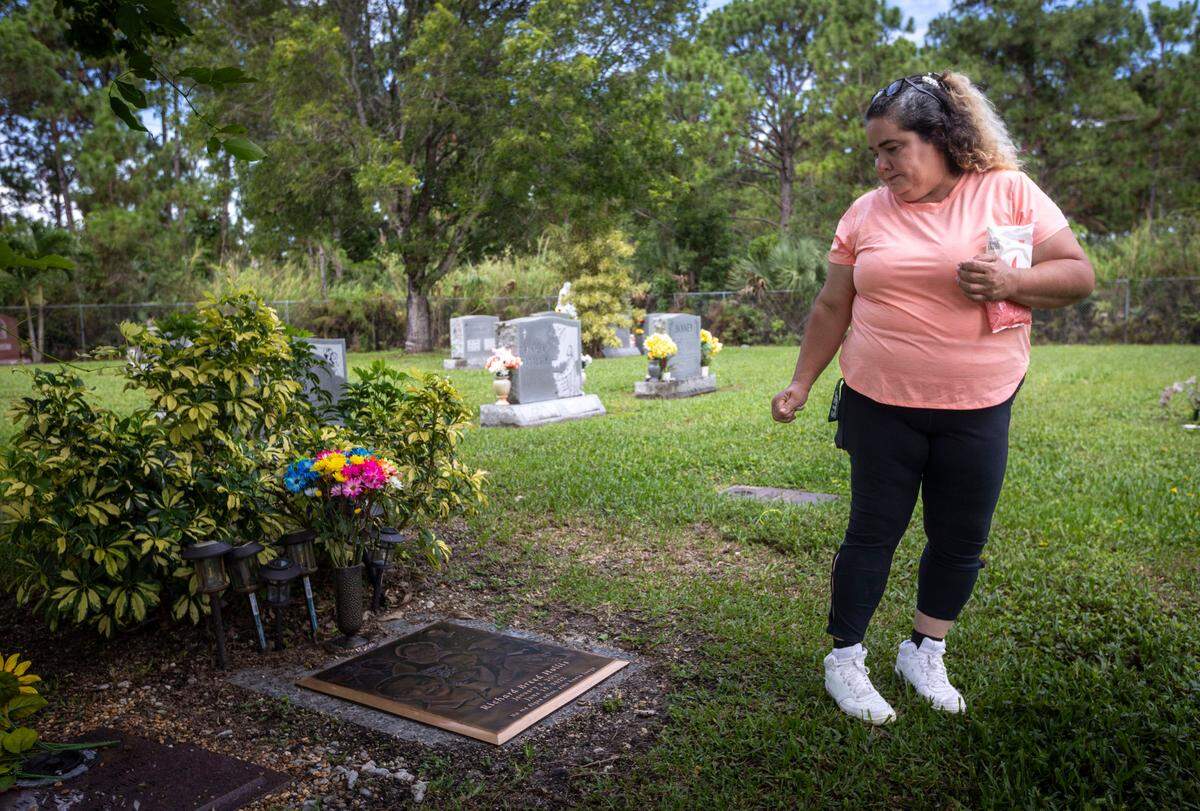
On June 15, 2022, Hollis’ neighbor at the Peppermill Apartments in West Kendall called 911 to report another heated argument between Hollis and her 21-year-old son, Richard, whose threats to harm himself or others, drug abuse and explosive behavior drew police to the Hollis apartment 34 times over a two-year span. Richard, who was holding two steak knives, was shot five times that night by Officer Jaime Pino, who had told Hollis months earlier that if Richard wielded a weapon around him “I will kill your son.”
Richard Hollis was involuntarily committed to psychiatric hospitals under Florida’s Baker Act nine times in the final months of his life. Pino invoked the Baker Act at least once against Richard, taking him to Kendall Regional Hospital, records show.
The Florida Department of Law Enforcement and the State Attorney’s Office, both of which routinely investigate officer-involved shootings, cleared Pino of wrongdoing in Richard’s death.
Hollis visited the Hammocks precinct three times in the days following the shooting to find out the name of the officer who killed Richard and to obtain records of emergency calls to her apartment, she said. Two months later, she confronted Pino in public at the scene of an unrelated traffic stop, calling him asesino, or killer, and accusing him of murdering her son.
For those accusations, delivered from the driver’s seat of her car at the gatehouse of a Kendall subdivision, and a series of Facebook posts that Pino said were threatening, she was charged with stalking. She was also charged with resisting arrest for refusing to get out of her car when officers told her to; they then tased her, pinned her down on a sidewalk and handcuffed her. Those charges are pending.
Pino would later be reprimanded for a remark he made to Hollis during the brief confrontation at that scene in Kendall. After Hollis said, “You killed my son,” he replied: “Yeah, I did. Maybe if you did a better job there wouldn’t be a problem.”
Hollis was sentenced to 364 days in jail after she was convicted of violating a protective order Pino requested against her. She violated the order by posting a Google Maps image of Pino’s car and garage, along with the cryptic caption “Bye Bye.”
The antagonistic interactions between Hollis and the officers from her neighborhood substation exposed flaws in how police deal with people in psychiatric crisis and how the Miami-Dade Police Department – the largest in the Southeastern U.S. – responds to criticism of its officers.
Hollis was called “an inherent danger to the community” last year by prosecutor Alecsander Kohn for calling Pino a murderer and for her efforts to draw attention to her son’s death by posting pictures of Pino and his family from his Facebook page to the 39 followers on her Facebook page. One of the purposes of bail, Kohn wrote, was to “protect the community against unreasonable danger” from those charged with a crime.
Kohn argued in April that Hollis should remain in jail before her trial on the stalking charges. Pino and his union, the Police Benevolent Association, had “grave concerns” about what Hollis might do if allowed out on bond, Kohn said.
But on Thursday, the State Attorney’s Office’s stance toward Hollis appeared to soften.
Talpins insisted that his offer of probation had long been on the table. But Hollis’ attorney, Assistant Public Defender Natahly Soler, interjected that Talpins’ mention of probation in court Thursday was the first time she’d heard it. The deal – one year of probation in exchange for Hollis’ guilty plea to stalking or resisting arrest charges, or both – would spare Hollis from a trial that could put her back in jail for up to two years.
“Judge, I’m sorry. There has never been an offer conveyed in this case so I have no idea what Mr. Talpins is talking about,” Soler said to Miami-Dade Judge Jennifer Azar.
In its series last week, the Herald reported Hollis already had been punished more harshly than all but 1.3 percent of 440 defendants in Miami-Dade and Broward counties charged with violating protective orders against stalking, many of whom had also been charged with beating wives or girlfriends.
Reporting from Camellia Burris was produced with financial support from the Esserman Family Foundation in partnership with Journalism Funding Partners. The Miami Herald maintains full editorial control of this work.
This story was originally published November 21, 2024 at 6:19 PM.