
As Miami-Dade scrambles to get people off the streets, why is one shelter reducing beds?
Juan slept in on Nov. 1, a Friday. After a long shift at the Miami Beach Convention Center the night before, he had returned to Camillus House, the homeless shelter where he had been staying for over a year, in the wee hours of the morning.
Juan said he awoke to learn that he had an hour to pack his things before he would have to leave the shelter. His most immediate concern was that he’d find himself sleeping outside again.
“I’ve had five heart attacks,” he said, “I can’t be in the street.”
Juan, who asked that his last name be withheld as he works to find more permanent housing, was one of hundreds of Camillus House clients swept up in the shelter’s massive downsizing in recent weeks. Three-quarters of the emergency shelter beds at Camillus House, one of Miami-Dade’s largest shelters, have gone offline since October amid contract disputes with local governments and the shelter’s own reorganization. Although Juan was ultimately transferred to Bikini Hostel, a Miami Beach hostel that’s being used to house the homeless, a number of clients were released to the street.
Camillus House’s shrinkage comes at a time when shelter beds have never been more needed. HB 1365, the Florida law that bans public camping, took effect on Oct. 1. Starting in January, residents can sue local governments for non-enforcement, a provision that could lead cities to jail people for sleeping in public. According to the Homeless Trust, Miami-Dade’s homeless agency, 1,004 people in the county currently sleep on the streets.
Money partly explains Camillus’ decision. The homeless services provider has for months been locked in disputes with the Miami-Dade County and Miami city governments over the nightly price of its emergency shelter beds. Local governments have long rented beds from the shelter — typically in yearlong contracts — that they can use to give people experiencing homelessness an indoor place to sleep. If the beds are paid for, people in need can fill them.
But at the end of September, those contracts expired for Miami-Dade County and the city of Miami, two of Camillus House’s top clients. As it prepared to renegotiate, Camillus House doubled what it charges nightly for a bed, from $31 to $67. After avoiding raising bed prices for more than a decade, Camillus said its costs had soared and that the price hike was necessary.
Miami-Dade County and Miami both rejected the increase. Unable to find a compromise, their contracts with Camillus House lapsed.
Of the 320 emergency shelter beds that Camillus operated in September, only 90 are filled today.
For Camillus House, a refocus
With both inflation and the size of its emergency shelter ballooning during and after the COVID-19 pandemic, Camillus House CEO Eddie Gloria said that Camillus House’s previous bed rate, $31, forced the organization to dip into its savings to cover the cost of its shelter program.
Doing so didn’t immediately threaten Camillus’ solvency. But, argued Gloria, it was unsustainable in the long run and threatened the organization’s ability to provide its full range of services.
Camillus House’s “continuum of care” — its spectrum of services — is broad. Medical assistance, free breakfasts, outreach programs and, prominently, housing, are all part of its offering.
The homeless services provider oversees three primary types of housing.
One of those is its emergency shelter — where rows of bunked beds house people for as long as the entity that sent them — be it the city, the county or someone else — decides. Some stay for a night, some for a week and some for months.
Transitional treatment is another. Housed in college dorm-like rooms, 208 beds at Camillus are reserved for longer-term, focused support for people struggling with physical ailments, mental illness and addiction, as well as survivors of human trafficking.
The rest, roughly 80% of Camillus’ housing system, is the third type, permanent supportive housing. Designed for those who are more stable, the organization’s 1,400 permanent supportive housing units are just that: permanent — people can live there indefinitely. Depending on their income, residents typically pay some portion of the rent for their subsidized apartments, which Camillus House maintains.
Gloria, justifying the price increase, said the emergency shelter’s growing suck on resources could have threatened the sustainability of Camillus’ housing triad.
But sustainability isn’t Gloria’s only issue. Outcomes are a concern as well. It’s a challenge, said Gloria, to recruit and retain talented caseworkers when Camillus is only able to pay them $42,000 per year.
Those are all reasons the CEO in recent months opted to reduce Camillus House’s emergency shelter capacity by more than half, from roughly 320 beds to 136, though only 90 of them are filled now. Even if Miami-Dade County and the city of Miami had agreed to the rate increase for emergency shelter beds, “we would still have to limit it to what we’re at now,” he said.
Having such a large emergency shelter encroached on the other housing programs, particularly transitional treatment, said Gloria, making it hard to maintain what he considered to be an acceptable quality of care.
“Treatment,” he said, “is a more effective solution for ending homelessness than just simply sheltering people.”
For local governments, renewed urgency
Whatever the merits of Gloria’s decision, its timing poses a challenge for Ron Book, chairman of Miami-Dade’s Homeless Trust. “It’s been an extremely painful time,” he said.
Camillus House “made a business decision, which we respect: They don’t want to be in the business of subsidizing shelter beds,” said Book.
Prior to the dispute, Miami-Dade County and its various cities had been scrambling to increase housing capacity — both long-term and short-term emergency shelter — to get people off the streets in accordance with the new state law.
Other shelters have picked up some of the slack from Camillus’ downsizing. The Salvation Army and Chapman Partnership, both in Miami-Dade, have each either added or are working to add dozens of additional beds.
Less traditional housing options, including hotels and motels, have also played a role in patching up holes in the county’s shelter system. They will likely continue to feature in housing efforts, according to Book.
Per the chairman’s estimation, the Trust has identified “close to 400 new shelter opportunities” throughout the county. Roughly 150 to 200 of those beds could be at Bikini Hostel in Miami Beach. Forty-one Camillus House residents were abruptly moved to Bikini Hostel in early November after negotiations between Miami and Camillus over a new contract ended without resolution.
The city also had yet to settle a $1 million past-due bill with Camillus for the previous year’s services. In a statement to the Herald, the city confirmed the debt and committed to quickly resolving the issue, which it blamed on a Camillus House invoicing error.
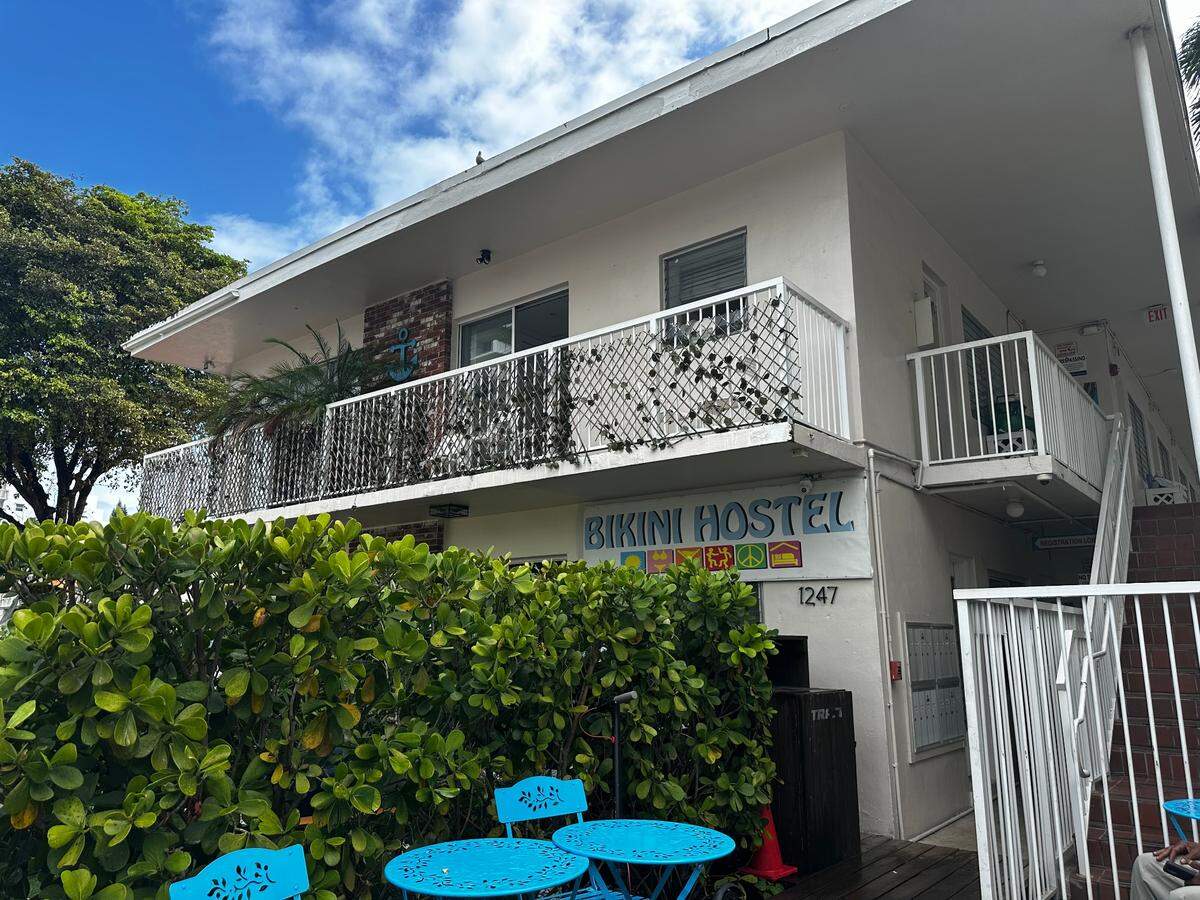
Juan was one of those 41 Camillus House transplants. Originally told he’d only be at Bikini Hostel until Dec. 1, he’s now gearing up to stay there indefinitely.
Juan prefers Camillus House. Bikini Hostel, he said, is cramped — with a dozen people sleeping in a room, where metal beds are bunked three high. “But I’d rather be here than on the street,” he said of the hostel.
Book told the Herald he expects the contract with Bikini will be renewed.
While Bikini Hostel has provided a bed windfall to local governments, it’s no replacement for Camillus House, which has trained medical and behavioral professionals on site, as well as a staff that’s experienced in dealing with the struggles faced by those experiencing homelessness.
But neither the hostel nor the county’s shelters will be enough to house all 1,000 people sleeping on the streets of Miami-Dade.
While locations haven’t been finalized, Book hopes a new emergency indoor shelter and a slew of tiny homes, as well as additional permanent low-income housing capacity, can clear up space in the county’s network of shelters. But, he concedes, many of those projects won’t come online until next year.
“We’ve still got a ways to go,” said Book.
This story was produced with financial support from supporters including The Green Family Foundation Trust and Ken O’Keefe, in partnership with Journalism Funding Partners. The Miami Herald maintains full editorial control of this work.
This story was originally published November 29, 2024 at 5:00 AM.
.jpg)