
A fake Florida candidate scheme was broad. Does ex-senator’s conviction end the case?
Four years after a network of political operatives orchestrated a scheme to recruit and promote straw candidates to siphon votes away from Democrats in Florida Senate races from Miami to Orlando, five people have taken plea deals or been convicted — but many of the players tied to the scandal have gone unscathed.
State prosecutors secured their latest conviction this week. A Miami jury found former Florida Sen. Frank Artiles guilty in a trial centered around allegations that the ex-lawmaker “stole an election” with the help of a paid candidate. Afterward, Miami-Dade State Attorney Katherine Fernandez Rundle referred to Artiles as the “mastermind of the ‘ghost candidate’ scandal” in Miami, and said his conviction proved that “we cannot tolerate the violation of our laws just to gain a political advantage.”
But with another election just weeks away, the former Democratic lawmaker hurt by the scheme says the elements that allowed so-called “ghost candidates” to flourish in 2020 remain legal and largely unaddressed by Florida’s Republican-dominated Legislature. And it’s unclear whether investigators intend to continue pulling the threads of an investigation that at different times roped in prominent political consultants, the state’s largest utility and the official campaign committee for Florida’s Republican senators.
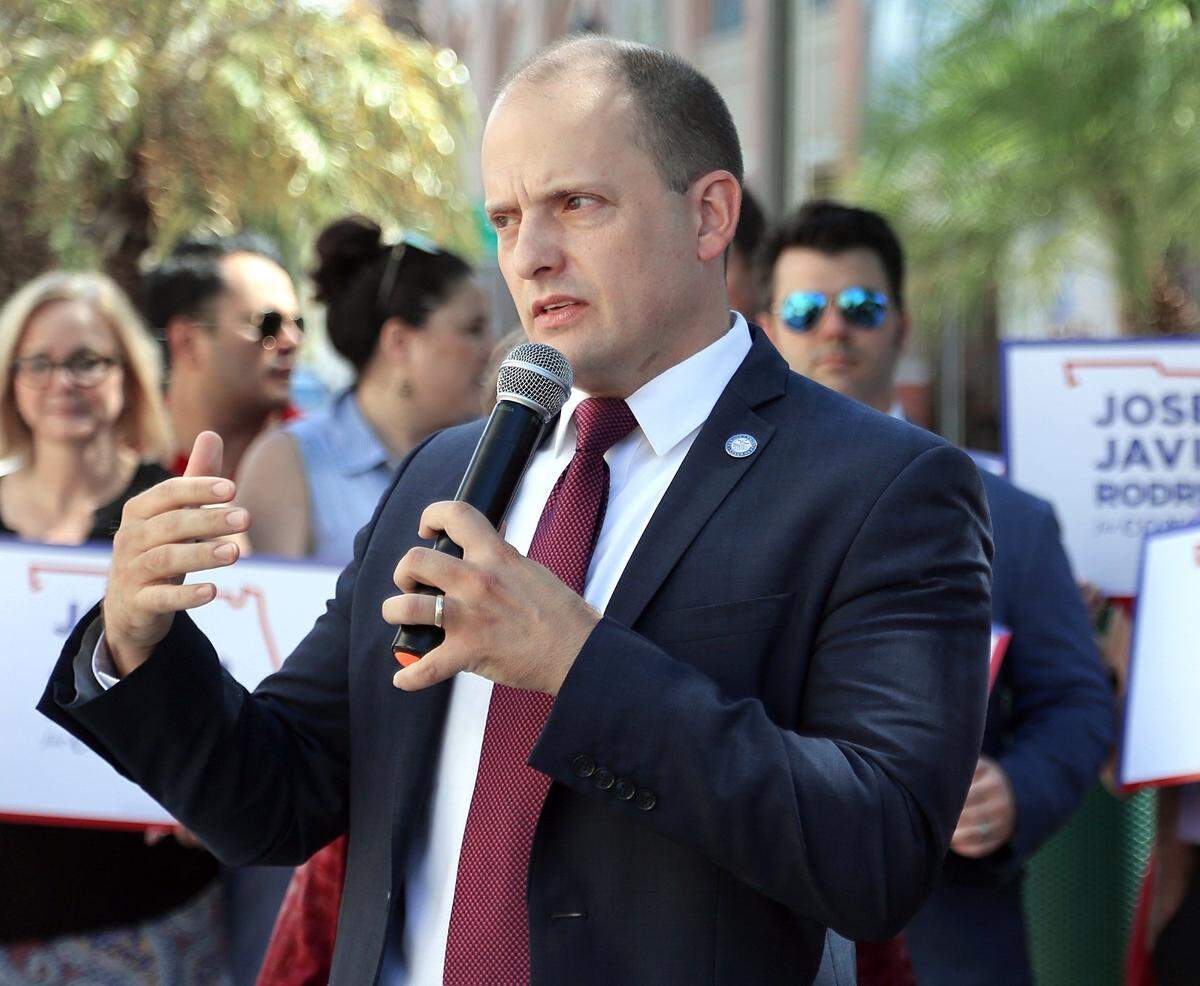
“This wasn’t just Artiles, this was an orchestrated thing and there were big-money interests paying into this behind the scenes to make this all happen,” said José Javier Rodriguez, the Democrat who lost his Senate seat by 34 votes after his reelection bid was targeted by Artiles.
A Herald/Times review of testimony, documents and interviews shows:
▪ The chief political consultant contracted by the Florida Republican Senatorial Campaign Committee testified in court that he hired Artiles to help win Miami races and green-lit his plan to recruit fake candidates, though he pleaded ignorance to how Artiles carried out the plot and denied that senior GOP leaders were involved in Artiles’ hiring.
▪ Other political consultants — including one who’d go on to be a key adviser to Gov. Ron DeSantis’ presidential campaign — moved large sums of money through political committees and coordinated political mail advertisements to bolster the candidacy of fake candidates.
▪ And Florida Power & Light, the state’s largest utility company, was accused in lawsuits of being involved in some of the transactions in the scheme. Internal documents showed a top executive viewed Rodriguez, the senator who lost his seat in 2020, with contempt, but the company has denied any involvement in the scandal.
▪ The Miami-Dade State Attorneys’ Office declined to say whether it intends to continue pursuing the case, or whether its efforts will end with Artiles’ conviction. Artiles, who has yet to be sentenced, is expected to appeal.
“With the sentencing of Frank Artiles still pending before the court, it would be inappropriate for us to address your concerns, as they could/would be seen as trying to influence the court’s upcoming sentencing considerations,” a spokesperson said.
The players
The scheme was notable for its breadth and for the number of prominent political operatives who were deposed in criminal investigations. When the findings were brought to trial, however, the evidence largely focused on campaign contributions that exceeded legal limits or were filed publicly under false pretenses.
Celso Alfonso, a candidate in his 80s who owned the salon where Artiles would get facials and his back waxed, was recruited by the former senator to help Sen. Ana Maria Rodriguez win her seat representing the state’s 39th Senate District in South Dade.
In Florida’s 37th Senate District, at the time representing Miami Beach, downtown and Miami neighborhoods to the west, no-party-affiliated candidate Alexis Rodriguez, an old Artiles acquaintance who was living in Boca Raton, said Artiles offered him $50,000 to run and help Sen. Ileana Garcia win the race.
And in Central Florida, Jestine Iannotti, a white woman who was in the process of moving to Sweden during election season, was promoted with mailers using progressive language and, in one case, a stock image of a Black woman, helping Republican Sen. Jason Brodeur.
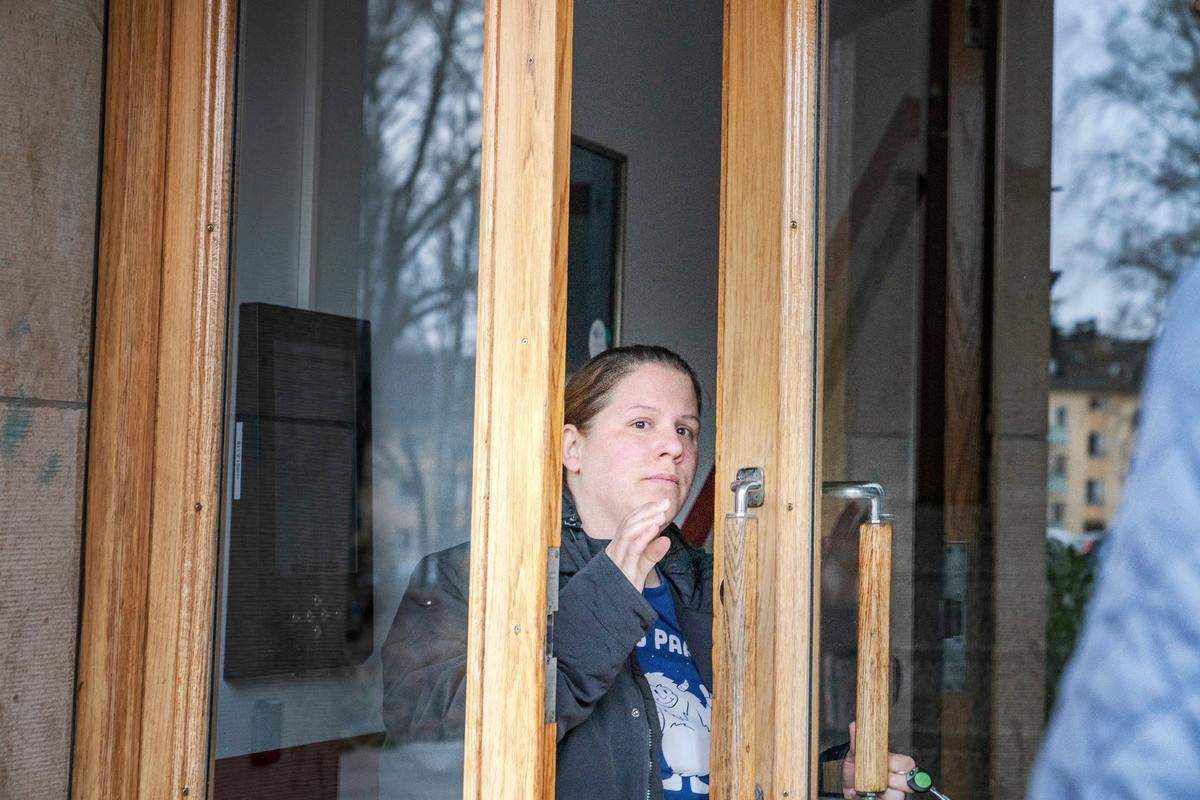
In Seminole County, Iannotti and her alleged handler, Eric Foglesong, pleaded no contest to campaign finance charges. In 2022, GOP operative Ben Paris was found guilty of making an illegal campaign contribution in someone else’s name in connection to the state Senate race.
In Miami-Dade County, Artiles was guilty of excessive campaign contributions, conspiracy to commit excessive contributions and falsely swearing an oath, all felonies that could carry five-year sentences. Alexis Rodriguez, who testified against Artiles, avoided conviction but was slapped with a $20,000 state ethics fine for accepting money prior to qualifying to run in the race.
Alfonso was hit with a small fine, but was not charged criminally.
All three sham candidates cooperated with investigators, who went down a rabbit hole of transactions among political committees in search of the source of the money in the scheme. In Artiles’ case, investigators found that Pat Bainter, the top consultant for Senate Republican campaigns, transferred nearly $200,000 to Artiles and a political organization he controlled.
As for the money used to promote the three candidates, $550,000 in donations to political committees ultimately traced back to a tax-exempt Delaware corporation called Grow United.
The “ghost” candidate scandal of 2020 wasn’t entirely unique for Florida, where recruiting a candidate to hurt an opponent is not inherently illegal, and political committees and dark-money non-profits are allowed to largely mask and obscure the source of campaign donations. For some of the actors wrapped up in the controversy, their defense wasn’t that they weren’t involved, but that there was nothing illegal about anything they did.
Four operatives received target letters, which often precede criminal charges. But no charges were filed by the Miami-Dade State Attorney’s office.
Alex Alvarado, who set up the political committees that paid for mailers that promoted the straw candidates, was at one point deemed a “possible subject” in the criminal investigation. He wasn’t charged, and he now says it was “political persecution.”
“During this investigation, I was personally accused of crimes that never existed,” Alvarado said in a statement. “The Miami-Dade State Attorney’s Office pursued charges for a crime they wish existed.”
Ryan Tyson, whose political nonprofit paid Artiles more than $125,000 for “South Florida research services” over several years and told investigators he wired money to Grow United in 2020, has long said he did not cross any legal lines. This week, when asked for his reaction to the outcome of Artiles’ case, he threatened to sue the Miami Herald if he was cast in a “false light.”
“Lose my number. Do not contact me,” Tyson, who served as an adviser on DeSantis’ presidential campaign, told a reporter.
During the investigation, Tyson voluntarily appeared for an interview with prosecutors to show that his political nonprofit — Let’s Preserve the American Dream — “complies with all state, federal and local laws,” his lawyers said at the time.
Unlike political committees, which are legally required to disclose their donors, dark money groups are not required by law to do so, which makes them useful for funders who don’t want their identities revealed when backing certain campaigns or causes. The judge presiding over Artiles case at one point blocked the release of information about donors to the groups that were roped into the investigation.
How involved were Senate Republicans?
In 2021, when Artiles was arrested for his involvement in the Senate District 37 election, Erin Isaac, a spokeswoman for the Florida Republican Senatorial Campaign Committee, said the committee “had no involvement, nor were we aware of outside involvement in the race.”
“What we have learned, we have learned from your [the Herald’s] reporting,” she said in a statement.
At the time, former Senate President Wilton Simpson headed the political committee and said he would not comment until “all the facts” were laid out. Simpson – who now serves as the state’s agriculture commissioner — did not respond to a text message this week seeking comment on the case.
During last month’s trial, Artiles’ defense attorney Jose Quiñon told jurors that Bainter, who hired Artiles to work as a consultant on Miami-Dade senate campaigns, was given his marching orders by the Senate GOP’s campaign committee, which he said eventually okayed a contract between Bainter and Artiles.
“Bainter contacted Artiles because he knows Miami-Dade County,” Quiñon told jurors. “Mr. Artiles was a fountain of knowledge.”
Artiles, who says he has been railroaded by prosecutors and the press, was paid $90,000 to help win Miami races by Data Targeting, the public opinion research company run by Bainter out of Gainesville. Bainter also put another $100,000 into Florida Stronger, a political action committee controlled by Artiles that does not have to disclose its donors.
During the trial, Quiñon noted that Bainter told Artiles while discussing a contract that he was instructed to “sharpen the pencil” to get a cheaper rate. Bainter, however, told investigators months ago that no one had told him to reduce the price – he made it up as a negotiating tactic. He also said the money used to pay Artiles did not come from the Florida Republican Senatorial Campaign Committee, but an undisclosed political committee.
Court records show that Artiles shopped a proposed contract with the Florida Republican Senatorial Campaign Committee to Bainter, but Bainter chose to hire Artiles directly with his own firm. Michael Beato, an attorney for the Senate GOP’s political committee, told the Herald/Times that the committee “never ordered Pat Bainter to hire Frank Artiles” and that “defense counsel’s statements aren’t evidence.”
Isaac, the FRSCC spokeswoman, declined this week to answer questions about the case, and referred questions about it to the committee’s attorneys. In an email Thursday, Beato said “there’s not a shred of evidence that FRSCC directed Frank Artiles to do the activities that he was convicted of.”
Florida Power & Light
One of the biggest questions that remains unanswered pertains to the origins of the money that made the scheme function. Ahead of the trial, the judge presiding over Artiles’ case shot down an effort to make public the donors to the groups funding the campaign.
But Florida Power & Light investors, relying in part on media reports based on leaked documents from a political consulting firm, accused the utility company in a federal lawsuit of being involved in funding “ghost” candidates to influence elections.
The lawsuit noted that Grow United — the dark-money group that sent $550,000 to political committees to pay for advertisements — was previously used by FPL and a political consulting firm, Matrix LLC, in a separate effort to influence a Jacksonville election. In the lawsuit, investors also claimed the utility company and Matrix “took pains to hide their involvement from the public” and claimed “the funding that flowed through Grow United to prop up the ghost candidates came down a path carefully planned” by the company’s former CEO, Eric Silagy, and other associates.
That lawsuit was dismissed last week.
The utility company was not mentioned during Artiles’ trial. The company did not respond to a request for comment.
In Tallahassee, José Javier Rodriguez built a reputation as one of the utility company’s biggest critics. So much so that in 2019, the former head of Florida Power & Light, told executives to make “his life a living hell” after the former state senator filed a bill threatening the utility’s hold on the state’s solar-energy market.
“The hard part was realizing that this trickery and these corrupt policies — which I guess we can say were criminal practices — frankly led the district to having different representation on critical issues,” Rodriguez said on Tuesday.
Looking back, Rodriguez — who now serves as the assistant secretary for the U.S. Department of Labor — says “the landscape hasn’t really changed a great deal” in Florida, putting the onus on voters to do their homework on candidates.
“The only reason why we need to be wise is because Tallahassee hasn’t done anything to change the laws or put any resources into enforcement against these tactics,” Rodriguez said in a phone interview on Tuesday.
Rodriguez urged voters to not become cynical or disengaged.
“The reason why they use these tactics is to confuse voters, muddy the waters and win that way. If we become disengaged as the public, ultimately these tactics work and they win,” he said.
Miami Herald reporter Charles Rabin contributed to this report.
This story was originally published October 5, 2024 at 5:30 AM.