Miami District 2 candidates talk about housing, homeless and police at community forums
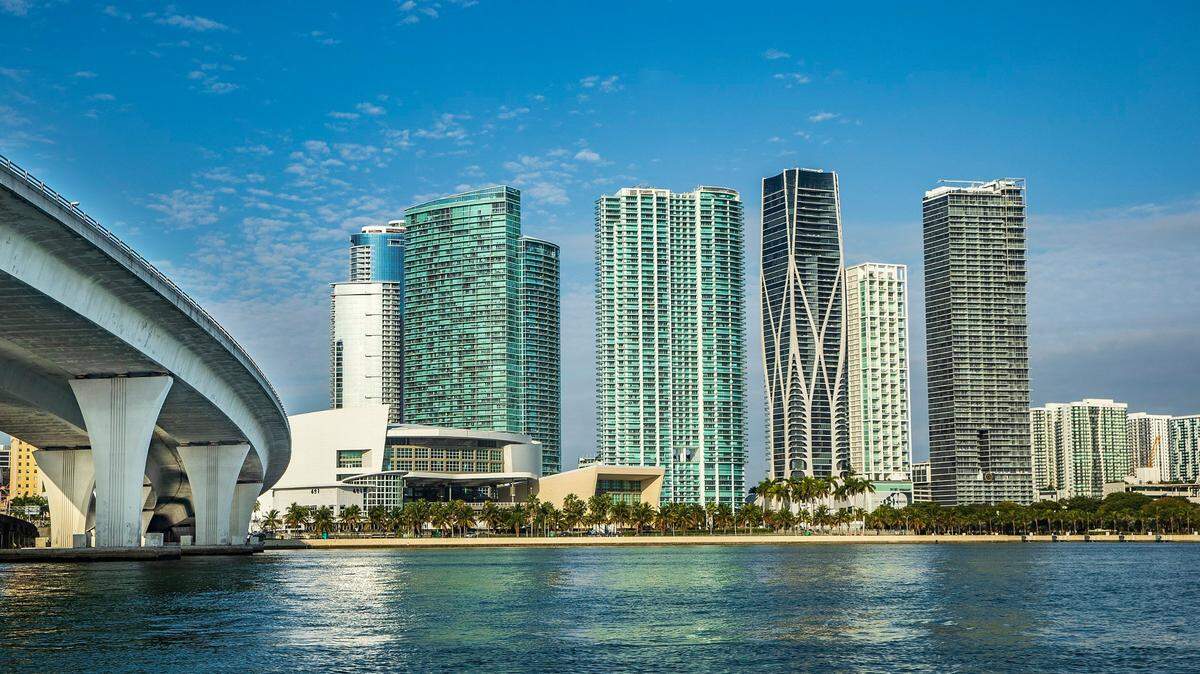
The 13 candidates in the race for the next commissioner to represent the city of Miami’s coastal neighborhoods in District 2 have highlighted issues ranging from housing to policing as they meet with the community ahead of the Feb. 27 special election.
Early voting begins Thursday. Voting sites will be open from 7 a.m. to 7 p.m. on Thursday and Friday, and from 8 a.m. to 4 p.m. on Saturday. The three early voting locations are:
▪ Miami City Hall, 3500 Pan American Drive
▪ Lemon City Library, 430 NE 61st St.
▪ Stephen P. Clark Government Center, 111 NW First St.
As of Wednesday afternoon, about 2,700 people had voted by mail ballots, more than a third of the 7,337 people who requested ballots by the Feb. 17 deadline. So far, roughly 5.4% of about 49,000 active eligible voters in District 2 have returned ballots.
A total of 6,336 voters participated in the regular District 2 election in November 2019, and 6,598 voted in the 2015 election.
READ MORE: Miami has a special election. Here are District 2 candidates talking about issues
Policing
Most candidates agree they want to see more police presence in downtown and Brickell, preferably walking the beat. Javier Gonzalez, who is running for the third time in District 2, told the Miami Herald Editorial Board that there are dozens of openings in the police department, and even a hiring spree wouldn’t fix the problem quickly because it would take a year to train the officers before they could hit the street.
“The reality is we have openings, but we just can’t find the talent and do the recruitment for it,” Gonzalez said. “I think that’s really the bigger issue.”
Eddy Leal, Sabina Covo and Martin Zilber pointed out that the number of police officers in areas such as Brickell have remained the same for years, even though the population of the city’s urban core has steadily increased. Christi Tasker criticized the amount of police protection provided to the city’s elected officials, who have a team of cops called sergeants-at-arms to protect them and drive them around.
“They can take police off the streets,” said Tasker, at a recent forum downtown.
Max Martinez, a previous mayoral candidate, has said there are too many vacant lots that require patrolling. He said that more real estate development could create housing, some of which could be used to house people who are living on the street and reduce the blight of empty properties.
The comments about law enforcement have led to candidates expressing their views on how to address homelessness in Miami. At a housing forum Saturday hosted by a coalition of community groups, Lorenzo Palomares said the police should not treat everyone alike when they interact with those experiencing homelessness.
“They have to treat everybody individually,” he said. “You cannot assume anything. Some people need mental health help. Some people need drug help. Some people need a helping hand to get back on the ladder and climb it up again.”
Mario Vuksanovic, a former city homeless outreach worker, said the city needs to invest in developing a new shelter that would serve as a transition space for people without housing, staffed with social workers who can follow individuals’ cases closely. Helping end homelessness in Miami is Vuksanovic’s top priority.
The forum was organized by Struggle for Miami’s Affordable and Sustainable Housing (SMASH), Miami Homes for All, Engage Miami, Florida Rising, Miami Coalition to Advance Racial Equity (MCARE), South Florida Community Development Coalition (SFCDC), Haitian Women of Miami (FANM) and Women with Broken Heals.
READ MORE: Here are the people and businesses funding campaigns in Miami’s special election
Housing, parks and other issues
Six of the thirteen candidates attended the forum Saturday: Covo, Lior Halabi, Martinez, Tasker, Vuksanovic and Palomares.
Halabi said he favors creating more incentives for developers to include a certain percentage of affordable housing units in new construction. “Because everything is about money, at the end of the day,” he said.
Covo said she would prioritize speeding up the process for developers to get permits so more units could be built faster. “Developers are not, I would say, enthusiastic, about building affordable housing,” she said.
She also said the city needs to work with the county and developers to use county-owned land, some of which is in the city of Miami, to build more units.
Palomares said the key to lowering housing costs is addressing the cost of insurance. He said that in order to reduce costs for homeowners, the city of Miami should create a self-insurance fund. Under such a system, Palomares later told the Miami Herald, homeowners would pay a premium to the city, and the city would maintain a fund that would be used to pay claims. The system would allow homeowners in the city to forgo private insurers or state-backed Citizens Property Insurance. Palomares argued this would reduce homeowners’ premiums and boost city revenues from fee collections.
At the Feb. 13 Brickell Homeowners Association forum, which was attended by all 13 candidates, Zilber said creating more parks in the city is a priority, and maintaining existing green space should be a focus for City Hall. He said the city is “ruining our own areas with city functions,” referring to the use of Regatta Park for events.
“We have to make sure that we fund our parks that are here already to be up to the standard,” he said.
At the same forum, James Torres said part of preserving the city’s natural areas, including Biscayne Bay, will require steeper fines for developers whose construction sites pollute. He also advocated for the city to use more electric vehicles.
June Savage told Brickell residents that traffic was a top concern. She said creating specific drop-off areas for ridesharing services such as Uber and Lyft would make a difference.
“They stop everywhere and they actually back up our traffic,” she said.
Leal, who has worked as a lawyer in Mayor Francis Suarez’s office, said his familiarity with the the city government’s day-to-day operations will help him push for accountability on key city projects, including work that will protect the city from the impacts of sea level rise.
Near the end of the Brickell forum, the hosts asked a yes-or-no question about whether candidates would support increasing the size of the five-member City Commission. Some residents in the community have discussed the issue after commissioners declined to consider creating a bigger board when they redrew the city’s voting map last year — a process that has since been challenged in a lawsuit.
Every candidate said yes.
This article has been updated to include the the names of each organization that sponsored the candidate forum on Saturday, Feb. 18, 2023.
This story was originally published February 22, 2023 at 5:36 PM.