
Doral smoke from trash fire hit ‘unhealthy’ levels, according to EPA monitoring report
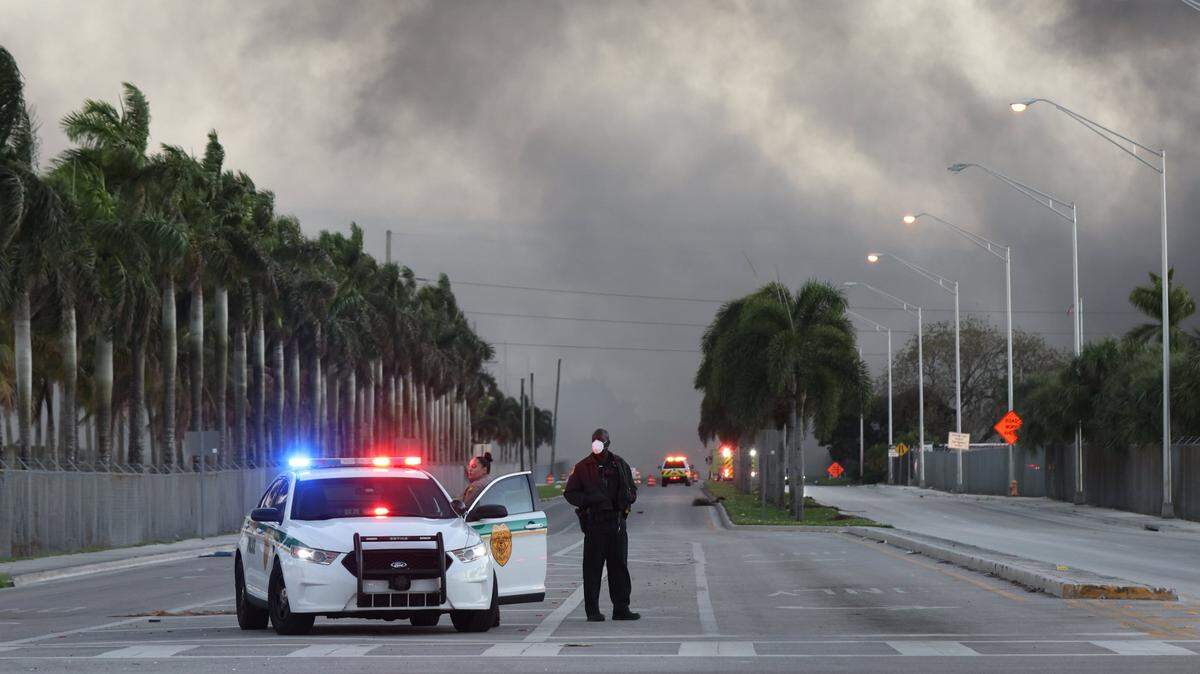
The western side of the Doral incinerator fire produced a health risk from smoke that’s serious enough to trigger a “shelter in place” advisory, according to an Environmental Protection Agency report released Thursday.
While Miami-Dade Mayor Daniella Levine Cava hasn’t used the phrase “shelter in place” to urge people to avoid the smoke, her message to residents near the burning trash plant to stay inside as much as possible matches what the EPA recommended, an agency representative said.
“What they’re doing is consistent with the data we provided to them,” added Matthew Huyser, the EPA official assigned to the Doral fire. “That is what they are recommending.”
Levine Cava’s office released two daily EPA reports Thursday afternoon after the agency responded to a fire that began Sunday at the waste-to-energy plant run by Covanta under a county contract.
A spokesperson said the county only received two 24-hour monitoring reports from the EPA for Wednesday and Thursday, and both were posted on the website dedicated to the blaze, miamidade.gov/wastefire.
Erika Benitez, a spokesperson for Miami-Dade Fire Rescue, said the county reserves the “shelter in place” phrase for when residents need to urgently seek shelter and stay there, such as during a shooting incident or a tornado.
“That’s not what this is,” she said. “We’re just asking you to limit your outdoors exposure.”
Of the four monitoring stations at the plant, only the one on the western side of the property registered consistently “unhealthy” readings — the fourth-worst level on the EPA’s six-level scale for air quality.
An EPA document attached to the report said an “unhealthy” reading means “everyone may begin to experience health effects” and that local officials should consider canceling outdoor events and closing schools in the affected areas. It didn’t specify what area was considered affected by the air that registered an “unhealthy” level.
Huyser said the unhealthy reading often comes with a large blaze like the one still burning in Doral. “It’s typical of smoke and a smoke plume,” he said.
Doral Mayor Christi Fraga said she was surprised the EPA used the words “shelter in place,” since that’s not the message conveyed in county text messages to residents living within two miles of the facility.
“Shelter in place: Is that in the actual report? That’s not what any of our briefings have said,” Fraga said in an interview Thursday evening after Levine Cava’s office posted the EPA reports with the shelter-in-place language.
Hours earlier, Fraga joined Levine Cava for a press conference at the county’s Emergency Operations Center in Doral, about two miles from the privately operated incinerator plant. Fraga urged the county to release all air-quality reports to the public. Hours later, the mayor’s office posted the EPA reports.
At the press conference, Levine Cava repeated her warnings that the smoke from the fire should be avoided by people living nearby.
“Residents in the area should stay indoors as much as possible, and keep your windows closed,” Levine Cava said. “These recommendations are especially important for anyone experiencing respiratory issues.”
In a subsequent interview, Fraga said she thought Miami-Dade was following the EPA’s guidance. But she emphasized Doral has to rely on Miami-Dade for safety information and that the city has no role in public messaging beyond relaying advisories from the county. “The question for clarification needs to go to the county,” she said.
Rachel Johnson, deputy chief of staff for Levine Cava, said the language Levine Cava used made it clear to residents that the smoke from the Doral fire presented a health hazard.
“What the EPA said in its report is consistent with what we’ve been recommending since Sunday, which is that residents stay indoors as much as possible and keep doors and windows closed,” she said.
The fire, now in its fifth day, has revived calls for Miami-Dade to relocate the power plant away from residential neighborhoods. “There are major concerns,” said MacKenzie Marcelin, climate justice coordinator for the Florida Rising advocacy group. “We’re wondering what other things [are there] beyond the smoke.”
This story was originally published February 16, 2023 at 7:50 PM.