
Metromover beats monorail for riders to Miami Beach, but costs more. Worth it?
Metromover would be enjoying a South Beach moment under a scenario laid out in a new county-funded transit report.
With a new three-mile extension over Biscayne Bay, a rider could take a train from the main Metrorail station in downtown Miami to South Beach in 13 minutes. The analysis predicts the free transit option would be popular, generating 13,000 trips a day on a line expected to cost about $630 million to build.
The other leading option is monorail, which would be far cheaper to operate but with fewer riders, according to projections laid out by the Parsons consulting firm. Using a new station built where the Miami Herald once stood near the MacArthur Causeway, the kind of automated train made famous by Disney World would be a transfer option at the far end of the Metromover system, six stations away from Metrorail.
The Parsons analysis predicts 10,200 trips a day on a $680 million monorail system, about 27 percent fewer than would be generated by a Metromover extension to South Beach, according to numbers in a county presentation submitted to elected officials this week.
Ridership estimates vary in the detailed Parsons report, with one measure showing a 52 percent advantage for Metromover. Parsons says that measure is misleading, since it includes Metromover passengers traveling on the existing tracks without crossing over the MacArthur.
Use another measure in the study that Parsons said looks just at new riders and the gap narrows to 22 percent.
Metromover’s busier trains would come at a higher expense, according to Parsons estimates.
Alice Bravo, Transportation’s director, said some of the upgrades needed to run the modern Metromover cars needed for a Beach extension on the existing system are already in the pipeline. That would leave the three-mile stretch between Miami and Miami Beach as the main cost difference, with Metromover costing $9.8 million to run and monorail about $7.2 million — about 36 percent less.
The numbers behind the Metromover-versus-monorail debate are helping fuel a fight over Miami-Dade’s next big transit vote.
Miami-Dade’s Transportation Department, which hired Parsons and supervised the $10 million study funded with state and local dollars, is recommending a board of county and city leaders not pick between monorail and Metromover when they meet Thursday to consider the report’s findings.
The agency wants the Transportation Planning Organization to simply endorse an elevated “rubber-wheel” train running between Miami and Miami Beach, a generic option that covers Metromover and monorail.
“I don’t think it makes sense to use a lower-ridership option when our community desperately needs higher-ridership options,” said Ric Katz, a longtime transit consultant who served on a county advisory board overseeing the Parsons study. “It seems backwards to me. Maybe there’s something I don’t know.”
In explaining the study’s neutral stance on monorail versus Metromover, Transportation Department spokeswoman Karla Damian pointed to ridership measures in the report that show a much narrower ridership gap between the two possibilities. She also said financials were a central factor in the decision, since Parsons found Metromover the pricier option.
“Monorail has lower operations and maintenance costs, which the county needs to consider as operations and maintenance funding is a long-term county commitment,” Damian said.
Looming over the transportation board’s vote on a transit route long known as “Baylink” is the fact that a consortium has already submitted a monorail proposal to Miami-Dade that could be voted on by the summer.
Genting, the casino company that owns the former Herald property, joined two lobbyists who helped lead Mayor Carlos Gimenez’s 2016 reelection campaign in submitting the confidential monorail proposal to the mayor in May.
Gimenez recommended commissioners launch a bidding process to invite competitors to submit plans for monorail, Metromover, light rail or rapid-transit buses to carry riders across the MacArthur.
Proposals are due in March.
By remaining neutral on monorail and Metromover, the transportation board can keep both projects eligible for the federal transportation funding that the panel oversees. The Genting consortium has already stated its proposal won’t need federal dollars.
It’s not known how much the Genting consortium, which includes former Gimenez finance chair Ralph Garcia-Toledo and campaign manager Jesse Manzano-Plaza, wants Miami-Dade to pay each year for the monorail system.
The proposed plan for the transportation board envisions a much larger transit system. While neutral on the best technology for the MacArthur, the Parsons study recommends extending Metromover about two miles north to the Design District. That would cost about $407 million to build and another $7.5 million to operate.
The recommendation is to create a trolley system with vehicles running on dedicated lanes shielded from traffic to connect the Miami Beach Convention Center with the new South Beach stop. That would cost about $1.7 million a year to operate, according to the Parsons study.
Miami Beach hired its own consultant to produce a counter report to the Parsons analysis, and that study urges the transportation board to reject the county’s conclusions. The report by Infrastrategies concluded: “Monorail did not meet many of the City’s needs.” It recommended Miami-Dade pursue light rail for the MacArthur, but picked a Metromover extension as the second choice since it could provide a “one-seat ride” between the Government Center Metrorail station and the beach.
Dan Gelber, Miami Beach’s mayor, said the city hasn’t had enough time to prepare a detailed response to the Parsons study, released last week. “I remain concerned that this is vendor driven,” said Gelber, a longtime anti-gambling advocate who was one of the first to criticize the Genting proposal. “That’s not acceptable. It needs to be driven by what’s best.”
A representative of the group behind the monorail proposal was not available for an interview Wednesday.
Odalys Delgado, a lead consultant on the Parsons study, said the monorail option offers an advantage for bus riders, since the station on the Genting property sits a short walk from the existing street-level Omni bus depot. She also emphasized that the study process continues after the policy decision is made to choose one or two preferred transit modes. The continued analysis can guide elected officials and administrators when they prepare bid documents to actually build a transit system. “There are a lot of refinements to be made,” she said.
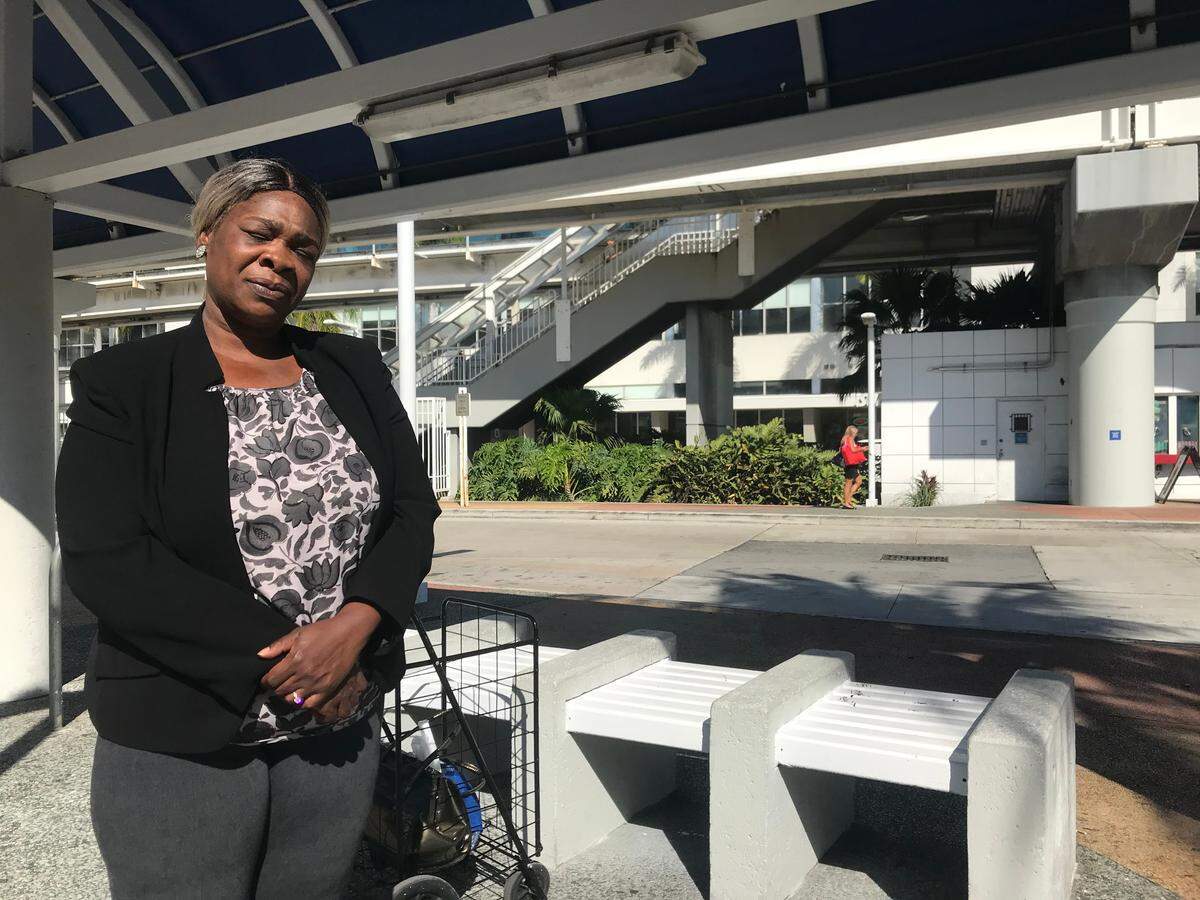
The process could mean a welcome change for Audrey Andrews, who was resting on a bench at the Omni depot Wednesday morning after a shopping trip to Miami Beach by bus. The Miami resident planned to take the Metromover to Government Station, for a Metrorail ride north, where she’d catch another bus to her church.
Andrews said she would be happy for a train connection to speed things along between the Beach and the mainland, but also described herself as grateful for the transit system ferrying her along that day.
“It sounds like it’s long,” she said of her trip. “But it’s a blessing.”
This post was updated to include what county transit consultant Parsons says are more relevant estimated ridership totals for the proposed transit options between Miami and Miami Beach.
This story was originally published January 30, 2020 at 6:00 AM.