
Expanding development near Biscayne Bay blocks options for Everglades, Fla. agency says
Building an industrial park outside Miami-Dade’s Urban Development Boundary in South Dade could hinder Florida’s main Everglades restoration project since the proposed construction site is part of several potential plans for the restoration effort, the state’s environmental agency said Friday.
Federal planners “recently identified several ... alternative plans featuring project elements on this parcel designed to increase the quantity, quality and distribution of freshwater flows to Southern Biscayne Bay,” Lindsey Weaver, an administrator with Florida’s Department of Environmental Protection, wrote in the Oct. 29 letter to Miami-Dade’s planning office.
“The Department remains concerned that advancing the proposed UDB expansion before the [Everglades program’s] tentatively selected plan is established could jeopardize significant restoration benefits and hinder a comprehensive accounting of those benefits during alternative plan evaluation,” Weaver wrote. The letter stated that “without proper considerations and engineering,” the UDB expansion “may produce results that conflict with this state and federal effort.”
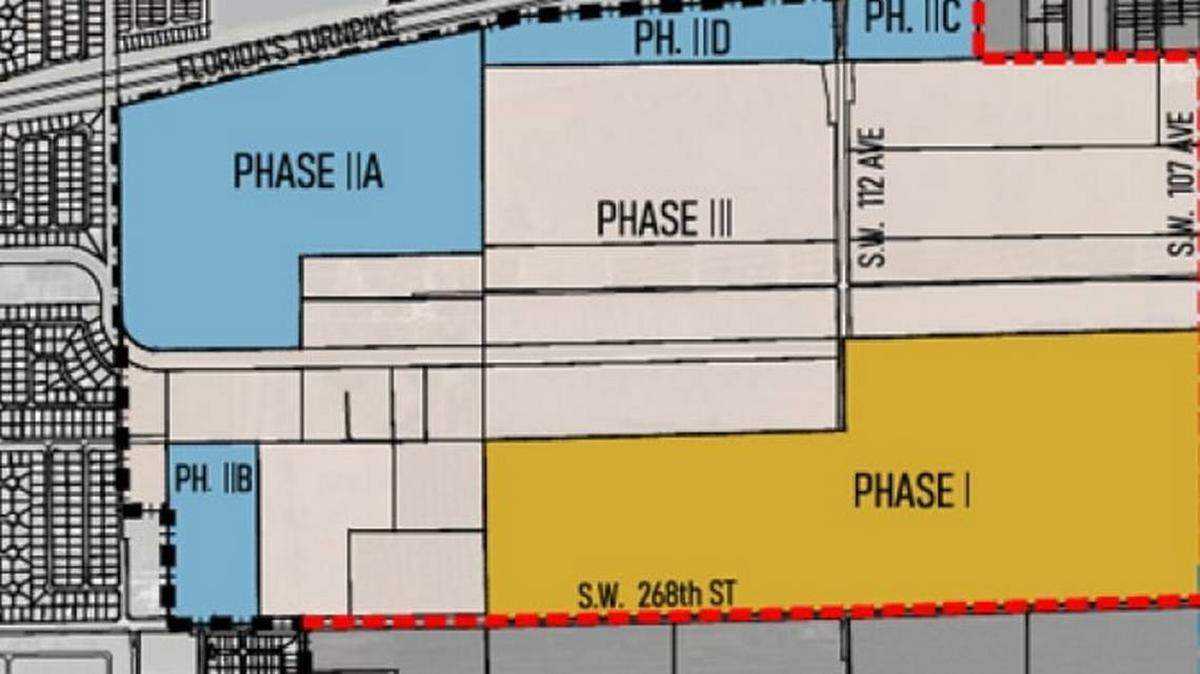
The letter is part of a review by state agencies of the proposed South Dade Logistics and Technology District industrial complex outside Homestead. The project would convert 800 acres of farmland into a 9-million-square-foot industrial park with a hotel, warehouses and commercial space for call centers and other operations.
Developing the farmland off the Florida Turnpike requires Miami-Dade commissioners to first move the county’s Urban Development Boundary, which marks the limits of where builders can construct new residential and commercial projects.
The “UDB” is designed to shield farmland, wetlands and the Everglades from development, and focus population growth closer to existing services until the county exhausts buildable land inside the boundary.
Commissioners voted to advance the project’s application in a 9 to 3 vote in September, with supporters citing the thousands of people developers said could be employed on the site in an area where many residents must commute north through traffic. A final vote is expected later this year or in 2022.
County planners recommended against extending the UDB for the project, citing the farmland’s location about three miles from the bay and in an area designated as a high risk for coastal flooding.
Environmental groups objected as well, and called the project problematic for the landmark federal and state Everglades restoration project launched in 2000. Known as “CERP,” the Comprehensive Everglades Restoration Plan seeks to restore natural waterflows in and out of the Everglades, including to Biscayne Bay.
A subset of CERP related to the bay has been named the Biscayne Bay and Southeastern Everglades Restoration project, nicknamed BBSEER.
Working under the U.S. Army Corps of Engineers, the federal agency overseeing Everglades restoration, the BBSEER effort recently published 10 potential plans for how to restore wetlands near the bay and manage water flow from the Everglades.
Some of those plans include the South Dade project site, sparking the warning from Environmental Protection, which reports to Gov. Ron DeSantis.
In a statement, developer Aligned Real Estate Holdings called the state agency “misinformed” in its letter to Miami-Dade.
“We appreciate the comments from Florida DEP, but we believe they are misinformed,” the statement read.
The developer pointed out the South Dade site has for years been designated a potential development zone by Miami-Dade should the UDB expand, with no objections that the area be targeted for wetlands restoration instead.
“The first time the South Dade Logistics and Technology District project has ever been included in any potential CERP BBSEER alternative was in the last few months,” the statement read. “The Urban Expansion Area was studied in depth in 2018 and not designated in any way as future wetlands.”
The statement reflects the tension between developers touting the project as an economic boon and environmental groups who see the assemblage of farmland as prime territory for filtering water heading into the bay.
In another letter to Miami-Dade on the project, the South Florida Water Management District also cited the land’s potential role in the next phase of Everglades restoration.
“This project sits in a unique landscape position that would readily allow for storing, retaining or detaining flows” from a nearby canal basin linking the Everglades with the bay, Lawrence Glenn, director of the district’s Water Resources Division, wrote Miami-Dade on Oct. 22. “The ability to store or detain wet season canal flows for delivery during drier times is key component to meeting BBSEER objectives.”
While commissioners are set to take a final vote on the South Dade project within the next several months, a draft report on the next steps for BBSEER isn’t due until 2023, according to a schedule posted by the U.S. Army Corps of Engineers. The process of adopting a final federal plan would take longer, with a report to Congress scheduled for 2025.
Laura Reynolds, a consultant who’s part of a BBSEER steering group and a leading opponent of the South Dade project, said Miami-Dade shouldn’t be hasty in closing off options for Everglades restoration by green lighting another commercial complex.
“We can put the industrial facility elsewhere,” she said. “We can’t relocate restoration ...”
This story was originally published October 30, 2021 at 6:00 AM.