The 44 Percent: Redistricting, vaccinations & Dave Chappelle

One of the things that makes me proudest to be puertorriqueña, living away from the place I will always call home, is reggaetón. Its irreverence brings back memories and an unapologetic longing of home. But with its rise to the mainstream, many of its roots have faded or been forgotten.
I’m admittedly not a big fan of celebrating Hispanic Heritage Month. I am hoping to offer another perspective: far from a month that helps celebrate a collective experience — our triumphs, our gains, our culture — this month that starts halfway through September feels to some of us as if somebody is squeezing us all into a room that’s too crammed to fit all of us in it. And even if you’re one of the few who make it inside, you realize all the seats are taken.

So I decided to reach out to an expert, Katelina Eccleston, a reggaetón historian and artist who you probably know as Reggaeton Con La Gata on Twitter (and who collaborated on the groundbreaking new podcast, LOUD: A History of Reggaetón).
I asked Eccleston, who, like me, is 27, how she feels about Hispanic Heritage Month, through the lens of reggaetón. We have vastly different experiences, but our stories are charted across some of the ways this genre has defined our generation. Hers is through both of her grandfathers who migrated like thousands of others from Jamaica to Panama to work on the canal’s construction. It was this community of immigrants who popularized the reggae and dancehall beats that built the foundation for what was later known as reggaetón.
“I am Latina. I am by definition Hispanic, Spanish is my first language. But sadly, I wish it meant more to me,” said Eccleston, who is the child of Panamanian and Jamaican parents and grew up in Boston. “My ‘Latinidad’ has never been standard to what others are at the national level, ever.”
Eccleston explained that reggaetón, and her own roots, have always been entrelazados. Her first memory of hearing the iconic “Pa Que Retozen,” a song by Tego Calderón, the Puerto Rican rap & reggaetón legend, was during a game of musical chairs as a kid. And despite the fact that reggaeton is a genre that to this day continues to deny its own roots in Blackness, Eccleston was never one to think she had pelo malo — bad hair — the way many Black and Latina girls are taught to believe. Her identity has always revolved around Blackness, even when Latinidad has not centered her.
As Hispanic Heritage Month comes to a close, Eccleston does believe there is some hope ahead to create space for artists like Eccleston in a genre that has largely excluded Black reggaetoneros and reggaetoneras. So what would it take? “Providing visibility, providing initiatives. Para aplicar and to have an actual chance...There are solutions here. That people are not complaining just to complain. That there are solutions, there is a bottom line, there is a way through it that is lucrative.”

INSIDE THE 305
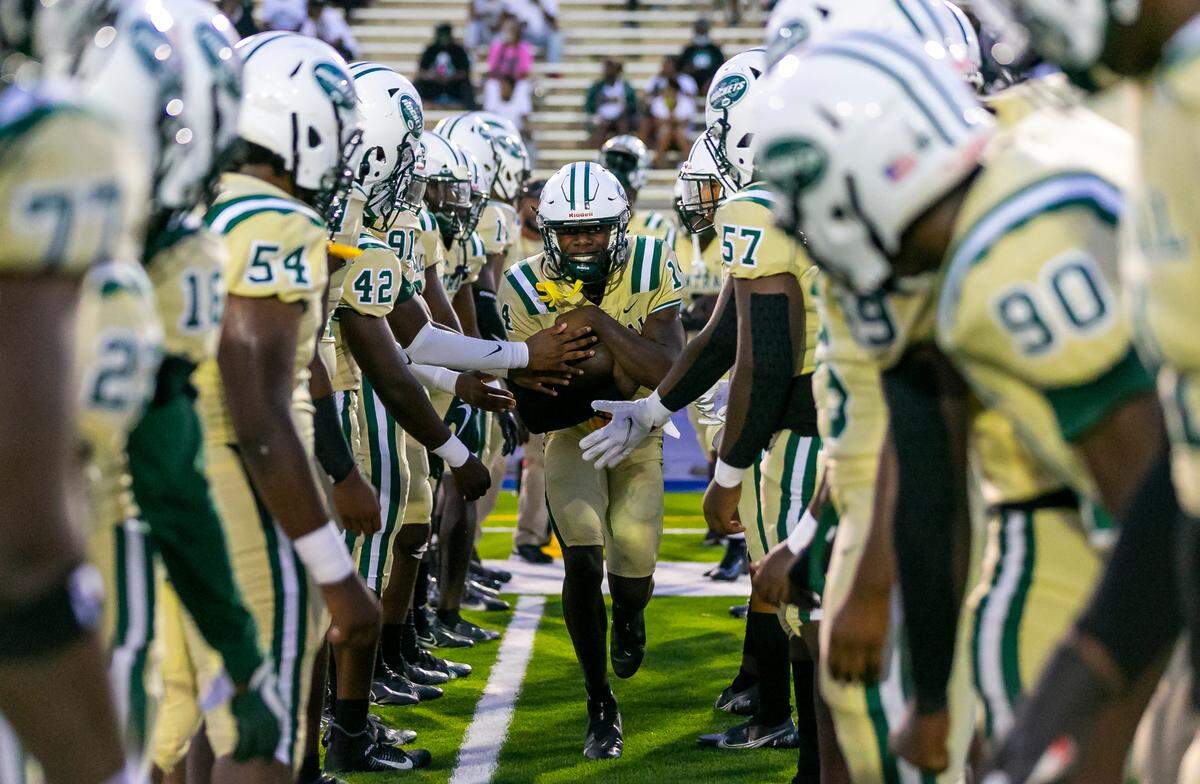
‘There’s nothing like this’: Why Miami Central-Northwestern is Florida’s best rivalry:
I had the pleasure of experiencing my first Miami Central-Northwestern showdown and its legend did not disappoint. From the atmosphere to the hits to the last-second finish, it was arguably the best high school game I’ve ever attended — including the matchups that I myself have played in. No, seriously — whatever Delaware passes for football would not fly down here. It’s just different.
For those that missed Friday night’s showdown, you can thank the Miami Herald’s David Wilson for capturing why this game matters so much:
It’s also about what they share — a home, a history and, above all else, a tradition.
In the last 10 years, the Rockets and Bulls have combined for 10 trips to the championship and nine titles. At least one has been to a state championship in every year but 2016. Central and Northwestern played in three Florida High School Athletic Association playoff games in the last decade and each time the winner went on to win the state title.
The Rockets and Bulls haven’t played in the playoffs since 2018, when a massive round of realignment knocked them into different classifications. A year later, Northwestern won Class 5A and Central won Class 6A. There was no question where the best football was being played, and the answer was more specific than just Miami.
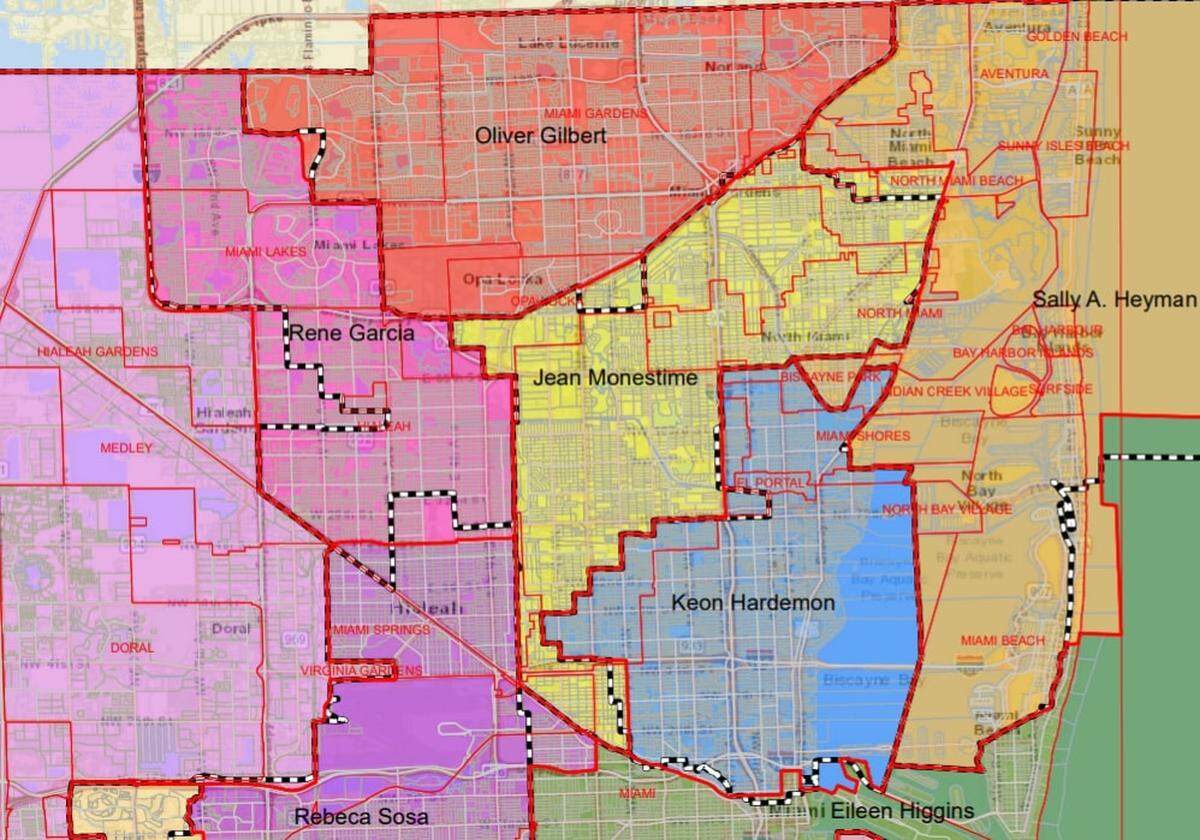
Miami-Dade has a new redistricting map. Let the fights begin over voting boundaries:
The end of the 2020 Census means redistricting. Here’s what you need to know, according to the Miami Herald’s Doug Hanks:
ARCBridge’s Priti Mathur told board members the proposed new districts even out the population figures within a 10% range. For example Miami-Dade’s most populated district (District 8 and home to about 217,160 people) should be within 10% of its least populated district (District 1 and home to 197,288 people in its suggested boundaries).
South Miami currently falls fully in [Commissioner Raquel] Regalado’s district, but the proposed map has part of the city moving into a new southern leg of District 6, represented by Rebeca Sosa.
In Hialeah, portions of that city, the second-largest in Miami-Dade, would shift from District 12, represented by Commission Chairman Jose “Pepe” Diaz, to Commissioner René Garcia’s District 13.
Portions of Opa-locka would shift from [Commissioner Oliver] Gilbert’s district to District 2, represented by Jean Monestime.
OUTSIDE THE 305

America’s cruel reality does not live up to its ideals or, rather, its myths | Opinion
Amid the stream of critiques levied following the image of a border patrol agent on horseback, it was easy to miss Leonard Pitts’ brilliant opinion piece. One passage in particular offers a brief yet encompassing summary of US foreign policy towards Haiti:
The cognitive disconnect between trumpeting and living is something else that is visible in those pictures. “This is why your country is shit, because you use your women for this,” one agent announced to a group of women and children in a video uploaded by Al Jazeera. As if enslavement by colonizers, and a 19-year U.S. occupation that brought puppet government, forced labor, U.S. control of Haitian finances, brutal violence and racist paternalism — “Think of it!” said William Jennings Bryan, secretary of state under Woodrow Wilson, “Niggers speaking French.” — did not play some role in Haiti’s present challenges.
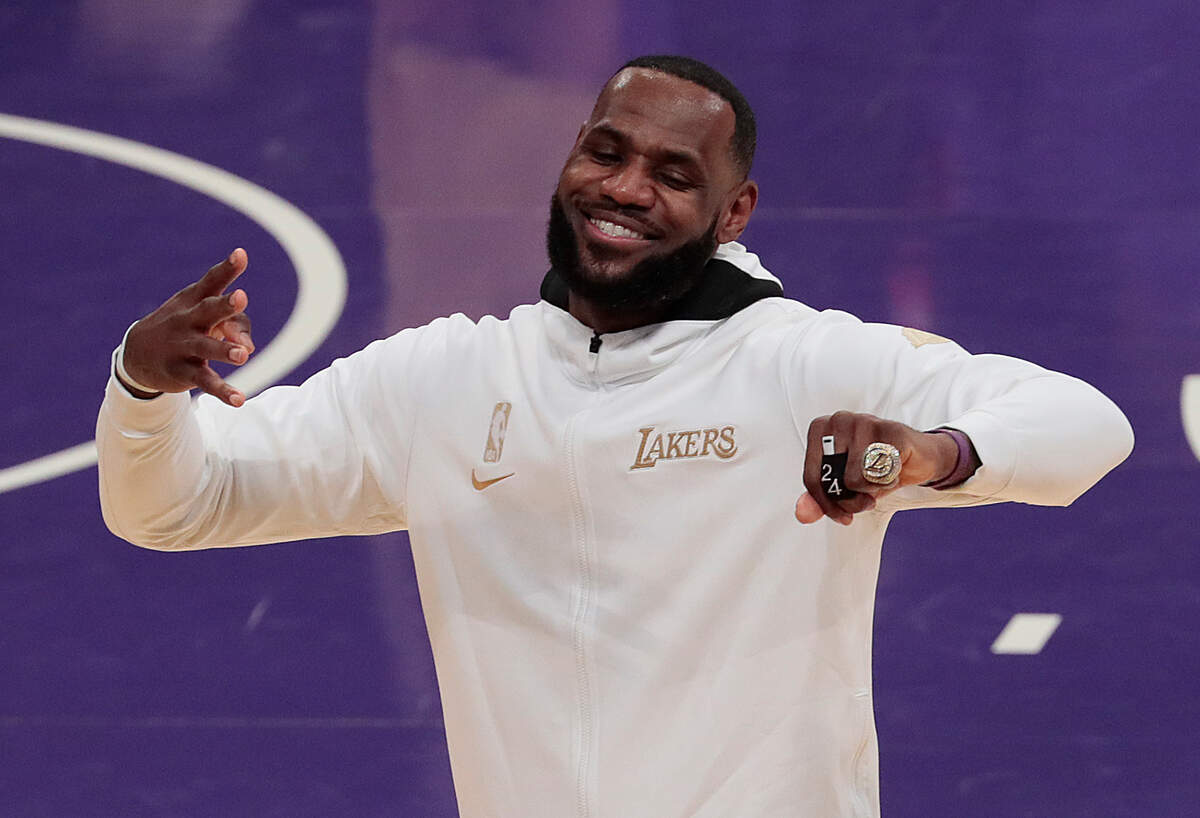
Here’s why LeBron James’ vaccination stance is an issue:
The Undefeated’s David J. Dennis has never been one to hold his tongue. In his latest piece, he holds LeBron James and Draymond Green accountable for referring to vaccination as a “personal choice.” Dennis does a phenomenal job of breaking down why athletes like LeBron need to champion vaccinations, especially in the Black community, like they do racial equality:
When James spoke about his decision to be silent about encouraging vaccinations, he said, “We’re not talking about something that’s, you know, political or racism or police brutality. So I don’t feel like, for me personally, I should get involved in what other people should do with their bodies and their livelihoods.”
The problem with this logic is that it misses the fact that fighting COVID-19 is an act of social justice work and a fight for equality tantamount to fighting police brutality or any other act of anti-Black violence. What James fails to realize here is that the way COVID-19 is impacting the Black community is an offshoot of the same racism that renders Black folks victims of extrajudicial killings.
HIGH CULTURE
Dave Chappelle drops final Netflix special:
Let the “canceling” begin.
At this point in his career, Chappelle pushes buttons just to push them. It can be just as cringeworthy as it is brilliant — a difference which, as New York Magazine’s Craig Jenkins explains, ultimately hinges upon whether you think Chappelle (the same man who walked away from $50 million due to his comedy not being perceived the way in which he intended) is a bad guy:
How much you enjoy “The Closer” will depend on whether you’re able or willing to believe the comic and the human are separate entities and to buy that the human loves us all, and the comic is only performing spitefulness for his audience.
There’s more to Chappelle’s special than that. He spends much of his time trying to convince the audience that his past jokes aren’t indicative of some internal cruelty. Where you land on the “Is Chappelle a bad guy?” spectrum might ultimately bias your perception of his final effort, but comedy genius only comes around every once in a while. Are there jokes that were better left in the notes? Of course. It still, however, is worth the watch.
Where does “The 44 Percent” name come from? Click here to find out how Miami history influenced the newsletter’s title.