The 44 Percent: Haiti earthquake, Black Business Month & Aaliyah
I awoke to news of the Haiti earthquake while vacationing in Jamaica.
Although prepping for a wedding later that day, my mind stayed on the island just hundreds of miles away from my hotel in Ocho Rios. With every notification, the death toll swelled. The images of buildings reduced to piles of rubble and beautiful Black faces filled with such agony hit me like a Tyson punch to the jaw. That my friends in Jamaica said they too felt the tremors earlier that morning made the situation all the more real.
It wasn’t until I touched back down in Miami, however, that the events of the last two months — from the assassination of President Jovenel Moïse to the devastating earthquake and tropical depression that hit just days after the tremor — really resonated. Normally, in similar times of crisis, I’d just send money. But something told me to do a bit more, something that gets supplies and funds directly into the hands of Haitians. I poked around, found a reputable organization that needs manpower and will be there volunteering over the next few months.
I’m not saying this for praise or a pat on the back. All that stuff doesn’t matter. What does matter is that much of Haiti’s current economic predicament (a recent New York Times piece reported the nation “is considered the poorest country in the Western Hemisphere”) stems from France and U.S. exploitation. As an American, that doesn’t sit well with me. As an African American, that especially doesn’t sit right with me.
So this is my call to you, dear reader, to do a little bit more this time. As we’ve already seen, blindly giving money often doesn’t pan out the way it should. The people of Haiti need our help now more than ever. And we owe it to them.
INSIDE THE 305
Black Entrepreneurs in South Florida reflect on their journey through COVID and BLM:
Entrepreneurship has never been easy — especially for the Black community.
The past 20 months have been like a roller coaster for Black entrepreneurs due to COVID-19, the ensuing economic shutdown and the global uprising for Black lives. For Black Business Month, I sat down with four Black executives who discussed their experiences. Rather than spoil the story, I just wanted to share my favorite quote that explains why many Black Americans start their own business.
“The wealth that we need to acquire to get us out of poverty isn’t necessarily accessible through traditional forms of employment,” said Nzingah Oniwosan, who started 365Zing, a self-care app for Black women, in late 2020. “Through entrepreneurship, we are able to not just free ourselves as individuals but we can really impact our family by employing them and breaking cycles of poverty.”
This bookstore in Little Haiti has been a cultural and literary landmark for decades:
Libreri Mapou is an essential Miami institution. Opened in 1992 by Jean-Marie “Jan Mapou” Denis, the bookstore sits right in the heart of Little Haiti next to the Caribbean Marketplace. Miami Herald reporter Joey Flechas talked with Mapou about weathering the twin economic storms of COVID-19 and gentrification as part of our spotlight on Black businesses.
Sales dipped after the stay-at-home orders and commercial closures halted the economy, cutting off the reliable stream of tourists and local regulars who visited the shop. Mapou switched to mail-order sales, but few orders came in. The virus claimed some of his friends and clients.
“Here in the area of Little Haiti, I know of 10 of my friends, customers who died because of COVID,” he said in an interview last week.
Since May, Libreri Mapou has been open to limited customers, who must wear masks. At 79, Mapou is being careful, but he’s also taken advantage of the extra time at home. He’s compiled anthologies of his plays and columns from Haiti en Marche, a newspaper for the diaspora. He’s also worked on his autobiography.
He sees the struggle of local businesses around him, especially as redevelopment pressure continues to squeeze Little Haiti’s residential and commercial corridors. Potential buyers frequently knock on his door, leave him voicemails, send him texts or email him.
“I don’t even know how they got my email,” he said.
Related Stories:
- Black entrepreneurs in need of help can look to these loans, grants and other services
The number of black-owned businesses rose sharply during Covid
Why did these Black entrepreneurs start their businesses? — Video
OUTSIDE THE 305
‘I’m sleeping in the streets.’ Life in a Haiti fishing village battered by the earthquake:
The Herald’s Jacqueline Charles and Jose Iglesias have been in Haiti capturing the scenes following a tremendous temblor that killed more than 2,200 people and destroyed upwards of 130,000 homes. Charles’ latest story takes us inside Boucan Noël, where the earthquake only deepened the village’s ongoing crisis.
There is no hospital, no dispensary, no drinking water, no chlorine purifier. In this far remote corner of southern Haiti, inside a green hamlet of overhanging palm trees, rocky roads and white sand, a poor fishing village stands alone.
The structures — homes, churches, schools — that weren’t flattened by the deadly 7.2 magnitude earthquake that shook the western reaches of southern Haiti are barely standing. Cracks run through the concrete of once upright buildings, winding along their sides, like badly fitting pieces of a jigsaw puzzle.
The people of Boucan Noël were already struggling to recover from 2016’s Hurricane Matthew, which battered their oceanfront hamlet with ferocious winds and waves before the ground buckled on Aug. 14.
Census shows America has grown more diverse, more multiracial:
New 2020 Census data shows an increased percentage of people of color (+9%) living in the U.S., while the non-Hispanic white population experienced the greatest fall among any race or ethnicity (-6%).
Although the Black population dropped roughly 0.2%, the number of adults who identified as Asian, Hispanic or multiracial is making the American pot appear a bit more melted.
HIGH CULTURE
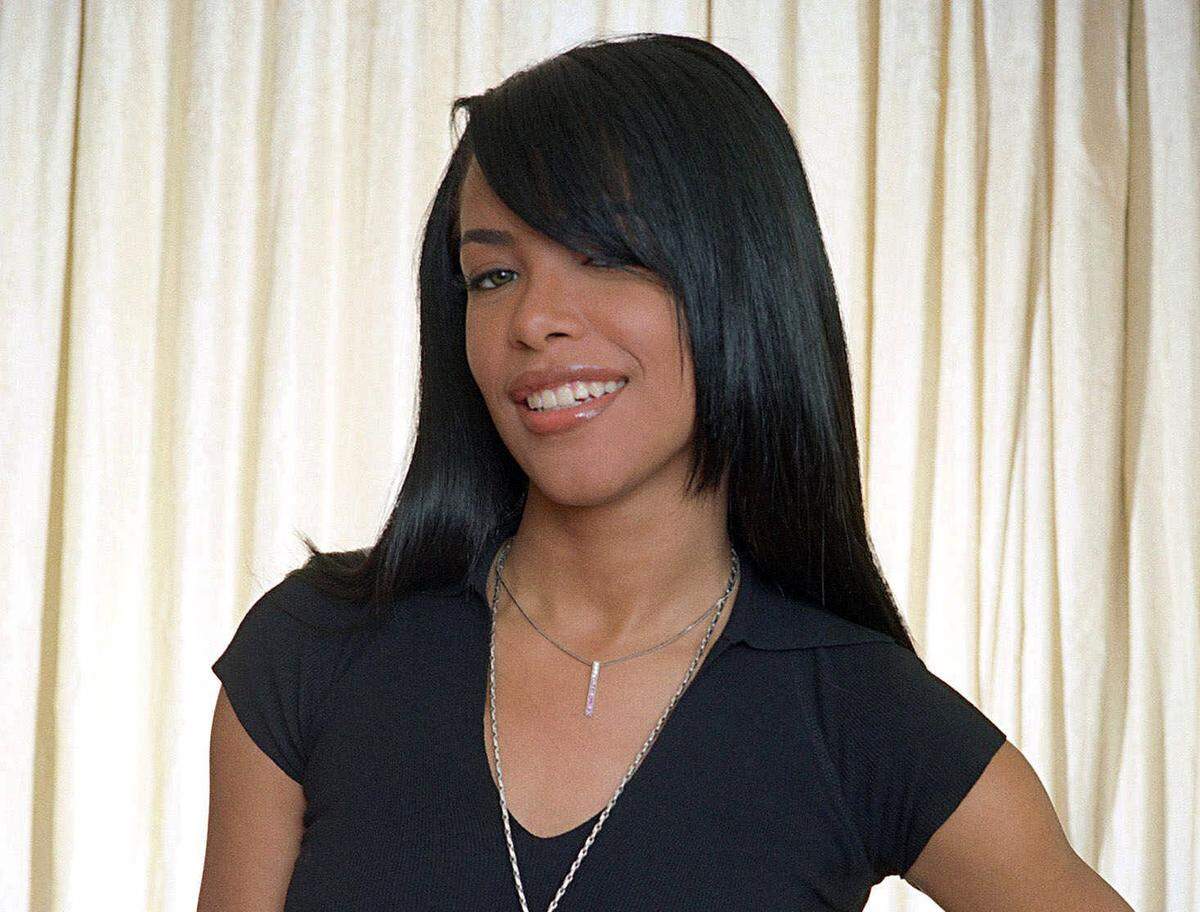
Aaliyah’s long overdue debut on streaming services:
In researching for a piece to accompany the release of Aaliyah’s “One in a Million” on streaming services, I stumbled across an article from NPR’s Aisha Harris that explores the link between the singer’s uniqueness and her complicated legacy. Harris specifically notes that Aaliyah’s “mature” label likely played a role in how the industry turned a blind eye to some of the alarming issues in her life (i.e. R. Kelly’s illegal marriage to the then-15-year-old).
The tragedy of Aaliyah is there are so many “What ifs?” that will forever remain unresolved. The upside is that, at least professionally, she managed to persevere in spite of the many people and institutions that failed her personally. Her final albums deserve to be heard in this way, and her legacy deserves to be remembered this way, too.
With more Aaliyah set to hit streaming services in the coming months, more of the younger generation will begin to dive into the life of the tragically deceased artist. And, as Harris said, resiliency must be featured in the story of her life just as much as the failures of those who should’ve protected her.
Where does “The 44 Percent” name come from? Click here to find out how Miami history influenced the newsletter’s title.
This story was originally published August 26, 2021 at 3:15 PM.