The 44 Percent: South Beach madness, Boston’s first Black mayor and Hampton House
When trying to figure out how to start this week’s newsletter, I couldn’t help but think of the the lives lost in the most recent mass shootings in Boulder, Colo. and Atlanta. My heart goes out to the grieving families.
This country’s fascination with guns has been difficult for me to reconcile since the Sandy Hook massacre, one of the first major mass shootings to etch itself into my psyche. But here we are, almost a decade later, with little change. And if the Atlanta shootings showed us anything, it’s that America still has a long way to go in terms of race relations. Whatever “moral awakening” occurred among Americans in the aftermath of the Jan. 6 insurrection wasn’t as universal as we’d like to think. There’s a lot of work to do.
And, just to be clear, it’s not just on Black Americans to lead the way. Defeating white supremacy requires buy-in from people of all colors. To quote Black Panther Assata Shakur, “It is our duty to fight for our freedom. It is our duty to win. We must love each other and support each other. We have nothing to lose but our chains.”
With that being said, let’s start the show:
INSIDE THE 305
Six Black women who helped shape Miami:
I couldn’t let Women’s History Month in without highlighting Marleine Bastien, Dorothy Fields, Thelma Gibson, Bea Hines and Enid Pinkney. Back in February, I wrote about the role these six Black women played in shaping Miami history. From advocating for Haitian refugees to preserving Black Miami history, each contributed in making Miami a more inclusive city. It’s safe to say Miami wouldn’t be the same without them.
Related coverage:
▪ 28 South Floridians explain the meaning of their Blackness
▪ Cemetery off Biscayne contains numerous Black pioneers
▪ Miami-area doctor wants to change the world with COVID shots in the Black community
Black Miamians plead for better treatment of Black spring breakers:
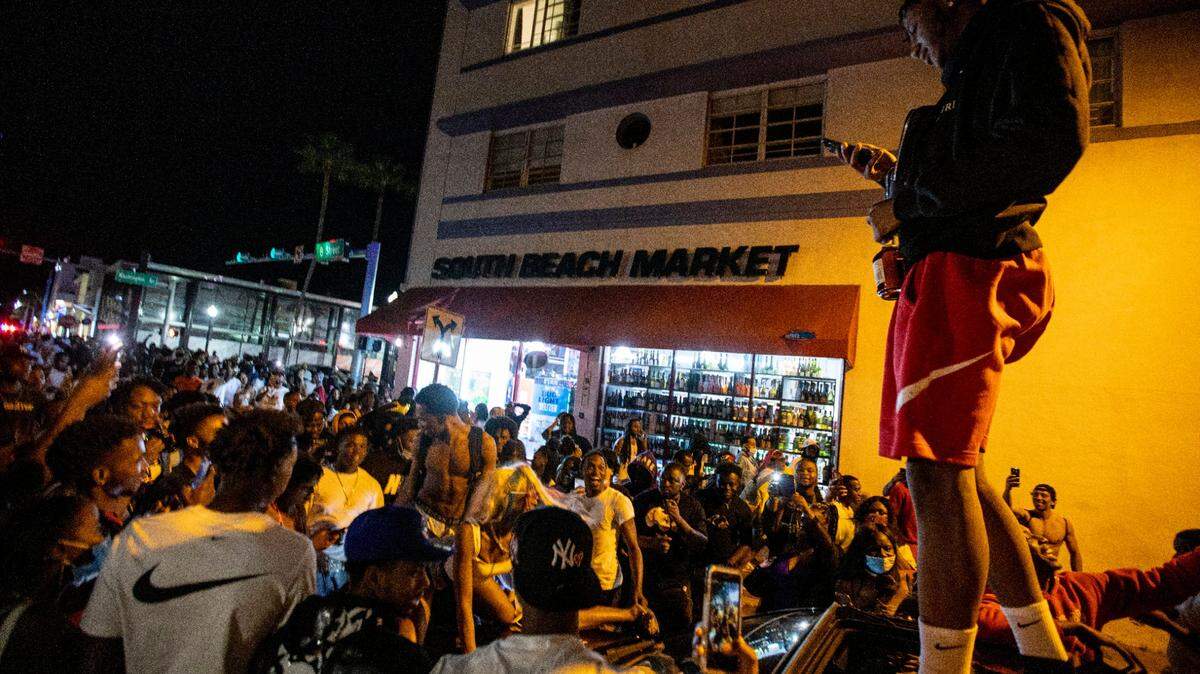
Just in case you haven’t noticed, South Beach has been WILD. Between the impromptu street parties and droves of maskless tourists, you would think that the pandemic doesn’t exist.
I’ve always maintained that South Beach’s demographics skew more Black at certain times and the past few weeks are no different. That, coupled with Miami Beach’s history of anti-Blackness, prompted community advocates to ask for better treatment of Black tourists. Stephen Hunter Johnson, chairman of Miami-Dade’s Black Affairs Advisory Committee, has been one of the most prominent voices on the issue, telling the Miami Herald’s Martin Vassolo that the police’s actions — specifically, using a military-style vehicle and firing pepper balls — appeared to be “performative.”
“The way that they have acted and the way that they have approached this entire situation, it is a product of racism,” he said. “None of this is new. ... The thought and the idea is, ‘Let’s get more aggressive with our policing. Let’s scare them.’”
In a video statement, Miami Beach Mayor Dan Gelber maintained that the huge crowds prompted this response.
“While most of our guests come here for all the reasons we hope they do and follow rules,” Gelber said Monday, “there are clearly too many coming here with other ideas. And some are bringing guns.”
OUTSIDE THE 305
Changing the conversation around Black vaccination rates:
The Black community’s low rates of vaccination remains a pressing issue. Many reporters, myself included, initially pointed to the history of medical malpractice as the main reasoning. While this form of vaccine hesitancy continues to exist, FiveThirtyEight’s Alex Samuels suggests shifting the focus to the lack of availability within Black and brown communities. Samuels cited several sources including a NPR analysis that, in early February, discovered vaccination sites were only sporadically found in predominantly Black and Hispanic communities in Louisiana, Texas and Alabama while white neighborhoods seldom lacked one.
Sean Dickson, the director of health policy at the West Health Policy Center, told FiveThirtyEight that although negative experiences with medical professionals do play a role, access continues to be a huge issue.
“We don’t want to rely on the narrative that Black people aren’t willing to get the vaccine... because it can become self-fulfilling if we presume Black Americans will be vaccinated at lower rates than white Americans. [I]f we presume that’s the case, then we don’t take it upon ourselves to see it as a problem.”
Click here to read about efforts in Miami-Dade to vaccinate marginalized communities.
A special shoutout to Kim Janey, a 55-year-old Black woman who became Boston’s first Black mayor on Monday after her predecessor, Martin J. Walsh, was confirmed as U.S. labor secretary. Ellen Barry of The New York Times wrote an excellent piece about how Janey could bring about equity to a Black community that has been consistently overlooked.
Although Janey, whose role as acting mayor could end as soon as the November election, hasn’t announced plans to run for reelection, her new position is a bright spot for a city with a storied racist history. And the mayor herself knows said history pretty well: angry white mobs telling her to go back to Africa greeted an 11-year-old Janey who was bused across town to integrate a school in 1976. Recalling those experience, Janey described herself as speechless at her swearing in.
“At 11 years old, I saw firsthand some of the darkest days of our city,” she said. “And here I am.”
High Culture
Hampton House set to kick off new concert series:
The success of Golden Globe-nominated film “One Night in Miami” was just the type press that the Hampton House needed. A former Green Book motel and entertainment hotspot, the Hampton House will be hosting a six-part concert series entitled “From Bebop to Hip-Hop” that begins Saturday, March 27 with R&B singer Eric Benét. Word on the street is that the upcoming acts will only get better and better so this is something that you don’t want to miss. Click here to purchase tickets.
Get the real story behind some of your favorite hip-hop artists:
In need of a new docuseries? Look no further than “Hip Hop Uncovered,” a new FX show that charts the genre’s history through the eyes of those who helped groom some of our favorite artists. The series features interviews from a wide range of people including Dr. Dre, Snoop Dogg and Mike Tyson. Hip-hop heads, both old and young, would love this so make sure to check it out.
Where does the name “The 44 Percent” come from? Click here to find out how Miami history influenced the newsletter’s title.
This story was originally published March 25, 2021 at 3:15 PM.