‘Mark of the devil’: Some Hispanic pastors contribute to vaccine skepticism in Miami
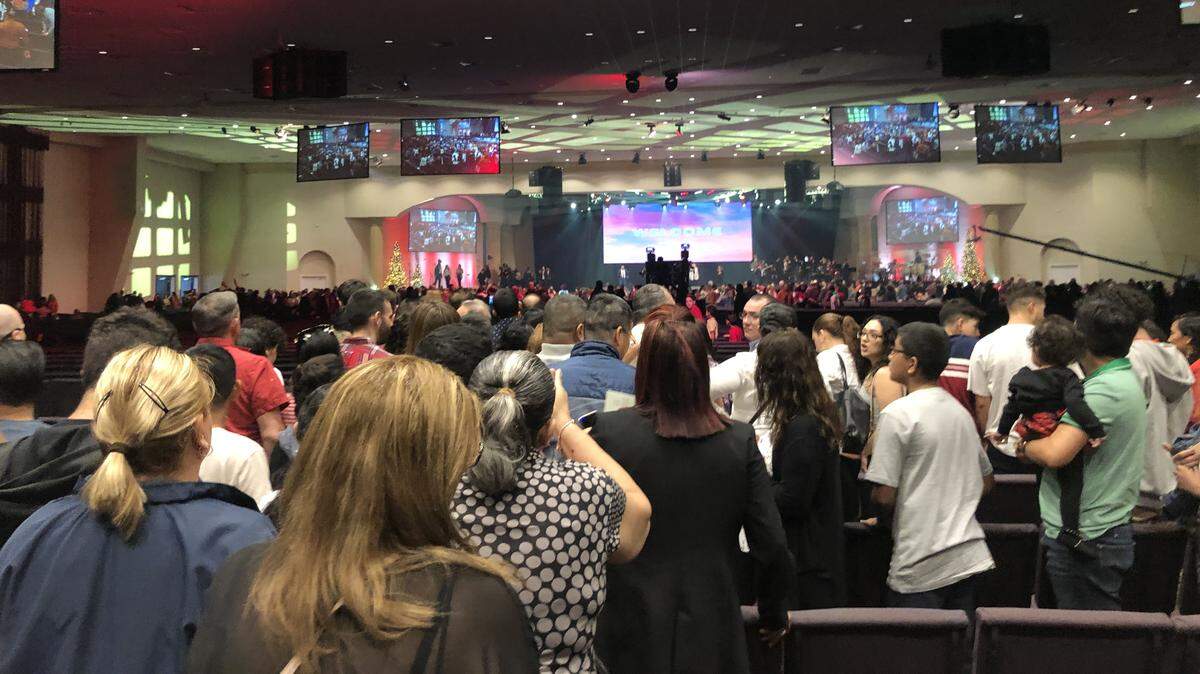
A pastor at a Hispanic church in Homestead raised concerns about the implications of getting vaccinated against COVID-19, warning his congregation about the “mark of the beast” and the specter of a “satanic, totalitarian” government coming to power. At times, images of horned beasts and microchips being inserted inside peoples’ bodies with syringes were projected on a big screen behind him.
Albert Ixchu, a founding pastor of the Iglesia Fraternidad de Fe — the Brotherhood of Faith Church — made his comments during a Sunday sermon delivered on Jan. 17, a streamed video of the Spanish-language service shows.
Ixchu is just one of several pastors at evangelical churches across Miami-Dade County sharing their skepticism about the vaccine and continuing to minimize the pandemic’s risk, even as the winter months have brought spikes in the number of cases in South Florida. And some advocates worry that the pastors’ rhetoric — part of a broader trend of misinformation around the vaccine in Latin communities — could translate into lower vaccination rates.
A former Fraternidad de Fe parishioner, who asked to remain anonymous because he has relatives heavily involved in the church, told the Herald that the pastor’s assertions related to the vaccine are “going to cause some dangerous situations.”
“My family has already said they will refuse the vaccine. Their friends, people of the church are saying the same already as well,” he said. “I haven’t seen my family in person since this COVID thing started, and it’s looking like I won’t be seeing them for quite a while after learning of this.”
The remarks from this, and a few other, South Florida congregations come even as efforts to mobilize against vaccine misinformation include influential players within the Hispanic evangelical community nationwide.
The Rev. Dr. Gabriel Salguero, an Orlando-based pastor who heads the National Latino Evangelical Coalition (NaLEC), a network of thousands of faith institutions that includes several South Florida churches, says his organization has teamed up with the Ad Council, a nonprofit that produces public service announcements, to create an educational campaign targeting Hispanic evangelicals. The goal is to explain why it’s important to be vaccinated, and dispel misconceptions about the vaccine.
“I think that people have the right to ask questions. We need to facilitate people’s questions being answered. If we are able to use our pulpits and our platforms for trustworthy information in collaboration with the health experts, I think we can help our community,” Salguero said.
“We are pastors, we cannot and should not engage in conspiracy theories,” he said. “We must [make] an intentional, transparent effort based on two things: the truth and the science — and then let people make up their minds.”
In South Florida, however, at least one advocate for immigrants says that the concerns about the COVID-19 vaccine that her organization has heard from the community have been “mostly religion-related.”
“They are saying it’s la marca del diablo, the mark of the devil,” said Lis-Marie Alvarado, program director of American Friends Service Committee, a Quaker-affiliated immigrant nonprofit that has helped bring free COVID-19 testing clinics to the county’s rural areas. “[That] if you get it, you will be controlled, and you are pretty much giving your life to Satan. How can you fight that?” Alvarado said.
“For most people, their pastor’s words are God’s words.… They have so much influence,” she said.
Other examples of the anti-vaccination rhetoric heard in Miami-Dade churches in recent months:
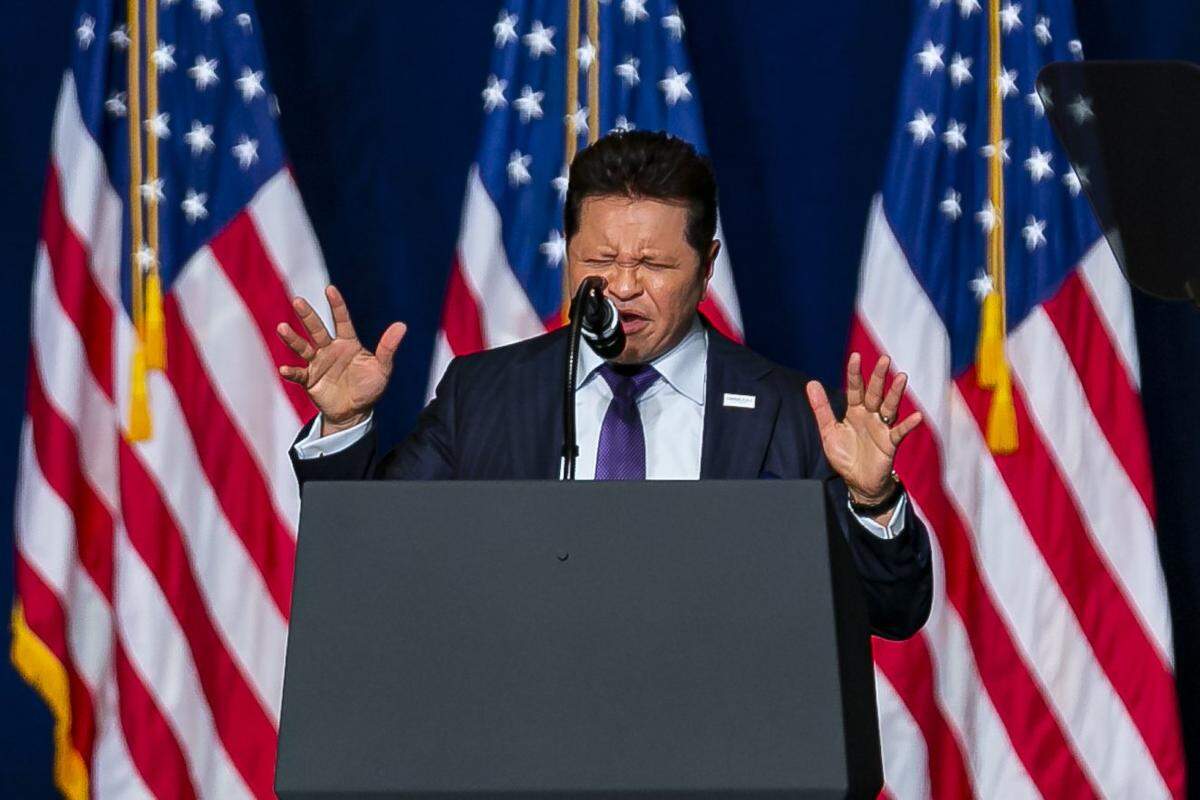
▪ In December, megachurch pastor Guillermo Maldonado made international headlines when he told his congregation at Miami’s King Jesus International Ministry that COVID-19 vaccines would be used to track people and “alter your DNA” — a claim that has been proven false. “Do not [take] the vaccine. Believe in the blood of Jesus. Believe in divine immunity,” added Maldonado, who hosted President Donald Trump in the January 2020 launch of the “Evangelicals for Trump” coalition. Fellow megachurch leader Ruddy Gracia, from Southwest Ranches’ Segadores de Vida ministry, has also made similar comments.
▪ Also in December, Pastor Noe Miniel, from the smaller Iglesia de Dios Pentecostal at 1751 NW 115th St., struck a similar tone in an address to his parishioners. “They say the vaccine is 95% effective. Well, I don’t want to be among those 5%,” he said. “You can get side effects. Some people will die.... This year of the coronavirus has shown that people are capable of sacrificing their freedom for the global system.”
▪ At the Iglesia Cristiana El Deseado de las Naciones, in Homestead, pastor Anibal Flecha used part of his Jan. 24 sermon to criticize media outlets for stoking fears about the COVID-19 pandemic. “Fear is the tool Satan is using to kill people,” he said. “If you get infected, don’t be afraid. God won’t abandon you for a single moment.”
VACCINE MISTRUST AMONG HISPANICS
Evidence of vaccine skepticism among Hispanics comes on the heels of a nearly yearlong pandemic that has had an outsized impact on Latin communities, with Hispanics being over four times more likely to be hospitalized for COVID and nearly three times more likely to die than their white counterparts, according to CDC data.
And every day, immigrant workers continue to brave exposure to the virus by disproportionately powering industries deemed essential, from agriculture to healthcare.
In South Dade, many farmworkers who are reluctant to receive the vaccine cite their religious faith as a reason, said Claudia Gonzalez, an organizer in Homestead for the Farmworker Association of Florida.
Gonzalez, who herself is a former farmworker, has spent the beginning of the year surveying Miami-Dade farmworkers in one-on-one conversations to gauge the community’s interest in the COVID-19 vaccine.
So far, she said, she has spoken with around 200 people. About 35% indicated they don’t plan on taking the vaccine, and another 35% have said they weren’t sure. Just 30% indicated they would be interested in getting vaccinated.
Her findings broadly jibe with studies at the national level. For instance, a recent poll by the Kaiser Family Foundation found that 26% of Hispanics said they would get vaccinated as soon as possible, compared to 40% of white respondents. 43% of Hispanics said they would “wait and see” and 18% indicated they would “definitely not” get the shot — a higher percentage than that associated for both white and Black respondents.
“My big worry when it comes to vaccination is that the community is still very reticent about it,” Gonzalez said. “There’s been many people who have said that they leave it to their faith, that they don’t believe in the vaccine. They say they don’t want to get vaccinated because they think there’s some sort of conspiracy behind it.”
Other types of fears about the vaccine also are often at play.
Often, Gonzalez finds, people — like her own mother — are wary about vaccines in general. Or they are concerned about the speed with which the new COVID-19 vaccines were developed.
Gonzalez also said that extensive local media coverage of a Miami Beach doctor who died on Jan. 3, about two weeks after he received a COVID-19 vaccine, is often cited as a contributing factor behind some folks’ vaccine skepticism. (The Miami-Dade Medical Examiner’s Office hasn’t finished its investigation into the cause of the doctor’s death.)
Other forces that could tamp down vaccination rates among Hispanics and immigrants include a potential chilling effect from the state’s new proof-of-residency requirement, according to local advocates.
FIGHTING MISINFORMATION
But it is the effects of misinformation that most stoke vaccine mistrust among immigrant Hispanics. Exaggerated reports and conspiracy theories about the vaccine’s risks echo throughout social media, circulating widely in large WhatsApp group chats, Facebook groups, and YouTube channels, Gonzalez says. Those messages are sometimes reinforced by pastors in some evangelical churches.
To combat significant vaccine mistrust among other communities they serve, organizations and nonprofits are retooling their priorities and investing time and effort in misinformation-fighting initiatives.
The immigrant-rights organization WeCount!, for example, has sent staff to corners of South Dade, where day laborers gather, to distribute information on COVID-19 prevention and the vaccine. The organization is also broadcasting vaccine-related public service announcements on its community radio station, and is developing more material to address common myths and provide resources and information about the vaccination process.
“I think that vaccine misinformation is a big issue here in South Florida,” said Oscar Londoño, WeCount!’s executive director. “If we don’t address that misinformation and vaccine distrust, no amount of large-scale vaccine distribution will be effective at expediting the recovery, because people even though they will have access to vaccination won’t go and actually get vaccinated.”
Alvarado agrees.
Her group, the American Friends and Service Committee, is one of the many nonprofits that is balancing vaccine-outreach efforts with campaigns to pressure the administration of Florida Gov. Ron DeSantis to prioritize frontline, essential workers in the state’s vaccination rollout.
“It’s just tiring that in addition to the actual challenge of having to negotiate our rights with the administration, we also have to deal with the disinformation that is intentional, by not only social media but also, for us and our people, the evangelical churches, specifically,” Alvarado said.
This story was originally published February 11, 2021 at 7:00 AM.