
They want to recall Joe Carollo. City said the petitions were late. Now they’re suing.
Hours after Miami government officials rejected signatures filed in the effort to recall Commissioner Joe Carollo, the committee behind the campaign sued City Hall, asking a judge to force the city clerk to turn the petitions over to the Miami-Dade elections department for verification.
The lawsuit, filed Monday night in Miami-Dade Circuit Court, accused Miami City Clerk Todd Hannon of abusing his discretion when he rejected more than 1,900 petitions submitted in the recall of Carollo, the controversial District 3 representative and former mayor.
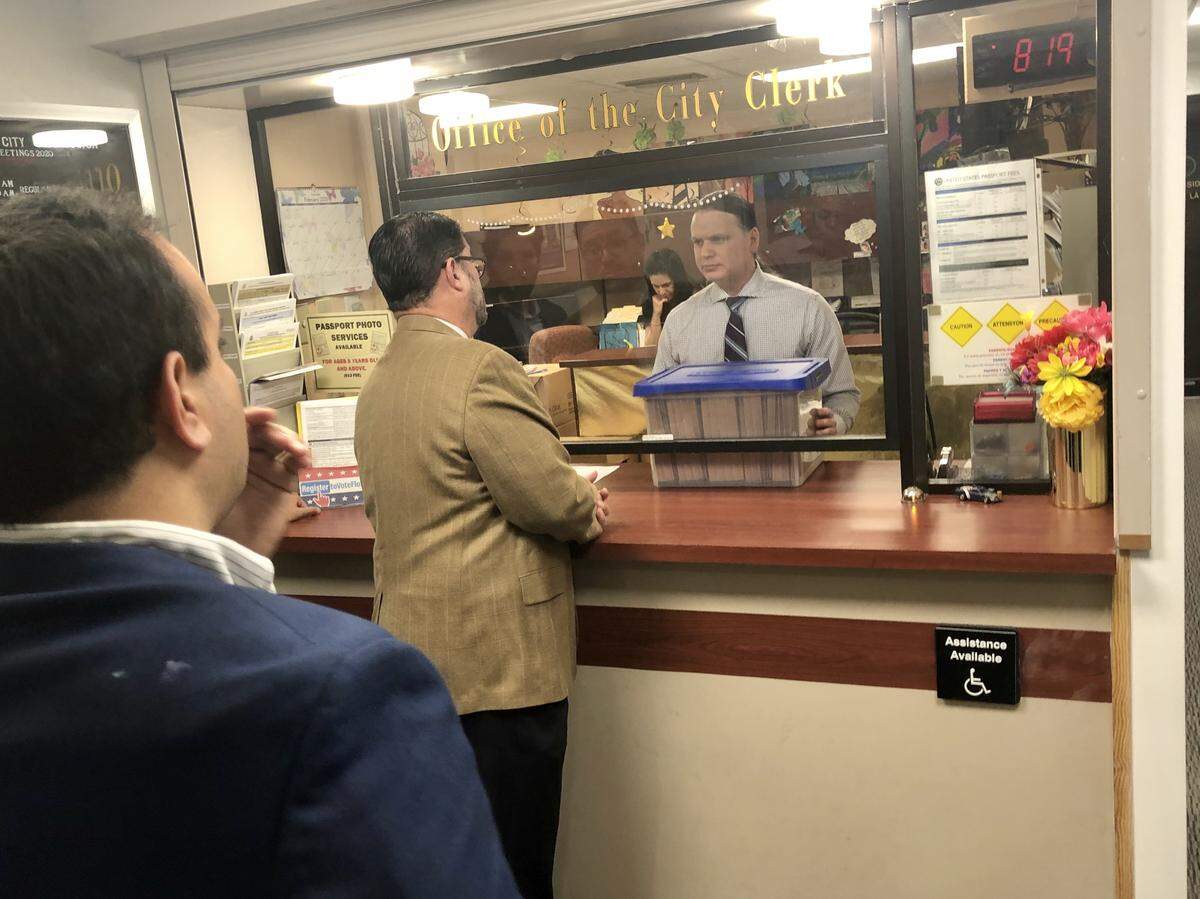
Late Monday afternoon, Hannon informed the attorney representing the recall organizers, J.C. Planas, that the city was rejecting the petitions because they were not submitted on time. The city and Planas disagree on when the petitions were due. Hannon wrote that the last day for filing the recall petition was Sunday, and that state law does not allow the deadline to roll over to the next regular business day when the deadline falls on a weekend.
Planas has said the date of the first collected signature is irrelevant because the law only requires that the oldest signature not be 30 days or older then the most recent signature. Planas, along with activist and attorney David Winker, argue in the lawsuit that Hannon was wrong to reject the petitions and should have immediately turned the signatures over to the county elections department for the signatures to be certified.
The attorneys called the city’s actions “absurd as by their logic, they can arbitrarily limit the days available to turn in petitions if the supposed 30th day falls on Saturday before a three-day weekend or similar situation.
“Florida black letter law rejects this impossible and absurd interpretation by the City,” reads the complaint. “It is well settled in Florida that where a statute is silent as to the computation of a deadline, as is the recall statute, it is presumed that a statutory deadline will not expire on a weekend or legal holiday.”
Planas and Winker are representing the political committee behind the recall effort, Take Back Our City, and its chairman, Shenandoah resident Rob Piper. The attorneys questioned why Hannon received the plastic bin with petitions Monday morning and then, after scanning the petitions through the day, sent a letter to Planas explaining the city’s reasons for rejecting the petitions.
Hannon likely immediately scanned the petitions due to a provision in state law that requires municipal clerks to make the petitions available in multiple formats.
“Upon filing with the clerk, the petition and all subsequent papers or forms required or permitted to be filed with the clerk in connection with this section must, upon request, be made available in alternative formats by the clerk,” reads the statute.
The lawsuit also states that after Hannon received the box with petitions, he notified the Miami-Dade Supervisor of Elections they would be delivered promptly. On Tuesday, the elections department confirmed this account.
“The city of Miami Clerk’s Office called the Elections Department around 9:20 a.m. on Monday, March 2, to advise they received over 1,900 petitions, would be reviewing them and delivering them to the Elections Department once their review was completed,” wrote Suzy Trutie, spokeswoman for the county elections department.
The role of the city’s legal department is unclear in determining the validity and timeliness of the petition. On Monday, when the Miami Herald asked City Attorney Victoria Méndez if her office issued an opinion regarding the timetable for submission of petitions, she did not respond. On Tuesday, she gave a brief statement in response to the lawsuit.
“We will defend this in court,” she said.
One of the organizers of the recall, businessman and former Miami city manager Joe Arriola, said he wants State Attorney Katherine Fernandez Rundle to investigate the city’s handling of the petitions.
Read the full complaint below:
Read Hannon’s letter to Planas below:
This story was originally published March 3, 2020 at 10:36 AM.