City rejects petitions in Carollo recall campaign because they were late. Cue lawsuit.
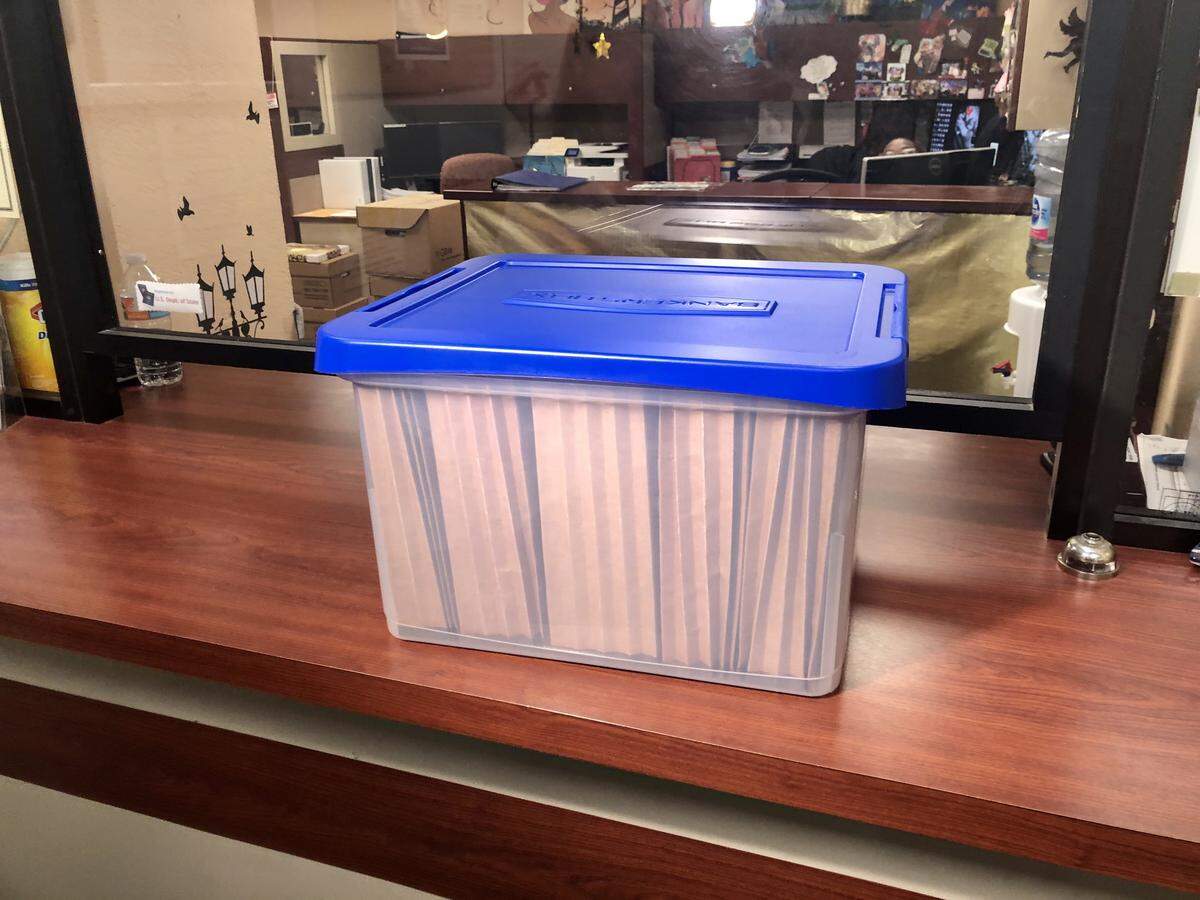
Organizers of the effort to recall Miami Commissioner Joe Carollo submitted more than 1,900 signatures electronically Saturday, then turned in a plastic bin with the actual petitions Monday morning.
By 5 p.m., the city had rejected the petitions, stating the deadline to physically turn in signatures was Saturday. The rejection ostensibly killed the effort to recall Carollo.
As is the case with many initiatives at Miami City Hall, expect to see the matter resolved in court.
Late Saturday, the attorney representing the recall organizers, J.C. Planas, sent an email to City Clerk Todd Hannon with digital copies of 1,941 signed petitions. The recall campaign, organized by a political committee called Take Back Our City, had to collect at least 1,577 signatures from registered voters in District 3, or 5% of the voters in the area Carollo represents. Early Monday, recall organizers submitted the petitions in person.
Planas sent the Saturday email shortly before midnight, stating that all of the submitted petitions were collected between Jan. 31 and Saturday, a 30-day period, as required under state law. The recall is following state laws because the city does not have its own recall law. The recall committee’s position is that the start date is irrelevant, so long as the earliest petition submitted is not 30 days or older than the most recent petition.
City Hall officials have a different interpretation. In a letter sent to Planas late Monday afternoon, Hannon outlines the city’s rejection of the petitions, stating that the city’s stance is that the first signatures were collected on Jan. 31, so the last day to file the first batch of signatures was Sunday, or 30 days later.
“Although you sent me an e-mail communication on Feb. 29, 2020, attempting to submit the petition, there is no provision in [the state statute] for the electronic submission of recall petitions,” Hannon wrote. He added that state law requires that the petitions be submitted by the chair of the committee organizing the recall. Planas is the attorney representing the recall committee, but the chair is Rob Piper, a retired Marine who lives in Shenandoah.
Hannon opened the city clerk’s office on Saturday for the petitions to be hand-delivered, apparently after City Attorney Victoria Méndez advised that Saturday was the deadline. The recall committee never came, and it never asked the clerk to open the office on Sunday.
Because of the city’s position, the petitions were not transmitted to Miami-Dade’s elections department for the signatures to be certified.
“You may stop by to retrieve the petition, at your convenience,” Hannon’s letter says.
If there had been no issues with the first round of petitions and at least 1,577 signatures had been certified by county elections workers, Carollo would have been able to write a 200-word statement defending himself that would have been printed on a second round of petitions. With this statement included on the petition, the campaign would have had to collect signatures from 15% of the district’s voters, or 4,730 petitions, in a 60-day period.
If the recall effort had cleared the second stage with enough verified signatures, Carollo could either resign or go to a recall election, where voters would have decided whether he should be removed from office.
The disagreement between the city and Planas, which sets the stage for a legal battle, was telegraphed over the weekend.
“Although you offered to open your office for us today to present these in person, we chose to continue collecting petitions into the late afternoon as we are allowed to by the Florida Statutes,” Planas wrote in a letter to the city attached to the Saturday night email.
Planas maintained that Saturday was not a hard-and-fast deadline for the petitions because state law only requires that the oldest petition submitted be within 30 days of the last petition collected. He wrote that he disagreed with the city’s “artificial timetable for the turn in of the petitions.”
Either way, Planas did send the email with scanned copies of the petitions late Saturday. Then he and organizers of the recall campaign turned in a plastic bin filled with petitions around 8:30 a.m. Monday at City Hall.
Before Hannon’s Monday afternoon letter, recall organizers said they were ready to fight any challenge to their process, whether it be on the question of the deadline or the digital submission.
Shortly after the signatures were turned in Monday morning, Carollo said he believed they were too late.
“It is untimely,” he said. “The bottom line is that by law, they were supposed to hand them in two days ago. They did not.”
The recall campaign was launched by a group of activists and financially backed by businessman and former Miami city manager Joe Arriola. The petition focused on controversies that have marked Carollo’s term since he was elected in 2017. He’s been accused of pushing the city’s code enforcement department to target properties owned by Little Havana businessman Bill Fuller, including the Ball & Chain nightclub.
Organizers also pointed to a paella luncheon that Carollo hosted for seniors in his district. Alex Díaz de la Portilla, then a County Commission candidate, was present and greeted residents. Both Carollo and Díaz de la Portilla, who lost that county election but was elected to the City Commission in November, have denied any wrongdoing since prosecutors began an inquiry in June 2018.
Amid the current recall effort, city commissioners took an initial step toward creating a new city law to address recall elections. Under a proposal that received preliminary approval from three commissioners last week, residents would have to wait a full year before organizing the recall of an elected official after an initial recall effort fails. It was not clear if the law, which requires a second approval, would affect efforts to recall Carollo. Méndez declined to comment after last week’s meeting.
The three commissioners who voted in favor of the new recall ordinance were Carollo, Commissioner Manolo Reyes and the item’s sponsor, Alex Díaz de la Portilla. They all said the campaign against Carollo had nothing to do with their stance on the recall ordinance.
Arriola predicted the submission of the petitions might not go smoothly for his cause. He blamed Méndez for the issue, accusing her of kowtowing to Carollo.
“She works for the city,” he told the Herald. “She doesn’t work to protect Joe Carollo.”
This story was originally published March 2, 2020 at 6:00 AM.