
Miami-Dade’s next big transit choice: Monorail or Metromover to South Beach?
Genting’s monorail proposal faces competition from an old stand-by of Miami-Dade transit, with consultants predicting an extension of Metromover would prove popular with riders traveling between downtown Miami and South Beach.
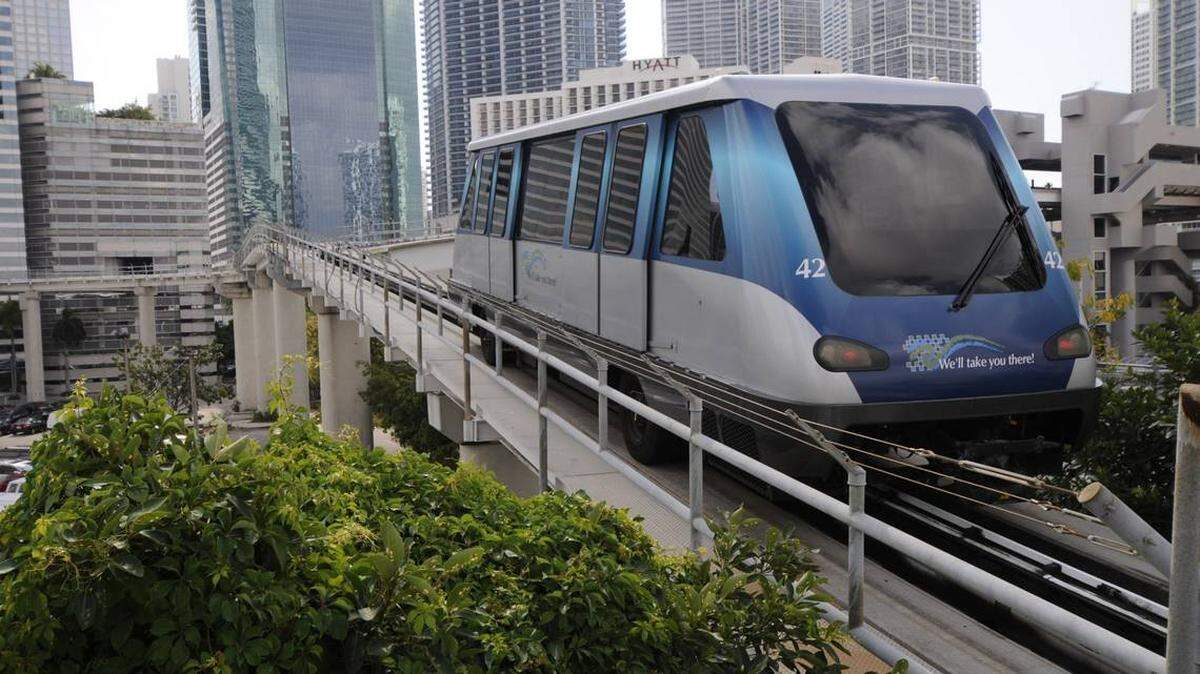
The latest report from Miami-Dade’s three-year SMART Plan review declines to pick a winner between monorail and automated people mover — the kind of rubber-wheeled train that powers the county’s free Metromover system, which opened in Miami in 1986.
The analysis by Parsons, a consultant hired by Miami-Dade to study the Beach route, concluded that expanding the existing, fare-free Metromover system to South Beach would attract about 12,000 riders per day — the most of any transit option studied. Those options included light rail and a rapid-transit bus system, two transit modes that the Parsons study said wouldn’t be ideal for the Beach route.
If Miami-Dade opted to build a new people-mover train to the Beach that charged fares, it would attract the same number of riders as monorail — about 9,200 per day. That’s a drop of about 25 percent from the ridership predicted for an extended, free Metromover route.
Miami-Dade released a summary of the study this week. It predicts building a monorail or a people-mover route from Miami to South Beach would cost between $630 million and $680 million. Monorail would cost about $7.2 million a year to operate, and the new people-mover line would cost about $10 million, the study said. While both are automated systems running on rubber wheels, monorail uses a narrower track than people-mover trains do.
The recommendations in the study will help frame what’s likely to be the first major transit debate of 2020, as Miami-Dade considers bids from Genting and other bidders pursuing a county contract to finally build the “Baylink” transit route between Miami and Miami Beach.
That bidding process got started in September after Genting submitted a monorail proposal for the route under review by Parsons, with months left to go in a study that the county said would cost about $8 million once final. With the preliminary report submitted, Miami-Dade commissioners must decide whether to accept the recommendations on the Beach corridor about two months before developers must submit their bids for the transit route.
A main appeal of extending Metromover would be to offer a “one-seat” ride between the heart of downtown Miami and South Beach, rather than forcing passengers to switch to a new vehicle near Biscayne Bay. The Parsons study said an extended Metromover system could run an express route that would deliver someone from South Beach to the Government Center Metrorail station in 13 minutes, a commute that typically takes at least 30 minutes by bus.
But extending Metromover would mean no fare revenue for a new rail route over the MacArthur, and could face technical difficulties linking new people-mover trains to the existing Metromover tracks.
Eileen Higgins, a Miami-Dade commissioner whose district includes the Beach side of the proposed route, said she didn’t want to see concerns about switching to a new vehicle hurt the county’s chances to give commuters another option for getting across Biscayne Bay.
“People who don’t ride transit talk about one-seat rides,” Higgins said. “People who ride transit want it to arrive frequently and get them where they need to go quickly. They’ll transfer to do so, as long as the transfers are designed effectively.”
Bids due in March, and a big vote expected in January
Bids are due March 17 in a contest prompted by Genting and partners’ confidential proposal to use about $240 million in tax dollars to build a for-profit monorail running between South Beach and land on the Miami waterfront where the Malaysian gaming company wants to build a casino resort.
Genting would contribute “over $150 million to the cost of the project,” Mayor Carlos Gimenez said in July, and Miami-Dade would pay the monorail group an unknown yearly fee to operate the system in addition to the $240 million upfront from state and local governments.
Other teams are considering competing proposals with a mix of transit modes on the table. A county procurement website shows a stream of questions from would-be bidders trying to clarify or change small elements in the 1,718-page request for bids that Miami-Dade issued in September.
“Siemens Mobility is very interested in providing a transit system for the Beach Corridor Trunk Line and would like to submit the following question,” Brian Hawkins, director of business development for the German-based conglomerate, wrote on Oct. 26. “Can the center of the MacArthur Causeway be utilized for an At-Grade Light Rail solution?”
A Miami-Dade administrator posted the answer for all bidders to see two weeks later: No, the center of the bridge is off-limits for transit.
The Parsons study recommended against light rail as a transit solution between Miami and Miami Beach, concluding that option could cost more than monorail or people mover.
That doesn’t mean light rail isn’t an option. Elected leaders with the authority to award transit contracts and request federal transportation dollars aren’t bound by the recommendations of the Parson study.
Weeks before the bids are due, Miami-Dade commissioners and municipal leaders who sit on the board of the county’s Transportation Planning Organization are expected to vote on whether to accept the Parsons recommendation.
The vote would establish the preferred transit mode for the Beach corridor, a required step in applying for the federal and state transportation grants that the board oversees.
A vote is expected in January. That decision would mark the halfway point for the county’s SMART Plan process, which launched six corridor studies in 2016.
The Planning Organization board has already voted to pursue a rapid-transit bus system in South Dade and try for a Metrorail extension along 27th Avenue to Miami Gardens.
Bidding process underway to connect Miami and Miami Beach with a new transit route
By starting its bidding process earlier this year, Miami-Dade opted not to wait for the Planning Organization vote or the Parsons recommendations after Genting submitted its monorail proposal in May.
In September, county commissioners accepted the recommendation from Mayor Carlos Gimenez to invite bids for the kind of project Genting proposed. The casino company and partners, including lobbyists Ralph Garcia-Toledo and Jesse Manzano-Plaza, who helped lead Gimenez’s 2016 reelection effort, must submit a new proposal, and aren’t bound by terms it offered in the first plan, which remains confidential.
The Parsons study recommends a transit expansion beyond the scope of the proposals sought by Miami-Dade. While the county specifications mostly track the proposed three-mile Genting monorail route between mainland Miami and South Beach, the Parsons study also endorses transit upgrades linking Miami’s Design District and Miami Beach’s Convention Center.
No matter what mode is picked for the MacArthur, Parsons said Miami-Dade should extend Metromover about two miles north to the Design District.
It also recommends the new train route link with Metromover either at the existing station at Museum Park or at a new one on the old Miami Herald property that Genting purchased for $236 million in 2011.
On South Beach, the study recommends two stations: one at Lenox Avenue and Fifth Street, and another at Fifth and Washington Avenue. From there, the study recommends new trolley and bus routes to the Convention Center.
Dan Gelber, Miami Beach’s mayor and a past leader of Florida’s anti-casino efforts, said he’s concerned Miami-Dade’s request for proposals — often called an “RFP” — could produce a transit plan that winds up costing millions without appealing to everyday commuters and tourists.
“I’ve always worried a vendor-driven RFP is certainly going to address the needs of the vendor. But it certainly needs to address the needs of our community,” he said. “It has to be something that’s easy to use. Otherwise, it’s a waste.”
This story was originally published December 24, 2019 at 4:50 PM.