
Fabio Diaz Vilela: His Road to Success
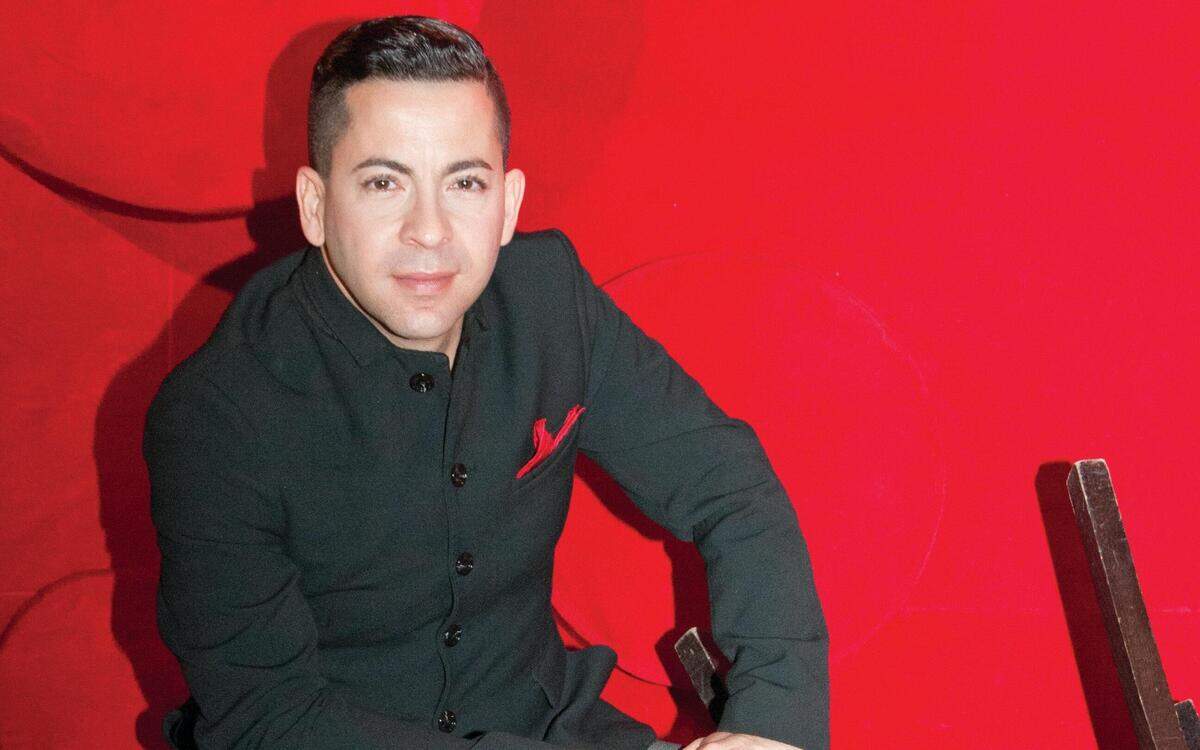
Few could guess at the long, hard-fought history that lies behind Fabio Díaz Vilela’s restless, childlike demeanor — a history that exemplifies the American Dream.
Fabito— as he is called by those who know him best — is the youngest of two siblings. His family left Cuba for Miami in search of better opportunities. “When I was very young I was thrilled when my father, who was a radio and TV producer in Cuba, would take me to visit the Radio Progreso recording studios in Havana,” he recalls fondly. “It was then that I began growing increasingly curious about everything that related to program production, and I learned to observe artists and get to know their nuances and expectations.”
It was in those formative days that Díaz realized that his future had to be related in some way to show business. At 19, during his third year at journalism school at the Universidad de la Habana, he made the tough decision to leave Cuba with his family. He left behind his grandmother (“one of the most important people in my life”), his traditions, his friends and his country — and everything that goes with that. “It was quite painful because it was like being reborn, but the bond I had with my mother and sister and my desire to see the world provided the push that I needed to take that step.”
Miami, the city that has embraced so many Cuban exiles for more than half a century, welcomed him with open arms. “Immediately I caught on to how things worked here, and I realized that in this country everything is possible. Here you can reach your dreams through hard work and sacrifice.”
Like any other newcomer, Díaz began his pilgrimage through the Magic City working at whatever he could find. That is how he made his first acquaintance with the culinary world: He worked the counter at Juanito’s Esquina de Tejas. “That was my first taste of the service industry, and it made me stronger. It defined a lot for me. For the first time, I learned to appreciate every minute of work I had, and I began to see the importance behind each job, regardless of how basic it might seem.”
Versailles Restaurant and Larios on the Beach would cement his learning experiences and taught him about the business end of the industry. “During that time, I worked very hard, and it took me no time to notice that this city is full of potential. I learned about the positive and negative aspects of this business and about customer service, managing large events and attention to the smallest details.”
One night, as he was driving to work he saw a “For Sale” sign posted on the door of the former Café Nostalgia on Calle Ocho — a place he frequented and cared for deeply. “I didn’t hesitate an instant in making an offer to stay with the place. I always knew that that space was meant for me,” Díaz assures.
The decision to buy the space that would change his life was actually a great financial risk for a young man who had but $10,000 to put toward his dream.
“I knew that I was putting all my eggs in one basket, but I was convinced that this was the opportunity of a lifetime,” he says. The deed was signed and the space — newly christened Hoy Como Ayer — belonged to Díaz. “We wanted a name that would honor the past and the present and that would connect generations. The Beny [Moré] song seemed perfect,” says Díaz. “At first, everything was a challenge and we had to work relentlessly to get the club off the ground. But three events helped set us on the right track: the first run of A 2.50 la Cuba Libre, Fuákata on Thursday nights and Albita Rodríguez’s live shows. I remember we were under incredible pressure to pay the bills and keep the place running, but with those three events we were able to find some stability and keep going.”
Little by little, Hoy Como Ayer became an indispensable part of the Little Havana landscape. It turned into the evening spot of choice for locals and tourists looking for a friendly crowd, dancing and — above all — great music.
Even now, the local nightclub retains the kind of charm that delights and turns regular spaces into landmarks. Far from pretentious, the place is billed as a “space made for all,” and it is a rightful heir to the grand legacy of both Cuban music and the unique culture that defines the Magic City. Nicole Kidman, Mick Jagger, Ricky Martin and Shakira are just a few of the celebrities that have sat at its tables, confirming with their presence the kind of success that the club has achieved. Recently, actor and director Jon Favreau shot a scene of Chef — the runaway hit starring Sofía Vergara — on the premises.
“We are very fortunate to have famous personalities among our customers, but in the end, the final verdict comes from those who pack the club night after night,” says Díaz. “Our purpose is to make people feel at home and to have those who visit leave with a genuine smile after experiencing cultural enrichment.” Nearing its 15th anniversary, Hoy Como Ayer has made it to Travel + Leisure‘s 101 Places Every Traveler Should Know list — for the third time. Clearly Díaz’s unassuming space has made a lasting impression.
Hoy Como Ayer has also served as the springboard for the young entrepreneur to cement his reputation as an influential artistic producer. It is where he expanded his intimate circle, having met countless friends and collaborators there. “We are all like family here. I have people working with me that were with me at the very beginning, and they have kept the same customers for many years,” says Díaz. Another highlight of his tenure at Hoy Como Ayer was meeting the love of his life. “Eduardo was a regular,” he recalls, speaking about his partner, Eduardo Guerra. “It was here that our relationship began and where it blossomed.”
The happy couple, who recently celebrated a seventh anniversary, has not overlooked the possibility of tying the knot. “We’re eager to do it, but we had always put it off because of work, or because we were required to travel out of state to actually get married. But I think that now that we are able to do it right here, everything’s changed.”
Both men share the day-to-day responsibilities of the business and enjoy the fruits of the work that every project yields with the same zest and zeal as that of newly minted entrepreneurs. “Each show is a new challenge for us, and though each time we host a performance we understand exactly what we are agreeing to do, we feel extremely fortunate to get to do it together.”
The first few shows were produced as Hoy Como Ayer, but the actual production arm of their company started just two years ago, under the moniker Producciones FABIO DV. “It has allowed me to concentrate on working with the kinds of shows that this town needs. I want to embrace all generations and help foster a true appreciation for theater,” Díaz asserts. “I think my generation is tasked with the important role of bringing together all Cubans and promoting communication. I would like to facilitate a cultural exchange between artists from both shores and build those cultural and communal bridges.”
It goes without saying that the roster of projects does not end there. Díaz intends to keep working with local artists that stand out, as well as well-known stars. “I want to vary the productions and dive into new projects,” he says smiling as he let’s us in on his dream to one day promote Belgian-Canadian singer Lara Fabian — one of his “greatest idols.” He’d also like to create spaces like Hoy Como Ayer in other cities so that those communities can enjoy great Cuban music, maybe in New York or San Juan...maybe even Havana. And why not?
This story was originally published April 1, 2015 at 2:42 PM with the headline "Fabio Diaz Vilela: His Road to Success ."