‘A sex slave’: Broward hotel in center of sex-trafficking allegations
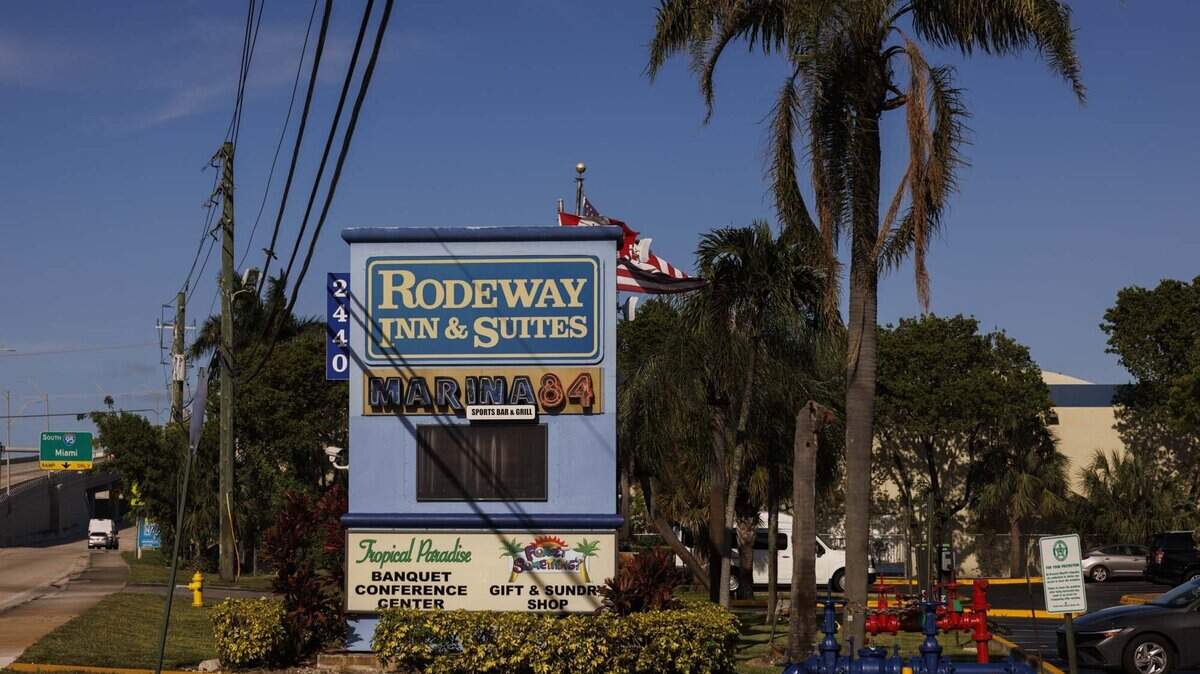
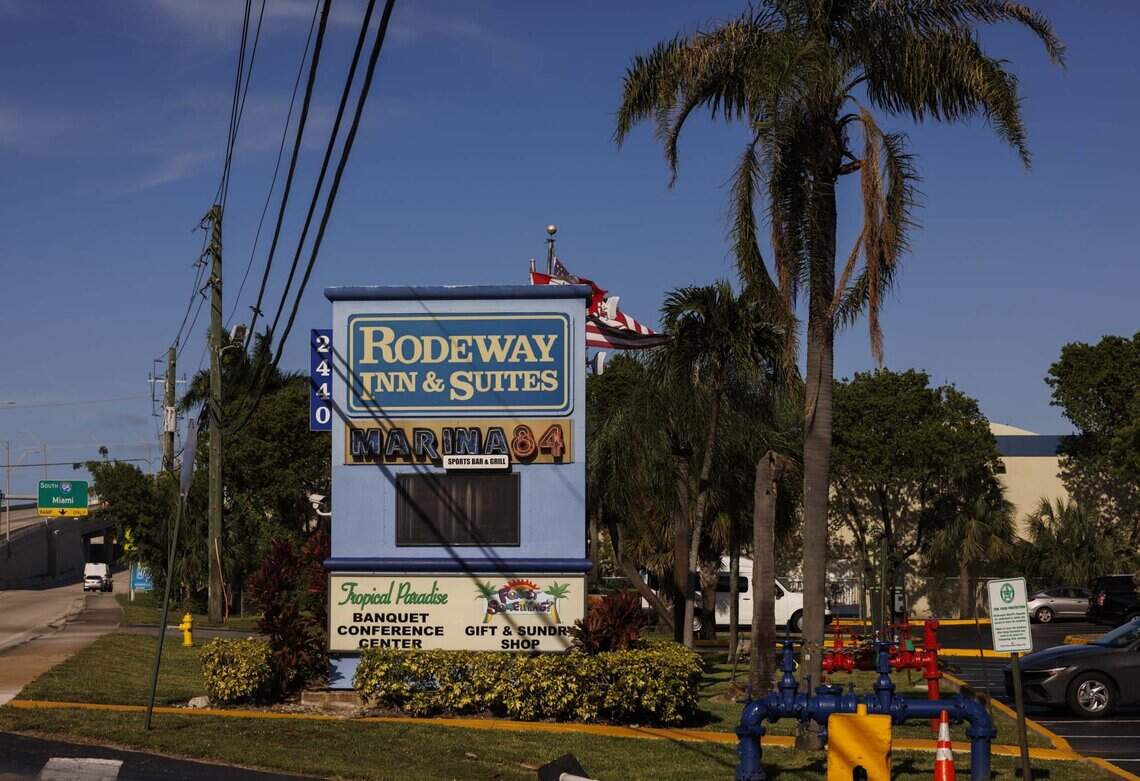
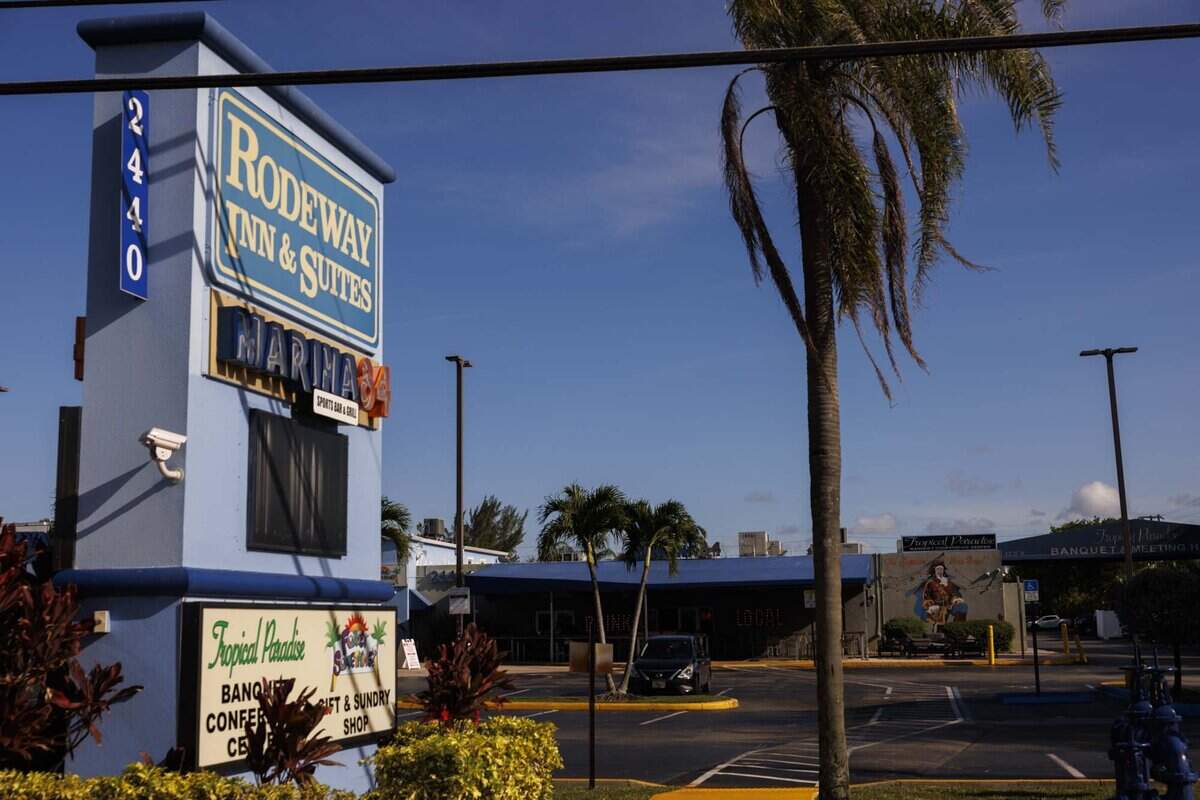
From the outside, the Rodeway Inn near Fort Lauderdale airport seems like a convenient, affordable spot for cruise passengers to spend a night or two and relax in sunny Florida.
“Every day is a romantic day at Rodeway Inn,” says a poolside sign at the Dania Beach hotel, which offers free shuttles to Port Everglades.
But its rooms hide a dark secret, according to a federal lawsuit filed in early 2025 against the hotel’s owner and operator.
A former Miami-Dade escort stated in the suit that a pimp held her captive as a “sex slave,” prostituted her out to other men and raped her himself numerous times at the hotel from 2019 through 2020. Rodeway and its then-manager, Israel “Izzy” Fintz, “aided, concealed, confined, benefitted and profited” from her abuse, she alleged.
She recently took her allegations to the Broward Sheriff’s Office, putting the lawsuit on pause.
Fintz, who no longer works at the hotel, told the Miami Herald he doesn’t remember the woman or the man she accused of trafficking her.
“It’s a bull---t lawsuit,” he told the Herald.
The hotel is owned by Tropical Paradise Resorts, a company that lists Fintz’s parents, Esther and Marcos Fintz, as its proprietors. It is operated by EZ Hospitality, another company with the Fintz family as its principals.
The family has a history of allegations of sexual misconduct at its properties, including two sexual harassment cases against Marcos, a Miami Herald investigation found.
The findings cast a glare on the South Florida family, which at one point owned at least four hotels in South and Central Florida.
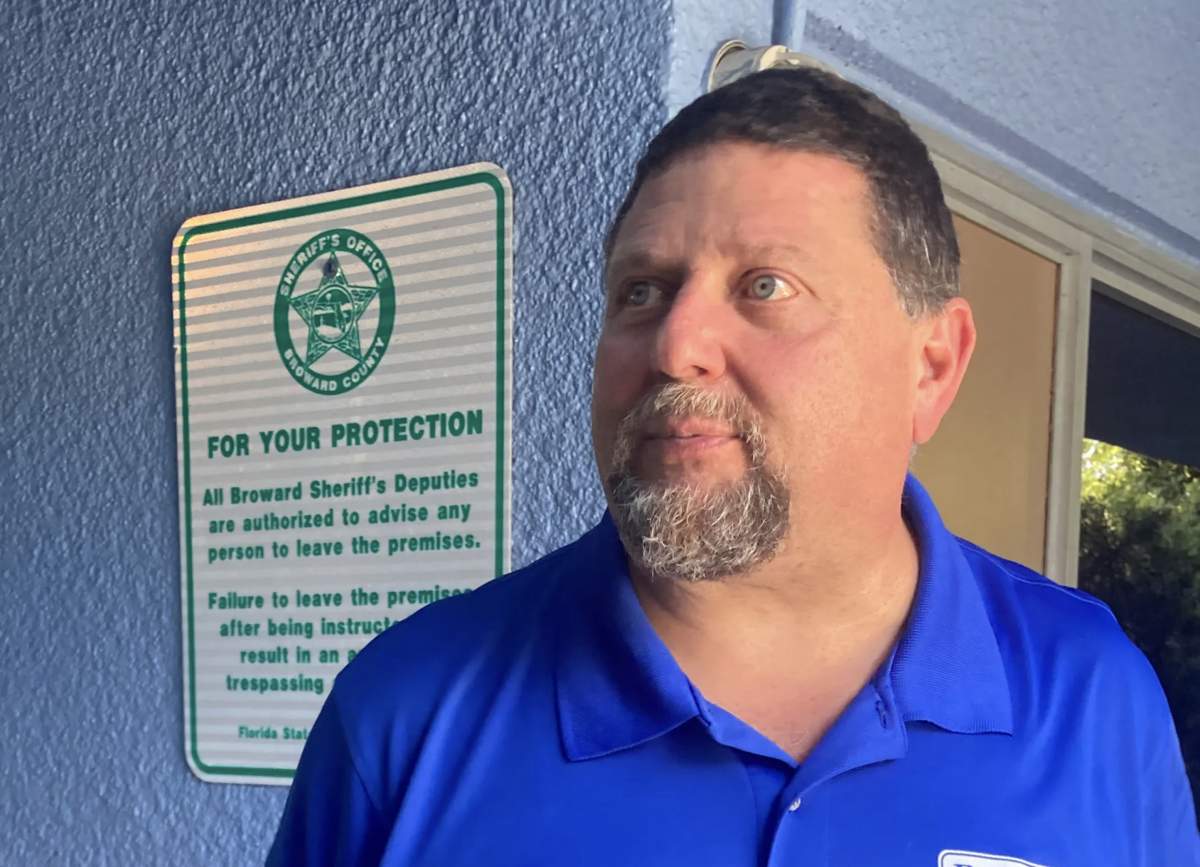
Tropical Paradise and EZ Hospitality’s attorney, Elizabeth Hueber, said in a statement to the Herald that it is “committed to providing a safe environment for its guests” and that it “vehemently denies” the allegations in the suit. All employees undergo a criminal background check and are trained in anti-trafficking prevention, she said.
None of the Fintzes were named individually as defendants in the woman’s lawsuit.
In the late 2000s, two former employees of two hotels the Fintz family owned at the time in Kissimmee, an Orlando suburb, alleged that Marcos had sexually harassed and groped them, court filings show.
A 2010 Broward County lawsuit also alleged that the night manager of a Quality Inn the Fintzes still own in Hollywood had lured a 15-year-old boy with “emotional and cognitive disabilities,” who lived nearby, into a hotel room, got him drunk and then raped him. The boy’s mother filed the suit against two of the Fintzes’ companies that owned and operated the hotel and against Choice Hotels, the Maryland-based multinational that owns the Rodeway Inn and Quality Inn brands.
The court record states that the man had allegedly openly groomed the boy prior to the incident but that other staffers did nothing to stop it. The mother dismissed the case in 2018. The records do not state why.
The suit was filed anonymously, and the Herald was not able to identify the victim and his mother.
Hueber declined to comment on those cases. The Herald reached out to Esther and Marcos Fintz directly but did not receive any response.
John Rode, a former Miami-Dade police detective turned anti-trafficking advocate, also shared with the Herald messages dating back to 2019 that show he had warned Israel Fintz more than 120 times that online ads were listing sex workers operating out of the Dania Beach Rodeway Inn.
Fintz, Rode said, rarely responded. Rode is now working with the legal team on the 2025 lawsuit against Rodeway Inn.
In the lawsuit, the woman said that Steven Charles Joseph, a 33-year-old local content creator and a former friend of hers, trafficked her out of the hotel for about a year.
Joseph, in an interview with the Herald, described the allegations as fiction, calling it a “good script for a twisted movie.” He is not named as a defendant in the lawsuit.
The woman, who filed the federal lawsuit under the initials, “S.W.”, seeks to hold liable Tropical Paradise Resorts, EZ Hospitality and Choice Hotels under a 2008 federal anti-trafficking law.
Since January 2021, Florida requires all of its hotels and lodging facilities to train staffers on how to identify and prevent sex trafficking, and put in place a procedure for reporting suspected trafficking to authorities.
Rodeway Inn and the Quality Inn both were among the hundreds of Florida hotels cited for failure to comply with the law — Quality Inn in 2022 and Rodeway Inn in 2023, state citation data shows. Israel Fintz told the Herald that those issues have been corrected.
The Fintzes’ history had little effect on the family’s licenses with Choice Hotels.
They continue to operate as Choice franchisees.
The hotels and Choice, failed in their “duty to take adequate measures on their premises to protect their guests … from being victims of continued sex trafficking,” the recent trafficking lawsuit states.
The Herald independently identified the woman who filed the suit but is not publishing her name since she is an alleged victim of sex crimes.
The Herald’s request for an interview was declined by her attorneys, who cited concerns about the woman’s safety.
A spokesperson for the Broward Sheriff’s Office told the Herald that a detective had met with the alleged victim “and is working to determine if a crime was committed.”
The Herald sent detailed questions to Choice Hotels and its attorney but did not receive any response. In court filings, Choice denied having any responsibility.
Hazel’s ordeals
The woman had previously worked as an escort, she stated in the lawsuit, and when Joseph wanted to list her on solicitation websites like Adult Search and Eros, she agreed.
She did not fear for her safety. She had known Joseph since she was 12-years-old. He was a friend from school. They had lost touch but reconnected around 2019 when she moved back to Miami, her hometown, from Naples. She was in her 20s at the time.
Joseph allegedly listed her under the names “Lili 2 Cups,” “Gabriela Diaz” and “Hazel” and paid her for the sex work.
But their relationship soon changed.
Until the end of 2020, for upward of a year, Joseph stopped paying her, beat her, held her at gunpoint and pistol-whipped her, the lawsuit states.
“Her screams during such assaults were ignored by hotel staff,” another court filing states.
Joseph made her beg for “food, clothes and toiletries” and had “complete control and ownership” of her life, the lawsuit alleges. She was not allowed to go anywhere — even to visit her family — without Joseph or his express permission. He warned her against speaking out, often citing his connections with Haitian gang members and saying that her young niece was “not safe.”
The lawsuit accuses Joseph of booking the hotel rooms for “multiple days or weeks in succession” and forcing her to have sex with upward of five men per night. He charged them $500 an hour and would wait outside in the hotel’s corridors, she said. Joseph kept all of the money.
Joseph, the woman alleged, also recorded a video while raping her at the Rodeway Inn and posted it on the Internet.
Joseph and other “pimps” hosted sex parties at the hotel’s lobby and adjoining restaurant, she stated in the lawsuit. They advertised the parties on the internet so potential clients would know where to come.
Multiple hotel staffers were “present at these parties and all were aware of their purpose,” the suit states, but “essentially ignored what was going on or looked the other way.”
The then-manager, Israel, the hotel owners’ son, would frequently invite her to his office and repeatedly asked her to go on dates with him, she alleged.
Fintz received “monetary kickbacks” from traffickers like Joseph in exchange for allowing their activities to continue at the hotel, the lawsuit alleges. Those incentives included “payments per room rented and, in some cases, per trafficking victim.”
“Those things don’t apply to me; they’re trying to sue the hotel,” Joseph told the Herald. “I live a totally different life than what’s going on with that.”
Israel Fintz called the lawsuit a “nothing burger” that unfairly blames him and the hotel for alleged crimes.
“These people are trying to do everything they can to make a public nuisance or get a settlement,” Fintz told the Herald.
The case is aimed at holding both the property, as well as Choice Hotels as the franchisor, liable for the ordeals the alleged victim endured. Choice Hotels “failed to act reasonably in response to complaints about criminal activity and sex trafficking” on Rodeway’s premises, the lawsuit states.
The case was filed by attorneys Aaron Karger and Spencer Kuvin. Kuvin has represented several alleged victims of Jeffrey Epstein.
Choice, for its part, has waved off any responsibility and said that it does not control the daily activities of its franchisees.
“Choice denies that it had the ability or authority to control the manner and means of the hotel’s operations,” the company’s attorneys stated in a court filing.
Past allegations
Both Marcos and Esther Fintz were born in Cuba in the mid-1940s but left the island to flee the Castro regime. They met in Brooklyn, New York, in the 1960s, got married and moved to Florida.
There, the family got into real estate, developing multiple condo and apartment complexes across Broward and Miami-Dade counties, a Herald review of property and business records found.
They also entered the hotel business, and by 2006, owned three Choice Hotel-branded properties — the company’s largest Hispanic franchisee at the time. The couple, now in their 80s, are the authors of a series of faith-based personal development books.
They “felt the presence of God” and that God wanted to use their life experiences to show people how to make their lives and relationships a success, Marcos, who also goes by the name Mordechai, stated in one interview.
But in 2006, Melissa Pagan, then an employee at a Howard Johnson hotel the Fintzes owned at the time in Kissimmee, reported to an Osceola County Sheriff’s deputy that, while picking up his mail, Marcos put his arm around her, placed his hands on her behind and tried to “grab her vagina.”
When she pushed him away and sat down, he allegedly came up behind her, leaned over, put his right hand down her shirt and started rubbing her breast. When Pagan stood up and moved away, he came up behind her again and started touching her breasts once more, she said.
He left only after she called her manager to the front desk, she said. The incident report the sheriff’s deputy filed notes that she alleged that Marcos had also sexually harassed several other women who worked at the hotel.
Pagan broke down crying while telling the Herald about the incident. She said the encounter, though two decades ago, still feels like it just happened.
State prosecutors charged Marcos with battery in the summer of 2006 but did not proceed after Pagan declined to go ahead with the case. Pagan told the Herald that she took a monetary settlement.
The Fintzes and their attorney in the suit did not respond to the Herald’s questions about the settlement allegations or the settlement.
Three years after Pagan’s incident, an employee at an adjoining Choice-branded hotel the Fintz family owned alleged in a federal lawsuit in Orlando that while on a visit to the property on Jan. 13, 2009, Marcos made numerous inappropriate sexual comments and caressed her thigh.
That night, he instructed the female employee to meet him in a hotel room to discuss work. But when she arrived, he asked some questions that they had already discussed and then put his arms around her, grabbed her breasts and shoved his tongue in her mouth, she alleged in the suit.
“Your breast feels good,” he allegedly said while blocking the exit. She finally managed to push her way past him and told him never to touch her again, the lawsuit states.
The victim said she resigned to avoid further assault or harassment.
The woman’s lawsuit named three of the Fintzes’ companies that owned and operated the hotel as defendants. She dropped the case roughly a month after filing, for unknown reasons. She did not respond to the Herald’s requests for an interview.
Marcos Fintz did not respond to the Herald’s repeated requests for comment on the allegations.
Pagan said she couldn’t sleep after learning from the Herald that Marcos had gone on to be accused of sexual harassment by someone else. She said she felt “horrible” that she’d agreed to a monetary settlement.
“In my mind I’m thinking, I let him walk away,” she said. “I let them do that to someone else or think it was OK to do that to someone else.”
Pagan said her 14-year-old daughter noticed her distress the morning she spoke to the Herald.
“I had to explain to her that one day when you grow up, something might happen to you,” she said. “You need to know it’s OK to say something.”