Hollywood historic board approves Jewish ritual bath after chaotic meeting
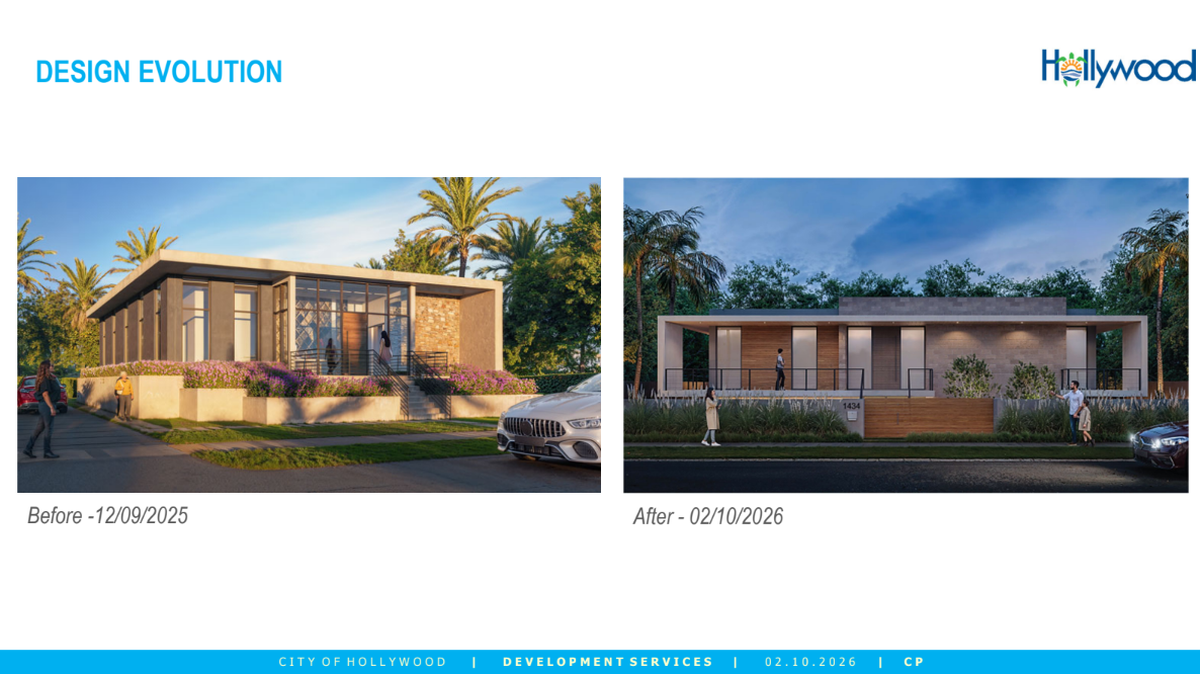
The city of Hollywood approved a controversial proposal to build a religious ritual bath in a residential neighborhood following a full redesign of the building.
In a 4-2 vote, the Hollywood Historic Preservation Board approved a special exception to build a Jewish ritual bath — called a mikvah — on 1434 Monroe Street, an area zoned for residential use.
The decision capped an hours-long tense meeting filled with confusion over order of meeting operations, debate between the board and the applicant’s lawyers and rowdy members of the public who were interjecting constantly and at times, storming out of city hall.
Residents of Hollywood Lakes, a historic, affluent neighborhood in Hollywood, have been pushing back on the project since it was proposed over the summer, organizing a petition with over 1,400 signatures, emailing city officials and launching social media campaigns in an attempt to stop it. Residents argue that the modern design of the building does not fit with the neighborhood’s historic atmosphere and that allowing it will set a precedent to allow more non-residential buildings to pop up.
Despite the public opposition, the city’s planning department issued a report recommending full approval of the special zoning exception, determining that the mikvah project was consistent with city’s guidelines, which includes consideration for things like traffic flow, impact to the surrounding areas and its definition of a religious space.
The project calls for demolishing a 1949 single-family home and building a 2,500-square-foot contemporary building to be used as a Jewish ritual pool for women for spiritual purification. At a historic board meeting in December, the architect of the project was told to go back to the drawing board after the board decided the design of the building was too contemporary and didn’t fit the historic character of Hollywood Lakes.
“I do believe that preservation is not about freezing neighborhoods in time. It is about allowing reasonable code compliant use while protecting architectural integrity,” said board member Stephanie Bendoym, who voted in favor of the project.
READ MORE: Hollywood historic board rejects design for Mikvah after heated meeting
But, yesterday’s approval came with a list of conditions.
The facility will only be allowed to be used by females; expansions of the building are not allowed vertically or horizontally; appointments will begin at 6:30 p.m. and end no later than 10:30 p.m. with a maximum of eight per day; and the facility will have a limit of five parking spaces on site.
The design of the mikvah was approved with another long list of conditions including things like alterations on the type of window glass, exterior lighting, facade materials and landscaping.
All were requested by the Historic Preservation Board in an attempt to make the building appear more residential and less commercial.
Debate of proposed use
Historic Preservation Board members spent hours on Tuesday asking questions to the city staff and the applicant’s lawyers about the use of the space.
Along with concerns over the design, one of the biggest concerns the board raised was about the applicant’s marketing materials being out of step with what was presented to the city. Some members felt that the mikvah would be used more frequently than what was being represented in the meeting, which would cause unwanted traffic on a narrow residential street.
“I strongly feel in my bones that this is going to be a traffic issue, even though they say it’s not,” said Fred Villiers-Furze, who took over as chair of the meeting after Terry Catrell excused himself over conflicts of interest.
Villiers-Furze said that the mikvah was advertised to be used by hundreds of surrounding families, yet would only service eight women per day.
Mendy Halberstam, a civil rights lawyer representing the applicants, said that the mikvah will never be used before 6 p.m. because of religious reasons. He said that the applicants are being honest in their prediction of how many people will use it per day.
“It is not somebody trying to pull the wool over anybody’s eyes,” Halberstam said. “It’s simply a community of like-minded religious people desperately trying to fulfill a religious need.”
Halberstam said that a denial of the application would “impose unconstitutionally undue burden,” on the community.
There was also insinuation by some that the city was feeling pressured to move the project forward.
When Villiers-Furze asked city planning staff if they felt outside pressure to approve the project, a crowd of opponents answered back, “Yes!”
Mikvah redesign
Architect Joseph Kaller walked the board through the changes of the new mikvah design after hearing critiques from the Historic Preservation Board and from members of the public in December.
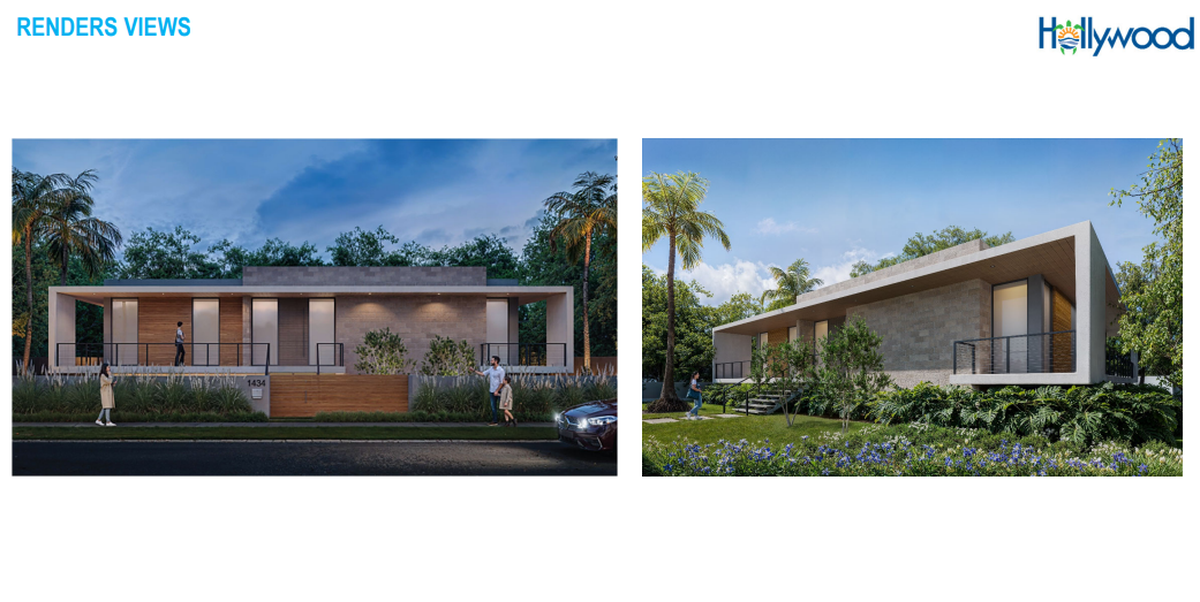
The new design included “lusher landscaping,” an elimination of a driveway, a wider, more residential facade, wraparound porch, and a continuous covered walkway from the back parking lot to the main entrance of the building.
Kaller presented a “materials mood board” showing that the architect drew inspiration from elements like rainwater and native Florida plants, as well as materials like wood, Jerusalem and stucco.
“We did take your comments very seriously,” Kaller said. “We do hear. We do listen.”
The main difference, Kaller said, was that the new design is meant to look and feel more like a midcentury modern home, rather than a commercial space.
The majority of the board agreed that the new design appeared to be more compatible with the character of the neighborhood.
“It’s a much improved design. You listened to what we said,” said board member Ari Sklar.
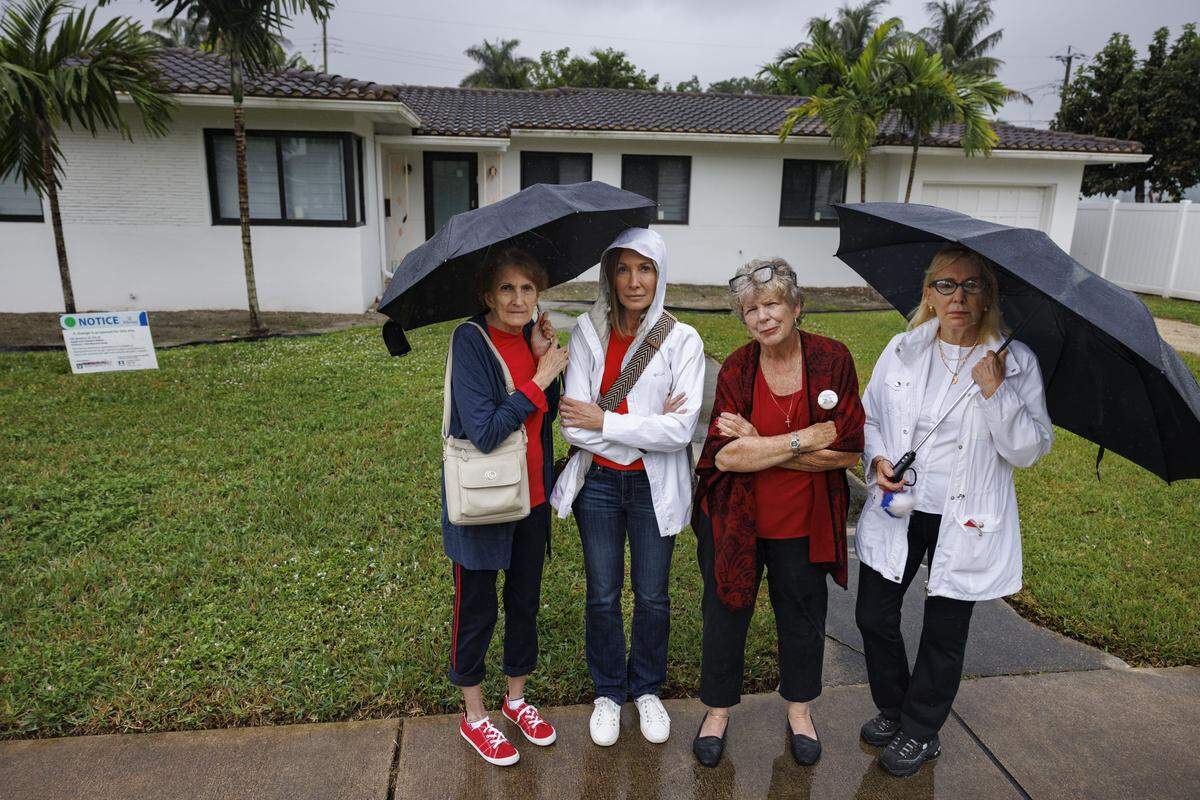
The board then heard from about a dozen residents who spoke in opposition of the project, citing, once again, traffic congestion and incompatibility with the residential feel of the neighborhood.
“A mikvah, as a place of holiness, deserves to be located where its sanctity can be honored in spirit and infrastructure, not where it causes strain and conflict,” said resident Vanessa Susan Mercier.
Some residents brought up concerns that the approval setting a precedent for more commercial buildings to pop-up in the neighborhood. Some mentioned the fact that the applicant had outstanding fines and liens with the city — an issue that was addressed briefly earlier in the meeting, but did not appear to impede the application process, according to city staff.
“It is just an absolute disgrace that people would owe the city money ... and then have the absolute gall to come before this board and ask for a variance, an exception or an exemption. It speaks volumes for their character,” said resident Siobhan McLaughlin, who wore a red shirt donning the phrase “Move the Mikvah.”
After the vote approving the project, resident Pam Burgio, 62, said she felt “mixed emotions.” She said she thinks the city staff felt pressured to vote the way they did due to the city’s past experiences with religious lawsuits. Hollywood was ordered to pay $2 million to a Chabad in the early 2000s, after the city ordered the synagogue to leave its neighborhood location.
“It’s not about religion to me, because I am Jewish. It’s just the fact that we’re losing our neighborhoods more and more,” she said.
This story was produced with financial support from Trish and Dan Bell and donors in South Florida’s Jewish and Muslim communities, including Khalid and Diana Mirza and the Mohsin and Fauzi Jaffer Foundation, in partnership with Journalism Funding Partners. The Miami Herald maintains full editorial control of this work.