
Fort Lauderdale to expand homeless response team amid city’s economic ‘renaissance’
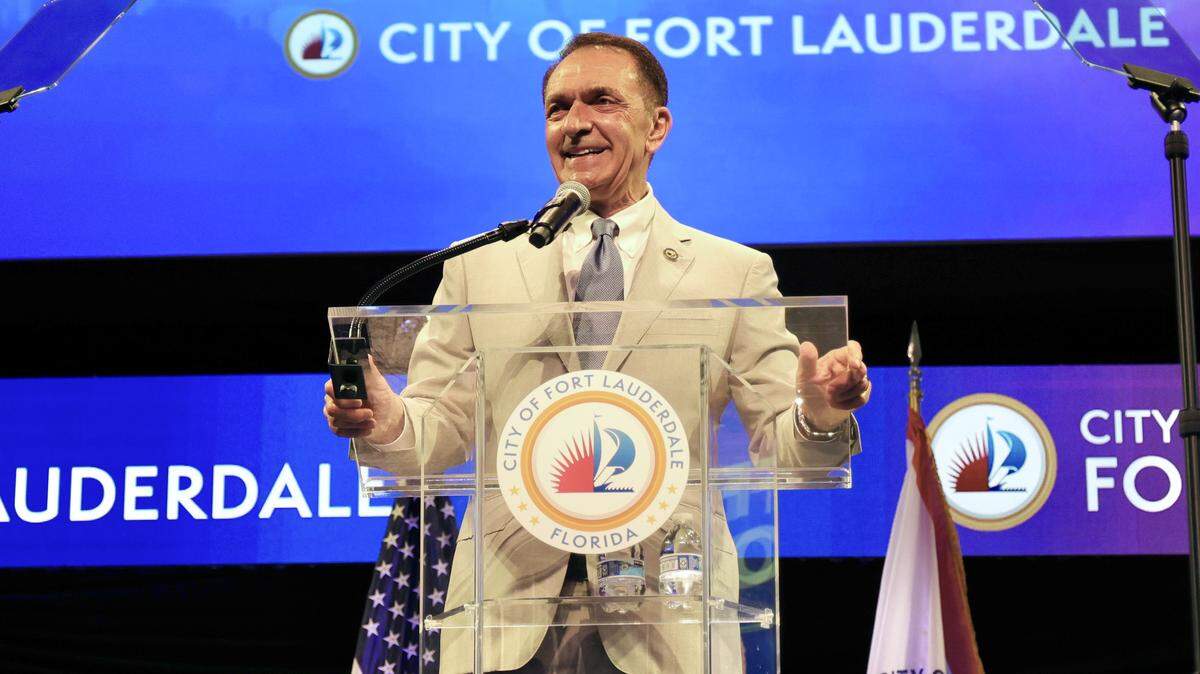
As he touted Fort Lauderdale’s “great renaissance,” Mayor Dean Trantalis addressed a major issue still affecting the city during his State of the City address Monday night: homelessness.
“Homelessness remains one of our greatest challenges facing our community,” Trantalis said during his speech. “It’s complex. It is human. It requires us to be both compassionate and firm, but we also will not tolerate conduct that harms our community.”
Starting Wednesday, the mayor announced, the City of Fort Lauderdale is expanding its homelessness response by increasing staff and reorganizing the team to better address the needs of the city’s homeless population. This comes as Fort Lauderdale, especially its affluent downtown area, is experiencing a flurry of flashy real estate developments, young professionals moving in and overall economic growth.
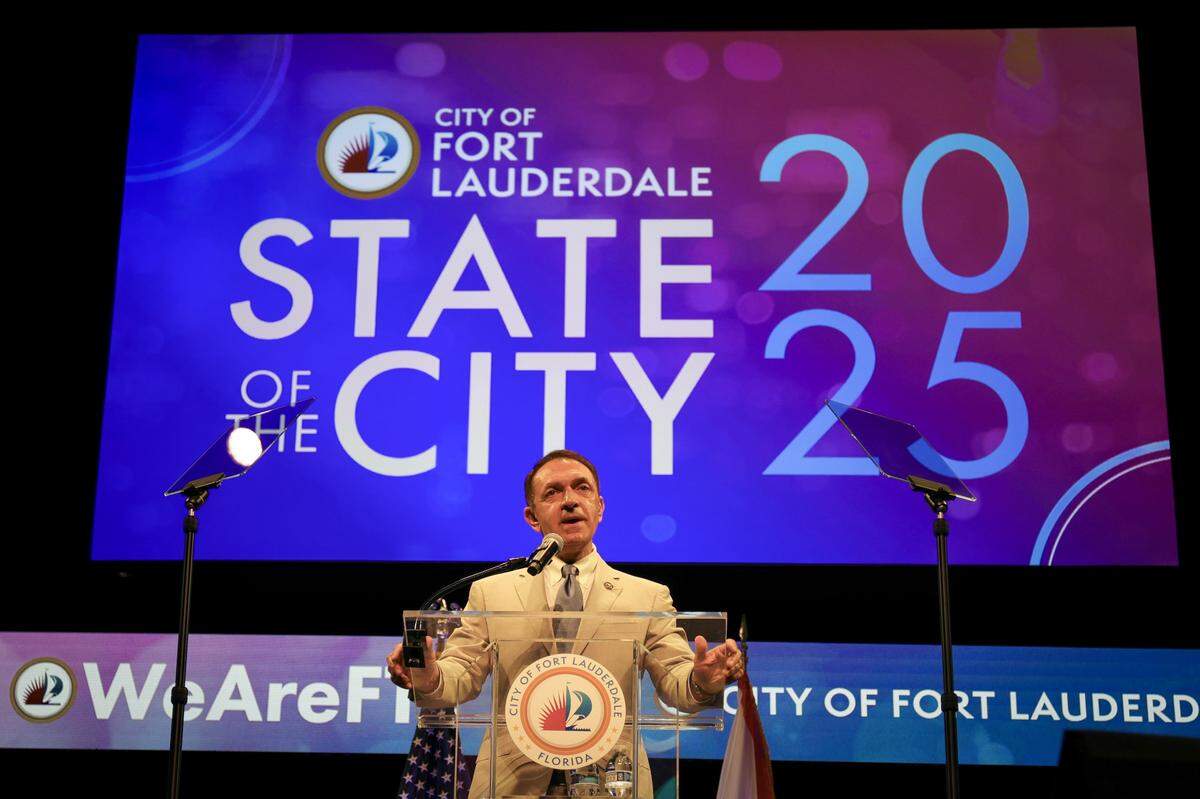
The city will add seven new job positions to its homelessness team, the mayor said, bringing it to 20 employees that will focus on three main pillars: street engagement, intensive outreach and program services.
Under street engagement, police officers, homeless outreach team members and new park rangers will enforce city ordinances in the streets while offering help to those who want it. Intensive outreach refers to the fire rescue staff, nurse practitioners, case managers and behavioral health experts that will address “root causes,” like medical, mental health and substance abuse issues. And the program services team will consist of program managers and coordinators who make sure “people don’t fall through the cracks,” the mayor said.
“This is about building a system that is smarter, stronger and more compassionate,” Trantalis said. “One that reduces repeated police calls, cuts down on hospital visits, eases burdens on neighborhoods and businesses, and most importantly, helps people find stability and hope.”
In the last year, Trantalis said, the city’s efforts have sheltered more than 80 people, helped 18 secure housing and 41 reunite with their families. Instead of making arrests, officers issued 137 notices to appear, which directs homeless individuals to the city’s Community Court, where they can access services.
The state of Florida has cracked down on homelessness over the last few years, including passing controversial laws that criminalized sleeping outdoors and encouraged individuals to sue local governments over homelessness. The City of Fort Lauderdale faced backlash last year over an app that allowed residents to report homeless people in their communities, along with potholes and flooded streets. Homeless advocates have called these efforts “inhumane.”
The mayor emphasized how community services and outreach can lift individuals into recovery, inviting three men on stage who had previously experienced homelessness in Fort Lauderdale. “These are more than just statistics. These are people,” Trantalis said.
The mayor introduced JaCare Burgess, a United States Air Force veteran who had been homeless for nearly a decade. After going to Community Court, he received help from support group Fellowship Recovery Community Organization.
“I just want to thank God, the community and Fellowship for this chance and life changing opportunity,” Burgess said on stage.
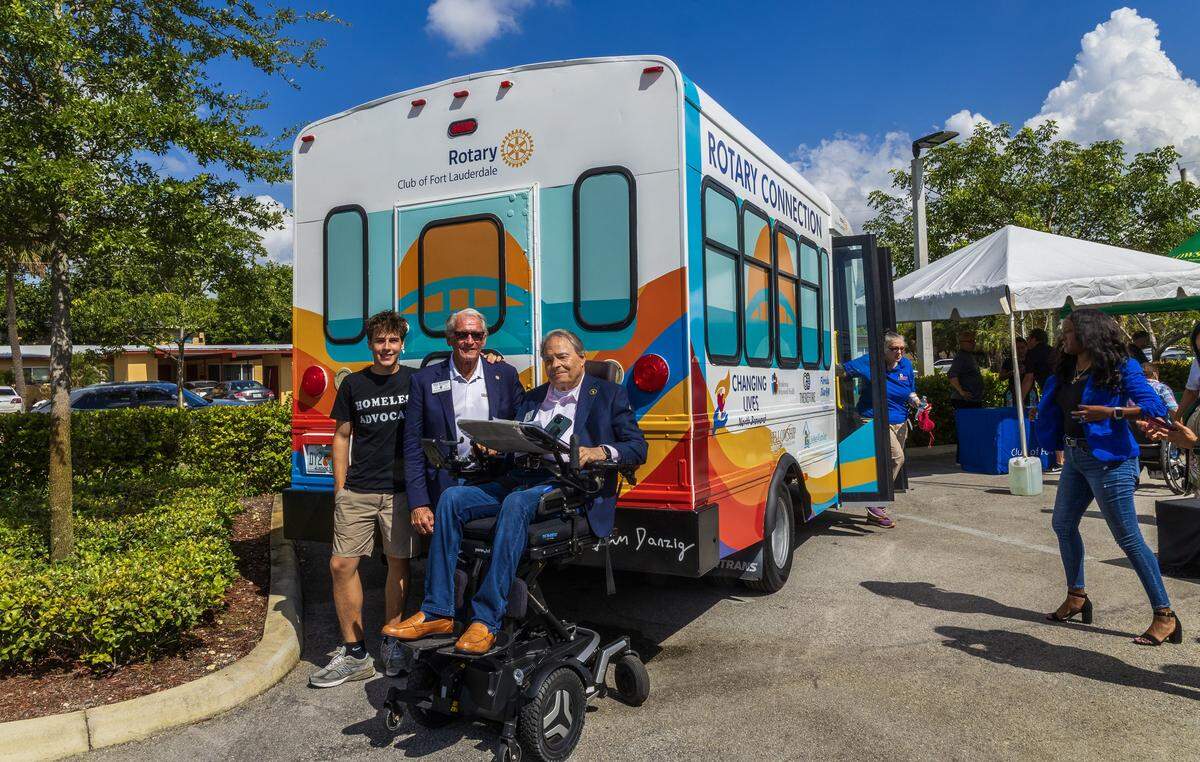
Rick Riccardi, the Board Chairman and founder of Fellowship Recovery Community Organization, said he was impressed by the mayor’s speech and approved of the city’s homelessness response expansion. Riccardi helped create the Rotary Connection, a free bus service that drives homeless individuals to resources in Fort Lauderdale that launched this summer. About 10 to 30 people use the bus each day, he said, and a few have taken steps to recovery.
“The city is very involved with trying to help the homeless resolution, at the same time trying to keep the community tuned into what they’re actually doing so they don’t get frustrated,” Riccardi told the Herald. “They’ve been very active in terms of the problem. This is another step forward in terms of taking positive action.”
The topic of homelessness came toward the end of Trantalis’ speech, which otherwise painted a rather optimistic picture of where Fort Lauderdale is headed.
“We come at a time when it is important for us to look around and say, ‘Wow, this community has really been transformed,’” Trantalis said. “Many of us can remember when Flagler Village was all but a ghost town, Las Olas Boulevard basically closed up shop for the summer and the beach was gone to budget hotels catering to college kids in search of sun and beer.”
Times have certainly changed. The mayor boasted several highlights, including a surge in tourism and more than $10 billion of investment into downtown, including new residential towers, offices, renowned restaurants and public spaces, like the soon-to-be renovated Huizenga Park. Highly anticipated development projects include FAT Village, a mixed-use arts hub that will feature retail, restaurants, office space and residential living.
Unlike in other major cities, the mayor said, more young families are moving into downtown Fort Lauderdale, sparking a mini baby boom. Data from the city’s Downtown Development Authority suggests that Fort Lauderdale has emerged as a happy medium for new residents compared to Miami and West Palm Beach.
“We’re not just living through a renaissance,” the mayor said. “We have created a destiny. Fort Lauderdale has come of age.”
This story was originally published September 30, 2025 at 6:21 PM.