
This $500M redevelopment is underway to transform downtown Fort Lauderdale
In the beginning, there was FAT Village, two blocks of squat warehouses offering art classes, cozy coffee shops and a monthly art walk in downtown Fort Lauderdale.
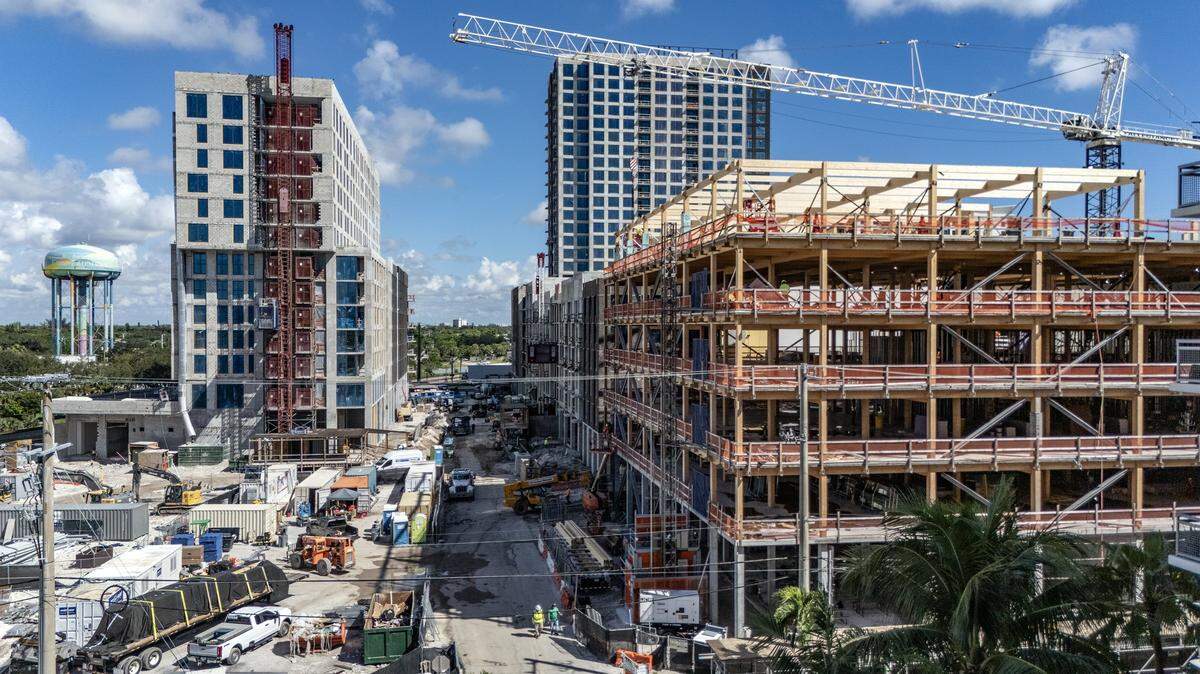
Today, there is a bustling construction site where developers say they’re ushering in a bigger and better version of the city’s art district.
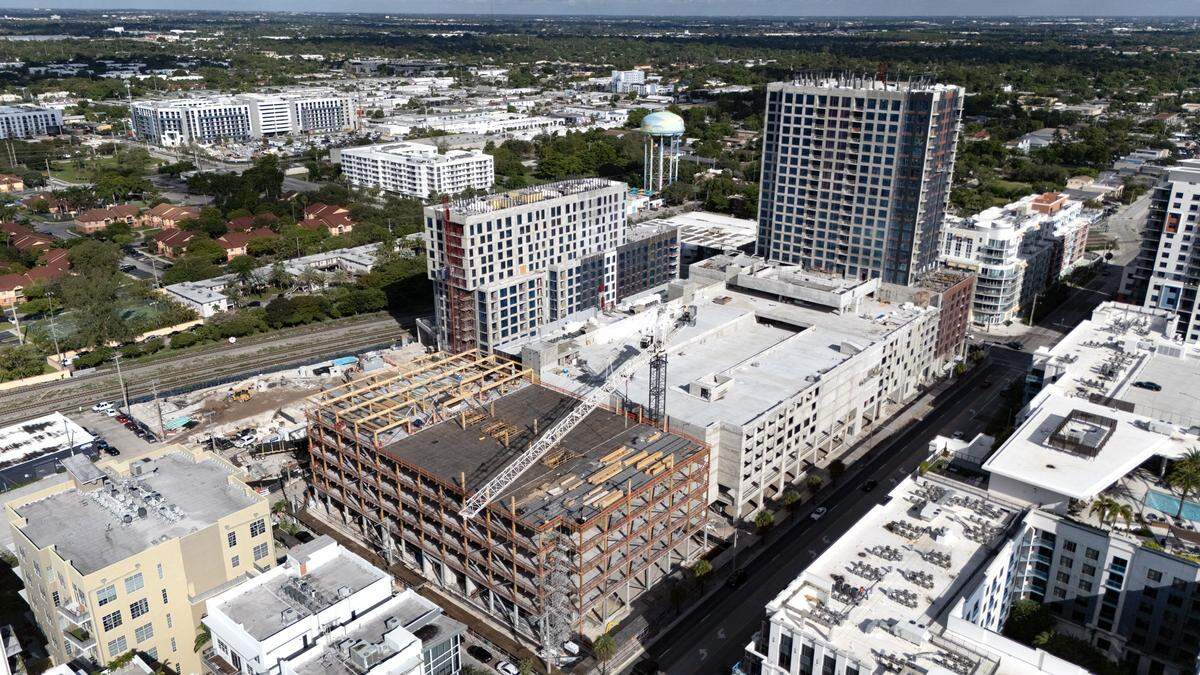
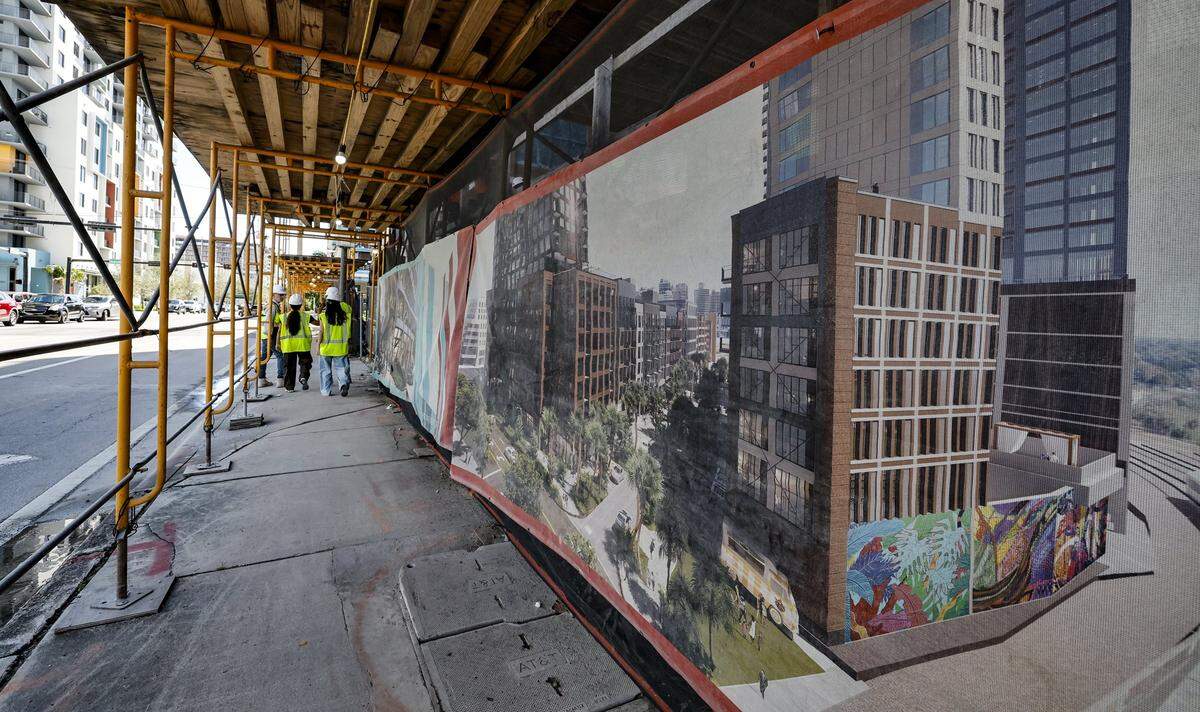
The highly anticipated $500 million redevelopment of FAT Village, an acronym for Flagler, Art, Technology, is well underway in Fort Lauderdale’s up-and-coming Flagler Village. Three towers — one office building and two residential buildings — already stand on the 5.6-acre mixed-use site, which is designed to offer retail stores, art spaces, restaurants and apartments. In late October, workers will “top off,” or place the final beam, on the office building’s structure. The residential buildings were topped off earlier this year.
That means construction on the mixed-use project on North Andrews Avenue is on track to be completed next year. Retail and residential living on the site will be ready in 2027.
“It’s not just a single place to go to work or a single place to live, but a place to live, shop, work, be, hang out,” said Alan Kennedy, the managing director at real estate investment group Hines. “If we only deliver a one-use project, then we failed.”
Founded in 2000 by Doug McCraw and Lutz Hofbauer as an arts nonprofit, FAT Village was a unique, innovative arts hub right next to the train tracks where artists showed their work, students learned figure drawing, and patrons sipped cappuccinos while surrounded by vintage books. Hines then bought the land from four people: FAT Village’s McCraw and Hofbauer and Urban Street Development’s Alan Hooper and Tim Petrillo.
“Instead of just buying the land and saying, ‘see ya,’ we took all four of those guys and made them our equal partners in the development of FAT Village,” Kennedy said. “It’s a Hines-Urban Street Development partnership that’s delivering this project. We felt that the engagement of the local folks, especially the art community leaders, were essential to having a successful project.”
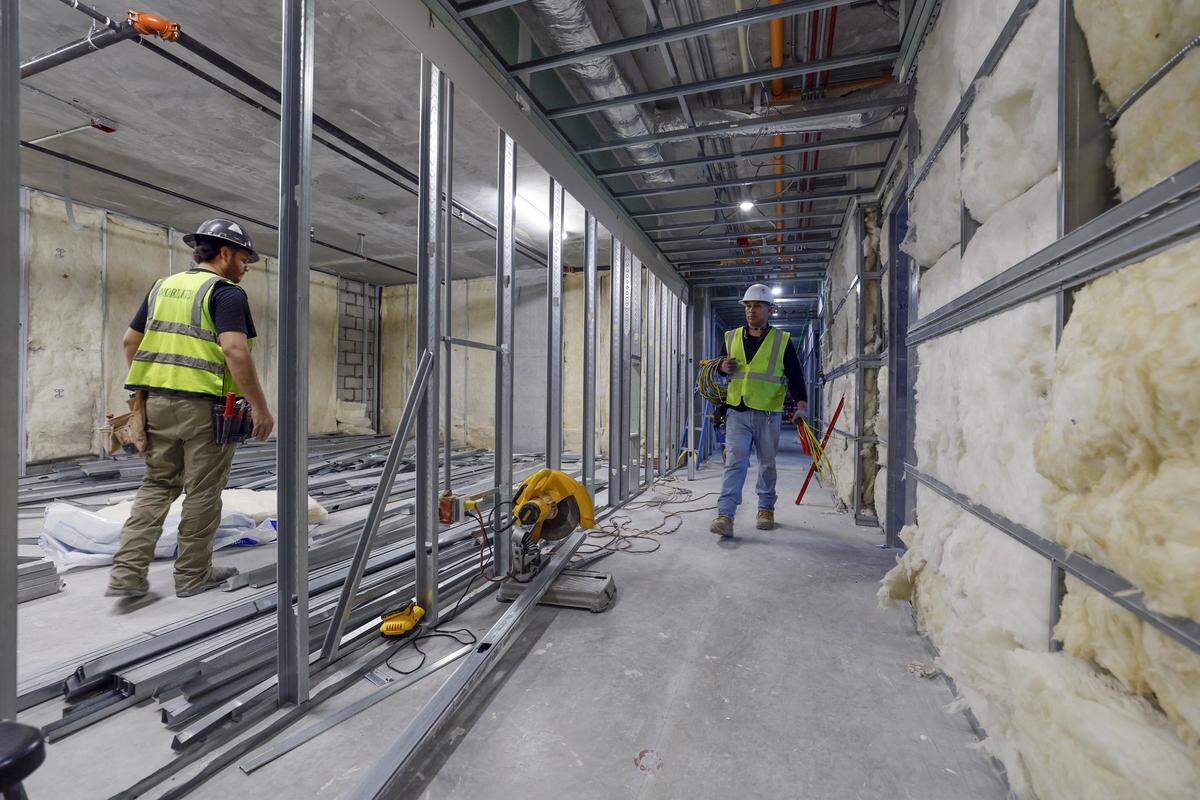
Though the area’s artist warehouses and businesses had to close, like the old-school Irish pub Maguire’s Hill 16, Kennedy said no residents were displaced by the project. Dressed in a hard hat and neon green vest, Kennedy walked through the construction site, pointing out special features in each building designed to promote safety, sustainability and hurricane protection. A fourth building is also in the works, though developers are waiting to decide on turning it into a commercial or residential space.
The base of each building will have retail storefronts and restaurants to promote a lively, walkable community, he said. Developers plan to work with local artists to create murals and sculptures to decorate the space.
The goal, Kennedy said, is to create a hub that benefits the entire Fort Lauderdale community, not just the future FAT Village tenants and residents.
“The whole idea is that the street is activated and friendly and engaging and brings people in, because that’s where communities come together, right?” he said. “We are not trying to make it so that it’s a fortress. We’re trying to make it so that FAT Village bleeds out to the community.”
The redevelopment is one of several projects underway in downtown Fort Lauderdale, which is in the midst of a real estate boom while attracting companies, young professionals and young families in recent years. FAT Village’s multi-million dollar makeover has been an economic boon for the downtown area, said Jenni Morejon, the president and CEO of Fort Lauderdale’s Downtown Development Authority.
“It just further demonstrates that there’s a growing critical mass in Flagler Village with FAT Village coming,” Morejon said. “There’s an employee population, a resident population that will support retail.”
Living in the Village
FAT Village plans to offer about 600 rental units between its two residential buildings. There’s the taller Building One, as Kennedy calls it, that stands 24 floors tall and holds 355 “luxury” units. The shorter, 13-story building will have 246 workforce units that are less expensive to rent.
“We’re trying to make it so that somebody who doesn’t make $150,000 a year, like what you see in the rest of Flagler Village, can have a place to live here,” Kennedy said. “It’s very similar to the tall one. It’s kind of like the punk kid sister. It’s smaller, but it’s a little edgier.”
A finished apartment unit in the taller building overlooks nearby Sistrunk Marketplace. Developers say its ideal for the young professionals they’re trying to attract: two bedrooms, two bathrooms, in-unit washer and dryer and a dog park downstairs.
Transit is another selling point, developers said. Not only is the Fort Lauderdale Brightline station walking distance from FAT Village, the site’s taller building also includes a parking garage meant for residents, employees and the general public to use.
The timber office building
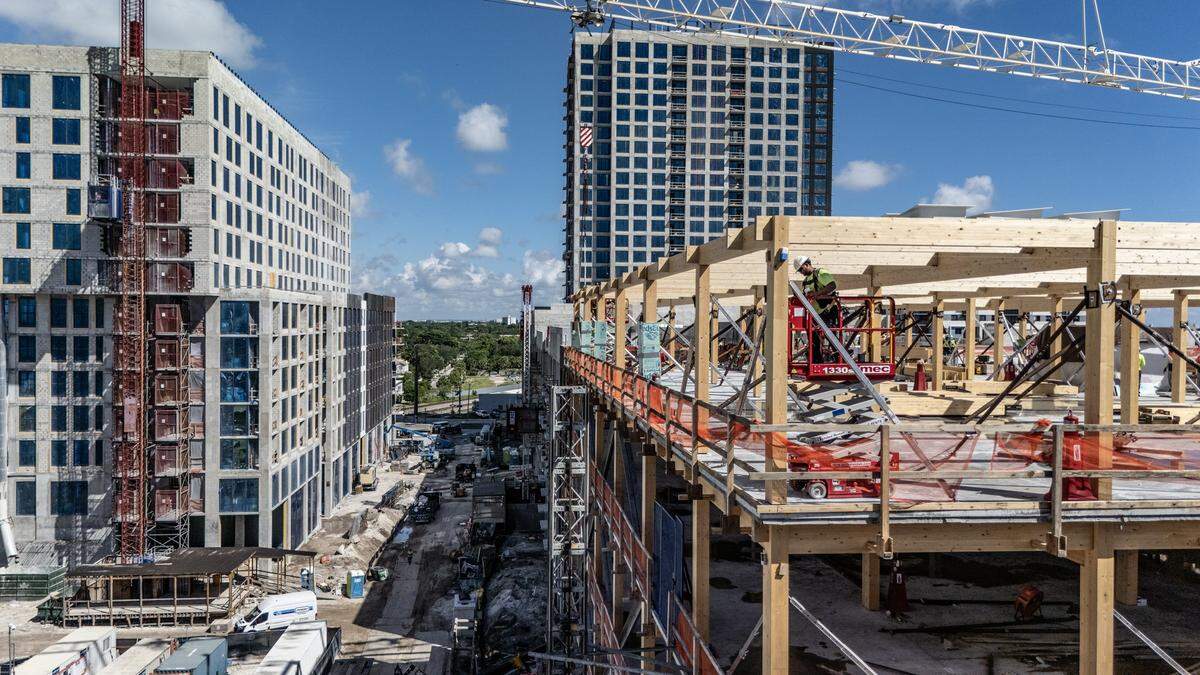
Perhaps FAT Village’s most unique feature is its six-floor office building, called T3. That stands for Timber, Transit and Technology.
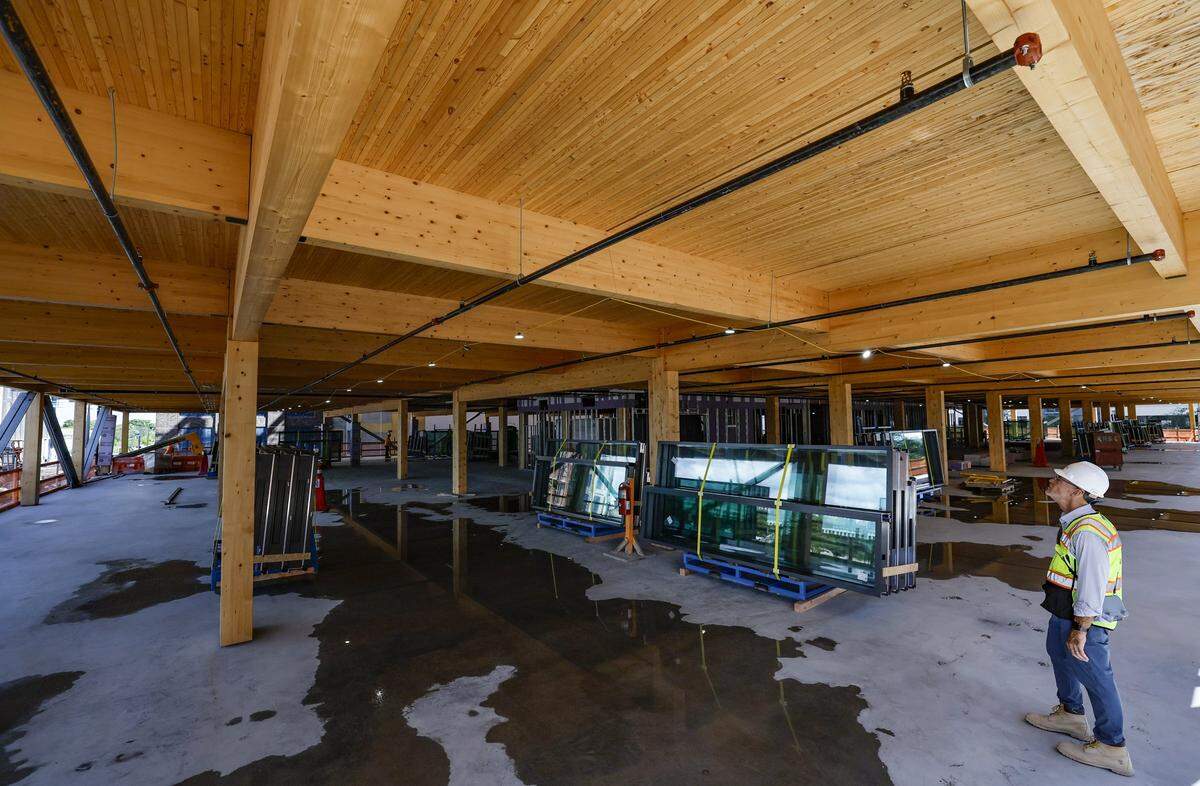
Unlike the staggering, shiny corporate towers of Manhattan and Brickell, the 180,000 square-foot T3 building is largely made of timber, which adds to the project’s sustainability, Kennedy said. The pine and spruce wood used to build the frame of the building comes from a managed forest where trees are grown, harvested and regrown for construction purposes. Building with timber is more eco-conscious than steel and concrete, he said. (Contrary to popular belief, he added, the timber is fire retardant and safe.)
The light-colored, unfinished wooden structure will remain visible on the inside as large windows allow for natural sunlight to reach into the center of the building. The aesthetics of the building, along with its private balconies, creates an indoor-outdoor vibe, Kennedy said. Amenities at T3 include a fitness center, bike storage, a conference room and a shared workspace in the lobby.
“It’s a very important thing, making guests of the building feel more comfortable,” he said.
Several companies and businesses have already shown interest in renting out the retail spaces and the office building, though no final contracts have been signed yet. Christina Jolley, the senior vice president at Blanca Commercial Real Estate, said her team is negotiating with companies from a variety of industries, including tech, law, healthcare and marketing.
Some potential tenants want to relocate their workforce to the downtown Fort Lauderdale area, while other companies are interested in hiring more employees, she said. FAT Village’s amenities, housing, retail and nearby public transportation are “what tenants have been looking for,” Jolley said.
“The fact that we now have office there really signals to the market that Fort Lauderdale has matured,” she said.
This story was originally published September 27, 2025 at 4:30 AM.