‘These stories are the truth’: New exhibit about slavery opens in Broward County
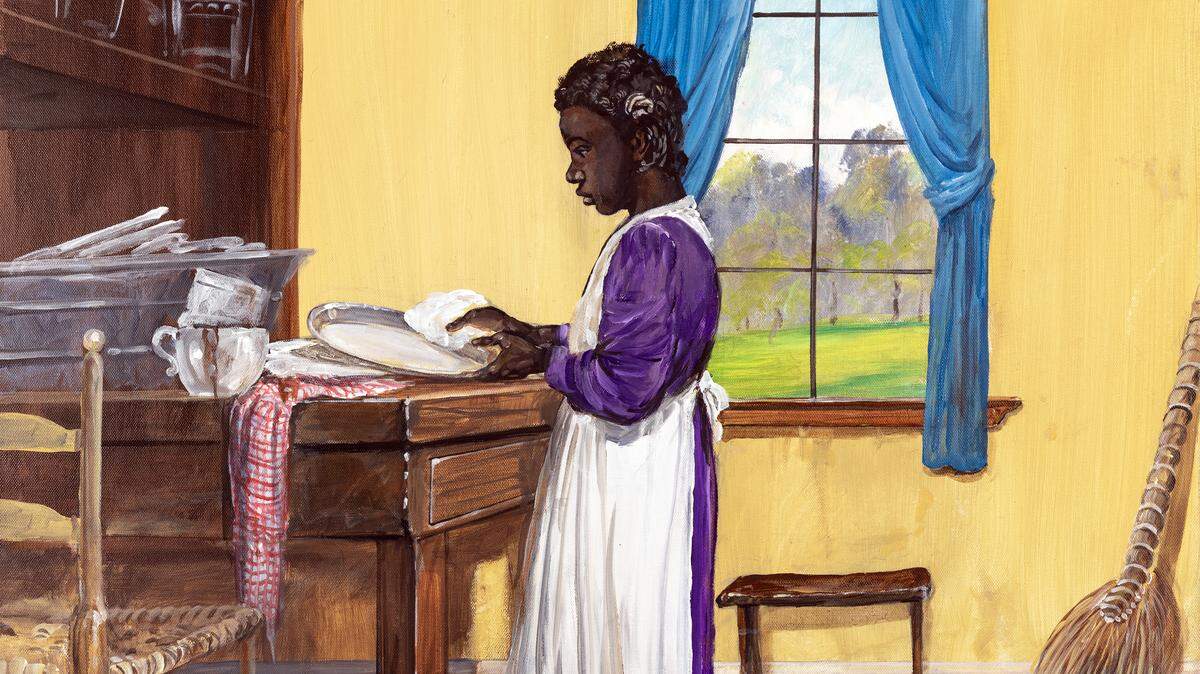
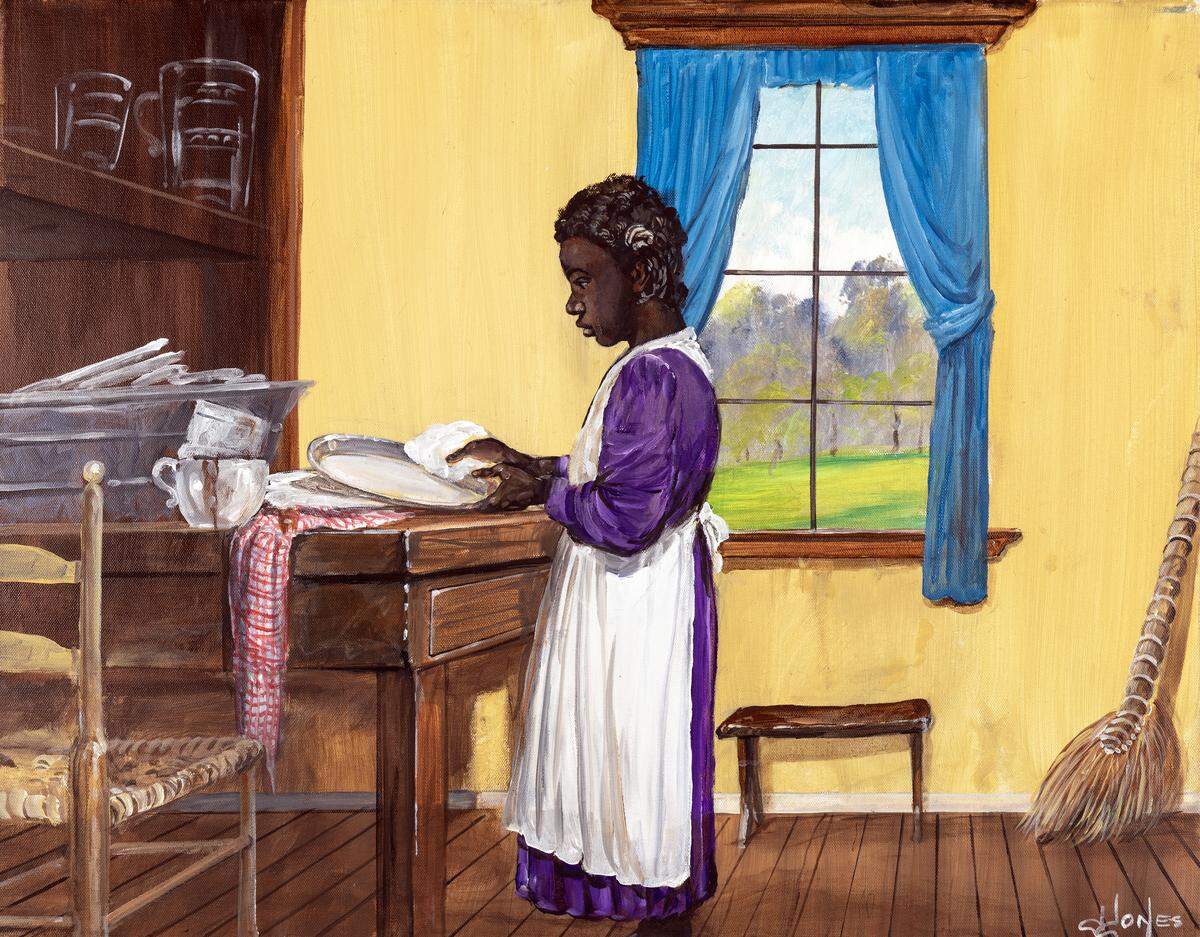
A young Black enslaved girl in a bright purple dress shines a silver platter beside a window that shows off a bright green yard filled with trees.
That is the image depicted in “A Likely Girl,” a painting by artist John W. Jones, and it is one of the pieces that will be a part of the traveling exhibit, To Be Sold: Enslaved Labor and Slave Trading, on display at the African American Research Library and Cultural Center in Fort Lauderdale starting Saturday.
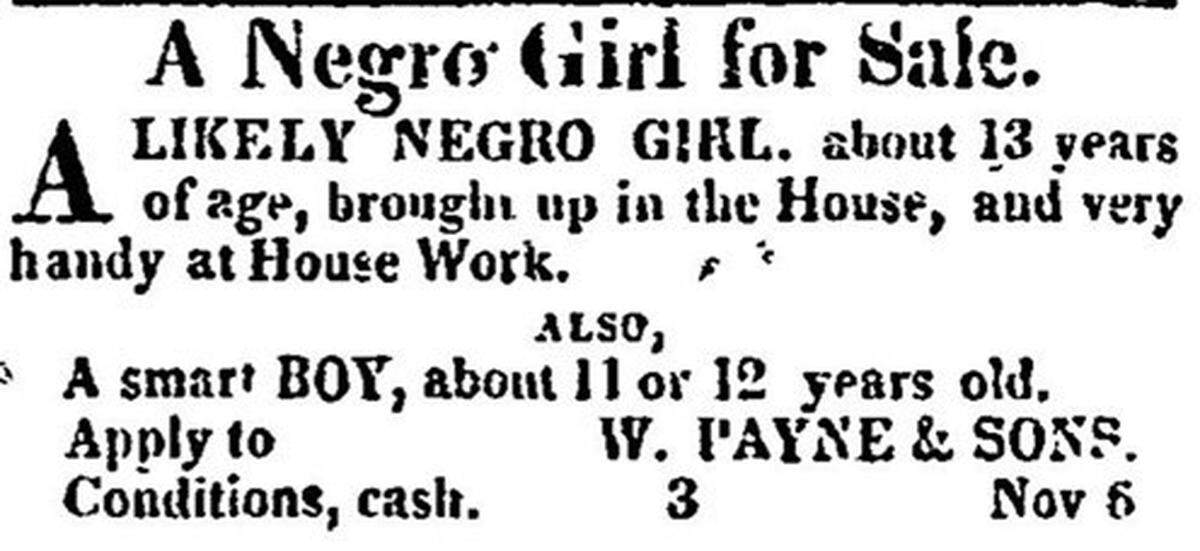
For Tameka Hobbs, the library manager for the AARLCC, the painting is more than just a young enslaved girl doing household chores. The artist’s title provides a subtle comment on what a commodity the child is: “The fact that part of this girl’s value is in her potential to give birth to other slaves,” said Hobbs. “It’s a very painful reminder of this girl’s life and what it may have been like.”
Curated in collaboration with Partners in Racial Justice and the Gullah Geechee Cultural Heritage Corridor, the traveling exhibit offers a rarely seen window into South Carolina’s role in the domestic slave trade. The exhibit comes at a moment when many feel like Black history is facing revisionism. In Florida, state laws already limit how Black history can be taught in schools, prohibiting instruction that would potentially make one racial group feel responsible for historical acts. Public school libraries have had books removed that might have included content that doesn’t align with the statutes.
Florida’s example is scaling up: Last month, the Trump administration announced plans for an internal review of eight Smithsonian museums, including the Museum of African American History and Culture, as part of the America 250 campaign, a purported nonpartisan effort to commemorate the country’s 250th anniversary. Trump specifically pointed out his frustration with exhibits that highlight “how bad slavery was.” The announcement sparked uproar among local historian and archivists.
RELATED: ‘Rewrite history’: Miami historians alarmed over review of Smithsonian exhibits
Djuanna Brockington, interim executive director of the Gullah Geechee Cultural Heritage Corridor, said it’s important to tell the stories of slavery and Gullah Geeche people because “these stories are the truth.”
“It’s our history. You can’t pretend that something hasn’t happened or pretend it was a different version of what we understood it to be,” she said. “We have to keep telling these stories to shine a light on the truth and prepare our future and ourselves for a better future.”
Hobbs agreed, saying nationally, there are people who would rather not talk about slavery and its legacy. “They’re interested in a much more sunny, glowing narrative about the United States of America, especially as we enter into the semiquincentennial,” she said. “I just think we can never forget.”
The exhibition’s debut will be preceded by a conversation between author Margaret Seidler, a white Charleston native, author, and descendant of slave traders whose book “Payne-ful” Business: Charleston’s Journey to Truth” chronicled her family’s history, and South Carolina Senator Mia S. McLeod, a Black legislator whose ancestors had been enslaved by Seidler’s ancestors.
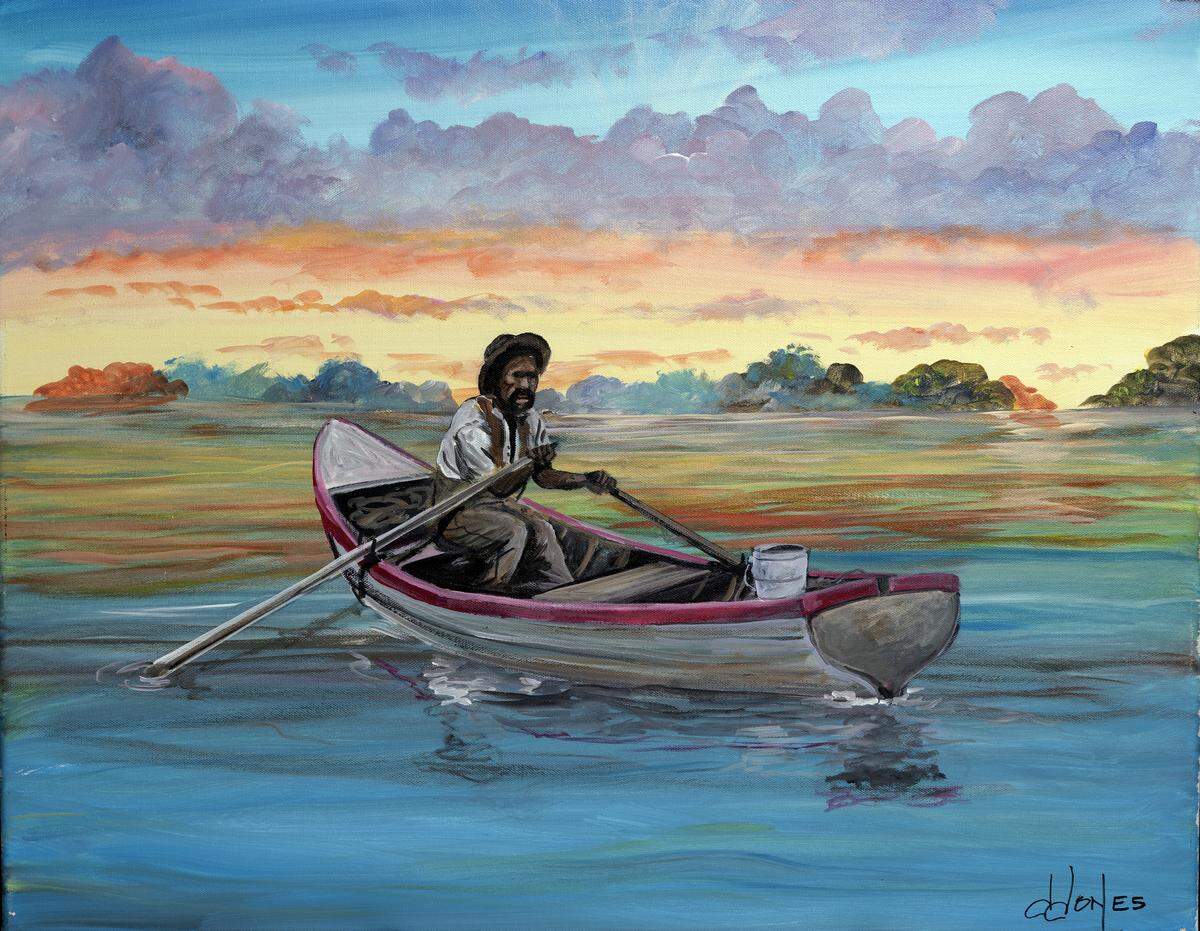
Seidler and McLeod connected via email and have since developed a close relationship, holding conversations across the country about their shared history. “I’m hoping there will be a conversation around restorative justice, but I’m hoping that there is a reclamation of one’s culture, especially the Gullah Geechee,” Brockington said.
Brockington said the exhibition and the conversation is also part of the GGCHC’s efforts to share the history of Gullah Geechee people outside its coastal corridor. Gullah Geechee people are descendants of West and Central Africans who were enslaved on the rice, indigo and cotton plantations on the Sea Islands of the lower Atlantic states, including part of north Florida.
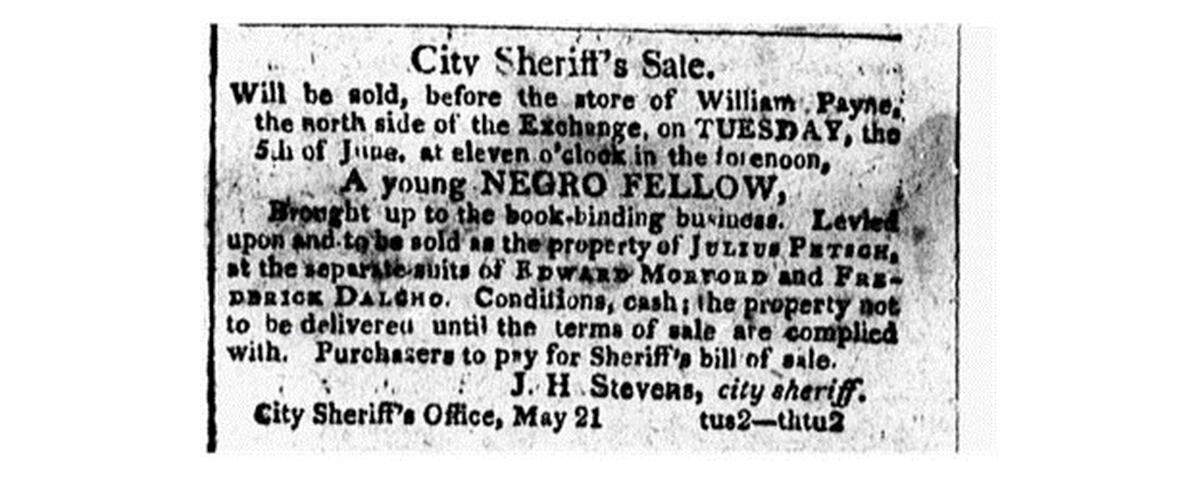
Paired with the exhibit will be a collection of slavery documents from AARLCC, such as bills of sale for slaves, insurance documents, and emancipation documents, Hobbs said. Items from the Dorothy Porter Wesley rare book collection of slave narratives and abolitionist tracks will also be included.
Along with the gripping visuals, Hobbs said she hopes people walk away from the conversation with the understanding that people can have difficult conversation and can “wrestle with the difficult parts of our past” and acknowledge the harm that was done because of slavery.
“Slavery is undeniable as a reality for this country. It helped to bolster and fuel the economic success of this country for centuries, and that it was done in an extractive and exploitative way,” she said.
IF YOU GO:
What: To Be Sold: Enslaved Labor and Slave Trading exhibit
Where: African American Research Library and Cultural Center, 2650 Sistrunk Blvd., Fort Lauderdale
When: Sept. 6-Dec. 27; Cultural Conversation: A Bridge to Truth and Connection with Sen. Mia S. McLeod and Margaret Seidler on Sept. 6 at 3 p.m.
Price: Free
This story was originally published September 3, 2025 at 4:30 AM.