Teen boy identified days after drowning in choppy waters off Fort Lauderdale beach
-1.jpg "A teenage boy died swimming in the ocean off Fort Lauderdale Friday afternoon, April 18, 2025, according to police. Police divers found his body Friday night.")
Fort Lauderdale police on Monday identified the teen boy who died in an accidental ocean drowning days earlier.
He is Jerry Hyppolite, 13, from Palm Beach County, said police spokeswoman Casey Liening. He was swimming with friends near Lifeguard Tower 3 at 800 Seabreeze Boulevard around 4:30 p.m. Friday when he disappeared in the water, according to Fort Lauderdale Fire Rescue.
Frank Guzman, a Fire Rescue spokesman, said lifeguards rescued several of Hyppolite’s friends, who were also struggling in the rough water, but were unable to locate the teen. Lifeguards then “immediately called for an all-out search,” Guzman said.
“We conducted the nearly two-hour search using [Broward Sheriff’s Office’s] helicopter, two fire boats, personal watercraft, lifeguards in the water and firefighters on the shore,” Guzman said. “Unfortunately, despite our best efforts alongside our partners at Fort Lauderdale Police, the Broward Sheriff’s Office, and the U.S. Coast Guard, he was not found alive.”
Liening said Fort Lauderdale police divers found the boy’s body just before 8 p.m.
According to Local 10, Hyppolite was visiting Fort Lauderdale with a group from the Team Jordan Basketball Club in Lake Worth. The Herald has reached out to the club, but has not immediately heard back.
Rough surf conditions, including rip currents and high winds, continued through the weekend.
Lifeguards rescued 33 swimmers between Friday and Sunday, and conducted 4,350 “preventative actions,” defined as making contact with swimmers prior to them being in distress,” Guzman said.
So far this year, Fort Lauderdale Ocean Rescue lifeguards have saved 145 swimmers in distress, including the 33 from over the weekend, Guzman said.
According to the National Weather Service, rip current risk conditions are expected to continue in coastal Palm Beach, Broward County and Miami-Dade counties through Tuesday night.
Rip currents are defined as powerful, channeled currents of water flowing away from the shore, and typically extend from the beach through the surf zone, according to the National Oceanic and Atmospheric Administration.
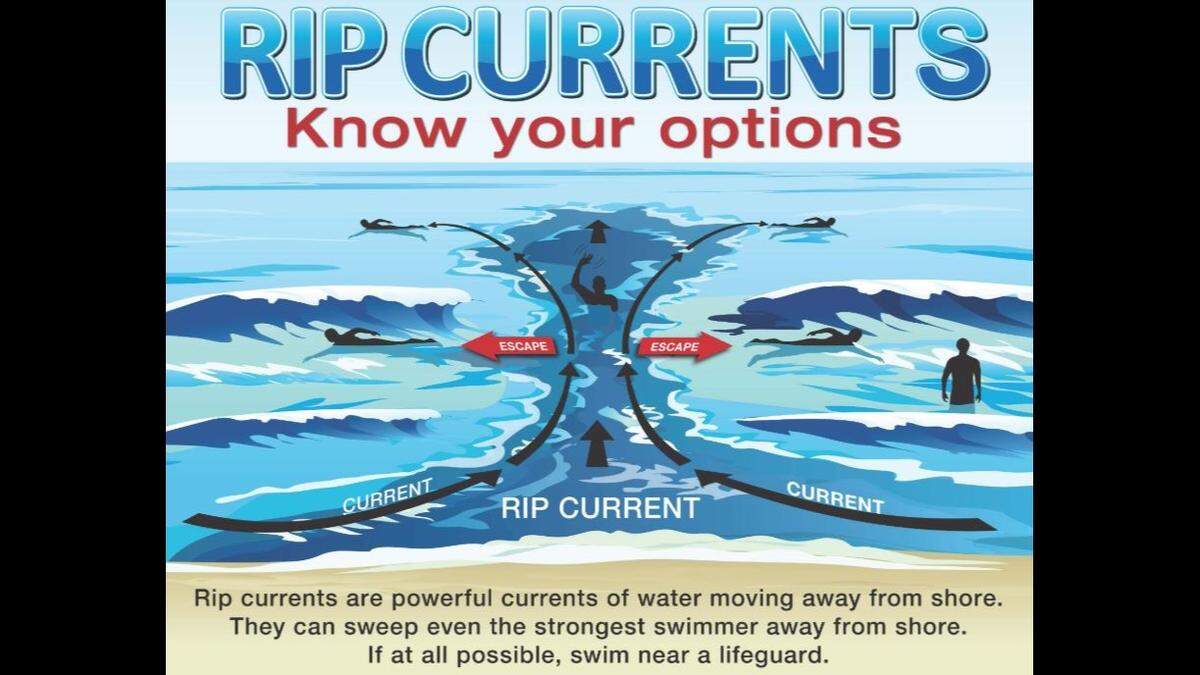
Rather than fight the water trying to swim directly back to the beach, experts encourage people caught in rip currents to swim parallel along the shoreline until they escape their pull. Then, they should swim at an angle to get back to shore.
Duly important, beachgoers should always swim where lifeguards are stationed.
“We urge swimmers to heed lifeguards’ warnings and stay close to shore. Ocean Rescue is closely guarding the beaches. Please, always check with the nearest lifeguard, swim near a lifeguard tower or just avoid the surf altogether,” Guzman said.