Hallandale mayor won’t face Sunshine charges. Prosecutors say it’s not worth pursuing
When the Broward County inspector general’s office dug into a Hallandale Beach nonprofit that was run by the city’s elected officials, investigators called the findings “disturbing.”
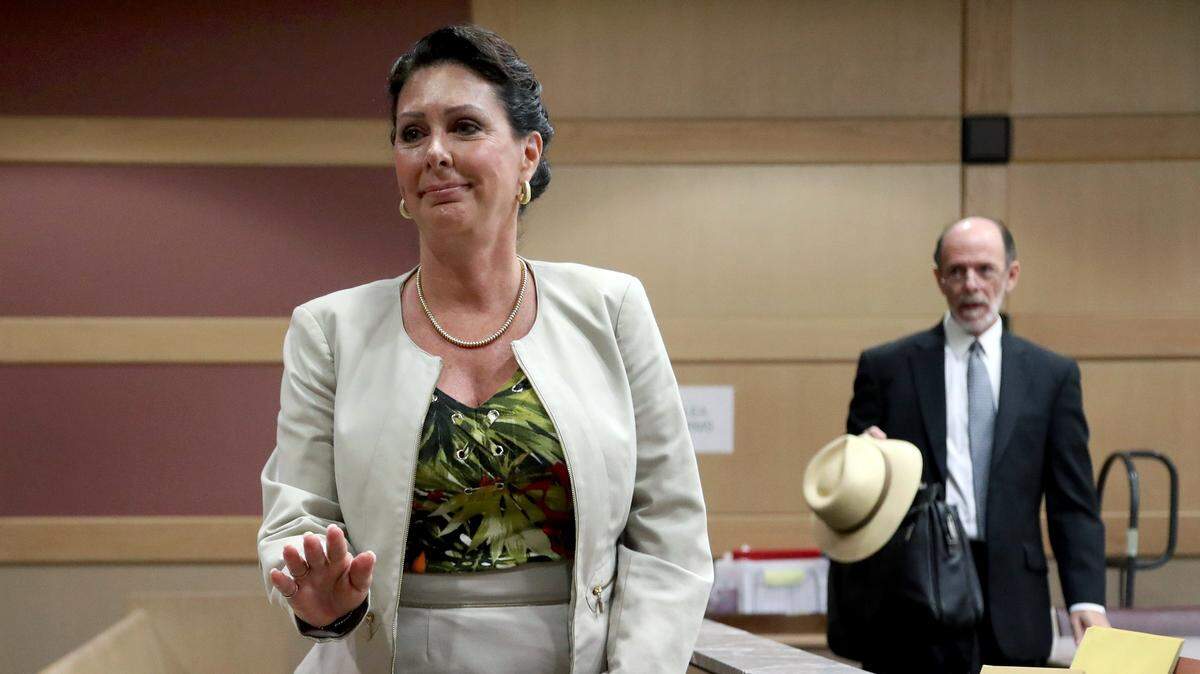
Mayor Joy Cooper committed “knowing” violations of Florida’s Government in the Sunshine Law by attending more than two dozen meetings held without public notice, according to a May 2018 report, and ran afoul of public records laws by refusing to turn over the nonprofit’s financial documents. Two other city commissioners also violated the Sunshine Law by attending meetings that weren’t publicly noticed, the report said.
“City officials, wearing the hat of foundation board members, made at least $239,693.11 in expenditures outside the public’s view and reach,” the inspector general’s office found.
There won’t be any consequences.
In an investigative closeout memo obtained this week by the Miami Herald, the Broward State Attorney’s Office didn’t address whether any crimes had been committed. Instead, prosecutor Christopher Killoran wrote that the decision not to bring charges was based on the “sheer amount of resources” that would have been required and the “low likelihood of conviction given the nature of the charges and the specific facts of the case.”
Prosecutors also chose not to pursue any fines, which can run up to $500 for Sunshine Law violations that aren’t committed “knowingly” and therefore are considered non-criminal offenses. Intentional violations of open government and public records laws are misdemeanors.
The closeout memo, dated Oct. 13, 2021, means Cooper has successfully avoided new criminal charges. A jury acquitted her in 2019 of allegations that she accepted campaign cash over the legal limit from a lobbyist and undercover FBI agents posing as developers. She was reinstated to her position as mayor after the trial.
“I am pleased that the State Attorney reviewed and realized there was no wrongdoing of any of the volunteers that worked to make the city better,” Cooper said in a text message Thursday.
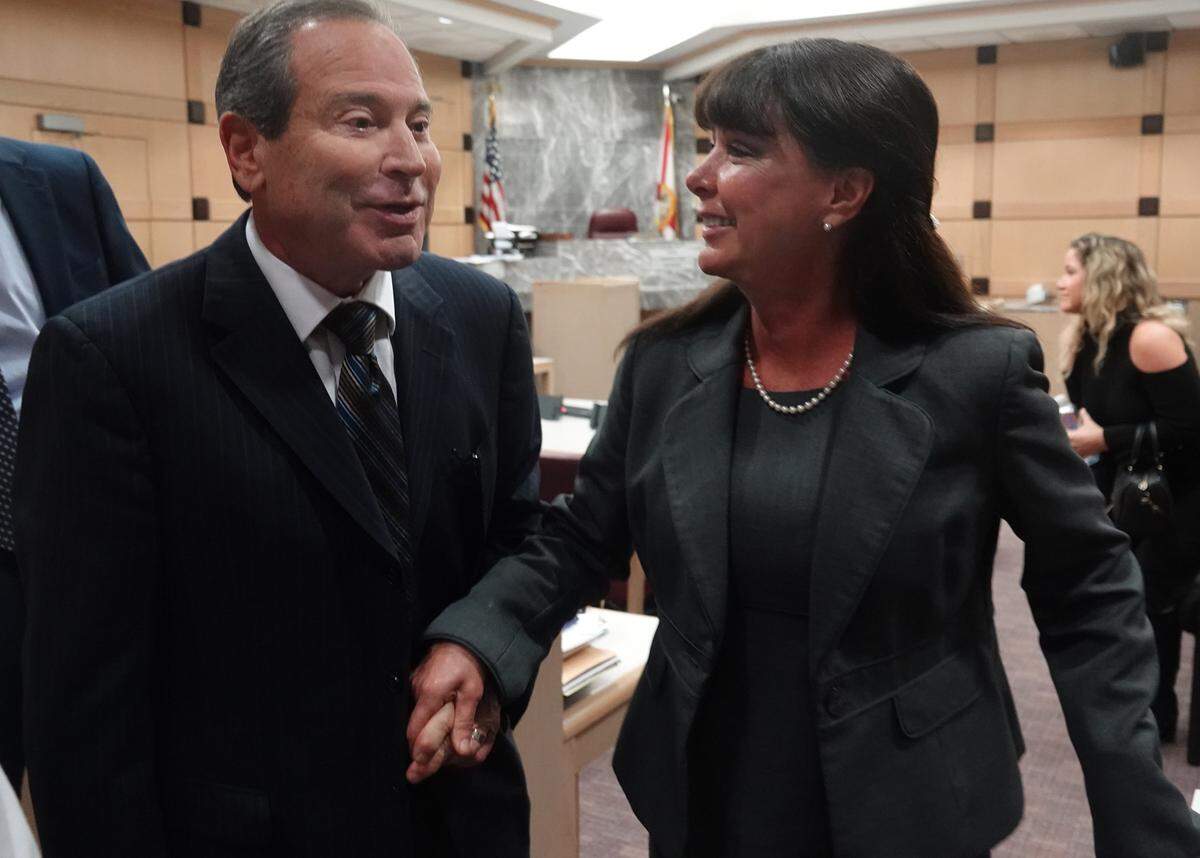
Cooper told the Herald the nonprofit Future Foundation “never conducted city business” and operated on its own, “like Rotary Clubs or Kiwanis Clubs.” She said the group raised money to “help promote after-school activities and provided grants to schools and other nonprofits to help under-served children” in the city, and denied that the foundation had received and spent public funds.
At the foundation’s meetings, Cooper added, “we didn’t discuss city business, we discussed our business. Our business was grants, nonprofits and helping students in the city.”
Report details city officials’ involvement
But the inspector general’s report said the now-defunct foundation was “created, led, and administered by city officials and staff on city property,” and that some of its money came from “city funds, employee payroll deductions, and private developers who sought city construction projects.”
The report also said Cooper had been told by attorneys that the foundation was subject to open government and public records laws.
Pamela Marsh, executive director of the First Amendment Foundation which advocates for government transparency in Florida, said the State Attorney’s Office decision was “highly disappointing.”
“In order for the Sunshine Law to be respected and complied with, the penalties have to be enforceable and enforced,” Marsh said. “There’s a reason why the Legislature has put those penalties in the law.”
Marsh said that, based on the investigative report, the Future Foundation should indeed have been subject to the Sunshine Law and public records requests.
“If councils or committees like this are allowed to do business in the dark using taxpayers’ money without consequence, there is no transparency and there’s flouting of the law,” she said.
A spokesperson for the State Attorney’s Office, Paula McMahon, defended the office’s decision in a statement.
“The Broward State Attorney’s Office has a record of pursuing and prosecuting public corruption cases and Sunshine Law violations and we will continue to do so,” she said. “Each allegation is reviewed extensively and decisions are made on a case-by-case basis.”
Experts not surprised
The closeout memo notes that a former city commissioner named in the inspector general’s report, Bill Julian, died in August. The report also names Anthony Sanders, a former commissioner who resigned in 2017 after a separate inspector general’s report accused him of using his position to award nearly $1 million to a nonprofit that made payments to his church and family. (The State Attorney’s Office declined to investigate that matter.)
Legal experts told the Herald the decision not to bring criminal charges against Cooper wasn’t surprising for several reasons, including the difficulty in securing convictions against public officials, the potential for a dispute over whether the Future Foundation was subject to the Sunshine Law, and the State Attorney’s Office’s previous failed case against Cooper.
Still, “it leaves a bad taste in the mouth of the public,” said David Weinstein, a Miami attorney and former state and federal prosecutor. “It sort of reinforces the opinion that public officials get specialized treatment and are not subject to the same scrutiny that the average person is.”
Bob Jarvis, a law professor at Nova Southeastern University, said the outcome was what he would have expected. The candor in the closeout memo — acknowledging that a reluctance to expend resources on the case and a perceived unlikelihood of conviction were deciding factors — may be unusual, Jarvis said, but it reflects the way prosecutors think.
“Even when closeout memos don’t have this level of candor, these are the calculations that prosecutors go through every day,” he said. “If there’s any chance you’re not going to be successful, you move on.”