
Former Hallandale Beach Mayor Joy Cooper cleared of corruption charges
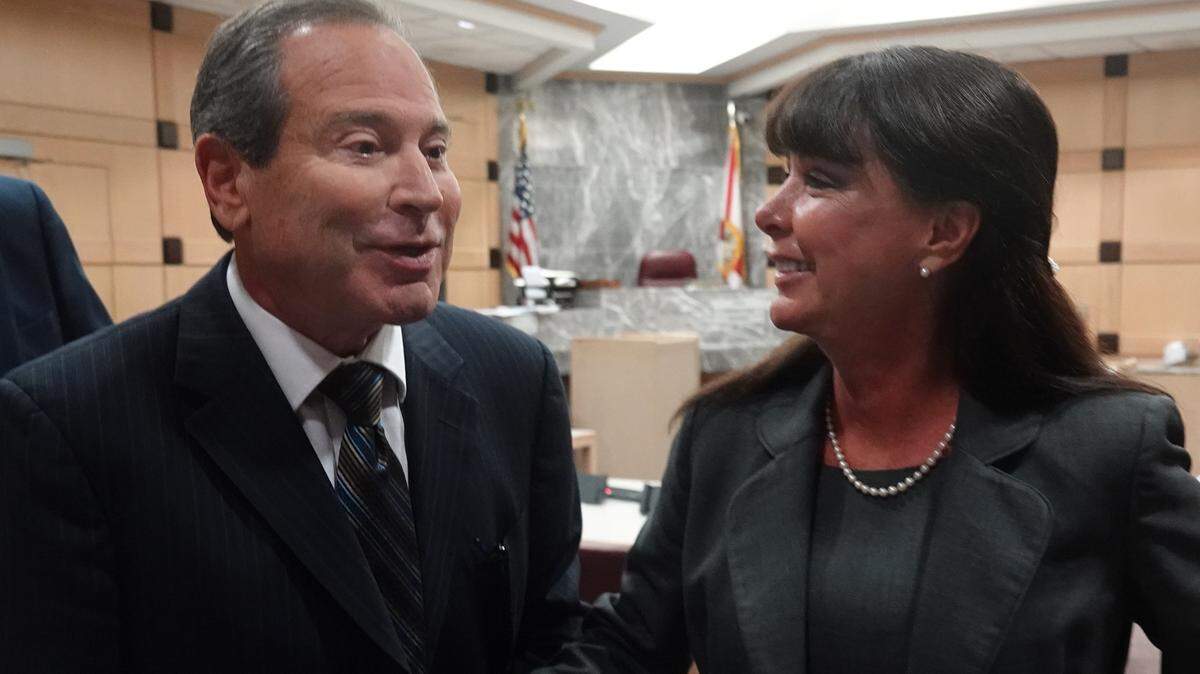
A jury acquitted former Hallandale Beach Mayor Joy Cooper on all six counts related to allegations that she took part in an illegal scheme to accept campaign cash in excess of the legal limit from a lobbyist and undercover FBI agents posing as developers.
Cooper cried as she sat next to her attorney in a Fort Lauderdale courtroom after the verdict was read around 5:30 p.m. Tuesday following two hours of jury deliberations. She embraced dozens of her supporters who had packed the courtroom.
“I just thank God,” Cooper told reporters outside the courtroom. “I’m just thankful that I have peace in my life back.”
Cooper, who was the mayor of Hallandale Beach for 13 years until her arrest in 2018, declined to answer a question about whether she might run again.
“I’m gonna go spend some quiet, peaceful time with my family and loved ones and enjoy Thanksgiving,” Cooper said.
Following a week of testimony, the Broward state attorney’s office rested its case Friday and Cooper’s legal team didn’t call any of its own witnesses. Cooper told the judge Tuesday morning that she did not want to testify in her defense.
During closing arguments, Catherine Maus, the state’s lead prosecutor on the case, leaned on a series of audio and video recordings taken by the undercover agents to support the argument that Cooper knew exactly how the scheme would play out in 2012.
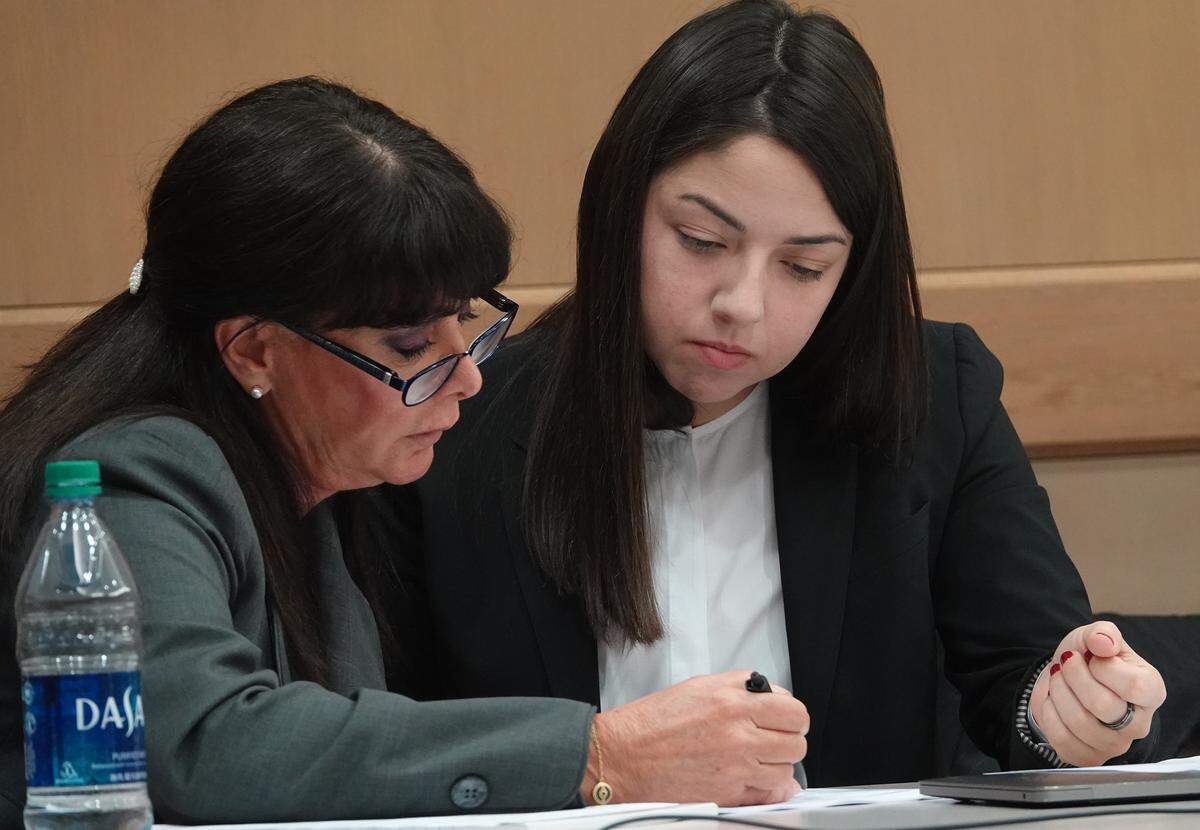
The government claimed that Cooper agreed to have lobbyist Alan Koslow funnel $5,000 from the agents — who were posing as developers pursuing a local project — to her campaign through checks from teachers at a school for Russian families, so that no check would exceed the limit of $500.
In one video, an agent tells Cooper she would know the developers’ money had come through when she received “a bunch of Russian checks.” Cooper laughs and repeats the phrase.
“She knew the $5,000 was funneled from the Russians into her campaign,” Maus told the jury.
Maus also highlighted an October 2012 meeting between Cooper and the undercover agents at the Flashback Diner in Hallandale Beach, where Cooper told the agents that one of the teachers’ checks had bounced. This was “direct evidence of the defendant’s knowledge of the scheme,” Maus said.
But Cooper’s attorney, Larry Davis, said Maus was jumping to conclusions that the evidence didn’t support.
Davis repeated what he told the jury during opening arguments last week: that the state’s case “begins and ends” with Koslow, the once influential lawyer and lobbyist whom the FBI was investigating as part of an inquiry into government corruption around South Broward.
Koslow later wore a wire for the government and was charged with money laundering unrelated to Cooper. He agreed to testify against the mayor as part of a plea deal.
According to prosecutors, the undercover agents gave Koslow $8,000 stuffed into a Dunkin’ Donuts bag, much of which he then passed on to Julia Yaremchuk, a client of his who ran the Russian school. Yaremchuk then allegedly reimbursed the teachers who had written checks to Cooper’s campaign.
Davis pointed to statements by Yaremchuk in which she wavered on whether Koslow ever gave her the money. He suggested that Koslow, the state’s star witness, may have been conning the FBI agents the whole time by keeping the money they gave him, pointing to Koslow’s admitted cocaine habit at the time and his apparent need for cash.
“Koslow is the only witness who says Joy Cooper knew about this,” Davis said.
He asked the jury to imagine Koslow as a car salesman.
“You know what you know about Alan Koslow: Would you buy that car?” Davis said.
Cooper faced six criminal counts, including three counts of official misconduct — one for each of the campaign treasurer report summaries she submitted in 2012 that listed the Russian teachers as contributors.
She was also charged with campaign contribution violations, conspiracy to commit such violations, and soliciting a campaign contribution in a government building.
At an initial meeting Cooper had with Koslow and the fake developers at City Hall in July 2012, prosecutors said Koslow wrote down a number that represented what the developers should contribute to her campaign as they sought support for a local project.
Cooper told Koslow to “add a zero,” according to an FBI recording of the meeting.
The mayor was facing a campaign challenge at the time from rival politician Keith London.
Davis cautioned the jurors that their verdict shouldn’t be a broader referendum on money in politics. Fundraisers “bundle” checks from groups of supporters all the time, he said, and it’s legal.
“It would be a miscarriage of justice if you would find Joy Cooper guilty because you don’t like the way fundraising is done,” Davis said.
Koslow testified that bundling is illegal if the donors are reimbursed, which is what prosecutors said happened in this case. Cooper’s campaign reports listed the teachers, but not the fake developers, as donors.
Maus said the evidence shows Cooper knew the developers and Koslow were sneaking extra cash into her campaign through fraudulent contributors.
“You don’t have to believe Alan Koslow to find the defendant guilty,” Maus said. “You can take [Cooper] at her word.”
Cooper filed a motion for acquittal Friday, arguing that the state had failed to produce any evidence of her knowledge of the scheme.
Circuit Judge Martin S. Fein said Tuesday morning that the argument was “very compelling,” but he said the question of Cooper’s complicity was still in dispute and therefore for the jury to decide.
“That is a decision for the jury to make,” the judge said. “That’s not my decision.”
This story was originally published November 26, 2019 at 4:34 PM.