She was just acquitted and reinstated as mayor — but she could face new charges
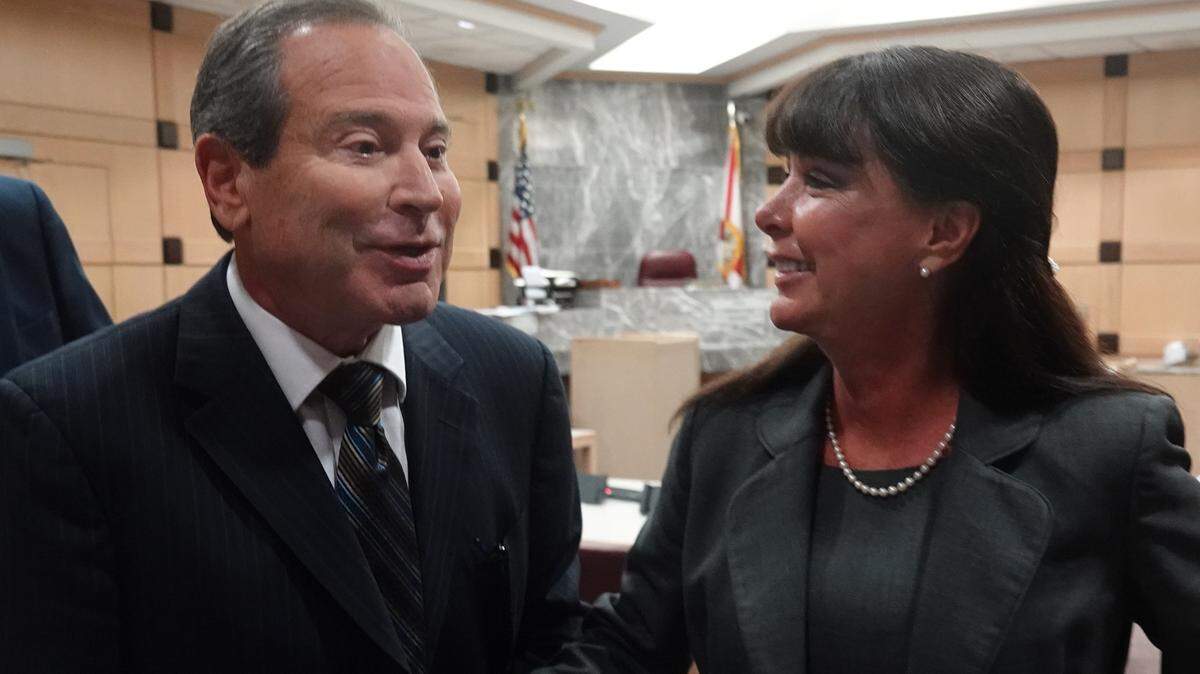
On Wednesday night, Hallandale Beach Mayor Joy Cooper is expected to sit on the dais at a City Commission meeting for the first time since she was arrested and suspended from office in January 2018.
Last week, Gov. Ron DeSantis reinstated Cooper after a state jury found her not guilty on six criminal counts, including multiple felonies, related to allegations that she accepted campaign cash over the legal limit as part of an FBI sting.
But Cooper isn’t out of the woods yet. Representatives for the Broward State Attorney’s Office told the Miami Herald on Monday that prosecutors are still considering whether to bring misdemeanor charges against Cooper and two former Hallandale Beach commissioners accusing them of violating Florida’s Sunshine Law, unrelated to last month’s trial.
In May 2018, the Broward Office of the Inspector General found that Cooper had violated the law 26 times by attending meetings with no public notice as president of the Future Foundation, a 501(c)(3) nonprofit that engages in “charitable and philanthropic endeavors of all kinds,” according to its bylaws.
The report said Cooper’s violations were “particularly troublesome” because she refused to turn over documents from the nonprofit in response to a resident’s public records request, “even after receiving legal opinions advising her that the foundation was obliged to comply with the state’s public records laws.”
Paula McMahon, a spokeswoman for the Broward State Attorney’s Office, told the Herald the matter is “still being reviewed.” She declined to provide more information on the status of the review.
“The IG’s office issued its report and sent it to our office to review for a decision on whether charges should be filed,” McMahon said, directing the Herald to “check back with us periodically to see if the review has been completed.”
The inspector general found that the foundation “amounts to an arm” of city government, meaning it is subject to the Sunshine Law. The nonprofit’s bylaws mandate that the mayor serve as its president and that three current commissioners serve on the board. The board in 2017 also included the vice mayor, city manager, city attorney, director of human resources, and director of parks and recreation, the report said.
Since its inception in 1996 the foundation has received almost $340,000 in donations, almost $175,000 of which came through city funds, employee payroll deductions, and “private developers who sought city construction projects,” according to the report.
The foundation effectively stopped operating in 2011 after the inspector general began to investigate Hallandale Beach’s community redevelopment agency and nonprofits associated with it, including the Future Foundation. In 2013, the inspector general said city officials had “grossly mismanaged” over $2 million in public funds through the redevelopment agency.
The board voted to dissolve the Future Foundation in March 2017, but about $100,000 remained in its balance when the inspector general’s report was released.
“City officials, wearing the hat of foundation board members, made at least $239,693 in expenditures outside the public’s view and reach,” the May 2018 report said. “We are referring this matter to the Broward State Attorney’s Office for whatever action it deems appropriate.”
Former commissioners Bill Julian and Anthony Sanders were also cited in the report because each attended at least two foundation meetings that weren’t publicly announced.
Cooper has disputed the allegations, arguing through her attorney, Larry Davis, that the foundation wasn’t subject to public records laws and that the inspector general’s office lacks the authority to investigate it.
“The Foundation, as a private, not-for-profit corporate entity, is not an ‘elected or appointed official’ and does not provide goods or services to Broward County or any municipality,” Davis said in an April 2018 email to the inspector general, citing language in the Sunshine Law. “The OIG does not have any jurisdiction to pursue this matter.”
Davis pointed out that, in 2017, the inspector general recommended changes to the county’s charter that would have expanded the agency’s jurisdiction to include any entity that receives funding from a municipality. But the county’s Charter Review Commission rejected it, Davis said.
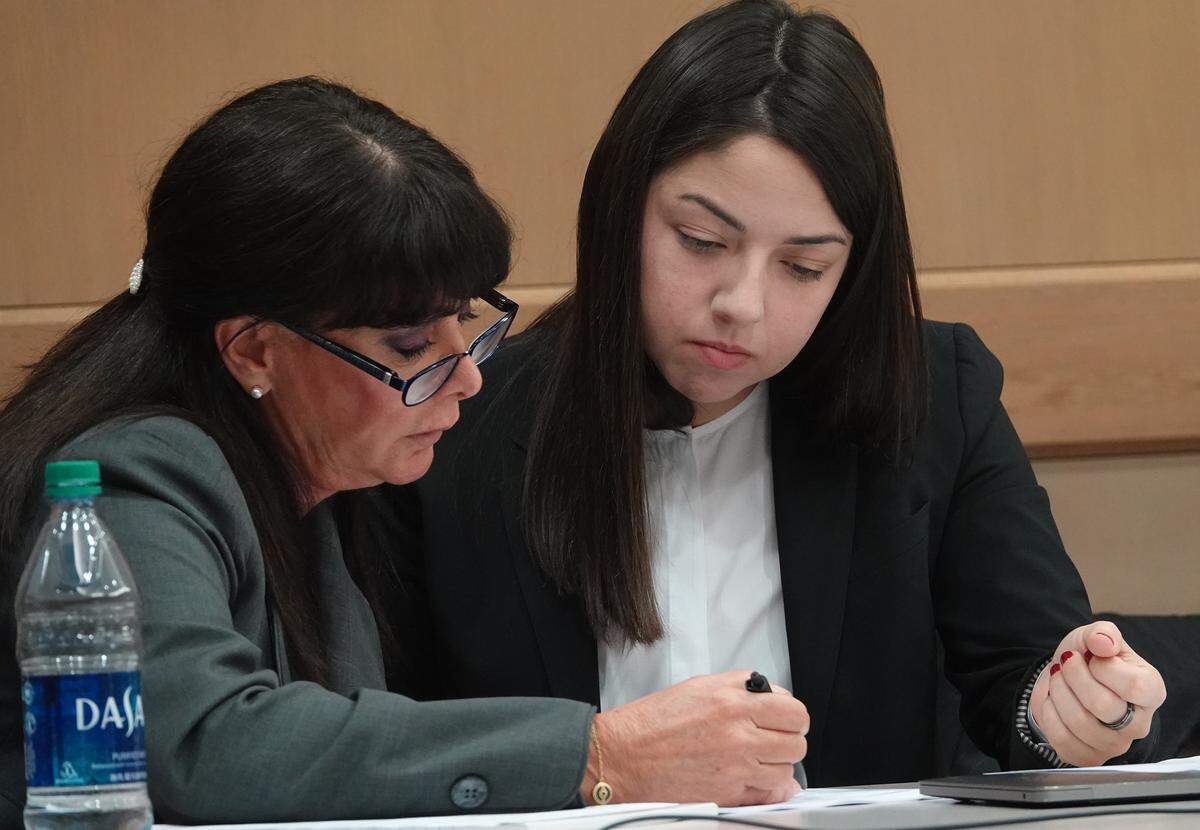
“The mere receipt of [public] funds does not subject the Foundation to the Sunshine Law or the Florida Public Records Act,” Davis said. “Although many City officials serve on the Board of the Foundation, the City has no control whatsoever over the Foundation. There is no action that can be taken by the City that would effect a fundamental change in the Foundation.”
In a letter to Davis, the inspector general’s general counsel, Carol “Jodie” Breece, said that although her office lacks authority over nonprofits, the county charter “does confer authority over those who operate or profit from local government.”
“Municipal officials and employees cannot avoid OIG oversight by spending taxpayer funds or otherwise engaging in any municipal affairs through any private, not-for-profit corporate entity,” Breece said.
Davis and Cooper declined to comment Tuesday. A representative for the inspector general’s office also declined to comment.
Julian and Sanders, the former commissioners, did not immediately return phone calls and messages.
The existence of a preliminary report by the inspector general was first reported by the South Florida Sun Sentinel last April. The final report was released last May.
Cooper has been reinstated as mayor through November 2020, the end of the four-year term she began serving before her arrest. Davis told the Herald last week that Cooper was “looking forward to going back in her position as mayor of Hallandale and continuing to serve the citizens of her city.”
The Florida governor is authorized to suspend or remove public officials from office if they are arrested on felony or misdemeanor charges related to their official duties. It’s not clear if Cooper could be suspended again if she is charged with Sunshine Law violations, which are misdemeanor crimes.
In Cooper’s unrelated trial last month, a jury deliberated for about two hours on Nov. 26 and acquitted her on all counts.
The Broward State Attorney’s Office claimed that during her 2012 reelection campaign, Cooper agreed to have lobbyist Alan Koslow funnel $5,000 from undercover FBI agents — who were posing as developers pursuing a local project — to her campaign.
Davis told the jury during closing arguments that prosecutors were jumping to conclusions that the evidence didn’t support, saying the state’s case “begins and ends” with Koslow.