
One nasty ripple effect from South Florida floods: Sewage spills, tainted water
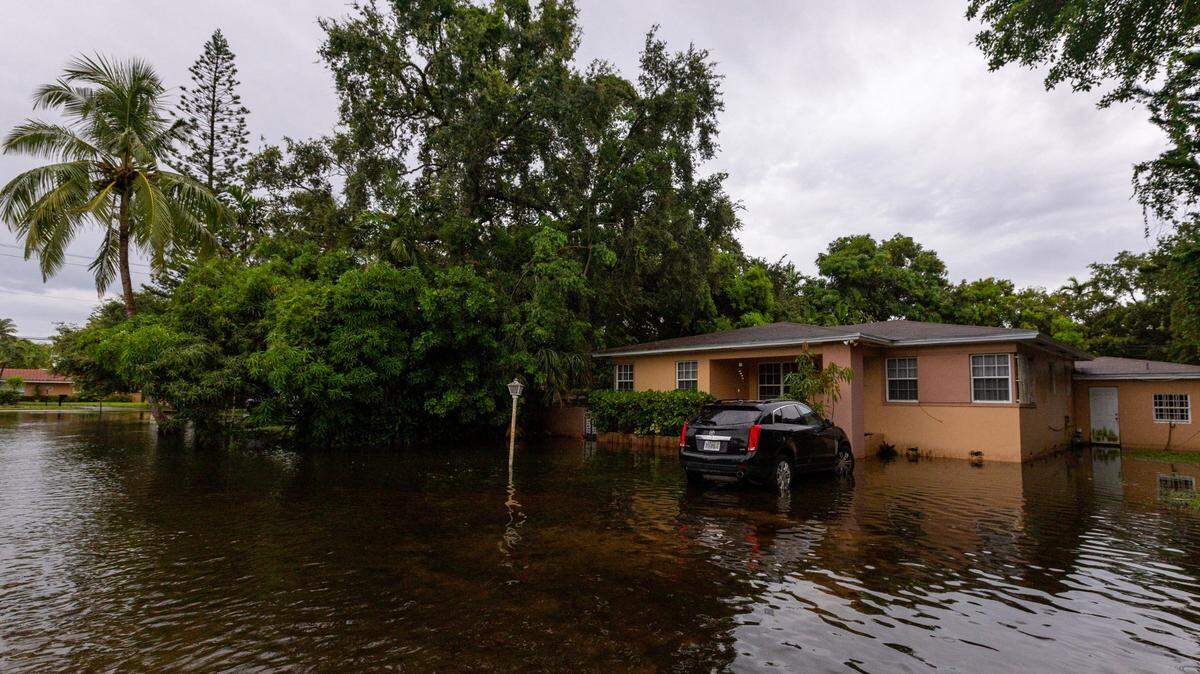
The tropical wave that swept across South Florida last week flooded homes and cars and created some other nasty messes that probably went unnoticed by many people wading in the rising waters.
The relentless rain overwhelmed some municipal sewage systems — in one case, triggering a release of 80,000 gallons of raw sewage in Hialeah, according to Florida Department of Environmental Protection notices. The city reported it had been cleaned up. There were at least seven other smaller spills across South Florida, including Sunrise and Cooper City in Broward County.
Stormwater runoff often contains all sorts of pollutants like dirt, oils, pesticides and pet waste that leaches from yards and streets. But the water quality is much worse when sewage systems overflow, adding high concentrations of bacteria associated with human waste into runoff that flows into storm drains but also coastal waters, canals and lakes. Exposure to that tainted water can cause health problems, mainly stomach problems, skin infections and breathing issues.
The multiple days of rain caused several wastewater flows across the region, according to the Miami-Dade Water and Sewer Department. By Tuesday, however, there was only one area in Miami-Dade that still had a no-swim advisory.
No-swim advisory signs were posted near a sewage system manhole at Kennedy Park in Coconut Grove where a manhole overflow at US 1 and SW 17 Avenue spilled into a storm drain. The Miami-Dade County’s Department of Regulatory and Economic Resources is testing the water’s bacteria, so the no-swim signs are still out while waiting for test results.
The closure will be lifted once the water there shows low levels of enterococci, a bacteria that is an indicator of human waste.
Miami Waterkeeper, a clean water advocacy group, recommends avoiding flood water as much as possible due to potential health risks – something to keep in mind as hurricane season ramps up this summer.
“After storms and flooding, residents should generally expect an increase in pollutants such as bacteria, sediment, chemicals and debris in waterways,” said Adriana Fernandez, Miami Waterkeeper’s science and research director. “The safety of waterways after storms can vary depending on the severity of the event and the area affected.”
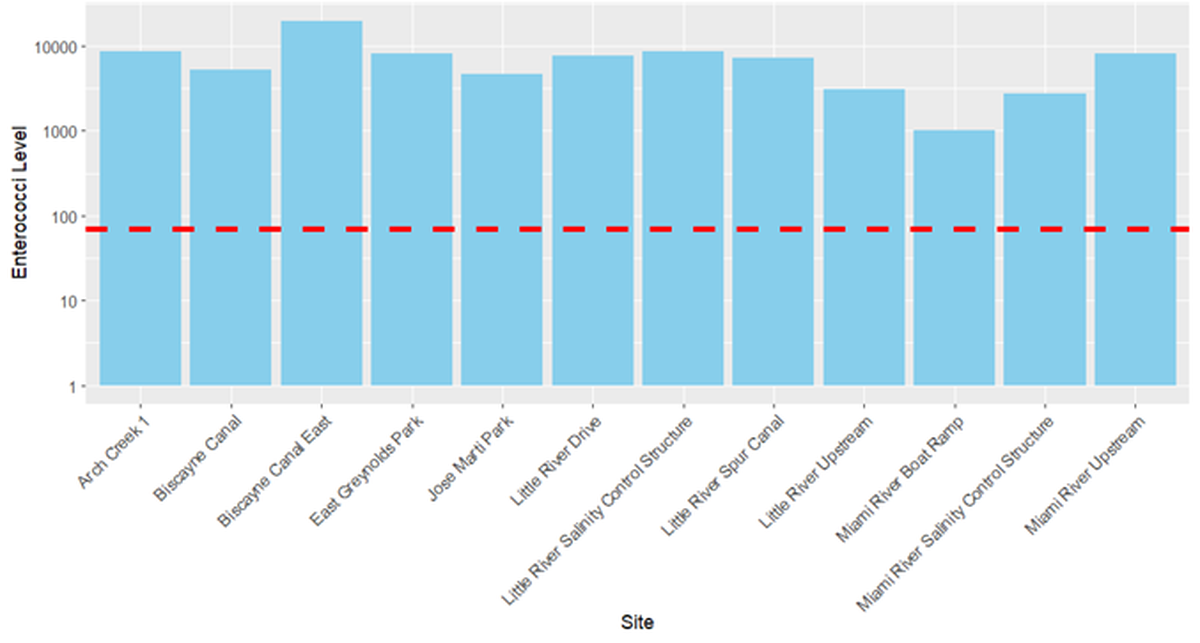
Miami Waterkeeper tested water June 12, a day of some of the heaviest rains, in a dozen areas such as Little River and the Miami River Boat Ramp for enterococci. It found that all water concentrations were unsuitable for recreational use. But elevated values don’t always indicate the presence of poop, as the bacteria can live in the environment independently.
Fernandez said it’s quite possible the levels are from the recent storm system, but it’s not necessarily the only answer. Leaky sewage pipes and septic tanks have long been a problem in the Little River area.
“Although lower levels of enterococci could be expected without the storm, there are many occasions where high levels of enterococci are related to other sources and observed during dry weather condition,” Fernandez said.
Even before the latest swamping, Miami-Dade has been battling sewage spills.
In May, the state fined Miami-Dade $123,000 for violating an agreement to stop spilling wastewater in the ocean. It said the county had six wastewater spills between 2020 and 2022, with more than 8 million gallons — 7.4 million of which was recovered — and 24 “effluent exceedances” between 2014 and 2022, which is when the water released from the sewage facility isn’t fully treated to remove all bacteria. Heavy rains can multiple the volume of water processed.