In South Florida, and the nation, few top cops are women. There’s a push to change that
READ MORE
Breaking the Brass Ceiling
In South Florida, and the nation, few top cops are women. There’s a push to change that.
Expand All
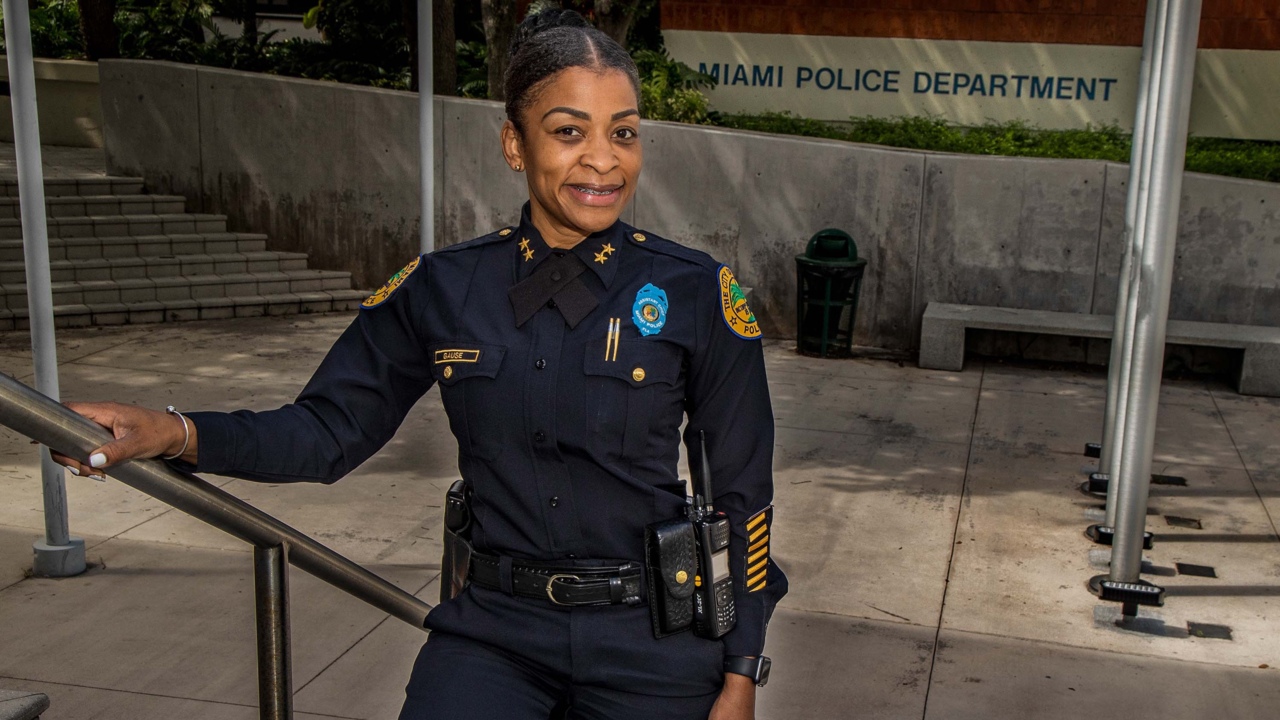
In the 126-year history of the Miami Police Department, Cherise Gause is one of only two women to achieve the rank of assistant chief. Over nearly three decades with the largest municipal police department in Florida, she rose from police dispatcher to oversee 1,000 officers in field operations, lead criminal investigations and manage the agency’s $276 million budget.
But her climb up the command ladder seems to have stalled of late.
A year ago, she was among the final candidates to replace a retiring chief when Mayor Francis Suarez pulled a flashy surprise, instead handpicking Art Acevedo, a high-profile chief from Houston who wound up fired after a short, tumultuous tenure. Another Miami assistant chief was then named to take over. In January, she was a finalist in Tampa, but ultimately lost out. While in the running for Tampa, she withdrew her own name from a short list of potential chiefs in Miami Shores.
Gause is far from alone. For many highly qualified women, breaking the brass ceiling — the military and law enforcement equivalent of the glass ceiling — remains an elusive goal. Women have made major strides in law enforcement over the past few decades, winning promotions to commanders, majors and deputy chiefs, even chiefs. Another woman, for instance, actually won the Tampa job.
But the numbers also show that top female cops, for a host of reasons, remain few and far between in Florida and across the nation.
“We’re not on the golf course with them. It’s hard for women to break through,” said Kym Craven, executive director of the National Association of Women Law Enforcement Executives, which held its annual convention in Miami in April. “Getting to the top, if you look at the percentages, we don’t have enough women yet to infiltrate the top ranks. It’s equality and inclusion that’s missing.”
While Gause herself acknowledges the challenges of being a woman in a macho, male-dominated profession she also stresses she does not see gender keeping her from becoming top cop somewhere. She remains confident the right opportunity to “create my own legacy” will come along.
“I do believe all of this is about timing,” she said. “Police chief positions just don’t come up that often. I hope it’s coming soon.”
Just 14 female top cops statewide
Florida’s numbers, though better than most states, underline the gender gap in law enforcement. Nearly 6,000 female police officers make up more than 12 percent of the state’s 46,000 or so sworn officers. Yet only four percent — 14 of the state’s 320 municipal police departments and county sheriff’s offices — are currently run by women, according to statistics the Miami Herald compiled from the websites of the Florida Department of Law Enforcement, the Florida Sheriffs Association and local agencies.
Only one of 67 sheriff’s offices and county police departments, the largest agencies in the state, has a woman in charge — Michelle Cook in Clay County, who was appointed by Gov. Ron DeSantis. The vast majority of the state’s top cops are white and male.
Of Miami-Dade’s 33 police departments, only two have full-time female chiefs and one of them is in the small West Dade town of Medley — that’s a six percent mark.
The gender imbalance at the top nationally is even more striking. Of the 700,000-plus law enforcement officers working in 17,985 agencies in the U.S., only three percent of the command staff are women, according to NAWLEE. And less than half of those have ascended to chief.
As Craven points out, the challenge, and the disparity, begins at the bottom with rank and file officers. A 2019 U.S. Department of Justice study found that women account for about 13 percent of all police officers nationwide and that the number “has remained relatively stagnant for the past few decades.”
Some cities are putting more effort into recruitment and retention to increase the numbers. In Miami, more than 20 percent of the department staff is female and Gause said there has been a shift in culture with more woman on the command staff. She also points to the city’s “30x30” initiative, a goal to boost the department’s police academy class to 30 percent female by 2030.
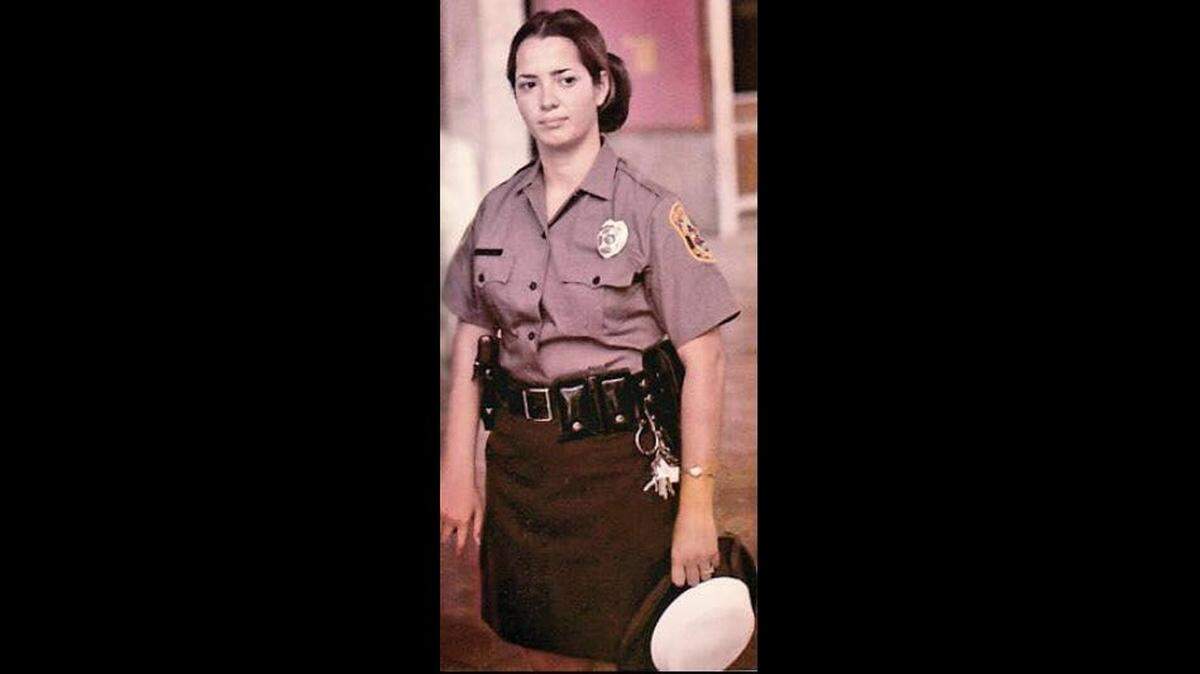
“We’ve evolved,” said Gause. “We’re in a much better place than we were in the 1970s. But we still have a lot of work to do.”
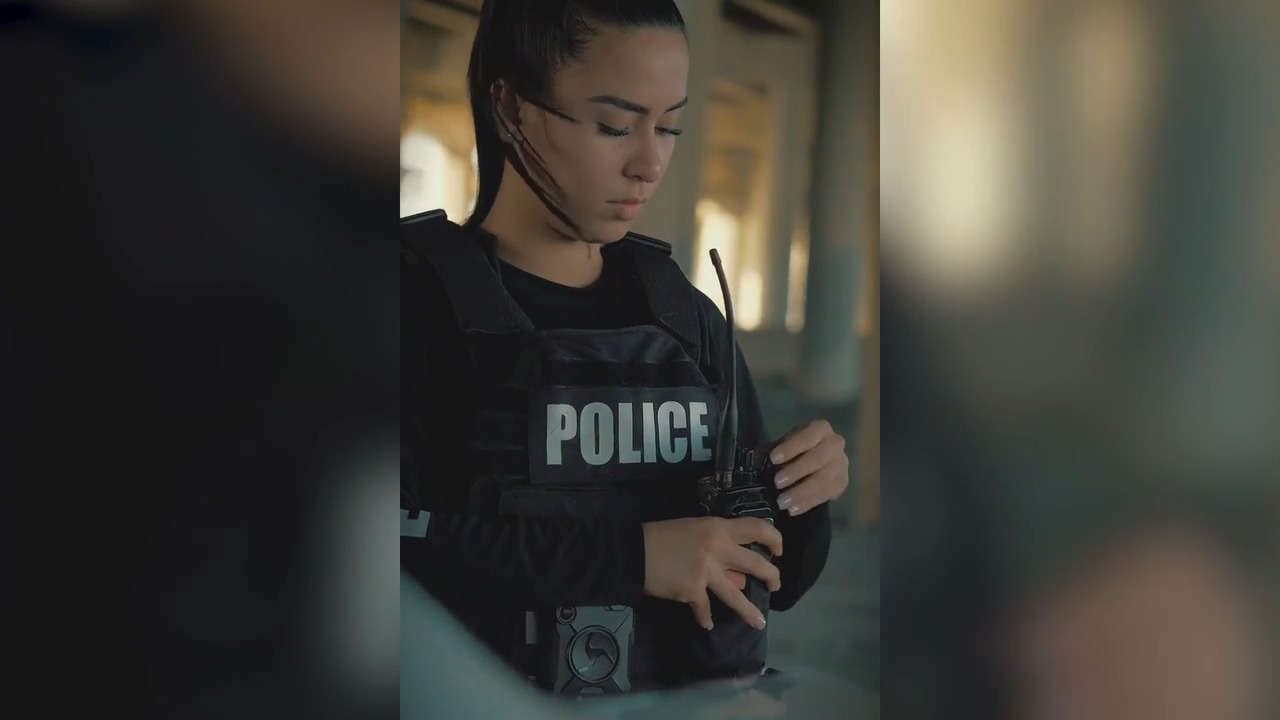
To get there, Miami has bolstered its recruiting and its social media team, which has produced a series of glossy, empowering videos featuring female officers.
They show them scuba diving, barking at recruits in training and tackling bad guys. In the most action-packed Miami Vice-ish clip, Officer Sthephany Canizares, dressed in full gear, idles up behind a bad guy, lights flashing. He makes a run for it. With Gin Wigmore’s “Kill of the Night” playing in the background, Canizares gives chase and takes him down. As help arrives, she radios in the arrest
The videos send the clear message that female officers can be just as physically tough as many men. But what they don’t show: the other strengths many woman bring to policing.
“Women bring a different perspective,” said Gause. “By nature we’re nurturers. We’re a voice of reason to calm people down. We’re more detail-oriented.”
Chuck Wexler, executive director of the Police Executive Research Forum, said his agency helped land Erika Shields as Louisville’s police chief. He also said one of the major topics at a scheduled June PERF conference in San Francisco is helping women become the next generation of law enforcement leaders.
“They make a huge difference,” Wexler said. “Women have great communications skills and are able to de-escalate situations better. It’s just one area they seem to excel at.”
Alex Piquero, a criminologist and chairman of sociology at the University of Miami, said several studies support that, showing female cops generally do a better job of communicating when they deal with the community than their male counterparts. Though obviously, every officer is different.
“Women are much calmer and more consensus-building. In interacting with citizens they tend to use force less. They’re able to talk down situations that could be volatile,” he said. “Consensus-building and transparency only add trust. That’s the kind of decision-making style the community wants. They want people to talk with them, not to them.“
Success stories and double standards
The annual convention for NAWLEE, the largest group of female police executives in the nation, was held at Miami’s Intercontinental Hotel last month. It showcased many success stories, both in South Florida and across the country.
Among the hundreds of leading women in law enforcement were Val Demings, the former Orlando chief of police and a current Democratic congresswoman who is running for the U.S. Senate. New York Police Commissioner Keechant Sewell, who made a national name for herself earlier in the month as one of the city’s main voices after the shooting in the Brooklyn subway station, attended.
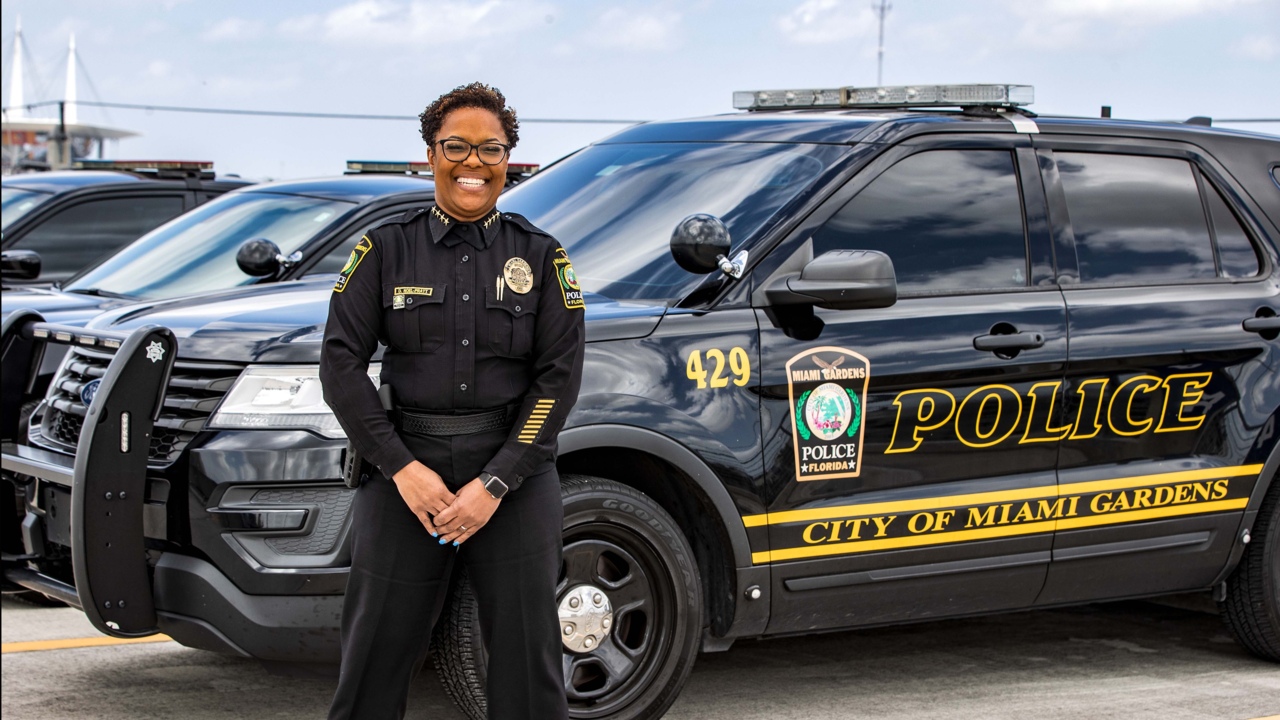
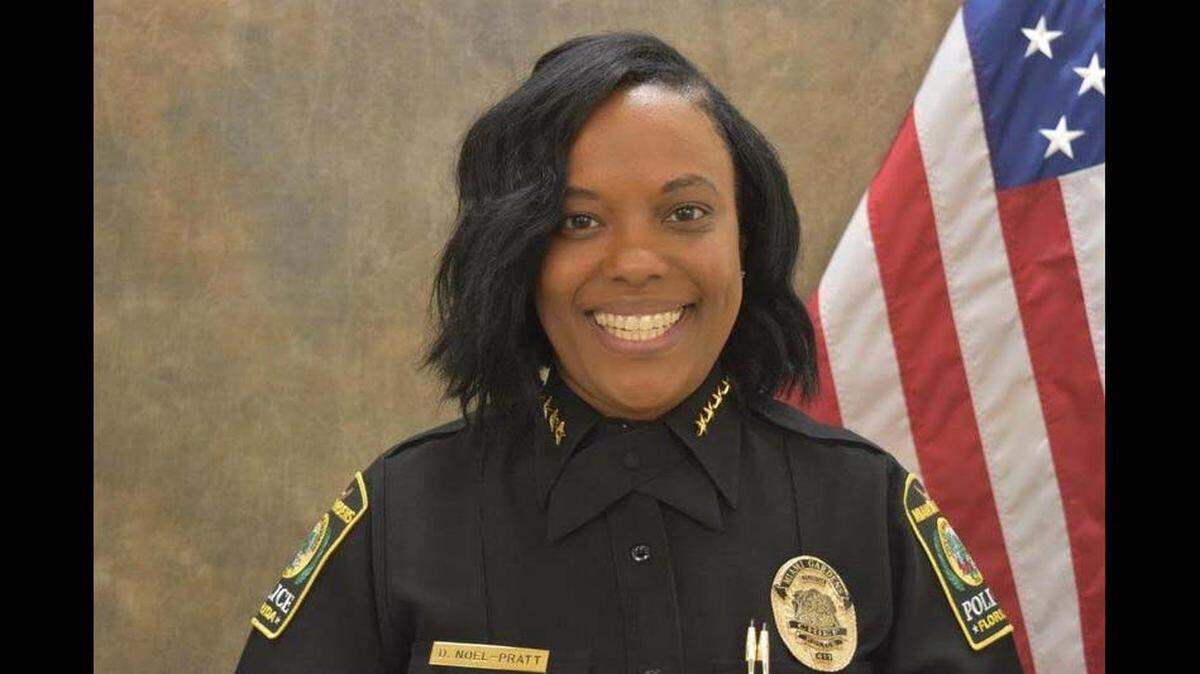
South Florida had a presence as well. Gause helped organize the convention and Miami Gardens Police Chief Delma Noel-Pratt — who oversees the fourth-largest police agency in Miami-Dade — was given a leadership award from the group. She’s also in line to become the first Black female president of the Greater Miami Chiefs of Police.
Women now occupy some high-profile law enforcement posts across the country, with Sewell in New York, Danielle Outlaw in Philadelphia as commissioner and Mary O’Connor, who got the job over Gause as Tampa’s new police chief. In Louisville, where Breonna Taylor’s 2020 shooting death by police sparked heavy protests, Shields is now at the helm.
But they also often face pushback, internally and externally, that most male cops don’t. Noel-Pratt said that after she was named chief in Miami Gardens, some male officers tested boundaries. Initially, some flat out said they refused to take orders from a woman.
“Some I had to woo to get them on board,” said Noel-Pratt. “Some left. That’s their choice though, it’s on them.”
The last few years — marked by Black Lives Matter protests and a global pandemic — also added pressure to the position. Several women chiefs were forced out or resigned.
Nationally, Shields resigned as Atlanta’s chief in June 2020 after a controversial police shooting and after video went viral of the rough arrest of college students by her officers. She later accepted the Louisville job. Renee Hall in Dallas, a highly regarded chief from the Detroit area, quit in September 2020, blaming bitter internal politics. The Santa Monica, California, chief, Cynthia Renaud, left in October 2020 after being criticized for how she handled the summer BLM protests.
In South Florida, former Hallandale Beach Police Chief Sonia Quiñones also ran into a BLM firestorm in June 2020, when all 10 members of her SWAT squad asked for reassignments, saying, among other things, they objected to Quiñones kneeling with protesters. They eventually offered their resignations. Quiñones called the move a union stunt and negotiating tactic and accepted the offer.
It wasn’t the first time Quiñones, who spent her 28-year career in Hallandale where she handled everything from marine patrol and homicide to federal drug task force roles, had been tested. She remembers showing up first at scenes early in her career, then other officers speaking with her male backup instead. She also recalls a male officer asking her if she got the Hallandale chief’s job in 2017 because no men applied.
The Broward Sheriff’s Office now runs the city’s SWAT unit and Quiñones resigned last October, moving to Florida’s southwest coast to begin her own company, which teaches officer safety and wellness. Quiñones, who remains second vice president at NAWLEE, said it was just the right time to make the move.
She has no regrets about kneeling with 19 members of her community.
“It’s the first time the entire world said ‘this is enough,’ ” said Quiñones. “We looked at what happened [George Floyd’s death under police officer Derek Chauvin’s knee] in horror. It [kneeling] was the right thing to do.”
Many other male chiefs did the same thing and, in striking contrast, won praise for it.
When Coral Gables Police Chief Ed Hudak knelt with other chiefs in front of City Hall in the summer of 2020, the move was hailed and made national headlines. And the decision by Acevedo, then Houston’s chief, to kneel got him accolades and speaking gigs on cable news shows, which he parlayed into the Miami police chief job in April of 2021.
It’s an example of what UM’s Piquero said are the double standards often applied to females in law enforcement. And it’s not just fellow cops that use them, said NAWLEE’s Craven.
Some political leaders who hire chiefs come in with perceptions shaped by popular culture, like countless police TV shows and movies, and past hiring practice — as does much of the public, who vote for county sheriffs. Craven said some media outlets also perpetuate the problems. She said far too often she’s seen stories in which a female officer or chief is too casually referred to, the story mentioning them by first name instead of being preceded by their title.
For many working female officers, discussing sexism in law enforcement is a touchy subject and they choose words carefully. Craven said the goal is simply a level playing field.
“Both men and women should be treated the same,” said Craven. “They take the same entrance exams and tests. And both are equally skilled — so they should be treated the same.”
‘It has to be the right fit’
It’s easy to see why Assistant Chief Gause was on the short list in Tampa. Her résumé shows she’s as qualified to lead a big city department as any law officer in the state. She’s widely respected on the force and for nearly three decades she’s successfully navigated the complicated politics of Miami and its high-profile police department.
She also plays her cards close to the vest.
She had seemed to be the front-runner in Tampa. A March 10 Tampa Bay Times story said that by late January Mayor Jane Castor had narrowed her search to three finalists and the paper obtained correspondence where the mayor said Gause was her choice. But two weeks later, for unexplained reasons, Castor changed her mind and appointed former Tampa police officer Mary O’Connor to the position.
Gause, 49, declined to talk about the Tampa job, saying only that she will abide with an agreement she made with the city. She won’t speculate as to what might have swung the decision. She’s not one to air grievances or even hint if she has any.
“I take each of the experiences in stride. I’ve learned something and gained a lot of knowledge,” she said.
Gause says she still aspires to lead a department. “I don’t think anyone gets to this level and doesn’t want to see it through.” Asked if she still expects to become a chief somewhere, without hesitation she responds, “Yes, absolutely.” But she adds she won’t take just any job.
“It has to be the right fit.”
This story was originally published May 29, 2022 at 7:00 AM.