Feds target illicit Russian riches in South Florida. Ordinary residents not on their radar
Just after Russian troops invaded neighboring Ukraine in late February, the Biden administration announced an aggressive sanctions policy targeting a list of major Russian banks, businesses and oligarchs with financial interests in the United States.
In South Florida, agents with Homeland Security Investigations and the FBI immediately began searching bank, property and corporate records along with other databases — focusing first on enclaves such as Aventura and Sunny Isles Beach, home to thousands of wealthy expatriate Russians, Ukrainians and other Eastern Europeans.
“It’s a major priority,” Anthony Salisbury, HSI’s special agent in charge of the Miami field office, said in an interview earlier this month. “Miami and New York are the two major hubs for potential Russian assets in the United States.”
While there may not be any high-profile oligarchs close to President Vladimir Putin actually living in South Florida, there’s a strong likelihood some on the federal target list may own properties here through discreet associates and surrogates. With the goal of freezing or seizing assets, federal authorities are trying to dig up evidence that would show whether certain oligarchs or other key Russian investors moved potentially illicit profits from their business dealings with Putin’s government into the United States.
Dozens of oligarchs — a term for uber-wealthy Russian business leaders with powerful political influence — have amassed billion-dollar fortunes from the privatization of former state-owned industries, while investing in luxury homes, super yachts and corporations in the United States, Europe and elsewhere.
Real estate is the most obvious reason for a focus on South Florida. Russian investors, often using shell companies of uncertain ownership, have poured many millions into the luxury oceanfront high-rises that now shape the skyline of Sunny Isles Beach.
The federal effort has raised alarms in Sunny Isles Beach with some residents expressing worry that their homes, bank accounts and other assets could be taken just because Russia attacked Ukraine. Federal law enforcement agencies and prosecutors in South Florida insist they aren’t going after ordinary Russians — only those with ill-gotten profits from their business relationships with Putin’s government.
HSI’s Salisbury said any fears of everyday people losing properties are misplaced: “That is not going to happen.”
Venezuelan kleptocrat cases a guide
South Florida federal agencies have plenty of experience with these sorts of difficult financial investigations. Homeland Security Investigations has plumbed the Latin American sphere of foreign corruption by going after tainted assets belonging to so-called Venezuelan kleptocrats, including dozens of elite businessmen and government officials accused in money laundering cases of stealing billions from the oil-rich country and moving their tainted millions to this area and Europe.
Salisbury said HSI and its partners are using the same Venezuelan game plan against the latest Russian targets.
“There are similarities between the Venezuelans and the Russians,” Salisbury told the Miami Herald. “That has become a building block for our investigation of the Russians. We learned a lot of lessons from the Venezuelan regime, and we think it can apply to the Russian situation.”
Salisbury said HSI, the Internal Revenue Service and other federal partners have been developing a roster of potential Russian oligarch-related targets in South Florida, using a financial crimes and money laundering squad known as El Dorado Task Force South to lead the probe.
Dating back more than a decade, HSI’s money laundering investigators in Miami have seized more than $1 billion in assets — including the late pop superstar Michael Jackson’s crystal-studded white glove from his “Bad” tour (valued at $275,000) and other Jackson memorabilia (worth $827,000) that had belonged to an Equatorial Guinea vice president, according to court records.
More than half of those assets — $653 million — have been seized from U.S. and Swiss bank accounts, including $250 million turned over by Venezuela’s former national treasurer, Alejandro Andrade, who recently completed a prison sentence for embezzling billions from his government along with an alleged co-conspirator, Caracas TV network mogul Raúl Gorrín. Gorrín is wanted in Miami on a money laundering and foreign corruption indictment. (Andrade, Gorrín and several other Venezuelan associates were placed on a federal sanctions list in 2019.)
HSI’s task force has also confiscated $296 million in horses (including more than a dozen that belonged to Andrade at his Wellington estate), along with high-end watches and other personal assets; $72 million in real estate (including a former Venezuelan oil ministry lawyer’s condo in the Porsche Tower in Sunny Isles Beach); and about $5 million in vehicles (including a 2020 seizure of more than 80 luxury cars and SUVs bound for Venezuela’s political and business elite).
Cases could take months or longer
But just as it took years to build criminal, civil and sanctions cases against the Venezuelan kleptocrats who concealed their assets in South Florida behind shell companies, straw owners and sham documents, the same is likely to be true in targeting Russian oligarchs and associates, federal officials said.
And despite the urgency of cracking down on the Russians economically, efforts to bring cases that hit potential local targets in their pocketbooks could take months, officials said. Since the Russian invasion of Ukraine on Feb. 24, no criminal or civil cases have been brought to the attention of the U.S. Attorney’s Office in Miami.
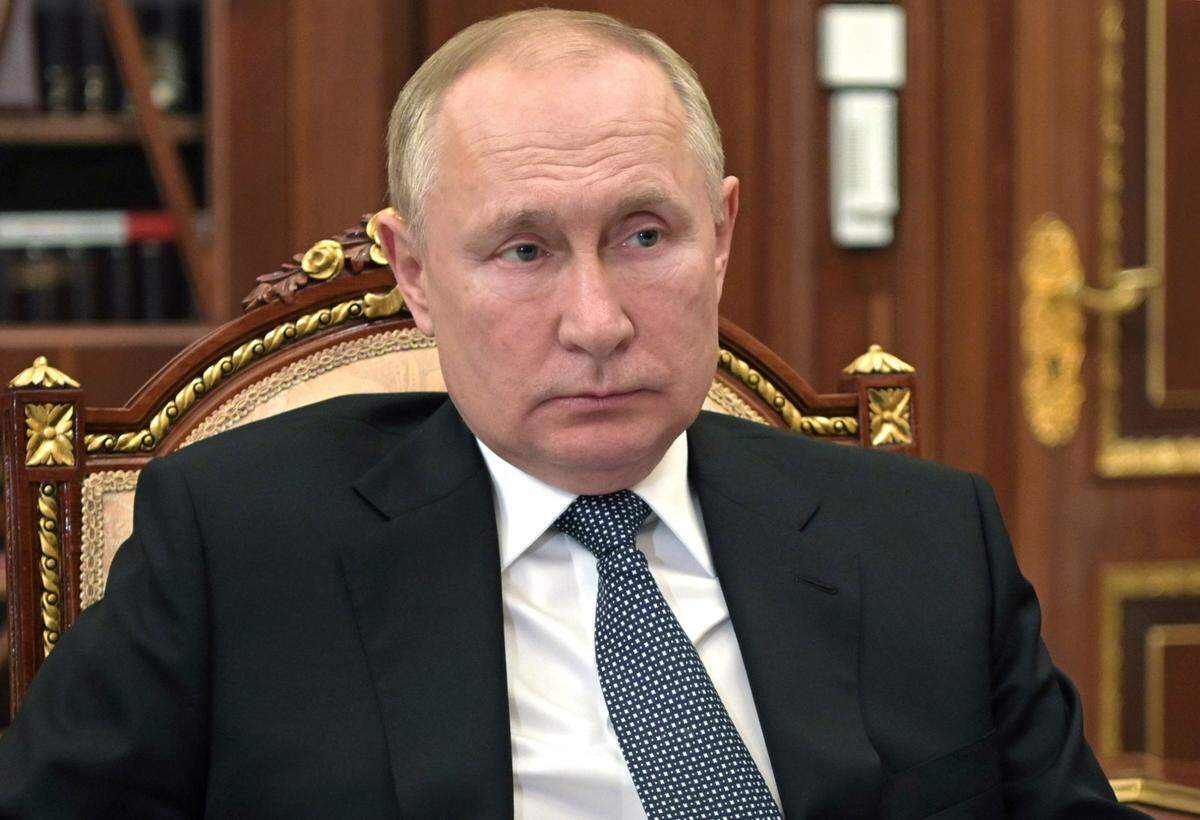
So far, only one indictment has been filed in the national crackdown on Russians close to Putin. In early March, federal prosecutors in New York charged a former American television news producer with working for a Russian oligarch, Konstantin Malofeyev, who was already on a U.S. sanctions list for financing propaganda efforts that promoted separatism in Crimea and Ukraine.
Federal investigators say the process of uncovering the opaque layers of any business or asset tied to Russian oligarchs and their associates is complicated and tedious because they often use offshore corporations without their names attached to any of the official records. The challenge for investigators is showing that the illicit money of oligarchs from business dealings with the Russian government and President Putin flowed into their U.S. and European acquisitions — and that they are still profiting from those relationships.
A former federal prosecutor in Miami with extensive experience in foreign corruption and money laundering cases said that while she understands the U.S. government’s goal is to disrupt the Russian elites and their nation’s economy, she questioned the legal basis for bringing criminal cases based on Russia’s invasion of Ukraine.
“It’s a tall order,” Miami defense attorney Lilly Ann Sanchez told the Herald. “All they have right now is a rich Russian buying property in New York or South Florida and investing in businesses. If it wasn’t a crime before Russia invaded Ukraine, why is it a crime now?
“Things that were not a crime before the war are not a crime after the war,” Sanchez continued. “Even if they find a connection to ill-gotten gains, who are they going to get to testify and prove it? That’s how the Venezuelan cases were made [with cooperating defendants providing inside information]. I’m not so sure it would work out that way for the Russians. They’re cut from a different mold.”
Sanchez said as an option, federal prosecutors could bring civil cases targeting specific assets like a high-rise condo or bank account instead of an individual oligarch or associate in criminal cases. But while the required standard of proof is lower in a civil action, it would open the door for discovery, or the turning over of evidence by the feds, which would likely eliminate the opportunity for prosecutors to pursue a parallel criminal case later on.
Seize or just freeze?
Sanchez said the more plausible outcome of any investigation targeting a Russian oligarch would be a sanctions order issued by the Treasury Department’s Office of Foreign Assets Control. But even then, she said, OFAC can only block, or freeze, the oligarch’s businesses and assets, such as bank accounts, homes or other property — not seize them.
While an OFAC designation can inflict serious financial damage, the target can seek to have his name taken off the list if he can show that no “ill-gotten” gains were used for making business, real estate or financial investments in the United States, said Sanchez, who has represented Venezuelans and Colombians who have been hit with such sanctions.
Over the past month, the White House and Treasury Department announced a series of OFAC sanctions, including one highlighted in an early March news release about the U.S. targeting of “Russian oligarchs enabling Putin’s war of choice.” The release stated that the U.S. and its European allies were focusing on “Russian elites and family members who continued supporting President Putin despite his brutal invasion of Ukraine,” identifying 19 oligarchs and 47 of their family members and close associates. They “will be cut off from the U.S. financial system, their assets in the United States will be frozen and their property will be blocked from use.” Their U.S. visas will also be revoked.
The Treasury Department noted that it “will share financial intelligence and other evidence where appropriate with the Department of Justice to support criminal prosecutions and seizure of assets.”
Among the Russian oligarchs on the new OFAC list: Alisher Burhanovich Usmanov, one of Russia’s wealthiest people and a close ally of Putin. He amassed his fortune, estimated to be worth nearly $20 billion, after the collapse of the Soviet Union, through metal and mining operations, as well as financial investments in Facebook, Apple and other tech companies. His properties, including a super yacht recently seized by Germany, and a private jet, have been blocked and cannot be used in the United States.
Another prominent Russian target: Putin’s spokesman, Dimitry Peskov.
At the same time, Britain has imposed similar financial sanctions on Russia and its billionaire oligarchs, including Roman Abramovich, the outgoing owner of the Chelsea soccer club and a longtime Putin ally.
In the United States, OFAC designations imposing sanctions on Russian oligarchs and others close to them can provide a platform for criminal investigations, officials said.
Salisbury, HSI’s special agent in charge in Miami, said that when OFAC designates a Russian oligarch, family member or associate on a sanctions list and freezes their assets in the United States, that is only the start of the process of building a potential criminal case against them or those who collaborate with them.
“The OFAC [designation] is sometimes the entry level piece for us to sink our teeth into,” he said, “so we can pursue some criminal cases.”