Federal agents seize more than 80 luxury cars at Port Everglades bound for Venezuela
Port Everglades is looking like an auto dealership these days, with rows of high-end vehicles on display, including a Mercedes Biturbo SUV worth a whopping $150,000, and even a few low-end cars, such as a Toyota Corolla valued at a meager $20,000.
There are 81 cars lined up, with a collective retail price of $3.2 million. And the feds have confiscated them all, with plans to seize a lot more.
Homeland Security Investigations says the new vehicles have been seized because a ring backed by a notorious Venezuelan billionaire and his associates tried to smuggle them out of South Florida to Venezuela, in violation of U.S. export laws and sanctions against the Latin American nation’s socialist government.
The billionaire, Caracas media mogul Raúl Gorrín, who already faces money-laundering charges in Miami accusing him of stealing from his own government, has been collaborating with straw buyers and shell companies in South Florida to buy the vehicles and ship them to Venezuela for use by the wealthy, the politically connected and the police, HSI officials said.
“This is a drop in the bucket,” HSI special agent in charge Anthony Salisbury told the Miami Herald Tuesday, saying there’s no telling how many cars slipped through Port Everglades to Venezuela before the first unlawful car was intercepted this spring.
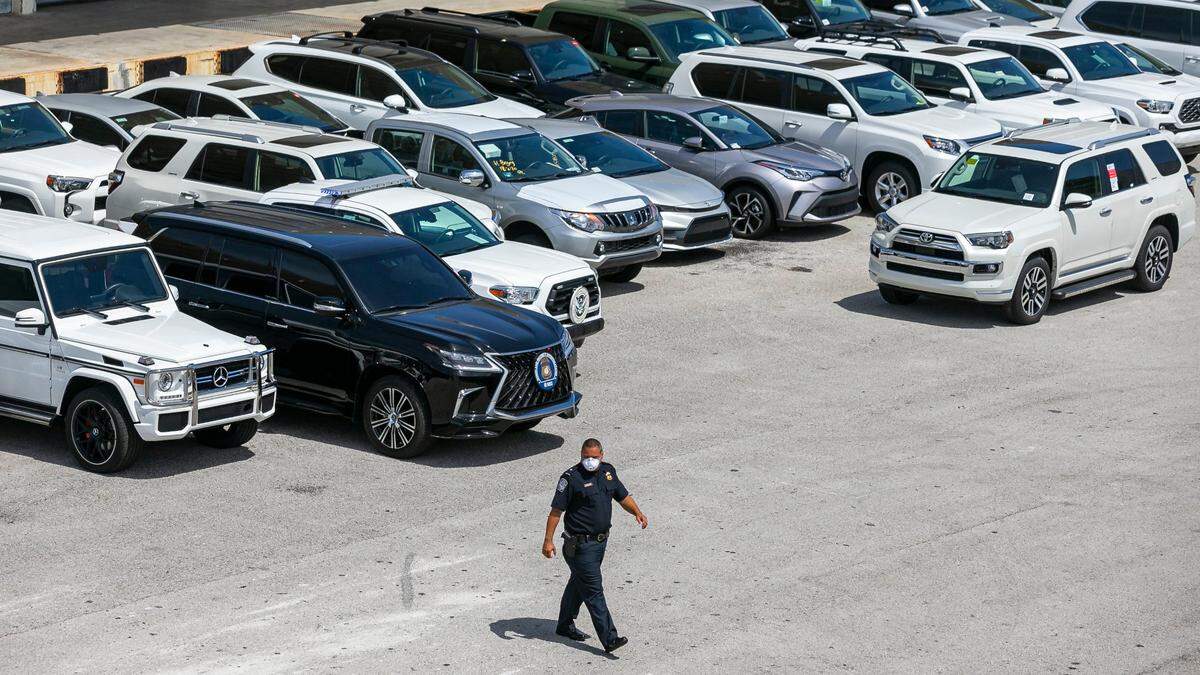
While surveying the rows of cars at Port Everglades, Salisbury pointed to a Toyota Tundra truck painted in military green ($66,000), a black Lexus SUV with police sirens and lights ($86,000), and a Jaguar F-Type sports coupe ($62,000).
“These cars are going down to kleptocrats like Gorrín and his associates to live their billionaire lifestyles while the people of Venezuela are starving to death,” Salisbury said. “You can’t get your hands on vehicles like these down there.”
Neither Gorrín nor anyone else has been charged as part of the federal criminal investigation into what Salisbury described as one of the biggest car-smuggling rackets in South Florida. He described Gorrín as a “master money launderer.”
After this story was published in the Herald, Gorrín’s defense attorney, Howard Srebnick, issued a statement condemning Homeland Security Investigation’s allegation that his client is involved with the car-export ring, saying he has “nothing to do with” this “fake news backed up by zero evidence.”
Since targeting Venezuelan corruption in 2017, HSI and the U.S. Attorney’s Office have seized $450 million in bank accounts — along with luxury properties, show horses, high-end watches and a super-yacht — that belonged to more than a dozen government officials and business people in Venezuela, all charged with laundering billions of dollars into the United States, Switzerland and other countries.
Salsibury said Homeland Security Investigations launched the car-smuggling probe earlier this year after receiving information from its office in Bogota, Colombia, that a ring was buying and shipping new cars through Port Everglades in Fort Lauderdale bound for Venezuela.
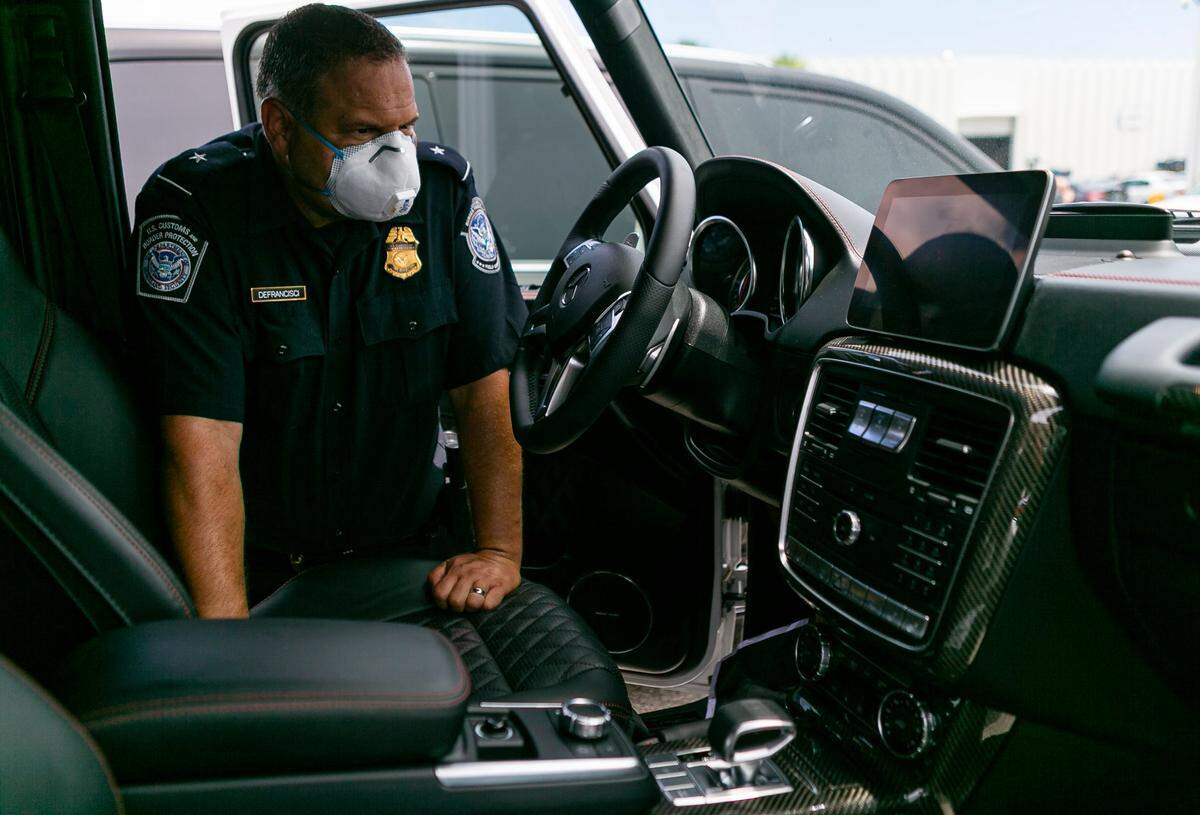
Customs and Border Protection agents started stopping multiple shipments of cars in April, noticing that some of them looked suspicious, had falsified paperwork, or had been stolen with their vehicle numbers scratched off.
“When you see a vehicle going out with a police package on it, it’s very suspicious,” said Dylan DeFrancisci, CBP’s director at Port Everglades. He added that at least nine confiscated Mitsubishi L200 SUVs were probably stolen because their vehicle numbers had been erased.
Officials said the car smugglers tried to make the shipments to Venezuela look as legitimate as possible by carrying out the exports in “plain sight.”
“They are trying to overwhelm the system by sending through as many vehicles as possible at one time,” said Kevin Tyrrell, HSI’s assistant special agent in charge in Miami.
Under U.S. forfeiture law, federal agencies can carry out administrative seizures up to $500,000 without a court order, but officials must notify the buyers to give them an opportunity to contest the taking. If they do challenge a seizure, a dispute would likely follow in federal court.
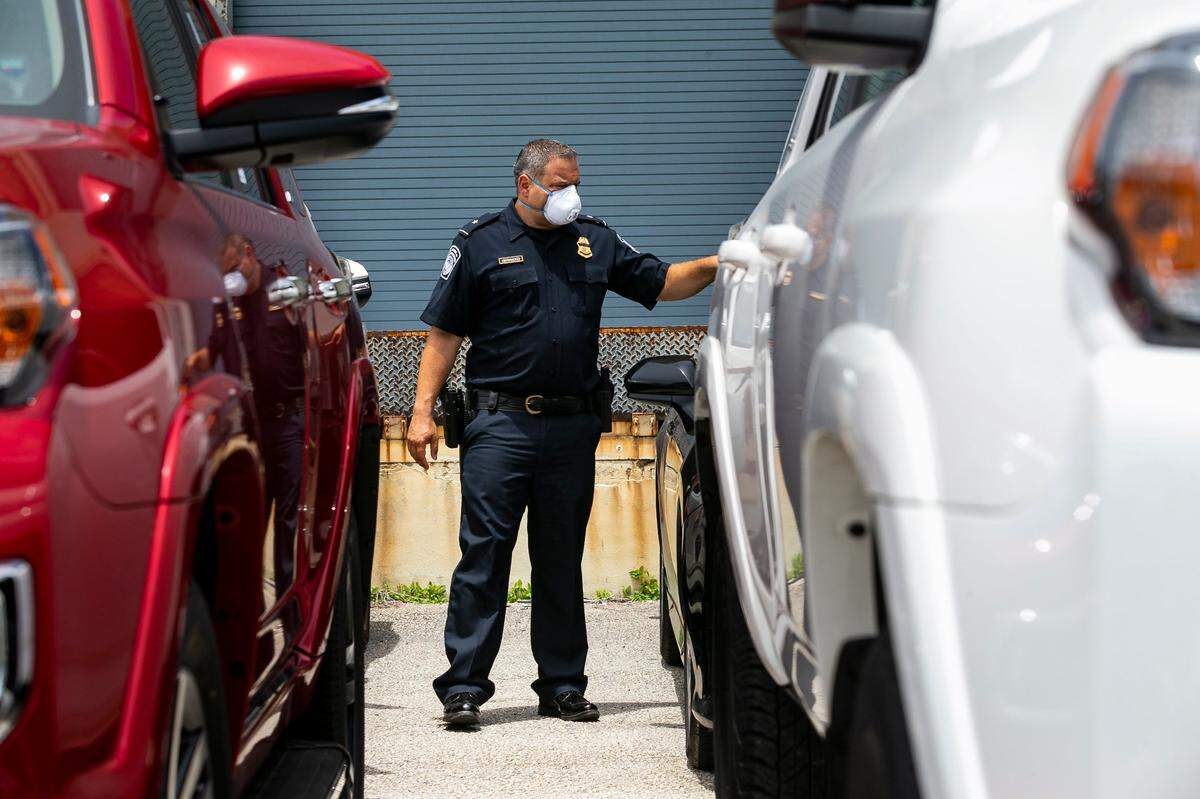
But Salisbury, HSI’s top agent, said he’s not expecting any of the straw buyers, shell companies and shippers involved in the car-smuggling ring to make claims for the confiscated vehicles.
He also said the seizures should put South Florida auto dealerships and other businesses involved in the all-cash car deals on notice for potentially violating anti-money-laundering laws.
“The amount the Venezuelan kleptocrats are laundering is staggering,” Salisbury said. “Drug traffickers launder hundreds of millions of dollars. The Venezuelan kleptocrats are laundering billions.”
Asked what his agency plans to do with all the fancy new cars, he said they would be sold at auction, with the proceeds going to the U.S. government.
Gorrín’s defense attorney, Srebnick, said his client has no recourse to defend his name against “defamation” by the HSI agents “other than to expose the hypocrisy” of their allegation that he is behind the South Florida-Venezuela car ring.
“The US government claims that these 81 cars represent proceeds of foreign corruption of which the people of Venezuela are the victims,” Srebnick said. “Yet the US government intends to forfeit the cars, auction them off and keep the money for itself, returning nothing to the purported Venezuelan victims. And the US government says Gorrin is a thief?”
This story was originally published July 8, 2020 at 7:00 AM.