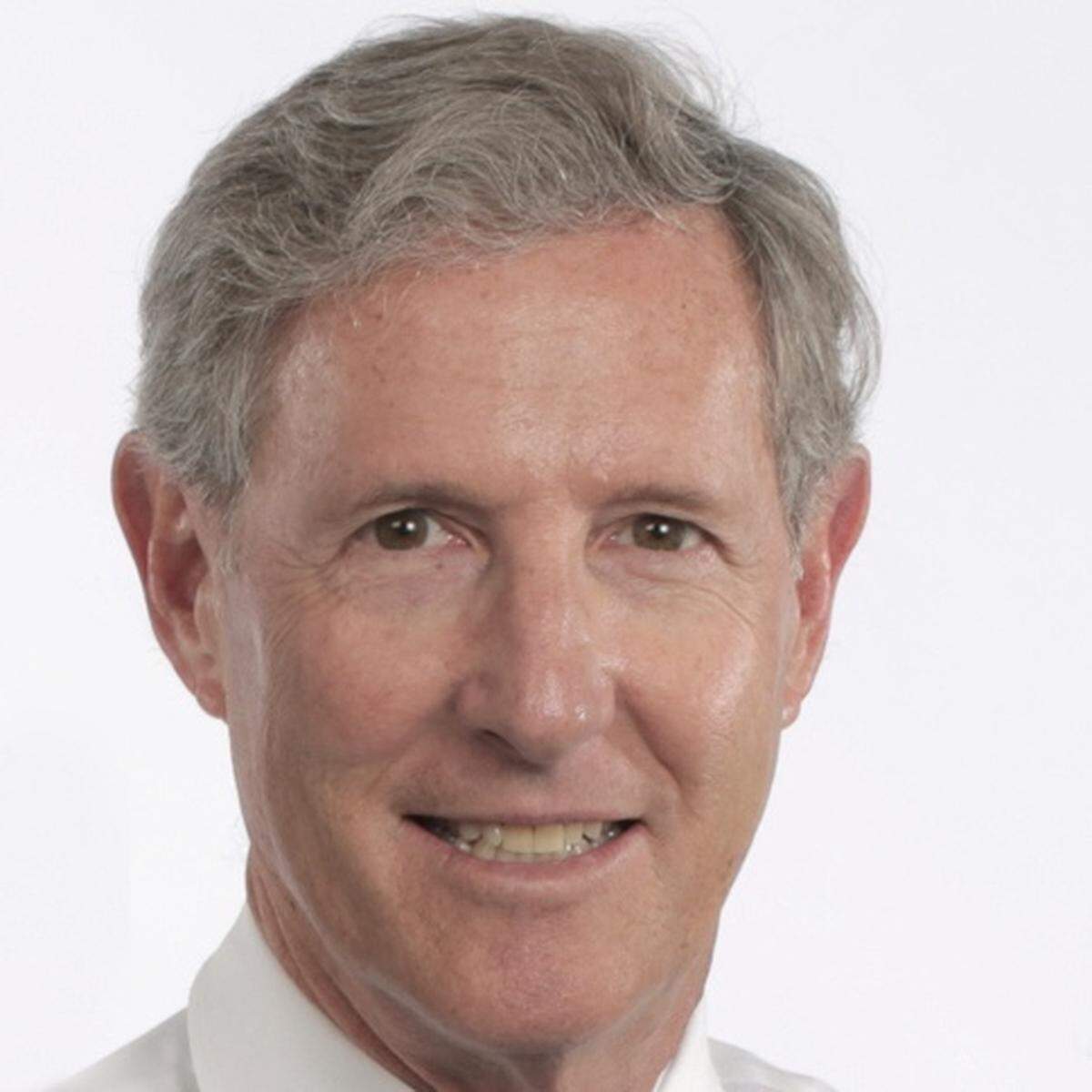
Former UM professor Bagley gets six months for laundering ‘dirty’ Venezuelan money
A once-prominent University of Miami professor was sentenced to six months in prison Tuesday for committing the kind of crime — washing millions of “dirty” dollars reaped from corrupt Venezuelan government deals — that he frequently commented on as an expert on Latin American drug trafficking and money laundering.
Bruce Bagley, who had pleaded guilty to two counts of money laundering last year, admitted that he helped a notorious Colombian businessman hide inflated profits from a Venezuelan food program in the safe haven of the U.S. banking system.
“I am ashamed of my irresponsible behavior,” Bagley, 75, told U.S. District Judge Jed Rakoff in New York federal court, as the former UM professor choked up while apologizing about the unusual criminal chapter in his otherwise distinguished academic career. He must surrender to prison on Jan. 25, 2022.
Rakoff acknowledged Bagley’s career, along with his advanced age and poor health, in giving him a sentence well below the federal guideline range of four years to five years for his money-laundering offense. But Rakoff said he could not ignore the fact “that of all the people in the world, Dr. Bagley was most able to appreciate the wrongfulness of his crime when he committed it, and it cannot go unpunished.”
Bagley took a 10 percent cut of about $3 million that Colombian Alex Saab funneled from foreign bank accounts through Bagley’s corporate and personal accounts in South Florida — even after one of Bagley’s accounts was closed for suspicious activity and after an undercover informant told Bagley the money was from Saab, prosecutors say. Bagley’s total take: about $250,000 — a sum that he already paid the U.S. government as part of his sentence.
Federal prosecutors acknowledged Bagley’s connection to Saab for the first time in court papers this month before the former professor’s sentencing in New York federal court.
Saab was arrested in Cape Verde off the coast of Africa en route to Iran last year. Saab, who is close to Venezuela’s president, was extradited to Miami last month on a money-laundering conspiracy charge accusing him of bribing Venezuelan officials and siphoning $350 million from government housing projects. He transferred some of the tainted Venezuelan funds into South Florida banks. On Monday, he pleaded not guilty to the conspiracy charge in Miami federal court.
Bagley, who was initially charged in November 2019, sought leniency as his lawyer asked for no prison time in connection with his dealings with Saab.
Bagley’s defense attorney, Peter Quijano, said the former professor had already suffered “devastating collateral consequences” as a result of his conviction, the end of his UM career and the death of his wife earlier this year.
Assistant U.S. Attorney Nathan Rehn disagreed, saying he should be punished with some prison time because as an expert on Latin American crime he was aware of his wrongdoing. “It’s a textbook case of money laundering,” Rehn told the judge.
Bagley — author of several books, including “Drug Trafficking, Organized Crime, and Violence in the Americas Today” — was initially hired by Saab as a consultant to help get a student visa for his son and later sought his advice on investments in Guatemala.
But then, starting in November 2017, Bagley started receiving monthly deposits of about $200,000 from the United Arab Emirates and Switzerland into the bank account of his consulting company, according to an indictment. The deposits came from two companies not named in the indictment — one described as a purported food company in the Emirates and the other as a “wealth management firm” in Switzerland. Their accounts were controlled by someone described in court papers only as a “Colombian individual,” whose identity would later be disclosed by federal prosecutors as Saab.
Bagley withdrew about 90 percent of the funds in the form of a cashier’s check, payable to an account held by another Colombian business associate, and then moved the balance into his personal account.
The associate, who was working undercover for the feds, and the professor discussed they were moving the money on behalf of Saab and that “the funds represented the proceeds from foreign bribery and embezzlement stolen from the Venezuelan people,” according to the indictment.
When he pleaded guilty in court last year, Bagley identified the associate as Jorge Luis Hernandez, a longtime U.S. informant in anti-narcotics cases better known by his nickname Boli.
Between November 2017 and February 2019, Bagley’s consulting company’s bank account received about $3 million from Saab’s overseas accounts. Federal prosecutors say Bagley kept about $250,000 as a fee for himself. Most of the money ended up being diverted to pay Saab’s lawyers in the United States, according to the former professor’s attorney, Quijano.
His lawyer also said in court that Saab was trying to negotiate with federal authorities and provide them with information on his dealings with the Venezuelan government and its leader, Nicolás Maduro.
Rehn, the prosecutor, countered that Bagley knew Saab’s funds were “dirty money” from his food import business for the Venezuelan government. Rhen said in court papers that the federal informant, Hernandez, told Bagley as much in a recorded December 2018 conversation.
“Yes. It is corruption,” the professor told Hernandez. “[Alex Saab] is deep in the importing of food ... into Venezuela,” according to court papers filed by the prosecutor. “And they have imported the worse quality products with inflated prices, and they have filled their pockets with money.”
In June 2019, Saab and others — including Maduro’s three stepsons — were hit with Treasury Department sanctions over diverting millions from the Venezuelan food program for the poor. That July, Saab and a Colombian business associate, Alvaro Pulido Vargas, were also charged in Miami with laundering proceeds from Venezuelan housing projects.
Bagley was not implicated in that case.
This story was originally published November 16, 2021 at 5:16 PM.