Sex offenders, COVID and bad candy. How your kids can avoid the risks of Halloween
Get ready, zombies, superheroes and witches. Halloween is back.
Well, as much as trick-or-treating can be during a pandemic.
There are lots of Halloween events happening this weekend. And the forecast is calling for ghoulishly good weather.
But parents still need to take precautions and we don’t mean social distancing from others due to circulating COVID variants (though there’s that, too).
Drivers might not see you or your child walking at night. You need to check your child’s bag of candy. And while you may know the people next door, what about the people a few blocks down?
Here are some tips to help keep your child safe this Halloween:
Do Halloween costume masks help protect from COVID?
Some popular costumes, like Spider-Man, need a costume mask. But it probably won’t protect you or your child from COVID that well, according to the Cleveland Clinic. Costume masks “typically have holes for your nose or mouth, making them less effective at stopping the spread” of COVID-infected respiratory droplets, the clinic wrote in a blog post.
Should you wear a cloth or surgical mask under the costume mask then?
You can, but Cleveland Clinic infectious disease expert Dr. Kristin Englund doesn’t recommend it.
“To put a costume mask over a mask you’re wearing to protect against the spread of COIVD-19 is probably going to be a tough, possibly uncomfortable fit,” she said in the post. “And while you shouldn’t have any issues breathing with just a cloth mask, costume masks are often a different story and doubling up could create some issues.”
Instead, families can look for or create a cloth mask that covers the mouth and nose and has a design or color scheme that matches a costume. Lots of places sell cloth masks, including Disney, retail stores and even Party City. Amazon and Etsy, too.
Take note: If you plan to create and color your own mask, beware of the paint. Some contain toxins.
How to check your neighborhood for potential risks
The Florida Department of Law Enforcement has a statewide database with information on in-state sexual offenders and predators. Parents can use this database to see if there are sex offenders living along their child’s trick-or-treat route. The database can be found on the homepage at fdle.state.fl.us.
The database’s information is not meant to be a judgment on the level of risk an offender might be to others. But it’s a tool parents can use to make their own risk assessment based on the information provided.
To use the database, type in your address, select how many miles you want to search (maximum is five) and select if you want to view the results on the map or in a list format.
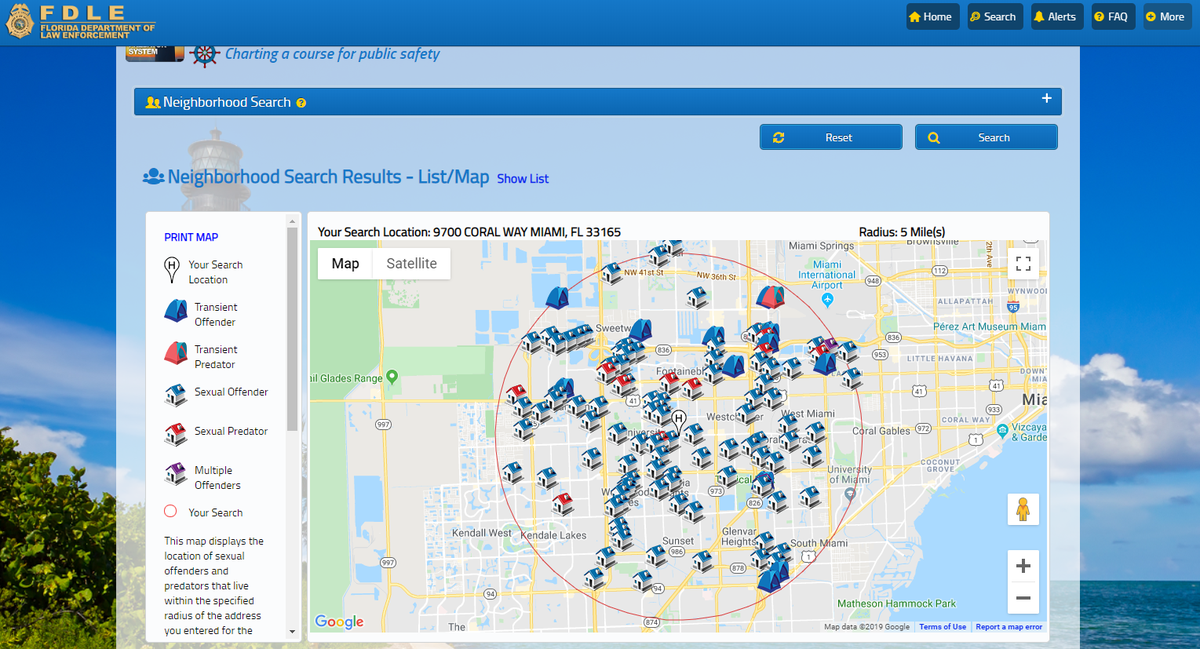
If you’re using the map option, click on any of the home icons that appear. A picture of the offender, the name, address and a PDF file that contains information on when and why the person was labeled as a predator or offender will then appear. The list format will provide you with the same information.
Parents can also download the department’s free mobile app, “FDLE Mobile App,” from the Apple App store or Google Play Store to have the information on hand. The app also lets you search active AMBER, Missing Child and Silver Alerts and submit tips on suspicious activities.
It’s worth noting that some Florida counties don’t allow sex offenders to distribute candy on Halloween, wear costumes that might attract children, decorate their home or have any exterior lights on after 5 p.m. during the holiday. Some counties also require sex offenders to post a sign that says “No candy or treats here.”
Use apps to track your child on their route
Experts suggest that parents or another trusted adult accompany kids when they go out trick-or-treating.
But if you’ve agreed to let your child go out alone with a group of friends, take advantage of your smartphone’s GPS-enabled apps to keep track of them like Apple’s Family-Sharing app and Androids Google Family Link app.
Both Apple and Android users can also share their real-time location using their phone’s messaging app or Google Maps.
Watch the road
Parents and children should always check for cars before crossing the road. But drivers also need to be aware.
Drivers should turn their headlights on earlier in the day and be more cautious when driving, entering and exiting driveways.
Parents should also try to take their kids out while it’s still light outside and make sure they are wearing light-colored costumes with reflective tape so they are visible to drivers on the road.
Other Halloween safety tips
▪ The American Academy of Pediatrics says it’s safer to attend outdoor Halloween parties and events this year due to COVID. And if you plan to be indoors, mask up.
▪ Don’t let your child eat any candy until you or another trusted adult have checked it for tampering. Also, make sure they wash their hands or use hand sanitizer before they dig into their treats.
▪ Children should only enter homes with their parent or another trusted adult.
▪ Don’t accept rides from strangers.
▪ If you notice anything suspicious or find a harmful item in your child’s treats, call police.
This story was originally published October 29, 2021 at 11:04 AM.