‘Tapped out’: South Florida groups feeding the hungry are running out of money
Nine months into the pandemic, Paco Vélez, who runs Feeding South Florida, is stuck on the numbers — and they don’t add up.
There’s the $30 food boxes with milk and produce that the massive food bank has given out to tens of thousands of families each week. There’s the 97 meals each person in South Florida can eat per box each month, thanks to the hundreds of Feeding South Florida volunteers around Miami-Dade and Broward counties.
But then, there’s the flip side of the math: The demand continues to be so high at most distribution centers, that if every single source of aid dried out, Feeding South Florida would run out of food in eight to nine days.
Ahead of a holiday season where more than half a million Floridians are still unemployed, Vélez and other large food distribution charities are sounding the alarm on the millions of pounds of food at stake when two crucial forms of federal aid are set to expire at the end of the month.
“We’re looking at a combined total of an 8.2-million-pound food gap every month in South Florida,” Vélez warned.
At the current pace, that’s about half the amount of food that Feeding South Florida hands out each month at their distribution centers.
Feeding South Florida is part of the national network of hunger relief groups known as Feeding America. Here, they operate over 40 distribution sites throughout South Florida, and the organization provides meals to churches and municipalities. Even if most avenues of funding were to dry out, Feeding South Florida continues to receive major food donations from Publix and other local grocers.
Running out of money
But while there are dozens more grassroots efforts in South Florida dedicated to feeding needy families, some local groups fear that without the larger food banks operating at full capacity, their efforts will not be enough to help the volume of families in need.
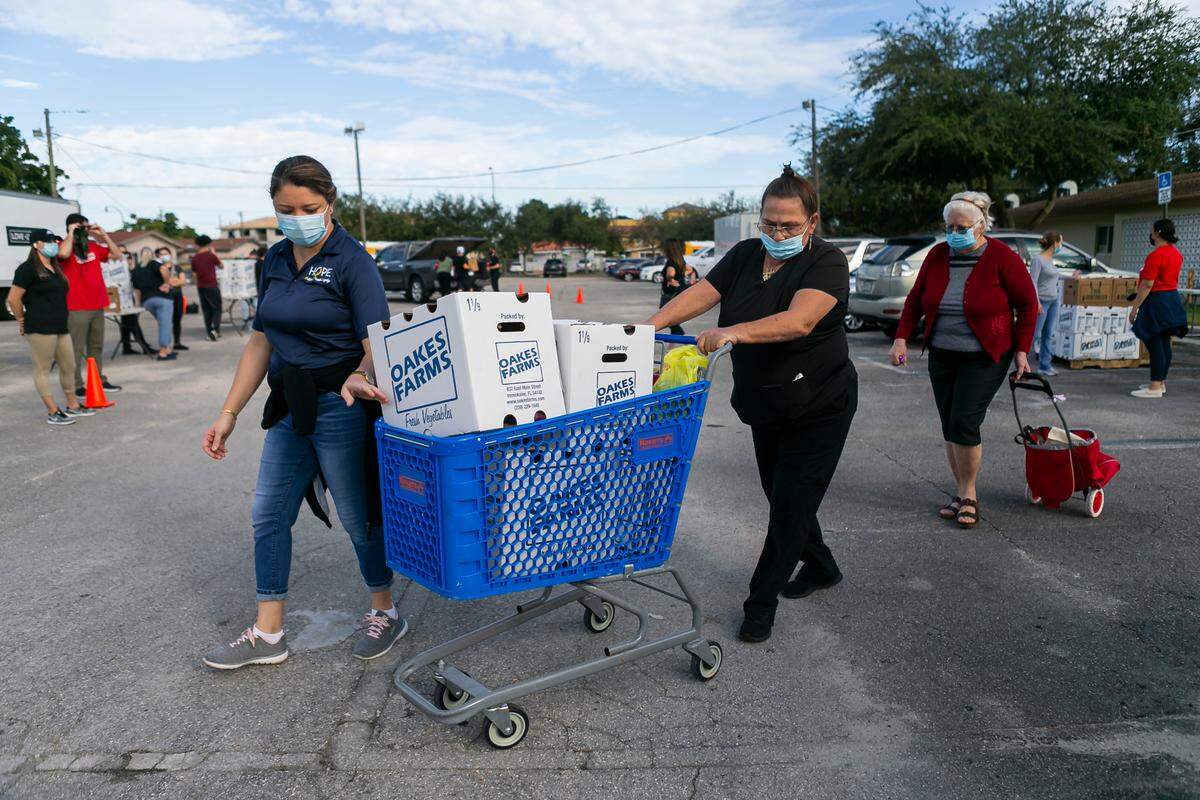
“We’re all beyond our capacity. Eight months of emergency support from all these community leaders, we’re all tapped out,” said Kristin Guestin, CEO of Buddy System, a local nonprofit that is behind community fridges in so-called “food deserts” throughout South Florida.
Among the major sources of funds on the line are those from the federal CARES Act assigned to the Coronavirus Food Assistance Program (CFAP) and the USDA’s trade mitigation program, passed in 2018 to help farmers distribute leftover food amid escalating trade tariffs enforced by China.
And while it is still unclear if Congress will vote on a $908 billion stimulus package before the end of the year, Vélez said the funds would still be only a “bridge” until President-elect Joe Biden takes office.
“We continue to see furloughs and layoffs, even through September, October, November... Families with no resources coming from the government, no major unemployment assistance,” Vélez said.
To offset the costs in the meantime, Vélez said his organization has been in talks with Miami-Dade and Broward county governments, both of which have signaled they will allocate some leftover CARES Act funds to feed families before the federal stimulus law closes on Dec. 30.
Miami-Dade County has millions of dollars from its $474 million in CARES Acts funds that it has not spent yet for 2020.
Claudia McLean, executive director for Joshua’s Heart Foundation, said their group has been struggling to find sources of funding to keep up with the demand. They are receiving more people per day than they would serve each week before the pandemic — and they are still forced to turn people away.
“We are not sure what’s going to happen after the funds that we receive because of the CARES Act ends this month,” McLean said. “So what happens in January? COVID is still around. We do have families asking us how long... We have no idea.”
Meanwhile, the city of Homestead announced Thursday it stopped distributing grocery gift cards “due to the volume of applications exceeding available funding.” The cards were for residents suffering financial hardships as a result of the pandemic.
Miami-Dade in top 10 for food scarcity
The hunger crisis in South Florida — and the dwindling funds for the efforts to stop it — is not unlike the crisis that threatens most of the country’s largest charities to battle food insecurity amid the coronavirus pandemic. Over the weekend, Miami-Dade officials, including Mayor Daniella Levine Cava, pleaded for federal aid.
“We need these stimulus funds more than ever,” Levine Cava said over Zoom, adding that many residents were at a “breaking point.”
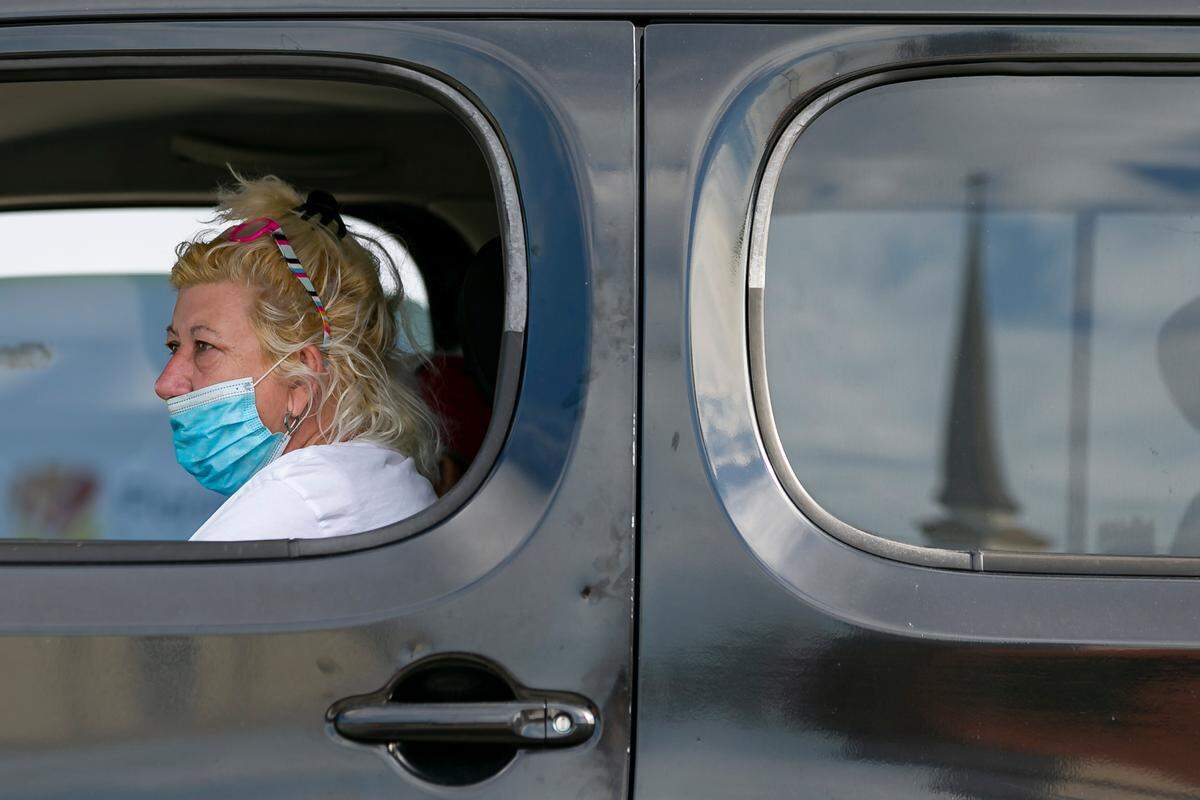
Aerial views of miles-long lines of cars waiting for food, or residents waiting overnight for a $250 Publix gift card have been especially illustrative of the severity of the problem in South Florida. According to one recent Census survey, Greater Miami is one of the top metro areas in the country for food scarcity, with 15.1% of adults stating they sometimes or often had nothing to eat.
Guestin, of Buddy System, said that their effort has only been able to survive thanks to partnerships they’ve made with Buchanan’s Whisky and residents who’ve made charitable donations. With only four paid part-time staffers and hundreds of volunteers, the organization has managed to open about seven fridges in Overtown, Richmond Heights, Little Haiti, Coconut Grove, Wynwood and Homestead.
Food “really is the first thing, sadly, to go, if you can’t afford to pay your rent, if you can’t afford to pay your utilities, you can’t afford your immigration fees,” Guestin said.
South Miami-Dade, the Keys hit hard
In the case of Alpha Fleurimond, who runs Three Virtues Organization in Homestead, he’s seen firsthand the toll of the pandemic and unemployment on South Florida’s migrant farmworker community. Because of the charity’s location, Fleurimond says they are also receiving many residents from the Florida Keys who have lost their jobs in tourism and drive up to Miami-Dade to get a box of food.
Even though the demand has grown, the organization did not have enough funding and volunteers to stay open weekly, as they did before COVID-19. Now, they only distribute once a month, and a few volunteers help deliver to senior citizens or persons with disabilities. They serve about 120 people a month, Fleurimond said.
“We just do it and people come in in good numbers,” Fleurimond said. “If we don’t find the funding, it’s going to be really hard for us...We’re looking for it but we haven’t had any luck yet.”
Though the families who seek assistance at food banks come from many different experiences, groups and experts say it is not a coincidence that majority of those who regularly seek help at South Florida’s food drives were employed in the tourism and hospitality industries, which have suffered the greatest blow throughout the COVID-19 pandemic.
More than quarter million jobs lost in South Florida
Since the pandemic began, the Metropolitan Center said, more than 256,000 jobs have been lost in South Florida and the region has accounted for 35% of the unemployment claims in the state.
Among the hardest-hit sectors: education and health services with 26,400 jobs lost in South Florida between March and August due to the pandemic; retail, where there were 17,200 COVID-related jobs lost; food services and accommodations with 81,200 lost jobs; and the administrative and waste services sector where 22,000 jobs disappeared.
“The transformation that [food distribution groups] have gone through this year is mind-boggling. And it still doesn’t keep up with demand,” said John Buschman, a professor at the Chaplin School of Hospitality & Tourism Management at Florida International University.
Buschman has worked closely with hunger relief efforts prior to the pandemic, “rescuing” food that would otherwise be wasted at major events, like the South Beach Food and Wine Festival, which he has been affiliated with for years. (This year, like many other large gatherings, the festival was postponed).
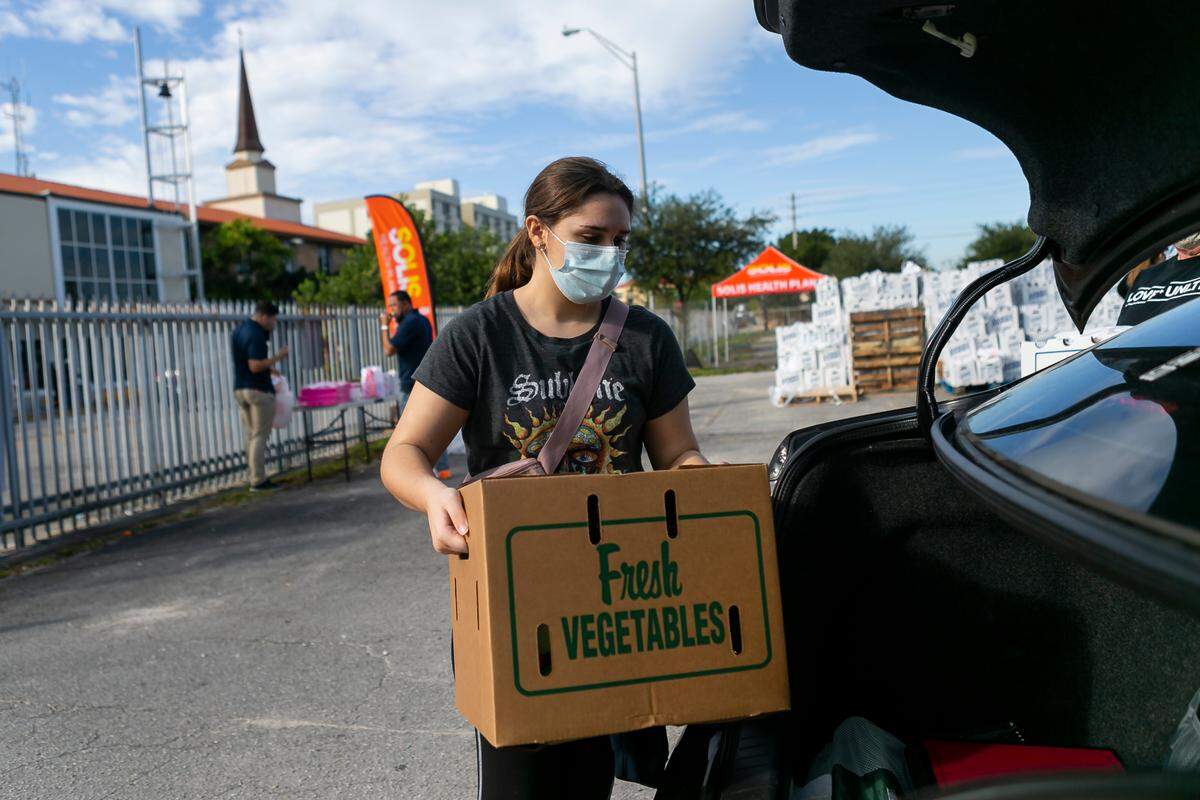
But even with the need created by the coronavirus, Buschman noticed that there weren’t enough efforts to save good ingredients and meals that were being thrown into the trash as a result of restaurant closures and event cancellations.
“Hospitality and tourism is the largest industry in Florida… so this was a supply chain gone crazy. You had suppliers of the industry all of a sudden don’t have anywhere to deliver this food. The farms, their production was growing and nowhere to deliver it to,” Buschman recalled.
So in some cases, Buschman said suppliers began exporting their product out of the state. Or even out of the country.
Food Rescue U.S. helping Miami restaurants
One local solution to re-purpose food waste was Ellen Bowen. She’s the site director for the nonprofit Food Rescue U.S., which used to rescue unused food from large-scale events like the Super Bowl, or restaurants.
With the pandemic, Bowen reinvented the playbook. With so many local restaurants closing their doors, she quickly realized it wouldn’t take long for most of her food sources to run out. So she decided to pay local restaurants to stay open, so they could pay their employees to make meals with leftover ingredients, which they would in turn donate to Miami communities.
In many cases, the food has gone back to the food service industry’s jobless. They’ve partnered with 24 local restaurants and have served over 50,000 meals.
“In many cases [residents] don’t have access to a car, so they can’t do a drive-thru,” said Bowen. “In many parts of Overtown, they don’t have ovens or stoves. So for us to provide them a hot, healthy meal has been very critical. It’s a different model than probably anyone … it’s been so rewarding and so inspiring.”
How to donate, volunteer and seek assistance
Feeding South Florida: https://feedingsouthflorida.org or call at 954-518-1818
Locator for drive-thru food distribution sites (updated daily): https://feedingsouthflorida.org/distribution_locator
Food Rescue U.S.: To donate to Food Rescue US in Miami, visit https://secure.givelively.org/donate/food-rescue-us/be-the-rescue-together-support-food-rescue-us-miami/
Buddy System: To support the Miami Community Fridge Initiative: https://www.buddysystemmia.com/fridgehelp
To sign-up to volunteer: https://www.buddysystemmia.com/volunteer
Three Virtues Organization: https://threevirtuesorganization.org/ or call at 786-377-3516. All donations are tax deductible and can be sent by Paypal, Zelle or direct deposit.
Joshua’s Heart Foundation: To find a food distribution event: https://joshuasheart.org/upcoming-events/
To donate: https://joshuasheart.org/make-a-donation/
Farm Share: To support the Homestead-based Farm Share: https://www.farmshare.org/ or call 305-246-3276, ext. 102.
Miami Herald freelance reporter Mimi Whitfield contributed to this story.
This story was originally published December 10, 2020 at 6:00 AM.