
Inspectors warned about Miami senior homes. The state sent at-risk elders anyway
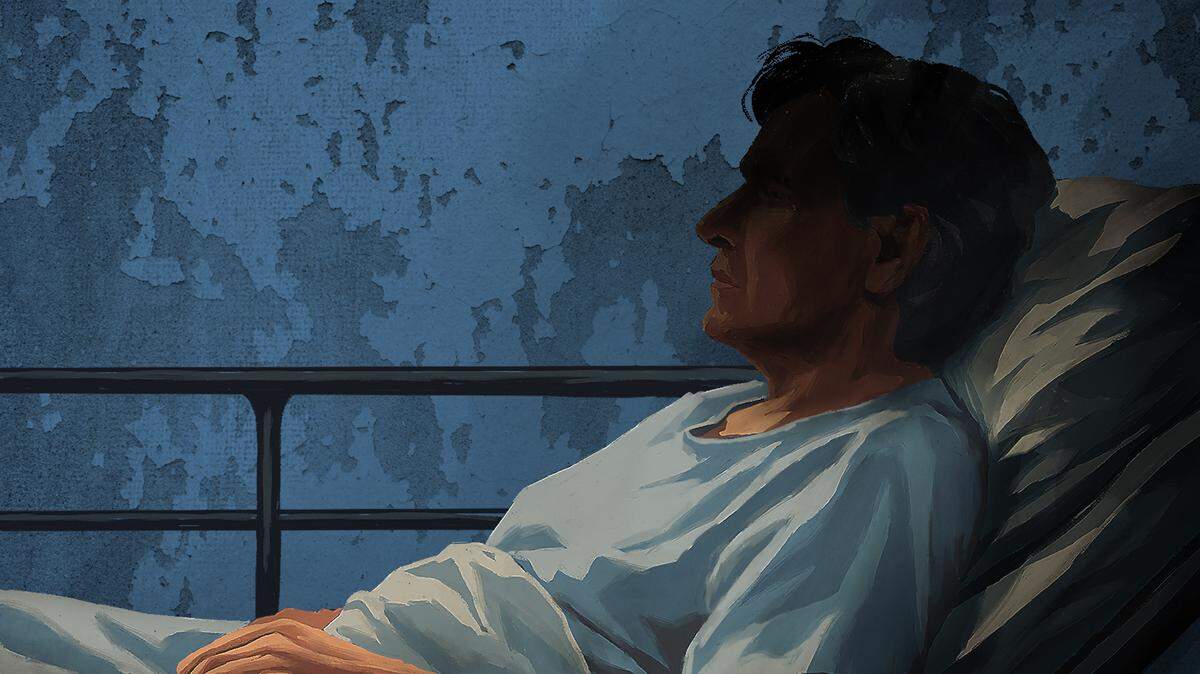
When a series of tragic failures at New Era Community Health Center left scores of the county’s weakest, poorest and most erratic residents in danger, Florida health inspectors took the unusual step of threatening to shut down the home.
One woman died after suffering a seizure, falling and receiving no medical care for hours. Another was housed in a second-story room despite having attempted suicide, health inspection reports say. “I want to kill myself,” she announced before jumping off the balcony in a second attempt, breaking her pelvis and several other bones.
New Era, an assisted living facility in Homestead, was still operating in 2024 when an elderly man was hospitalized with deadly Legionnaires’ disease. The home had contended with outbreaks since 2019 when it inexplicably halted water tests designed to prevent the spread of bacteria that causes severe lung infections, inspections said.
“You can’t dismiss this population,” a Health Department doctor warned New Era. “The elderly are very susceptible.”
But while health administrators were seeking to close the facility, leaders at its sister agency, the Department of Children and Families, were filling its beds.
Frail, disabled or isolated adults in Miami-Dade County can be moved from their unkempt or unsanitary homes for their own wellbeing only to land in assisted living facilities that are just as grim. State caseworkers have sent an untold number of elders in their care to a coterie of homes with a history of hurting, ignoring or humiliating their residents, records and anguished families say.
“DCF wants to get these clients off their books. People who know how substandard these homes are don’t voluntarily go there. But if DCF can help keep their beds filled, those homes are happy to take them,” said Michael Phillips, a former head of the Long-Term Care Ombudsman Program, a state watchdog group for Floridians in elder care and nursing homes.
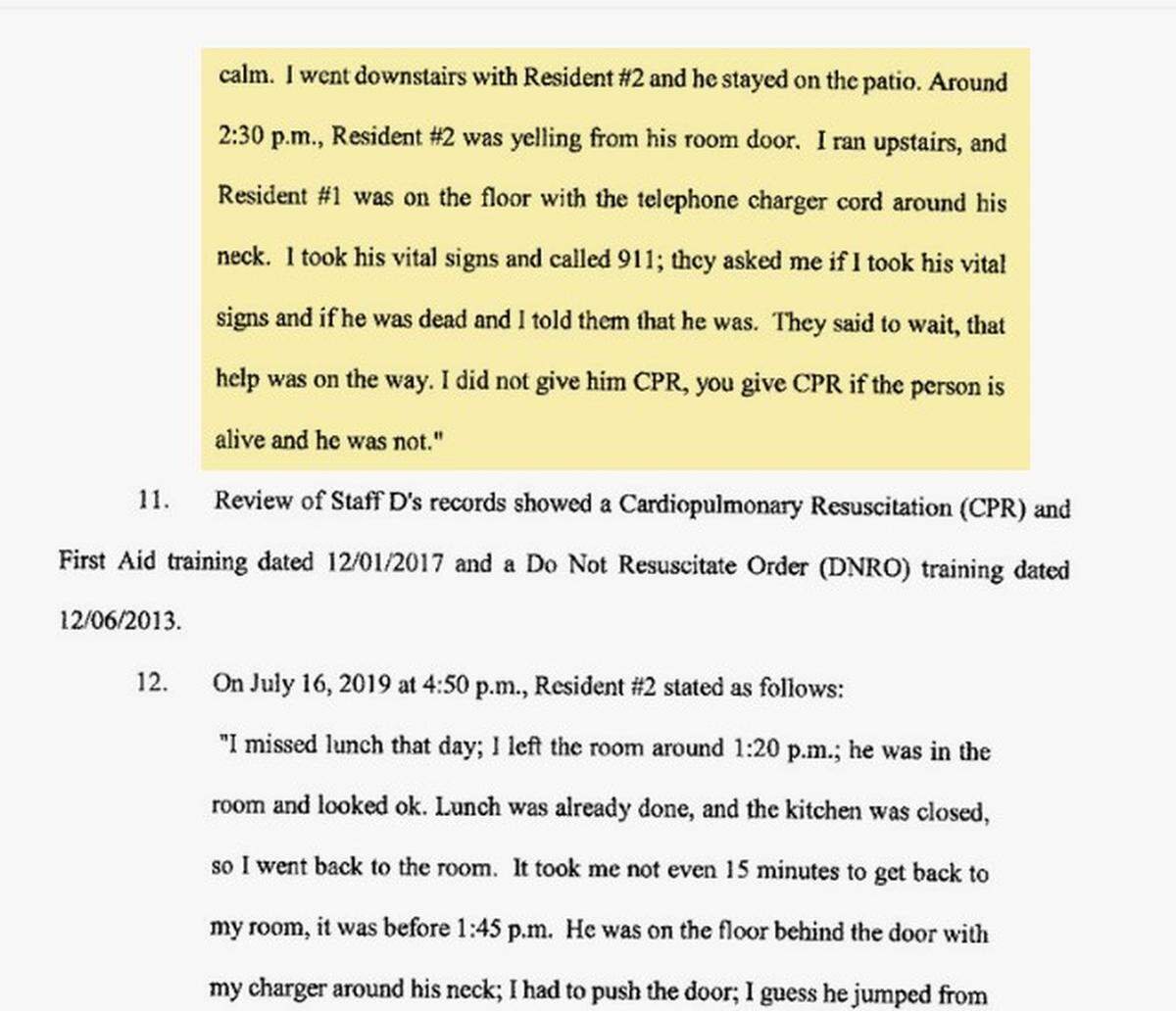
The state’s favored homes have been rebuked for skeleton crews, disease outbreaks, a meager diet of hot dogs and failure to investigate a rape allegation, according to public inspection reports and documents obtained by the Miami Herald. One facility left a suicidal resident hanging by the neck from a phone-charging cord attached to the sprinkler system after his roommate discovered him unconscious. Two homes in a Miami chain lost their licenses after inspectors said negligent protocols caused dozens of elderly residents to contract COVID-19.
Jorge Luis Musa, who owns New Era, said his home, which specializes in housing residents with mental illness, has accepted some of the most difficult and challenging clients in DCF custody. He acknowledged that health administrators have identified problems at the aging facility, but emphasized that he and his staff solve them as quickly as possible.
“Over the years, [DCF] patients never had an issue in our facility. I treat my patients like my own kids,” Musa said while showing a reporter the renovated lobby, office, kitchen and dining area as staff dispensed evening medications. “These are the hardest cases. Nobody wants them.”
Though DCF has declined repeatedly to answer questions about its elder protection program with the Herald, the agency said it is conscientious about placing vulnerable adults strictly in safe, licensed homes.
“We scrutinize placements” by reviewing DCF abuse investigations and Agency for Health Care Administration inspections, the agency said in a statement.
But DCF’s own records show it rarely, if ever, finds fault when others raise alarm. During a seven-year period, DCF received 117 hotline reports of maltreatment at 12 Miami-Dade ALFs frequently chosen as homes for vulnerable adults. Among the allegations: malnutrition, dehydration, medical neglect, physical injury and sexual abuse. None of the complaints was verified.
DCF has also brushed aside allegations of resident neglect reported by other agencies. A 2025 inspection following a complaint to the Agency for Health Care Administration found 10 violations at a Miami ALF when a lone caregiver took a shower during her shift, allowing a confused and mentally ill resident to sneak out. He was later picked up by police on a bus bench “disoriented.” The caregiver had not noticed he was missing.
“One of the most basic preventive measures is employee awareness,” health inspectors wrote. DCF, in contrast, saw no “inadequate supervision.”
‘BIGGEST LOSERS’ IN A BROKEN SYSTEM
Tania Hernandez, a 38-year state employee who decides where elders will go after they are removed from their Miami-Dade homes by DCF, said during an interview with a state investigator that clients don’t end up in luxury ALFs because the posh places are not willing to accept them.
“Some ALFs only wanted the good clients. Those that are, they call [them], grandfather and grandmother. ... They sit. They don’t bother. They eat. They sleep,” she said. “But our clients are not easy clients. Our clients are very difficult clients.
“Those ALFs that I used will take any type of clients — those that, in the middle of the night, will wake up and break the whole place, wake up everyone. You can see the difference.”
Retired Judge Steven Leifman, who founded and presided over Miami-Dade’s Mental Health Court for 30 years before retiring in 2025, told the Herald he was “scared to death” about the state’s dearth of facilities for people with mental illness, no money and no one to take care of them.
“The system is desperate,” he said. “We don’t have adequate care or services in our state. People who need services are the biggest losers.
“What are they supposed to do? Throw them out in the street?”
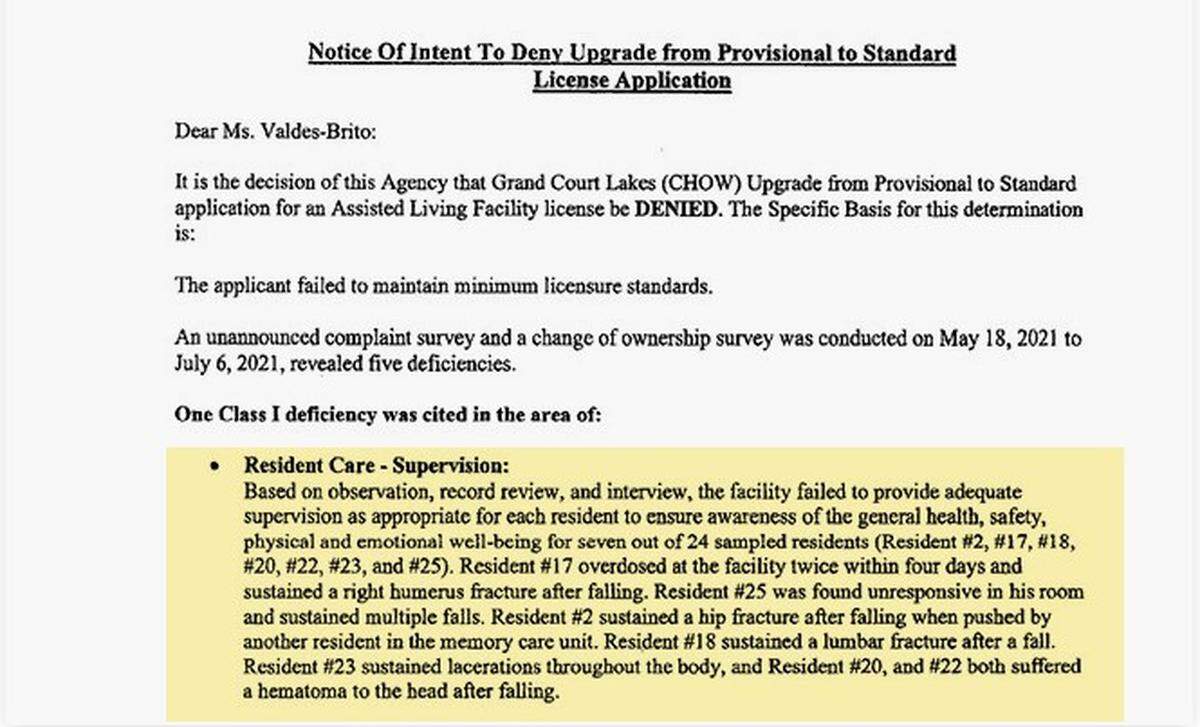
Grand Court Lakes, a 191-bed home that surrendered its license in 2022, continued to receive clients from DCF through at least 2021, department records obtained by the Herald show.
By then, the North Dade home was one of the most heavily punished ALFs in Florida, with 34 legal cases resulting in almost $94,000 in fines.
Inspection reports show one resident overdosed twice within four days, fell and broke an arm. Another was found unresponsive in his room after multiple falls. One resident broke a hip when he was pushed over by another in the dementia unit. The home didn’t provide telephones to residents, as the law requires, to report abuse.
A Hialeah-based chain of seven ALFs called Salmos 23 is named after the 23rd Psalm: “The Lord is my shepherd. I shall not want.” Despite numerous complaints to health inspectors from elderly people that Salmos 23 left them wanting the most basic necessities — like toilet paper — DCF chose it as a refuge over hundreds of other homes.
At one Salmos home, 59 of 62 residents told inspectors last April they could not communicate with caregivers who only spoke Spanish, reports say. Said one visiting relative: “As far as explaining what her family needs and wants if she’s in distress, it’s difficult because of the language barrier.”
Residents were treated carelessly, disrespectfully, insensitively. One report detailed a staff member bathing a senior who was in hospice care with the window blinds open so that anyone in the garden outside could see. Inspectors chided the home for not reminding staff “to stop … yelling at the residents.”
At another Salmos home, staff entered rooms without knocking and hovered when visitors stopped by, so they couldn’t speak freely.
Residents had no toilet paper or soap during two inspections last summer, they said.
“This is not a luxury; this is a necessity,” one resident told inspectors.
Treasured possessions were handled like junk.
“The staff was saying ‘garbage, garbage, garbage’ as they threw away items,” an April 2025 report noted. Into the garbage went one man’s Bible, eyeglasses, clothes and photos of his sister and the mom who adopted him.
“The staff throwing out my stuff,” he said, “it sent me low.”
One man said the ALF “rehomed” his cat, named Baby, despite a doctor’s letter stating the pet was an emotional support animal.
A 98-bed Salmos home on West First Avenue planning to expand its mental-health program blew its inspection at the time. Staff was AWOL when inspectors arrived. Whoever answered the phone at a sister Salmos hung up.
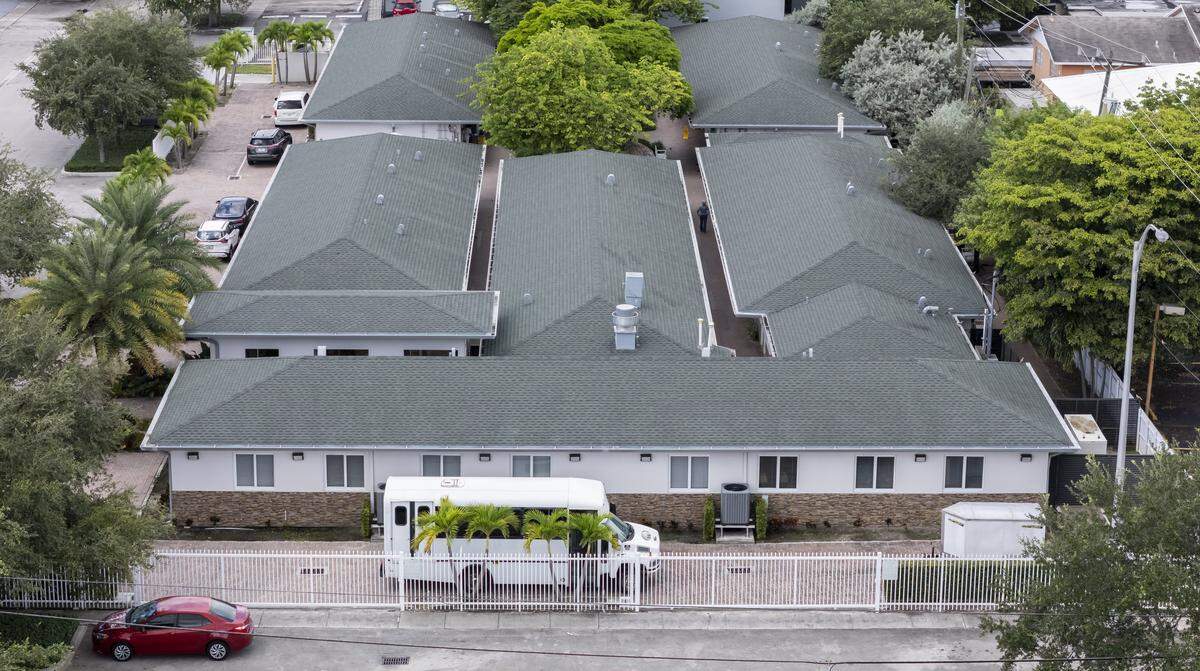
But the chain’s track record didn’t stop DCF from moving more clients in, including a man at Salmos 23 #3 who was so miserable he ran away and went missing for a month. He visited a friend’s house for a bath, bought food he’d been craving and took excursions with his bus pass.
“I am not a convict, not a robber and [have] not killed anybody,” he told an inspector. But at Salmos 23, he “felt like he was in jail.”
Odelmys Bello, the chain’s owner, told the Herald she specializes in rehabilitating troubled, run-down homes. She got started in the business in 2003.
“I have waiting lists [due to the high] quality of care,” she said, emphasizing that she does not turn anyone away, not even the neediest cases.
“Sometimes, I have residents coming from the hospital and coming in from DCF. I have a lot of referrals. Those residents don’t have shoes, they don’t have clothes, they don’t have nothing,” she said. “I have them in my ALF for a few months, and they don’t pay nothing.”
Bello invited reporters to tour Salmos 23 #3, which appeared modern and homey. Several people who said they were relatives of Salmos 23 residents called the Herald at Bello’s behest to say how well their loved ones had been treated. The chain’s coordinator, Melissa Soriano, blamed poor reviews on overly critical inspectors looking to find fault.
“The way AHCA works, they cite you with whatever they want,” Soriano said. “Whatever you try to explain, they don’t want to hear it.”
MISSING LAMPS, LARGE STAINS AND LEGIONNAIRES
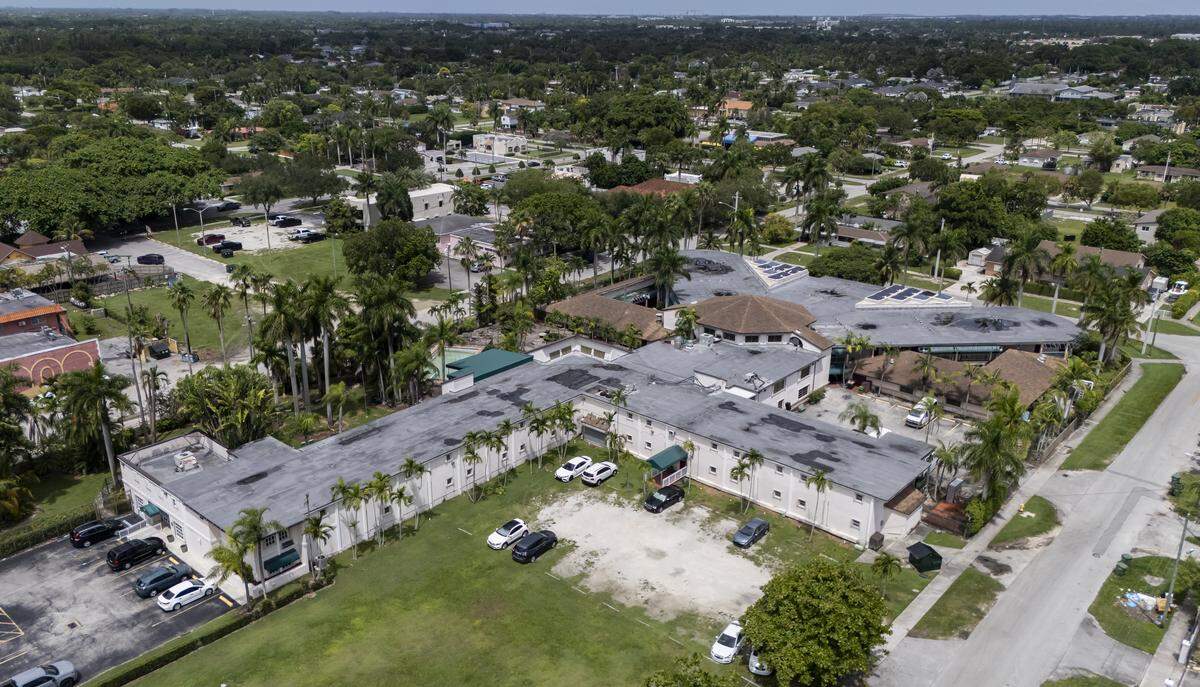
Musa, New Era’s owner, told the Herald that health administrators were never serious about shutting down the complex, which occupies an entire city block. They reprimanded him to force improvements.
“They were not trying to revoke,” he said. “They wanted to put us into compliance.”
Since then, he said, “everything has been taken care of. We correct mistakes.”
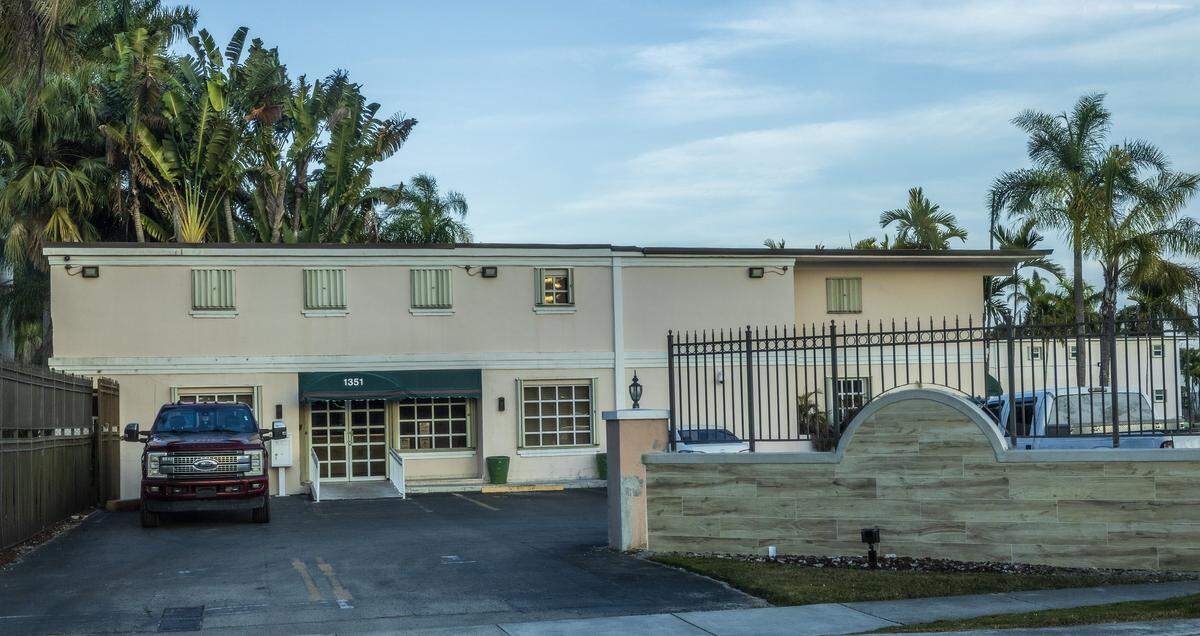
Through the years, DCF has placed 20 to 30 people at his Homestead home, located at 1351 N. Krome Ave., Musa said. Hernandez steers clients to his home because “she knows we take care of our patients who have mental illness well,” he said.
“Oh, yes. She gives us patients,” Musa said. “They are taken out of their houses, and they cannot go back.”
New Era has long been a destination for residents whose dementia or mental illness makes them difficult to place elsewhere. The home has also been cited 52 times for health and safety violations since 2017, health inspection reports show.
The worst failure involved a 60-year-old woman with epilepsy. She was supposed to see a neurologist after a hospital stay, but the home couldn’t find one for her. “She only had Medicaid, and none of them wanted to see her,” inspectors were told.
The woman fell and lost consciousness when she had a severe seizure. Though she broke her nose, upper arm, two ribs, cervical vertebra and part of her skull, the home did not call an ambulance. But by the next morning, the woman was in a “nonsurvivable” coma, and later died, records say.
“She was fine. That is why we did not call the rescue,” the owner told inspectors. Nor was the incident reported, as state law requires.
A resident who was unable to care for himself and known for his habit of running away took off one day. He was found at a nearby park with two broken arm bones and a fracture in his neck. He could not say who he was; he had to be identified by fingerprinting.
Another New Era runaway — Musa stressed that it’s against the law to restrain residents — said “he was fed up with his ALF, and that the food would give him diarrhea, so he decided to go to the mall, where he could be homeless, receive air conditioning, water and teriyaki,” a report said. He walked all night and police found him passed out on somebody’s lawn. Dehydrated, he was diagnosed with a life-threatening “acute kidney injury.”
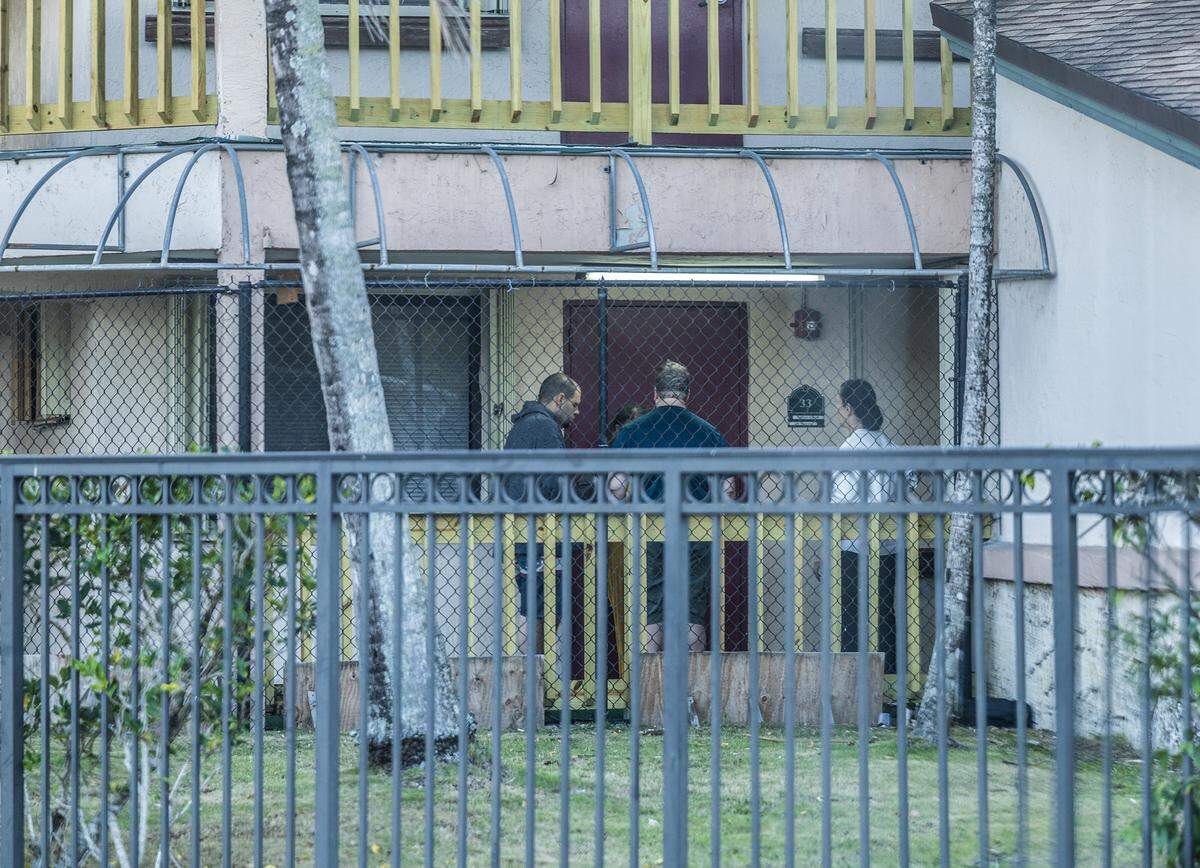
When health inspectors arrived in October, they found a resident curled up in bed and his sweating roommate in a hot, “musty” room with an air conditioner that couldn’t be turned on because it was “enclosed” in a box. “Large black stains” soiled the bathroom air vent.
The two residents who shared the bare room had no TV, no lamps and the blinds didn’t work. “There was no clothing in the room other than the clothing that the residents had on their backs,” a report stated.
Lamps were removed because residents “destroy them all the time” and could injure themselves, the owner said.
Likewise with their clothes. “If the residents were given their clothing, they would have thrown it all over the place,” the report quoted him as saying.
New Era, a 200-bed facility, has had recurring outbreaks of Legionella, the bacteria that grow within water and air conditioning systems and can cause Legionnaires’ disease, records show. The potentially fatal infection was first diagnosed at a 1976 American Legion convention in Philadelphia, where a contaminated hotel air conditioning system left 200 people sick and 34 dead.
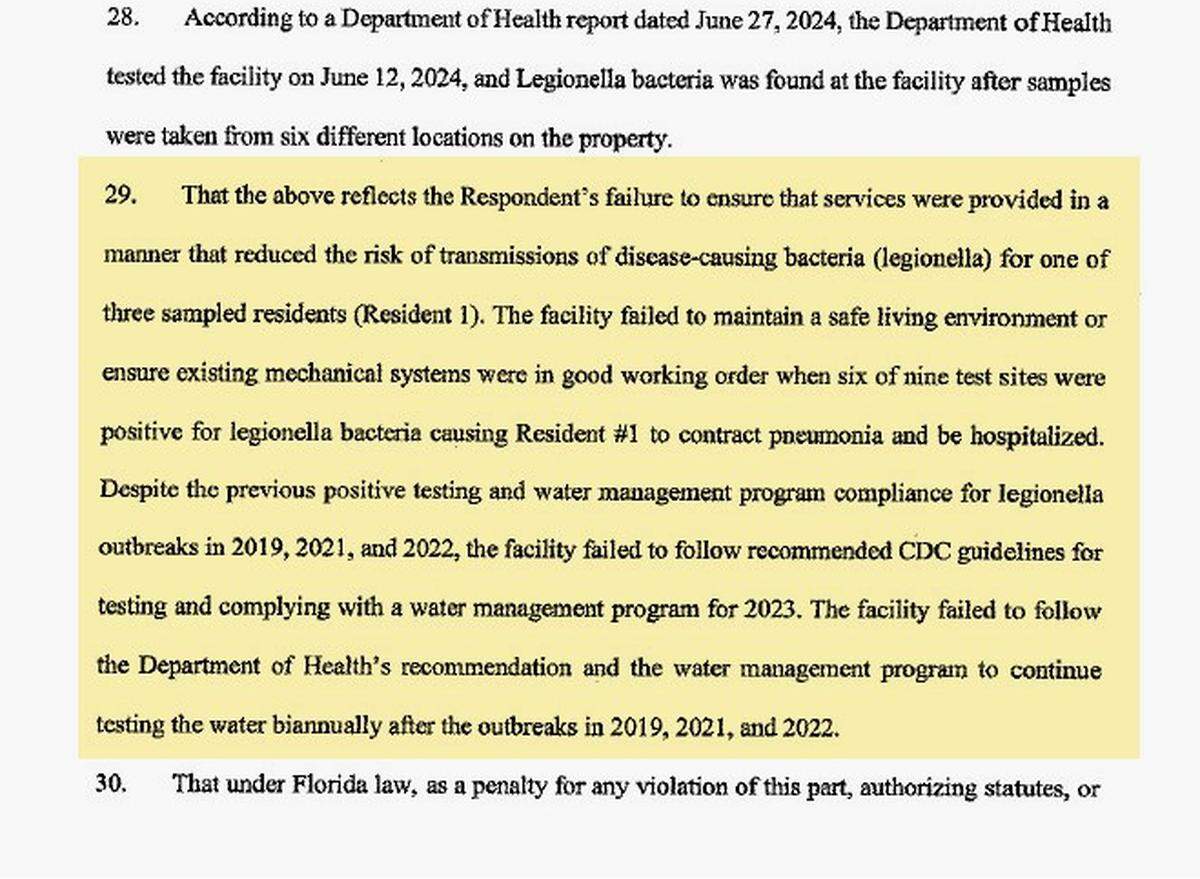
New Era “failed to follow” a testing and maintenance program, a report said, until a resident was hospitalized with pneumonia in 2024.
Musa said he is investing $1 million in the 62-year-old property because he is committed to improving it. He said he’s installed new water testing equipment that is monitored by a new company and is replacing old AC units.
‘DIFFICULT’ PATIENTS
The Agency for Health Care Administration, the state’s health licensing and oversight arm, moved to deny New Era’s license renewal application in 2019.
That action didn’t stop DCF from moving 76-year-old Jackie Meyerson there months later.
She was one of those difficult clients.
Meyerson had become frail and disoriented by the spring of 2019. When her friend, the now-retired television news anchor Bob Mayer, came to her apartment to check on her, he was assaulted by the odor and chaos. She was hoarding her possessions and unable to clean her home.
“She needed more help than I could possibly give her,” Mayer recalled. He called DCF’s hotline, hoping the adult protection program could keep her safe.
Instead, Meyerson was shuffled to three ALFs in six months — from Hialeah to Kendall to Homestead. Mayer envisioned rocking chairs, crisp linens and tasty dinners. What Meyerson got in the first ALF where DCF deposited her was a bedraggled patio, plastic furniture, holes in the walls. Inspectors had threatened to shut it down.
“Oh, my God, was it horrible,” Mayer told the Herald. “The whole experience played a big part in her getting worse.”
DCF moved Meyerson to a different ALF, but like the previous one, it employed only Spanish speakers.
By then, DCF was running out of patience with Mayer, whom Meyerson appointed to manage her affairs. A Sept. 23, 2019, notation in Meyerson’s file said Mayer would “be offered three options, as a courtesy gesture on the part of DCF.” Meyerson could remain where she was. Or move to New Era. If not, DCF would take “the case to court” to force her to accept one or the other.
Meyerson moved into New Era that same day. The state allowed New Era to renew its license, settling for what appears to be $14,000 in fines.
Mayer said he lost touch with Meyerson in spring 2020, when COVID-19 struck. She died on Aug. 10, 2020, at age 77.
“I’m sickened to learn the full story of what happened to my friend,” Mayer said after learning of Meyerson’s fate. “I don’t think they gave a shit what happened to her. It’s tragic.”
Miami Herald Staff Writer Michelle Marchante contributed to this report.
This story was originally published April 2, 2026 at 5:30 AM.