Waiting in the car. Wearing a mask. How coronavirus has changed a visit to your doctor
The days of sitting in a cramped waiting room for an hour or more to see your doctor are over. At least for now.
Eliminating waiting rooms, requiring patients and employees to wear masks and performing temperature checks are only a few of the new procedures at doctor offices and hospitals in South Florida during the COVID-19 pandemic.
Most physicians are also encouraging virtual appointments to reduce the flow of foot traffic in their offices while they work to catch up on a backlog of waiting patients now that Gov. Ron DeSantis has lifted the temporary ban on elective surgeries and procedures.
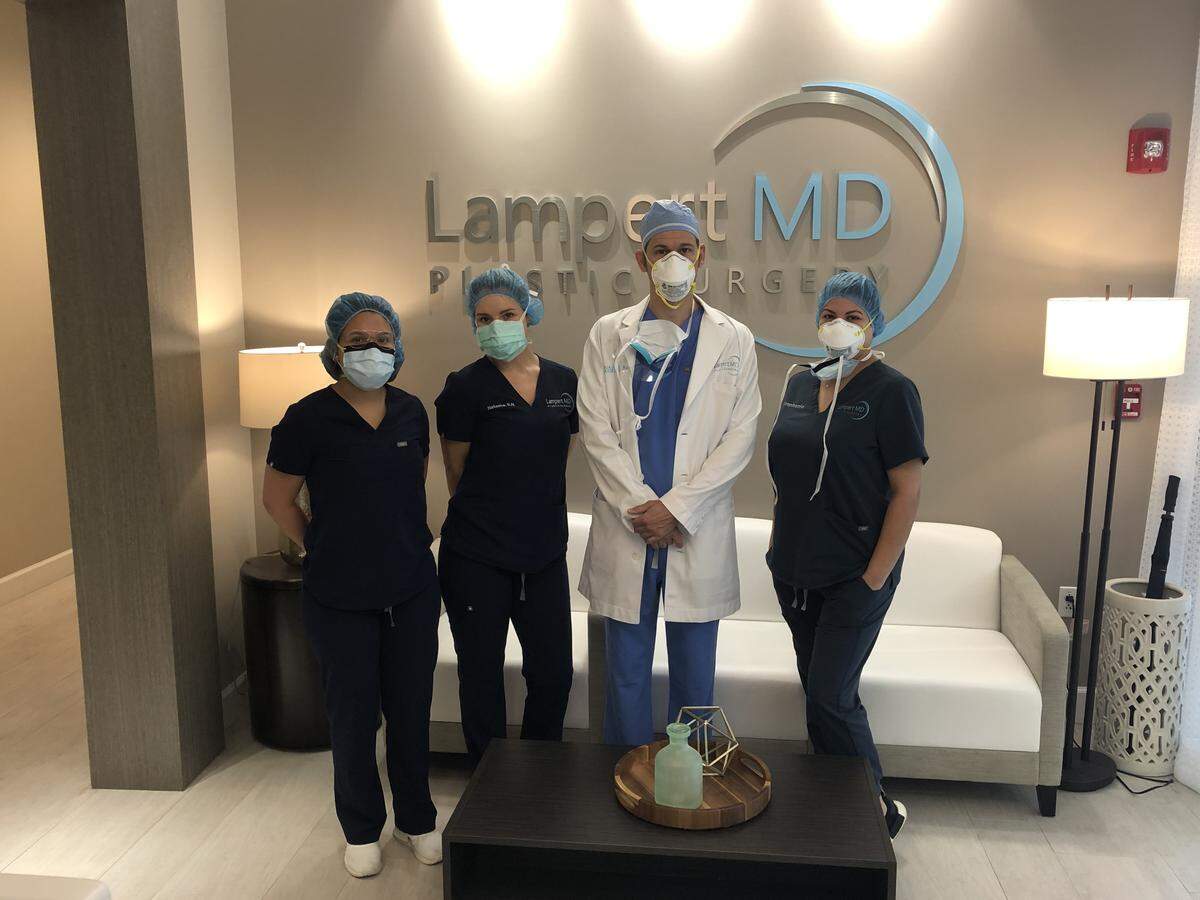
“It’s almost like landing at the airport but without the planes actually making visual contact with each other,” said Dr. Joshua Lampert, an aesthetic and reconstructive plastic surgeon in Aventura.
His “boutique” practice has three different entrances, four rooms and a recovery room authorized to hold multiple patients. The multiple entrances were always used to move patients in and out of the office so they wouldn’t run into each other for privacy reasons, Lampert said.
Now, he’s spacing appointments further apart — with virtual consultations in between — and having only one patient at a time use the recovery room to keep up with social distancing guidelines. Patients have to pass a COVID-19 questionnaire and a contactless temperature check before being allowed into the office.
Patients and staff also have to wear masks, a necessary but “weird” requirement, he said.
“I’ll see patients for examinations on other body parts and I still don’t know what they look like under their mask. We have their driver license picture, but it’s impersonal. What do you look like under there? They probably think the same, too,” Lampert joked.
At Drs. Margo Brilliant and Jeff Rothenberg’s orthodontic office in Aventura, walk-ins will no longer be accepted until further notice to avoid crowding. That includes emergency walk-ins for broken wires or a lost retainer.
After being closed for two months because of the pandemic, their office reopened Friday with a redesigned layout and a new appointment procedure. Patients have to complete a “Wellness” form online before their appointment, undergo a temperature check and have a mask on before being allowed into the office. The chairs inside the open-plan office are now more than six feet apart to enforce social distancing.
Brilliant and Rothenberg said they used virtual visits to discuss options, answer questions and provide some care to patients during the shutdown. Even though their office is open now, the doctors are still looking at ways to expand their telehealth service to decrease the number of people in the office at one time.
Since patients have to take the mask off during procedures, and COVID-19 spreads through respiratory droplets, this means the orthodontists have also had to bulk up their safety measures.
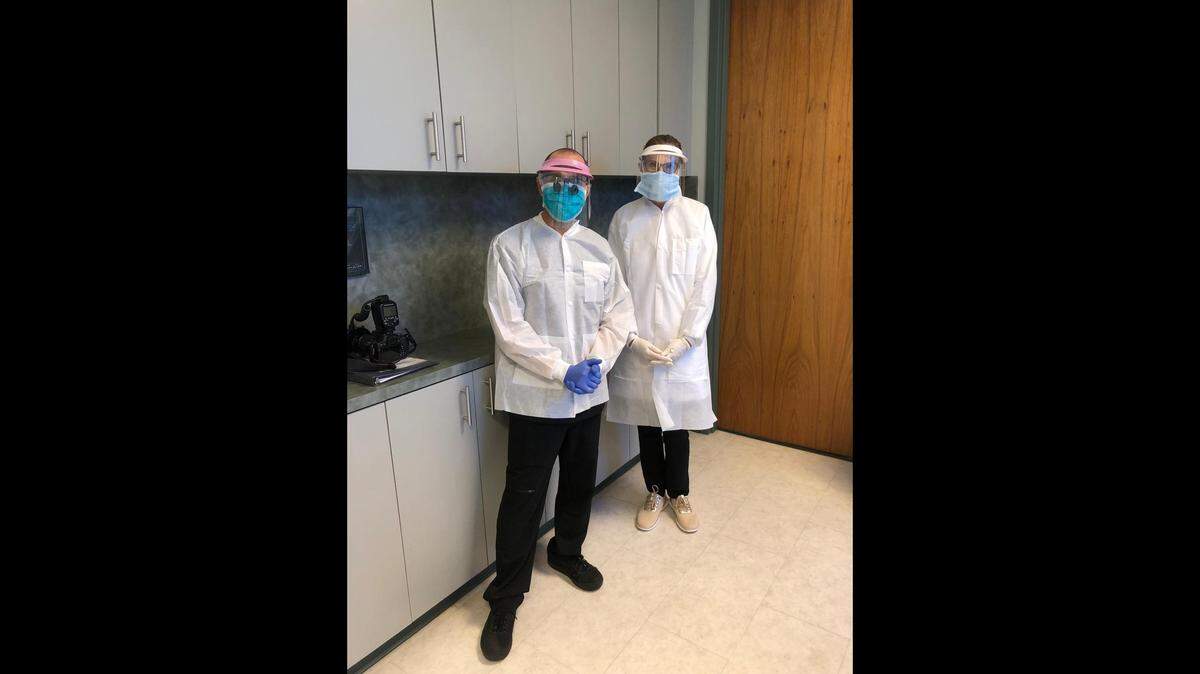
The doctors say that includes having air purifiers installed through the office, increasing the sanitation and disinfectant of surfaces and equipment, and making sure they and their staff members are wearing personal protective equipment, including N95 respirators, protective face shields, gloves and disposable gowns.
“We have a shield on and two masks on while we’re working,” Brilliant said.
As a surgeon, Lampert faces similar issues.
“We try to do what we can with photos but ... If I’m looking at someone with a broken nose or they need a more complicated reconstruction … then I have to make a decision. Should I put on an N95 or use two masks?” Lampert said.
Pediatric Associates, a privately owned primary care pediatric practice with locations across Florida, also has rolled out new guidelines, including giving families the option to wait outside or in their cars between check-in and their appointment.
Each pediatric patient will only be allowed to have one parent or guardian with them during the visit, and everyone who is over 2 must wear a mask or face covering. All morning appointments will also be for general child care, including vaccinations, injuries and any sickness that does not involve a fever, while afternoon appointments will only address “viral” visits involving fever, cough, diarrhea and upper respiratory illnesses.
How has COVID-19 changed hospital visits?
South Florida hospitals have also made similar changes in how they see and treat patients.
At Mount Sinai Medical Center in Miami Beach, patients with scheduled appointments at one of the center’s doctors offices must wait in their car, instead of in the waiting room, said Mount Sinai’s President and CEO Steven Sonenreich. Once the doctor is ready to see a patient, the office will call the patient and tell the person to go inside.
Everyone who enters Mount Sinai or any other South Florida hospital will also have to pass a COVID-19 screening, temperature check and wear a mask throughout their visit. Those who don’t have a mask will be given one.
“We really looked at everything across the board,” said Brett Cohen, chief of adult general surgery and chief of bariatric surgery for Memorial Healthcare System in Broward County. “Offices are safe places to be, but we have to make people feel comfortable again.”
Hospital emergency rooms across the country, including in South Florida, saw a decline in non-COVID-19 related visits for several weeks. Lampert — the aesthetic and reconstructive plastic surgeon in Aventura — said that during this time, his practice was dedicated to virtual consultations and patients who needed emergency reconstructive surgeries, such as broken noses, traumatic hand injuries and children who fell in the pool and had wounds on their lips or chin.
Lampert said these types of injuries would normally be taken care of at a hospital’s ER, but patients told him they didn’t want to decrease necessary hospital supplies or thought they had a higher risk of falling ill with COVID-19 if they went to a hospital.
South Florida hospital administrators say they have precautions in place to keep non-COVID-19 patients safe from being exposed to the novel coronavirus. These measures include rapid COVID-19 tests, a no-visitor policy (except for select circumstances) and treating non-COVID-19 patients in an area of the hospital that does not have COVID-19 patients.
And Mount Sinai’s CEO says people are already starting to make appointments and visit the ER now that the elective surgery and procedure ban was lifted.
It’s “a slow but sure journey to normalcy,” he said.
Here’s what to expect if you make a hospital appointment in South Florida:
Baptist Hospital/Baptist Health of South Florida
▪ Baptist Health has resumed regular scheduling for imaging and diagnostic tests and is asking patients to call 786-573-6000 to reschedule their appointment. The hospital says its physicians are also still serving patients in-office and virtually through its Baptist Health Care on Demand telehealth app and is asking you to contact your doctor’s office if you need to schedule an appointment.
▪ Everyone, including patients, will be given a new medical-grade face mask to wear once they enter the hospital. Everyone who enters a Baptist Health location will be screened for COVID-19 and have their temperature taken with a touch-free thermometer.
▪ The hospital is asking only those who are seeking care and treatment to enter their buildings, which means your spouse or other family member cannot go in with you. Exceptions will be made for parents with children and other special circumstances, according to the hospital’s website.
▪ Visitations and deliveries, including flowers and food, are still not allowed. Visitation exceptions will be made for pediatric patients, who can have one adult who is at least 18 years old accompany them. Exceptions will also be made for maternity and neonatal intensive care unit patients. The hospital says to ask the nurse manager in these units for more details.
▪ Besides enhancing sterilization and cleaning at all Baptist Health facilities, the hospital says its lobbies have been redesigned with spaced-out chairs and floor markings to promote social distancing, and plexiglass guards were installed at the front desks. Non-COVID-19 patients are also treated in an area separate from COVID-19 patients.
Broward Health
▪ All patients must arrive at the hospital with their own mask and wear it throughout their visit. Those who do not own a mask must arrive with a mouth and face covering. The hospital will then give you a mask. All workers will also be required to wear a mask.
▪ Valet parking is still suspended. This means patients need to be dropped off or arrive early to self-park.
▪ Patients and employees will be asked COVID-19 screening questions at the door and will have to undergo a temperature check with a no-contact forehead thermometer. Anyone with a temperature of 100 degrees or more will be asked to return at a later date or may be asked to visit the Emergency Department for additional care.
▪ Patients will undergo a rapid COVID-19 test 24-48 hours before their elective surgery. Results are typically received within an hour, a spokeswoman said.
▪ The hospital says its non-COVID-19 patients will be taken care of in a wing separate from where its COVID-19 patients are.
▪ Visitations are still suspended. Instead the patient’s chosen contact will be given updates about their condition by phone. There are a few exceptions to the visitation policy: Maternity patients will be allowed one visitor during labor; pediatric patients will be allowed one authorized adult (typically a guardian) to visit in 12-hour increments; and special considerations will be provided on a case-by-case basis for hospice patients.
Jackson Memorial Hospital/Jackson Health System
▪ The hospital says it’s working to reschedule all of its previous appointments and is prioritizing the most urgent non-emergency cases that were delayed first.
▪ Non-COVID-19 patients will be treated in an area separate from COVID-19 patients.
▪ It will also continue to test every patient who is admitted into its facilities or comes for a same-day procedure.
▪ Pediatric, inpatient rehab and maternity patients will be allowed to have one healthy visitor who is at least 12 years old. All outpatients can also have one healthy guest with them, but the person has to stay in the waiting room or lobby, the hospital wrote on Instagram. Visitors with special situations should ask to speak with a hospital administrator.
Memorial Healthcare System
▪ Elective surgeries and procedures will begin the week of May 11.
▪ All patients will be screened and tested for COVID-19 prior to entering the building. Everyone will also be required to wear a mask. Patients who test positive will have their elective procedure rescheduled and will be required to test negative.
▪ The hospital says its non-COVID patients will be taken care of in a wing separate from where COVID-19 patients are being cared for and will be treated by medical teams that are not handling COVID-19 patients.
▪ The hospital says it is spacing out appointments so patients don’t come into contact with other patients during an office visit and is also temporarily limiting the amount of elective surgeries it schedules each day. The hospital says it’s also starting social distancing measures in its waiting and recovery rooms and has increased its cleaning.
Mount Sinai Medical Center
▪ The hospital is scheduling outpatient and inpatient procedures farther apart to promote social distancing and is prioritizing urgent surgeries.
▪ Patients who have an appointment with one of the hospital’s doctor offices are being asked to wait outside, preferably in their car. The office will then call the patient once the doctor is ready to see the person.
▪ Everyone is required to wear a mask inside the hospital. Those who do not have a mask will be given one. Everyone will also have their temperature taken and will be screened for COVID-19. This goes for both emergency and non-emergency patients who are admitted.
▪ The hospital says its non-COVID-19 patients will be cared for in a wing that is separate from where its COVID-19 patients are. The doctors and staff caring for non-COVID-19 patients also do not have contact with COVID-19 patients.
▪ Visitations are still not allowed. Exceptions include maternity patients, who can have one person with them during delivery, and pediatric patients in the emergency department.
Nicklaus Children’s Hospital
▪ Children and their guardian will receive temperature checks. Only one adult will be allowed to accompany the child, except for select circumstances.
▪ Visits that can be done through telehealth will be.
▪ Signs and markers will be placed throughout the facilities to encourage social distancing. Patients will also have limited time in common areas. Non-COVID-19 patients will be treated in an area separate from COVID-19 patients.
▪ Cleaning will be doubled.
▪ Extended and weekend hours are being considered to help manage the caseload.
UHealth/University of Miami Health System
▪ Patients and employees will be asked COVID-19 screening questions at the door and may also have to undergo a temperature check.
▪ All patients will be given a clinical mask when arriving at the hospital.
▪ Anyone who is scheduled for a surgery or procedure at UHealth will be tested for COVID-19 before their appointment. The hospital says it will also be limiting the number of people allowed into its buildings at a time and is increasing its sanitation practices.
▪ Non-COVID-19 patients will be treated in an area separate from COVID-19 patients.
This story was originally published May 11, 2020 at 7:00 AM.