At-home deaths are up in Miami-Dade, but ER visits are down. It could be COVID-19 fears.
Florida’s COVID-19 death toll has soared past 1,600 in just a couple months, but another metric is rising too — at-home deaths.
A sharp decrease in emergency room visits across South Florida could point to coronavirus concern as a factor.
A Miami Herald analysis of natural, at-home deaths in Miami-Dade — the state’s most populous county and epicenter of Florida’s coronavirus spread — found dozens more people have died outside of hospitals and nursing homes than during the same stretch of time last year.
This year, Miami-Dade alone had 173 extra at-home deaths from January through April this year than the same period in 2019, according to records from the medical examiner’s office.
Experts said there could be several reasons for this jump, including a possible undercount of COVID-19 deaths. But new studies and stories from doctors point to another factor: fear.
It seems that ill people are afraid to seek care for emergencies like heart attacks and strokes because they worry they’ll contract the coronavirus inside the hospital.
Dr. Sergio Segarra, chief medical officer and emergency room physician for Baptist Hospital in Kendall told of a patient presenting stroke conditions who waited three days before going to the ER “and knew they were having a stroke.” By that point, it was too late to stem the brain injuries.
“If we rush those patients in we could try to break up the clot or withdraw the clot and could have done so much more as opposed to waiting three days and there was nothing to do except rehabilitation,” Segarra said.
Dr. Jonathon Fialkow, the chief population health officer at Baptist Health said his health system has seen a 40 to 50 percent decrease in patients coming in with heart attacks and strokes. And many of those that do come in have organ damage that could have been prevented if they’d sought care earlier, he said.
“It seems to be a real phenomenon,” he said.
Fialkow said it seems like more people are deciding to weather out a stroke or heart attack at home surrounded by family. He’s had patients tell him they avoided coming in because they were worried about contracting the coronavirus or, under new visitation policies, not being able to see their family.
“I’ve had patients tell me, ‘I’d rather my father not go to the hospital because then I can’t see him,’” Fialkow said.
Dr. Randy Katz, medical director of emergency services for Broward County’s Memorial Regional Hospital and medical director of Hollywood Fire Rescue, said adult patients declined about 40 to 50 percent across the system. Pediatric patients declined by 60 percent.
“I don’t know whether it’s fear or they think we are overwhelmed,” Katz said. “Either way people are staying away.”
Jackson Memorial has also seen a decline of 35 percent in visits to its emergency rooms — “anecdotally,” said Dr. Lilly Lee, Jackson’s chief of emergency.
“And that is concerning because people are delaying and we will lose the opportunity to receive clot busters” for stroke treatment, she said.
Emerging research appears to show that this is a broader problem beyond South Florida. A study published earlier this month in the Journal of the American College of Cardiology surveyed nine health systems across the country, none in Florida, and found a nearly 40 percent decline in treatments for severe heart attacks.
Miami-Dade Fire Rescue, the agency in charge of responding to at-home deaths, saw a significant increase in calls for at-home deaths in March and April of 2020 compared to last year. While January and February stayed steady at around 200 deaths per month year over year, the agency responded to 77 extra deaths in March 2020 and 105 more in April 2020 compared to 2019.
Dr. Hayley Gershengorn, an emergency medicine doctor with the University of Miami health system, said she’d call many of those deaths a result of COVID-19 too, “in the sense that either they’re not getting the same degree of contact with their clinicians as they were or they weren’t getting the same access to their meds and treatment, or they’re afraid to go get treatment.”
Because not every single body is tested for COVID-19, it’s impossible to know exactly how many of the dead were infected. Gershengorn pointed to the example of someone dying from a heart attack brought on by stress over shortness of breath caused but the virus. Their death certificate may say heart failure, but it could have been brought on by COVID-19.
“There’s going to be some people who die with coronavirus but not of it,” she said.
Testing the dead for COVID-19
South Florida medical examiners don’t do COVID-19 testing on every body that is brought in for an autopsy, which generally includes people who have died in homicides, car accidents, suicides and drug overdoses.
But medical examiners also investigate natural deaths that happen outside of a hospital or the presence of a doctor. During the pandemic, forensic pathologists are relying on their investigators and homicide detectives to probe the circumstances of someone’s death — whether a decedent was exposed to someone with COVID-19, and had symptoms such as coughs, fever or trouble breathing.
In Miami-Dade, the Medical Examiner’s Office has tested 64 people who died outside of hospitals, according to data released Friday. Thirty-two came back positive, 24 were negative and eight are pending. In Broward County, as of last month, 22 were tested, with nine positive, including three people who had been aboard the ill-fated Holland America Zaandam cruise ship.
“If they had the symptoms of COVID-19 before they died we test them,” Broward Medical Examiner Dr. Craig Mallak said in an email. “But, it has to be more than just a cough.”
With testing still limited, medical examiners across the country are taking similar approaches, asking relatives about their loved ones’ symptoms to try and separate COVID-19 from the usual heart attacks and other maladies that often strike people in their homes, said Sally Aiken, President of the National Association of Medical Examiners.
“Certain circumstances require judgment, such as a person who has few COVID-like symptoms that could also be attributable to their natural disease — people with emphysema are often short of breath,” said Aiken, who is the medical examiner in Spokane, Wash. “So it is not a perfect system. It is my sense that this is what most medical examiner offices are doing.”
Extraordinary safety protocols
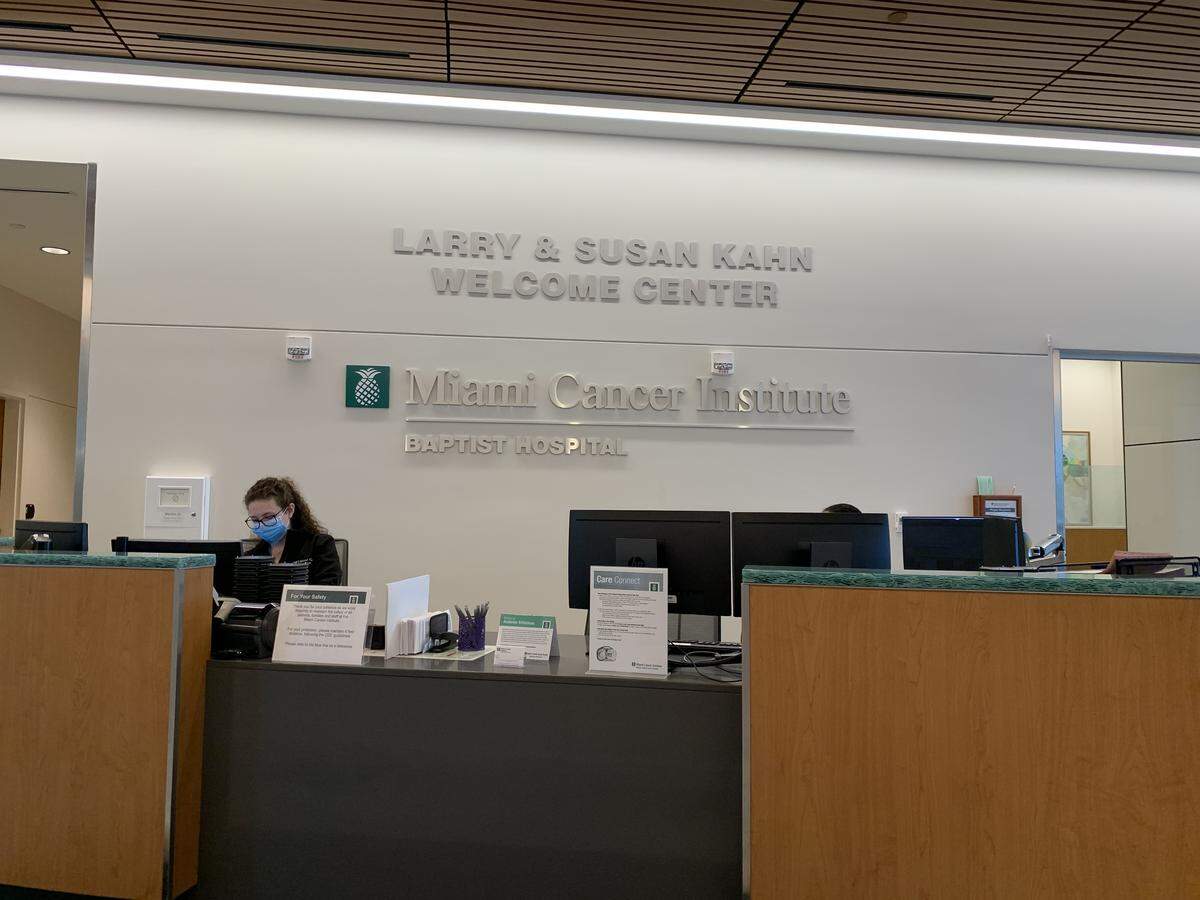
Katz said Memorial has gone to great lengths to make sure a visit to the hospital is minimum risk for catching COVID-19 — especially for people who need an emergency room but are afraid of the risk.
“There are plenty of practices in place that there is very little danger,” he said. “I’d venture to say it’s safer than grocery shopping in the general public.”
The same message is echoed at other hospitals across South Florida, including Baptist, Mount Sinai Medical Center, Jackson Memorial, UHealth, Nicklaus Children’s Hospital and Memorial Healthcare System. They all report taking extraordinary safety measures to protect patients by separating COVID and non-COVID cases into separate wings of the hospital or in tents off site.
Environmental service teams sterilize rooms and floors and touch points like elevators and railings. Negative pressure rooms that suck impurities out of the air are used to house infectious patients and keep them away from those without the coronavirus.
Admitted patients are also tested for the coronavirus, Segarra said. “Even the staff is separated into staff taking care of COVID patients and staff not taking care of COVID patients so we don’t cross contaminate, and that’s not just in the emergency room but we’ve done that through the hospital.”
Adds Lee from Jackson Memorial’s medical emergency department, “We respect each other. We are protecting you and we are protecting us.”
When should you visit an emergency room?
In addition to serious health challenges that won’t heal on their own like heart attacks, strokes, most broken bones, or trauma injuries like deep cuts or concussions, people should not allow the fear of COVID-19 to keep them from getting to an ER or urgent care center stat.
Non-acute medical problems like mental health issues, sprains, gastrointestinal reflux and even refilling medications, should not be postponed either, Lee said.
At public health hospitals like Miami’s Jackson or Manatee Memorial Hospital in Bradenton, ERs sometimes serve needs that are not emergencies but are also of vital importance.
“There is a population that doesn’t have a primary care doctor and relies on us to refill and that concerns us if people are not getting their medication refills on diabetes or hypertension because that becomes a problem,” Lee said.
Katz of Memorial said the standard for going to the hospital before the pandemic should be the same now.
“We are open for business. It is not business as usual, but it is safe,” he said.
Miami Herald Reporters David Ovalle and McClatchy Reporter Ben Wieder contributed to this story.
This story was originally published May 8, 2020 at 12:44 PM.