How can I get rid of peacocks — and why are they in Miami? Curious305 is on the case
Editor’s Note: This article was inspired by questions submitted from Miami Herald readers Ariel Heatwole, Joysea Crew, Steven Weissberg, Rene Price and an Instagram user through Curious305, our community-powered reporting series that solicits questions from readers about Miami-Dade, Broward, the Florida Keys and the rest of the Sunshine State. Submit your question here or scroll down to fill out our form.
Hey, Curious305: What’s the story behind Miami’s peacocks? Where did they come from and how many are there? How did they become a symbol of Miami? Is it true the birds are protected — and what can I do to get rid of them or at least scare them away from my home? Also, what’s with the peacock art pieces everywhere?
There’s nothing like watching peacocks roam the streets of Coconut Grove. These graceful birds, with their multi-colored plumage, are Miami royalty. But what is that horrible screeching sound?
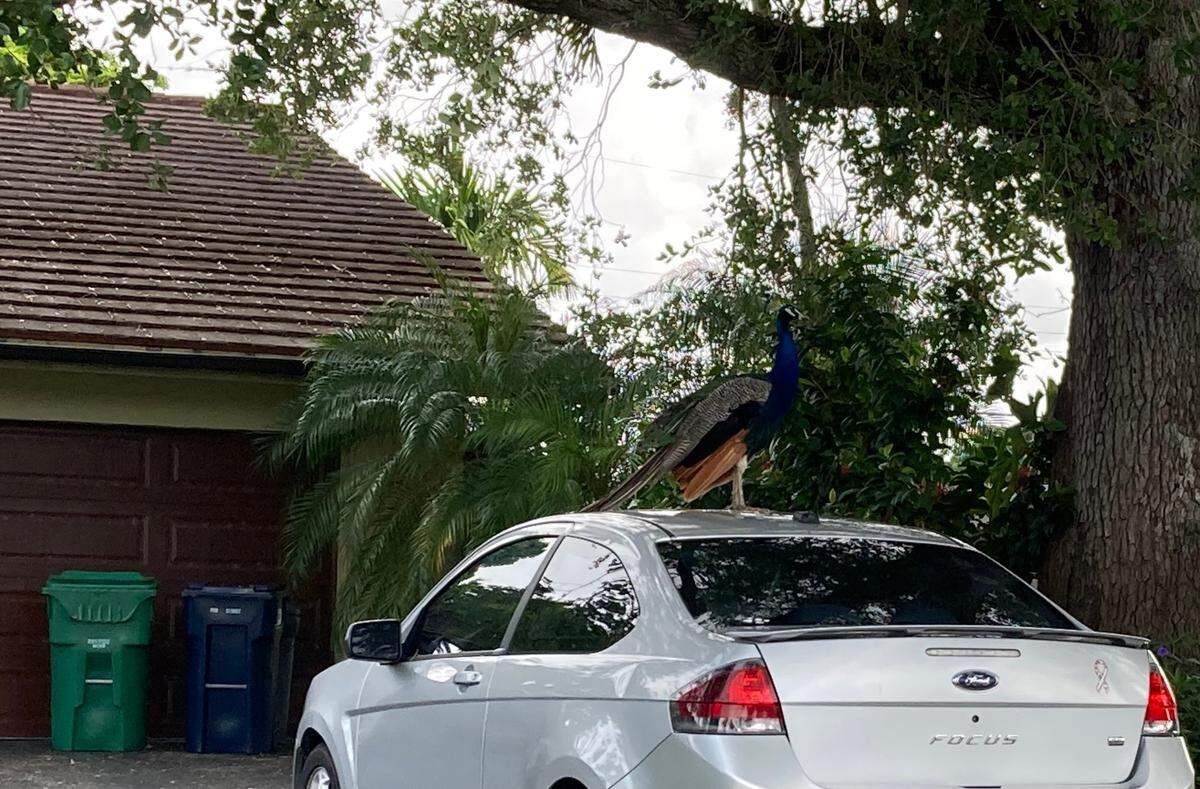
It’s the peacock. Look, now it’s on top of your car. And it just pooped.
Welcome to life in Miami, where we have a picturesque downtown skyline, eternal traffic jams and get to live side-by-side with chickens, iguanas, gators, peafowl — Florida’s basically the Wild West.
And Miami-Dade is peafowl haven. The males are known as peacocks and have the beautiful plumage. The females are peahens. Together they’re peafowl, and when they mate, they make peachicks.
Peafowls are not native to the U.S. and are the national bird of India. The birds, which are native to India and Sri Lanka, were brought to Miami to be exotic yard ornaments, or so the story goes. In the 1920s and 1930s, people would sometimes put classified ads in the Miami Herald selling peafowl. One ad described the bird as having “wonderful plumage” that would “ornament any home or division.”
Their nesting ground eventually became Coconut Grove. In 2019, the Grove’s flock population was estimated to be nearly 1,000. But you won’t just find these birds in Miami’s oldest neighborhood.
Peafowl have spread their wings —though they can’t fly far — and have expanded their turf to other parts of Miami-Dade County, including Coral Gables and Key Biscayne. Unlike the invasive iguanas, which are on the state’s hit list, peacocks are protected by Miami’s designation as a bird sanctuary, to the dismay of some Coconut Grove residents.
Peacock law: Can you get rid of the colorful birds?
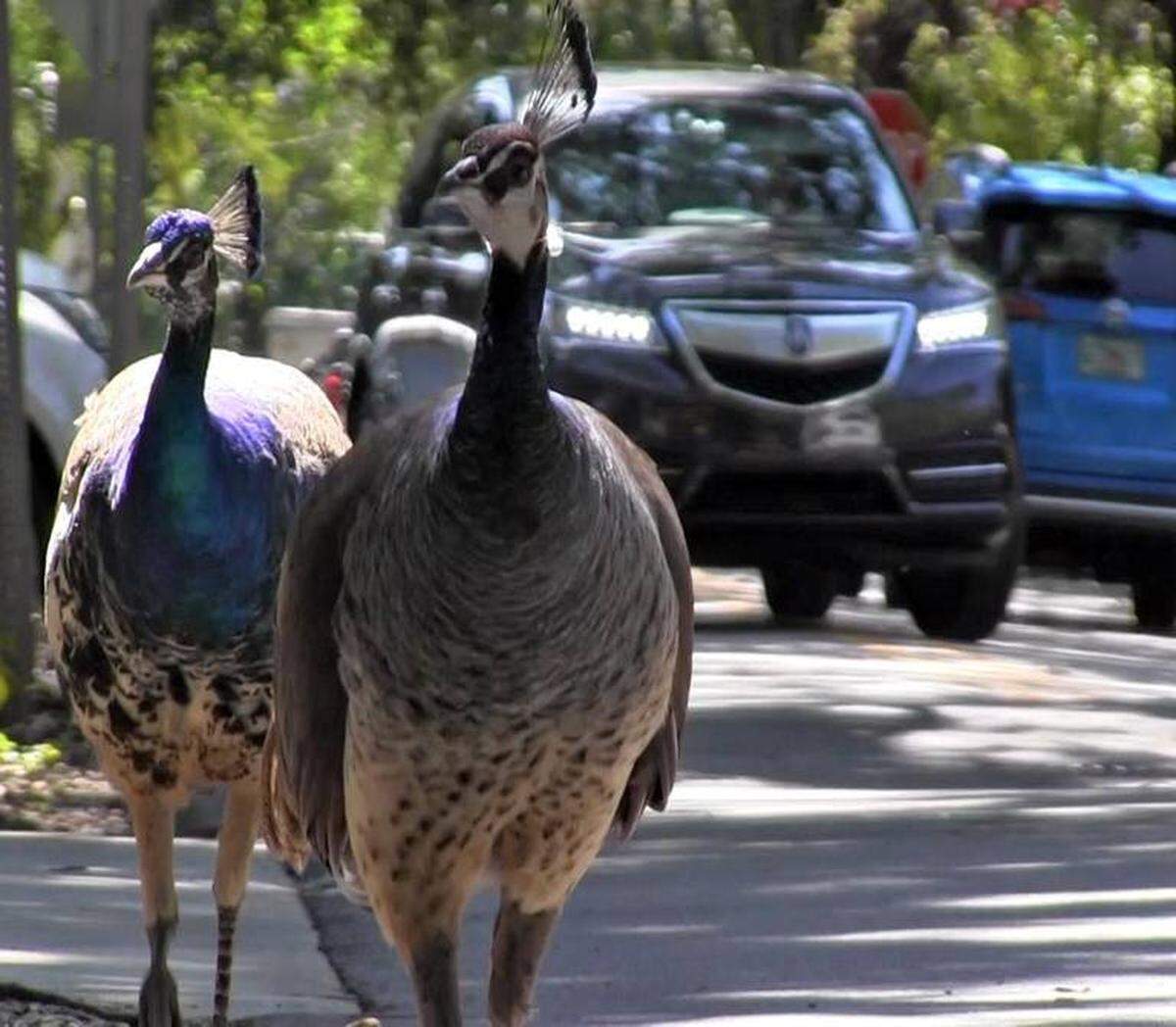
You can’t kill peafowl, even if their cries or thump-thump-thumping on your roof drives you crazy. The law, which Miami-Dade County approved in 2001, lets people remove the birds from their homes as long as the peafowl aren’t injured. The city of Miami has the same ordinance on the books. Both the city and the county updated their laws recently to allow for the humane removal of unwanted peacocks from the homes of residents.
But it’s complicated. Florida prohibits trappers from releasing invasive species into the wild, which means the birds can’t be released into the Everglades or your ex’s home. Catching peacocks is a workout. Finding a peacock sanctuary also isn’t easy.
Miami-Dade County Animal Services said it couldn’t find a sanctuary or zoo that would accept the birds. Its search has since stopped because of the bird flu outbreak that has killed more than 37 million chickens and turkeys.
While officials try to figure out a peafowl solution, people can do a few things to try and scare (but not injure) the birds away from their home. Here are some tips from the Florida Fish and Wildlife Conservation Commission and Miami-Dade Animal Services:
▪ Don’t feed the birds.
▪ Make loud noises, spray a water hose or use a motion-activated sprinkler to try and scare them away. Water is one of the most effective humane deterrents for peafowl, Miami-Dade Animal Services said.
▪ Don’t leave pet food outside and get rid of your bird feeders.
▪ Use car covers to help prevent damage from angry peacocks that attack their reflection thinking it’s another male bird.
The goal is to make your house unattractive to peafowl, according to the FWC, which considers the birds to be a domestic species like chickens and guineafowl.
And while the birds are sometimes a nuisance — attacking cars when they see their reflection, pooping and mating everywhere, eating flowers and screeching in the early morning hours — the state agency says they’re not a threat to Florida’s ecosystem.
Peacocks are also a 305 icon.
Peacocks: An art symbol in Miami
El Portal has a peacock on its seal. For years, Vizcaya had peacock statues in its Marine Garden, which was previously known as Peacock Bridge or Peacock Garden. It even held a peacock-themed ball in the 1980s, according to Miami Herald archives.
The statues, which were created by 20th Century sculptor Gaston Lachaise (James Deering was a big supporter of the contemporary artists of his time), were taken down for safe-keeping ahead of Hurricane Andrew in 1992 and are still in storage. Plans are in the works to put replicas on display as part of Vizcaya’s garden centennial project.

Peacocks are also a signature staple in Coconut Grove, fitting since one of the Grove’s earliest settlers was Jack Peacock and his family. Charles and Isabella Peacock opened the area’s first hotel in what is now Peacock Park. The park is named after the humans, not the birds.
And in 2010, Coconut Grove became home not just to the roaming birds, but to their fiberglass cousins. Dozens of fiberglass peacock sculptures were placed throughout the Grove as part of a public art project inspired by the internationally renowned CowParade. The peacock sculptures, sponsored by area businesses and individuals and decorated by local artists, were auctioned to benefit charities.
READ NEXT: My neighborhood is overrun by iguanas. How can I get rid of them?
Will there come a day that the only peacocks in Florida will be the butterfly peacock, a popular sportfish with a spot on its tail that is similar to the “eye” in a peacock’s plumage?
Doubtful.
Miami loves its birds. Haven’t you seen the rooster sculptures in Little Havana?
Miami Herald staff writers Linda Robinson and Douglas Hanks contributed to this report.
This story was originally published June 6, 2022 at 11:40 AM.