Omicron delivers tough day of Florida record cases, cruise warnings, kids hospitalized
Surging COVID-19 cases in Florida and the United States delivered another tough day of record infections and travel disruptions for millions of Americans preparing to ring in the new year as the highly contagious omicron variant continued to sweep across the nation and the globe with breathtaking speed.
The daily average number of new cases in the United States on Wednesday was more than 300,000, surpassing the previous peak set in January, according to the Centers for Disease Control and Prevention. In Florida, health officials reported 77,848 additional COVID-19 cases, and 90 more deaths on Thursday, reflecting a multi-day case count from the CDC backlogging cases and deaths, according to Miami Herald calculations of CDC data.
The rapid spread of infections, though causing mild to moderate disease in the majority of hospital cases, threatened to overwhelm emergency rooms as more people visit them seeking testing and treatment — even as overall hospitalizations remained “comparatively low,” according to the CDC.
CDC warns travelers to avoid cruises
Disruptions extended to airlines, with more than 1,100 flights canceled due to COVID absenteeism among workers, and cruises, a major South Florida industry, as the CDC raised warning levels for cruise ships and advised Americans to avoid them “regardless of vaccination status.”
The warning comes after cruise ships sailing in U.S. waters reported 5,013 COVID cases to the CDC between Dec. 15 and Dec. 29, the federal health agency said. By contrast, cruise lines reported only 162 cases to the agency between Nov. 30 and Dec. 14, the CDC said.
At least three cruise ships — two operated by Royal Caribbean and one by Carnival Cruise Line — that sailed from Fort Lauderdale or Miami since Dec. 18 have experienced COVID-19 outbreaks among passengers and crew.
“The virus that causes COVID-19 spreads easily between people in close quarters on board ships, and the chance of getting COVID-19 on cruise ships is very high, even if you are fully vaccinated and have received a COVID-19 vaccine booster dose,” the CDC said in its guidelines updated on Dec. 30.
The federal health agency raised its COVID-19 Travel Health Notice level for cruise travel from a Level 3 to a Level 4, which the agency described as the “highest level.”
History Miami, the county-funded museum in downtown Miami, announced it will close through Jan. 10 as COVID infections spike across Miami-Dade. Director Jorge Zamanillo said the nonprofit has enough staff to operate — its downtown buildings were open Thursday — but that he wanted to shut down before COVID’s spread left him no choice.
“We’ve had a few people with COVID, and some people are quarantining,” he said. “Right now, it’s more of a precaution before things get out of control.”
Miami, Broward expanding testing, at-home kits
In response to the surge in cases and the soaring demand for tests, local governments in Miami-Dade and Broward have expanded testing hours and sites, and handed out tens of thousands of free at-home tests that were snapped up in hours.
Miami-Dade officials plan to hand out about 75,000 COVID-19 home tests on Friday at eight libraries, repeating a giveaway that saw high demand over the last week for the more than 150,000 testing kits the county began handing out over the holiday weekend.
The state-supplied tests will be given away starting at 7:30 a.m., with a limit of two tests per household, according to a county press release.
“Our team is working around the clock to meet the enormous increase in demand and keep residents safe by making tests as accessible as possible, including by distributing hundreds of thousands of take-home rapid test kits and opening new testing sites this week,” said Mayor Daniella Levine Cava. “We’re grateful to all those across Miami-Dade taking the simple precautions that we know work to keep us safe.”
The libraries announced as Friday’s distribution centers are:
▪ Kendale Lakes Branch Library: 15205 SW 88 St., Miami
▪ Naranja Branch Library: 14850 SW 280 St., Miami
▪ North Dade Regional Library: 2455 NW 183 St., Miami Gardens
▪ Northeast Dade-Aventura Branch: 2930 Aventura Blvd., Aventura
▪ Main Library: 101 W. Flagler St., Miami
▪ Miami Beach Regional Library: 227 22nd St., Miami Beach
▪ Miami Lakes Branch Library: 6699 Windmill Gate Rd., Miami Lakes
▪ Westchester Regional Library: 9445 Coral Way, Miami
Broward also announced that the county will open new COVID-19 testing sites in January to help meet a surge of demand that has left people stuck in lines for hours and at-home test kits sold out in many stores.
The new test sites will be at Mullins Park in Coral Springs, Lauderhill Sports Park in Lauderhill, Tree Tops Park in Davie, Tradewinds Park in Coconut Creek and Central Broward Park & Broward County Stadium in Lauderhill. At least four of the sites previously served as testing or vaccination sites.
Remote learning at UM at semester start
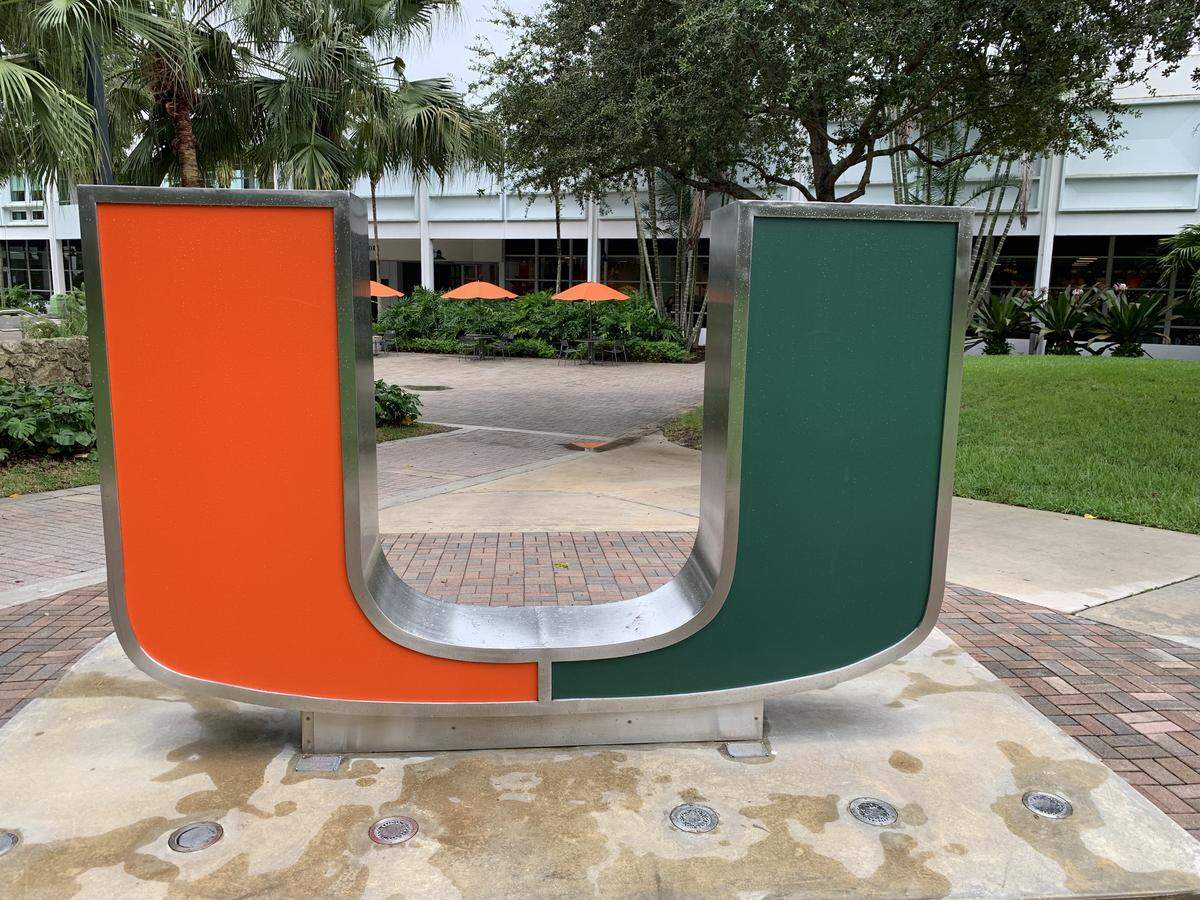
Amid the rise in COVID cases in South Florida, the University of Miami announced Wednesday evening it will start the spring semester with remote-only classes for the first two weeks. Classes will start on Tuesday, Jan. 18, as scheduled, but students will not be attending courses in classrooms at either the Coral Gables or Marine campuses.
UM’s decision to pivot to remote learning at the start of the semester follows a trend unfolding at many colleges as administrators and faculty contend with surging COVID cases and a loosening of safety protocols, such as mask mandates.
But as universities across Florida prepare to welcome back thousands of students from around the world in a few weeks, not all institutions are responding the same way.
In Gainesville, the University of Florida, despite protests from faculty, is scheduled to start classes in person next week. University union leaders have requested classes to begin remotely in light of the recent surge in COVID cases.
On Monday, Dec. 27, state university system Board of Governors Chairman Syd Kitson and system Chancellor Marshall Criser sent out an email to the 12 schools within their system emphasizing mask wearing and vaccination.
“It is clear the pandemic is not over, and as we prepare for the spring semester, we must also remain vigilant and follow the policies and protocols that are shown to limit the impacts of the virus,” reads the letter.
The letter from the Board of Governors also emphasized a return to in-class education.
Record kids’ COVID cases
Florida’s large increase in COVID cases comes from the CDC backlogging cases and deaths for the state on Mondays and Thursdays, when multiple days in the past have their totals changed.
In August, Florida began reporting cases by the “case date” rather than the date the case was logged into the system, resulting in a number of cases back-filling over time. All but 59 of the newly reported cases — about 99.9% — occurred since Dec. 2, according to a Miami Herald analysis.
In all, Florida has recorded at least 4,090,000 confirmed COVID cases and 62,480 deaths., surpassing 4 million cumulative COVID cases this week.
In the past seven days, as the omicron version of the virus has circulated, the state has added 19 deaths and 36,781 cases per day on average, according to Herald calculations. That rolling seven-day case average is the highest it’s ever been.
Florida hospitals also continued to report an increase in the number of inpatients with COVID-19, with a total of 4,433 people hospitalized with the disease on Thursday, according to hospital capacity data from the Department of Health & Human Services. COVID-19 patients filled about 8% of all inpatient beds in Florida.
Few of those inpatients are severely ill or progressing to the intensive care unit, and many are finding out that they’re positive for COVID-19 after being admitted to the hospital for other medical reasons, such as appendicitis or a broken bone, doctors say.
Yet despite what appears to be less severe illness, there has been a crush of pediatric patients at emergency rooms, accompanied by parents who want their children to be screened for COVID-19. The demand is stretching hospitals thin and leading physicians to plead with the community to stop going to the ER to get tested.
“It’s actually not a place you want to come right now just to have a test if you don’t need medical care,” said Dr. Ron Ford, chief medical officer for Joe DiMaggio Children’s Hospital, which is part of the Memorial Healthcare System, in Hollywood.
Even with fewer severely ill patients with COVID-19, hospital administrators emphasize that they still have to take extra precautions to prevent the disease from spreading to others.
Infection control protocols typically require COVID-positive patients to be held in negative pressure rooms that prevent the airborne virus from leaving an area. And healthcare workers, whose ranks are increasingly getting infected, too, must don more protective gear when caring for infected patients.
Dr. Marcos Mestre, chief medical officer for Nicklaus Children’s Hospital in Miami, said the number of COVID-positive patients visits seen in the emergency room and urgent care centers was at an all-time high this week. Most of those patients were sent home because they were not sick enough to be admitted to the hospital.
“It’s definitely a milder case,” he said, referring to the omicron variant, “but what makes it a little more difficult to handle is the sheer volume of cases.”
Miami Herald staff writers Michelle Marchante, Miami Herald writer Jesse Lieberman and Hayley Fowler of the Charlotte Observer contributed to this report.
This story was originally published December 30, 2021 at 6:47 PM.