Are Black people getting COVID-19 vaccines at Florida’s federal sites? State won’t say
State officials hoped for a steady stream of Black residents at a federally supported COVID-19 vaccination site in North Miami Beach on Monday morning, the first day of Florida lowering its vaccine eligibility from anyone over 65 to anyone over 60.
Instead, they seemed to get a trickle — a situation repeating itself across Miami-Dade County and Florida’s biggest cities for the last two weeks.
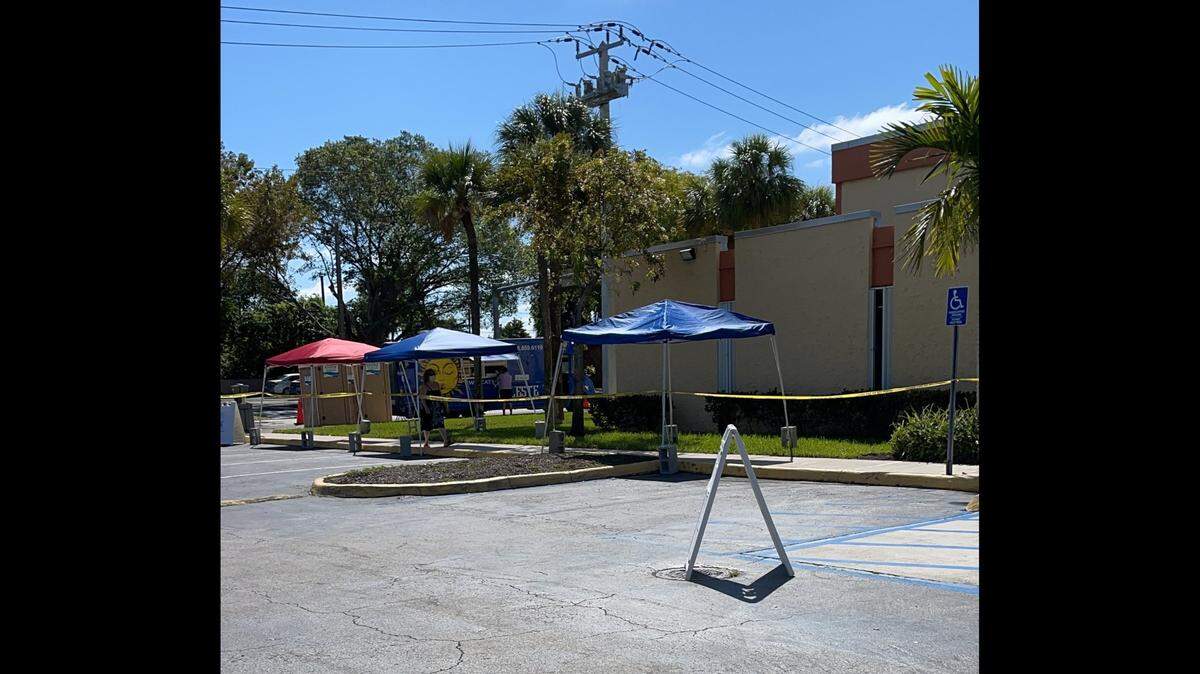
At 11 a.m., there was virtually no line at North Miami Beach’s city-owned DeLeonardis Youth Center, which was turned into a vaccination site last week, when eligibility was still largely restricted to people over the age of 65, law enforcement officers, school staff and medically vulnerable people with the ability to secure a doctor’s note.
The North Miami Beach location — and others supported by the Federal Emergency Management Agency but run by the state — are an effort to close a gap between the low percentage of minority residents receiving vaccinations and Florida’s broader population. But the lines have been short, and Michael Joseph, the city’s vice mayor, is among many who believe the state needs to do much more to increase turnout through public health outreach.
Joseph said he was not aware of any efforts by the state to canvass in the city, whose population is 42% Black.
“I know we’ve had low numbers, but I also believe we have to do a lot more when it comes to my community to get people out,” Joseph said. “And that’s going to involve canvassing. It’s going to involve reaching out to people on the phone, not just relying on social media to be the main way for people to come and get vaccinated.”
The state of Florida says the federally supported vaccination sites, set up in greater Miami, Tampa, Jacksonville and Orlando on March 3, are a success: More than 45,000 of the 101,000 people vaccinated as of Wednesday night were members of the state’s “minority population,” according to recently released official figures.
“Florida’s strategy of providing walk-up locations in predominantly minority areas is working,” said Jason Mahon, a spokesman for the Florida Division of Emergency Management.
But the state data actually give little insight into whether the sites are vaccinating Black residents in significant numbers.
State not breaking down data by race at FEMA sites
That’s because Mahon and DEM director Jared Moskowitz, who tweeted Thursday about the state’s apparent accomplishment, refused to provide any specific racial and ethnic breakdown for that statistic. All the state would say is that 45,171 of the people who got shots at the federal sites “identified as American Indian, Asian/Pacific Islander, Black/African American, Native Hawaiian or Other Pacific Islander, or Hispanic/Latino.” No explanation was provided for not breaking down the numbers from the federally supported sites by race.
As of Sunday, Florida had vaccinated roughly 7.5% percent of its Black population statewide, compared to 18% of whites, according to a Miami Herald analysis of state figures and Census data. The state’s decision to withhold detailed numbers from the federally supported sites throws into question whether the locations are actually improving vaccination rates for Black residents who live nearby.
Zinzi Bailey, a University of Miami professor who studies health inequities, said the state of Florida has had problems throughout the pandemic with the quality of its racial data on a variety of outcomes. But she found the grouping of all non-white people into a distinct category of “ethnic minorities” particularly shocking.
“Saying white/non-white is unacceptable, especially in a place like Miami-Dade,” Bailey said.
Such a grouping renders the data “basically useless,” Bailey added, which she speculated may have been the state’s intention.
“You can’t track outcomes without data, and often it is the case that when we are not [reaching minority populations] well, there are efforts to limit the data collection,” Bailey said.
Other public health experts agreed the state was making a mistake by grouping racial categories that way.
“I can’t believe they’re doing that. Transparency is key,” said Monique Brown, an assistant professor at the University of South Carolina’s Arnold School of Public Health. “We need to be transparent about what communities are being vaccinated and then get to the root cause of why others are not being vaccinated. That’s the way we can come up with solutions. ... If we are to figure out if the sites are doing what they were set up to do, then we need to see the data by race.”
Some state data suggest that the sites could be drawing their minority numbers largely from Hispanics.
Of the four metropolitan areas selected for the federal pilot program in Florida, the one trailing the farthest behind in raw numbers is Jacksonville, which has the highest percentage of African-American residents. Jacksonville’s main federal vaccination hub had inoculated roughly 11,400 people by Wednesday night, compared to 25,800 in Miami, 24,600 in Orlando and 19,400 in Tampa, state figures show.
Few Black people in line in Florida City, North Miami Beach
In Miami-Dade County, few Black residents seemed to show up over the last week to a temporary “satellite” site in the African-American community of Florida City.
Instead, Herald reporters saw crowds of overwhelmingly white and Hispanic people getting shots there. Many of those people drove in from from other cities after hearing the site was skirting state vaccine eligibility rules in response to initial low demand and giving vaccines to all Floridians 18 and older.
On Friday, after the Florida City satellite site moved to North Miami Beach, a Herald reporter again saw few Black people in line. That day, the North Miami Beach site gave out 380 shots — half the number administered at a site in the overwhelmingly Hispanic city of Miami Springs.
Greg Mendez, a 65-year-old who lives in North Miami Beach and got vaccinated at the community center Monday, said he didn’t hear about the site from any outreach efforts. Instead, he just saw people gathering there. He’s since told 20 people around the neighborhood. Most of them are under 65, now newly eligible for vaccines.
“That’s who needs it,” Mendez said.
If the state’s FEMA sites are primarily helping Hispanics, and not Blacks too, they are failing a core part of their mission, Brown said.
“We know that communities of color have the highest morbidity and mortality rates when it comes to COVID-19 in the U.S.,” she said.
The Herald asked the state repeatedly Thursday, Friday and over the weekend to release a detailed racial breakdown for the FEMA-supported sites. Mahon and Moskowitz acknowledged the request but did not provide the data. Gov. Ron DeSantis’ administration has been accused of withholding data since the pandemic began a year ago, forcing news outlets to sue in order to acquire what transparency advocates, legal experts and even the state’s top medical examiner say should be readily available public records.
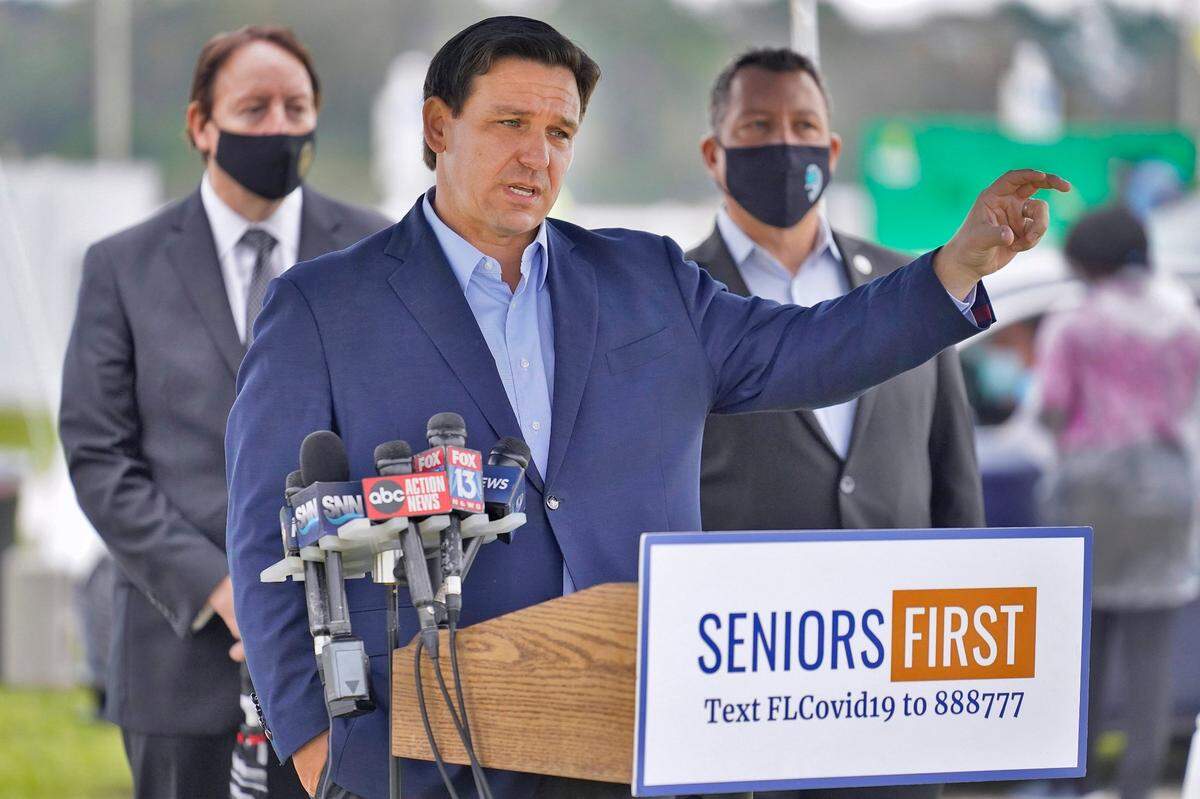
Meredith Beatrice, a spokeswoman for DeSantis, said in an email Sunday: “Florida is one of the most transparent states in the nation when it comes to providing public health data that everyone can access.”
“Florida was the first state in the nation to ask FEMA to include satellite sites so we could reach more underserved communities,” Beatrice wrote. “The Governor’s administration has worked with every member of Florida’s Legislative Black Caucus and partnered with more than 200 churches to vaccinate nearly 60,000 seniors at places of worship.”
Beatrice added that the best way to judge the impact of the FEMA sites on vaccine distribution was to read the state’s daily vaccination report. But that report does not provide any information on how many vaccinations are given out at individual sites, FEMA-supported or otherwise, listing only aggregated totals by county. She did not respond when reporters pointed that out.
A spokeswoman for FEMA also declined to provide the numbers, referring the Herald’s inquiries to the state.
‘The differences count’
Treating minority groups as monolithic is a mistake, said Brown, the public health professor.
“The health inequities we’re seeing are being exacerbated by healthcare officials not realizing that the differences count,” Brown said. “The fact that you’re grouping everybody as one is neglecting the differences between communities. That’s very concerning for public health. ... Even within the Black community, you have variation. Even within the Hispanic community, there are so many variations.”
Hispanics are having more success getting vaccines in Miami-Dade, where they make up more than two-thirds of the population. A Herald analysis of state data found that Miami-Dade Hispanics are getting vaccines at a higher rate than non-Hispanics, the only one of Florida’s largest counties where that is true.
Meanwhile, only 8% of Black Miami-Dade residents have received a vaccine, less than half of the percentage for whites, a category that includes white Hispanics, the Herald found. (The analysis does not include people who did not report their race.)
Mahon, the Department of Emergency Management spokesman, defended Florida’s efforts to reach minority communities.
“The state has sent canvassing teams to every federal site and these teams have already knocked on more than 3,000 doors,” he said. “The state is onboarding more individuals this week to increase these canvassing efforts.”
Herald reporters have asked to accompany the canvassing teams and observe the state’s outreach. So far, officials have not agreed.
This story was originally published March 15, 2021 at 4:55 PM.