
Look no further than the polio vaccine to know why we must get vaccinated against COVID
.JPG "Nurse Kathe Olmstead prepares a shot that is part of a possible COVID-19 vaccine, developed by the National Institutes of Health and Moderna in Binghamton, N.Y., in July. On Thursday, the FDA’s Vaccines and Related Biological Products Advisory Committee meets to consider emergency approval of a COVID-19 vaccine from Pfizer and BioNTech. It would be the first such OK for a COVID-19 vaccine in the U.S.")
As a person living in the age of COVID-19, memories of the summer of ‘49 flood my mind.
I was a child in the summer of 1949. But I can still remember the worried expression on our mom’s face each morning as she instructed my brother Adam and me to “stay inside,” as she hurried out the door to get her bus to work.
The stay-inside order was because of a raging virus — the polio virus — that was a known killer, especially of children. If it didn’t kill its victims, it left them crippled. One of its most famous victims was President Franklin D. Roosevelt, who was infected in 1921 when he was 39.
So, as much as we wanted to go outside to play, my brother and I stayed inside, making up games to entertain ourselves.
Since 1916, until the development of a vaccine in the mid-1950s, every summer some part of America had been stricken with the polio epidemic.
In 1949, we didn’t have television but we had the radio and newscasters like Gabriel Heatter, who kept us abreast of what was going on in our country and around the world.
It was how we learned that the polio outbreak in the U.S. had increased in the late 1940s. We learned the virus had affected more than 35,000 people each year, peaking in 1949, when 2,720 Americans died, and another 42,000 cases were reported.
People heeded the warnings about not congregating in large crowds. A few years later, Dr. Jonas Salk developed a vaccine and introduced it to the nation in 1955.
I am reminded of those times as I listen to daily reports of how COVID-19 is raging and how some people don’t want to wear a mask, wash their hands frequently and practice social distancing.
When I think of the nearly 3,000 people who died from polio in 1949, that number is dwarfed by the more than 275,000 who have died from COVID-19 across the country over the past nine months, including more than 19,000 who have died in Florida and another 3,868 who’ve died in Miami-Dade as of Thursday.
Now, a vaccine is on the way. Yet some people are saying they don’t know if they will take the vaccine.
The naysayers should take a look at the polio vaccine, which came out in the United States in 1955. Since 1979, polio has been eradicated in the United States, according to the Centers for Disease Control and Prevention.
However, the polio virus has been brought into the country by travelers; the last time this happened was in 1993.
Now, a vaccine to help stamp out COVID-19 will soon be available to us. Sadly, I am hearing rumors that some Black people say they won’t take the vaccine because they are afraid of what can happen to them.
They remember the Tuskegee experiment, from 1932-1972, where Black men were used as guinea pigs by the Public Health Service in a study of untreated syphilis.
The men thought they were being treated for “bad blood” but the men were never adequately treated. Worse, the researchers didn’t treat the men with penicillin, the drug of choice to treat syphilis, as they wanted to continue studying the infected men.
Can something like this happen again? I don ‘t know. I do know that COVID-19 affects and kills Blacks in greater numbers than any other ethnic group.
When I was first given the Salk Vaccine, the Tuskegee Experiment was still going on. I wonder if my mom would have allowed me to take the vaccine had she known about the Tuskegee Experiment, which was stopped after 40 years only after an Associated Press investigation, published in July 1972, caused such an outcry.
Perhaps she wouldn’t have. And perhaps I wouldn’t be writing this column.
Some children died before the vaccine was developed. I was one of the blessed ones. I believe I am here today by the grace of God, and the fact that I received the Salk Vaccine.
I am no scientist, nor a doctor. But I am Black and 82, which places me in a very vulnerable group. I am also a woman with common sense and one who as a child lived through the polio epidemic.
I am simply saying that when the COVID-19 vaccine is offered, I will take it. I hope you will, too.
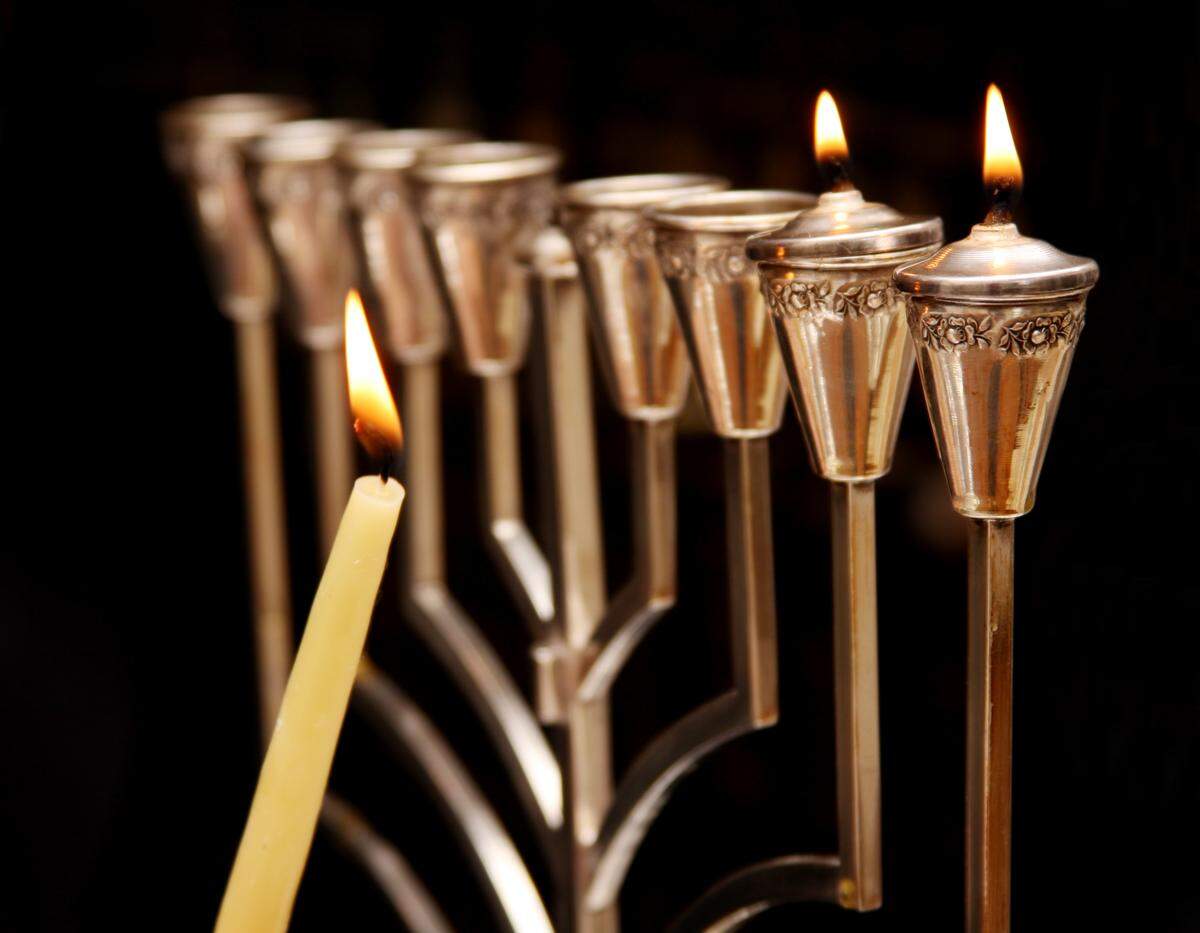
Temple Judea Hanukkah celebration
Temple Judea, 5500 Granada Blvd. in Coral Gables, has planned eight days of activities to celebrate Hanukkah, entitled “Mitzvah, Miracles and Munchies.”
The celebration will begin with a drive-through from 10 a. m. to noon Sunday, Dec. 6. The eight days of celebration will feature chocolate tasting, a mixologist drink night, a teen baking program and potato latke making.
In addition, the synagogue will livestream a Community Candle Lighting program from Dec. 12-17 to light the Hanukkah candles.
For more information, call the synagogue at 305-667-5657, or Jeanne Becker at 305-215-0220.
Women’s Clubs gift
A Neighbors in Religion salute to the women of the Florida Federation of Women’s Clubs, who presented a check for $4,000 to the Lemon City Cemetery Committee Corp.
Elizabeth Bain Warren, director of the Northeast Miami Women’s Club, presented the check to Enid Pinkney, founder of the Lemon City Cemetery Committee Corp.
The corporation was organized after the city of Miami’s Historic Preservation Office notified the county archaeologist on April 22, 2009, of the finding of human bones on a construction site in Lemon City, where developers were planning to build three affordable housing units.
.JPG "IMG_at_Lemon_City_Cemete_1_1_QH297V1L (1).JPG")
The site was an unknown abandoned Black cemetery. The corporation was organized to stop the development of the project, give respect to those buried in the cemetery and to celebrate the forgotten history, heritage and culture of the area, Pinkney said.