Florida adds 5,838 COVID-19 cases, topping 858,000, as state death toll rises to 17,300
Florida’s Department of Health on Wednesday confirmed 5,838 additional cases of COVID-19, bringing the state’s known total to 858,012. Also, 52 resident deaths were announced, bringing the resident death toll to 17,300.
This is the most number of cases reported since Sunday, when 6,820 were reported.
The state did not report any new non-resident deaths. On Wednesday, the cumulative non-resident toll was 212.
State-supported COVID-19 testing sites in Miami-Dade and Broward were closed this weekend for Tropical Storm Eta preparations. And while some sites reopened Tuesday, others remain closed because of flooding or other storm-related issues, including the test site at Hard Rock Stadium in Miami Gardens.
Confirmed COVID-19 cases in South Florida
▪ Miami-Dade County reported 718 additional confirmed cases of COVID-19 and three new deaths, according to Florida’s Department of Health. The county has a total of 195,991 confirmed cases and 3,693 deaths. Percent positivity for new cases decreased from 6.30% to 5.74%. The 14-day percent positivity average was 6.51%, according to Miami-Dade County’s “New Normal” Dashboard.
▪ Broward County reported 444 additional confirmed cases and four new deaths. The county now has a known total of 92,148 cases and 1,564 deaths. Percent positivity for new cases increased from 6.64% to 7.51%.
▪ Palm Beach County saw 364 additional confirmed cases and two new deaths. The county now has 56,509 confirmed cases and 1,614 deaths. Percent positivity for new cases increased from 7.95% to 8.22%.
▪ Monroe County confirmed 41 additional cases and no new deaths. The county has a known total of 2,646 cases and 25 deaths. Percent positivity for new cases increased from 6.07% to 16.39%.
COVID-19 hospitalizations in Florida
One of the tools that officials rely on to determine whether the coronavirus situation is improving in the state is hospitalization data. Unlike testing, which might be limited or take days to report results, hospitalizations can help give officials a real-time snapshot of how many people are severely ill with COVID-19.
The Florida Agency for Health Care Administration reports the number of patients hospitalized statewide with a “primary diagnosis of COVID.” The data, which is updated at least every hour, does not distinguish between the number of COVID-19 patients in hospital intensive care units and those in acute-care beds, which require less attention from nurses.
Previously, the state was providing only the total number of hospitalizations in its statewide and county-level data. Miami-Dade was an exception, with hospitals self-reporting a number of key metrics, including hospitalizations, to the county, which has made this data public for several months.
As of 5:16 p.m. Wednesday, there were 3,056 COVID-19 patients admitted into hospitals throughout the state, according to the Florida Agency for Health Care Administration dashboard. This is a decrease from early August, when more than 5,000 COVID-19 patients were admitted into hospitals throughout the state.
Of Wednesday’s hospitalizations, 410 were in Miami-Dade, 283 in Broward, 229 in Palm Beach and five in Monroe counties, according to the agency.
Florida’s current hospitalization data does not always match the hospitalization data reported in Miami-Dade’s “New Normal” dashboard. Officials say this could be for a number of reasons, including the frequency of daily updates.
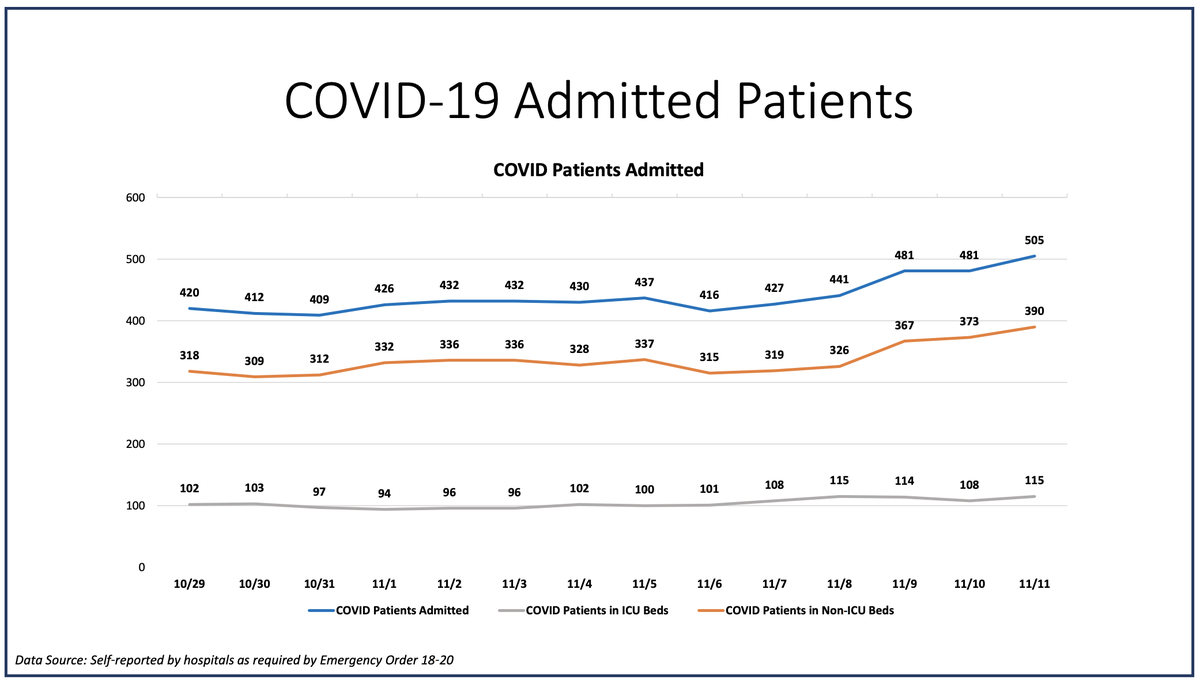
On Wednesday, Miami-Dade hospitalizations for COVID-19 complications increased from 481 to 505, according to Miami-Dade County’s “New Normal” dashboard. According to Wednesday’s data, 74 people were discharged and 72 people were admitted.
The state has had a total of 51,115 Florida residents hospitalized for COVID-19-related complications, according to Florida’s COVID-19 Data and Surveillance Dashboard.
COVID-19 Testing in Florida
Testing in Florida has seen steady growth since the COVID-19 crisis began.
Testing, like hospitalizations, helps officials determine the virus’ progress and plays a role in deciding whether it is safe to lift stay-at-home orders and loosen restrictions.
Epidemiologists use the testing data to create a positivity rate. The rate helps them determine if a rise in cases is because of an increase in testing or whether there’s increased transmission of the virus in the community.
On Wednesday, Florida’s Department of Health reported the results of 73,420 people tested on Tuesday. The positivity rate of new cases (people who tested positive for the first time) decreased from 8.28% to 7.79%.
This story was originally published November 11, 2020 at 1:51 PM.