Baptist Health developed its own coronavirus lab test. The feds just approved it.
Baptist Health South Florida has received emergency approval from federal regulators to begin using a test it developed on its own for the novel coronavirus, one of a dozen hospital labs across the country to receive the clearance.
The test has a turnaround time of 24 hours or less. It is not considered rapid or particularly high volume, carrying the ability to test 40 to 80 samples a day, once testing ramps up at Baptist Health’s Miami Cancer Institute lab, which will be conducting tests for the health system’s hospital patients and healthcare workers.
But the development is nonetheless significant for Miami’s biggest not-for-profit hospital system, allowing it to reduce its reliance on off-site private labs that can take several days to return results, even for extremely sick patients.
Dr. Edwin W. Gould, a pathologist at Baptist Health, said the hospital network has run into backlogs at private labs that vary depending on the lab and what kind of specimen they accept, but average two to five days for results.
“I think it’s a fair thing to say that, no matter what, the turnaround time is not acceptable unless we get a result back in 24 hours or less, and that means we’re going to have to do it in-house,” he said. “That’s the take-home message. We don’t want to wait. Patients don’t want to wait.”
Testing constraints throughout South Florida have potentially made the outbreak worse.
Shannon Monnat, a sociology professor and researcher at Syracuse University, said the absence of mass testing during the early stage of the coronavirus pandemic likely led to more spread of the disease.
“We have no idea of the true magnitude of this thing because testing has been horrible,” Monnat said. “If people aren’t being tested, you’re risking not only spread, but greater severity of the illness.”
Baptist Health’s test, which was cleared by the Food and Drug Administration under an emergency use authorization, will be run in the Miami Cancer Institute’s in-house lab, as well as a “germ-free trailer” that served as the institute’s pharmacy during construction work.
Baptist Health had already been doing some in-house testing using other tests developed elsewhere, but was limited by supplies of cartridges and testing kits.
By expanding its testing platforms, Gould said the main goal is to eventually make the hospital network independent of outside labs, where the tests have been taking “way too long.”
“We have to know what to do with these patients,” he said.
Though some have raised concerns over potential false negatives in these types of tests, Gould said that is likely the result of poor swab collection from patients. Nonetheless, Gould, who said the Baptist-developed test is “very sensitive,” plans to find out whether samples that are deemed negative by other tests come back positive on the hospital’s own test.
Accordingly, he said he’s asked his colleagues to notify his lab colleagues if specimens come back negative under suspicious circumstances.
“We will then take that specimen and we will run it on our own in-house assay and see what we get,” he said.
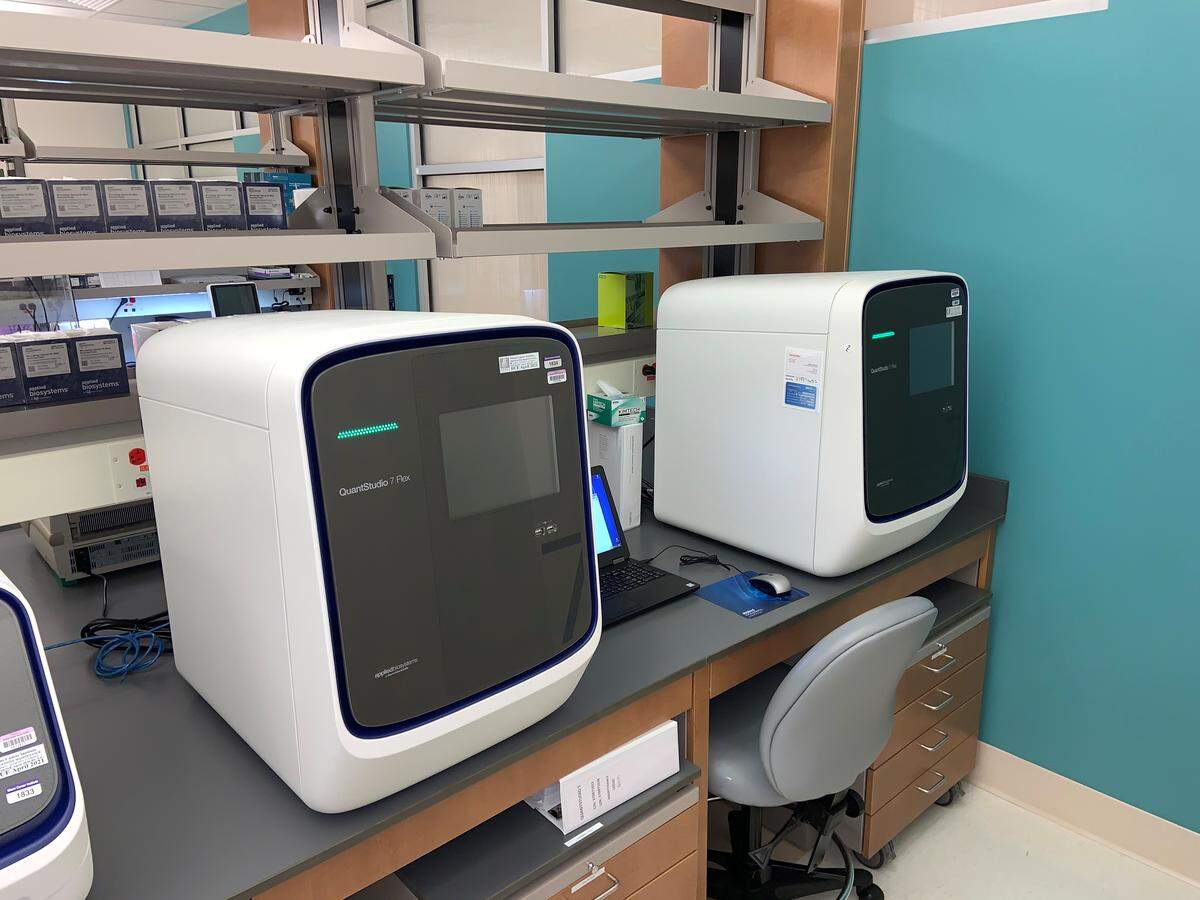
The Baptist coronavirus test requires highly qualified medical personnel, Gould said, which is part of the reason the hospital system will only start off running 40 to 80 tests per day. He said the typical turnaround time should be between four and six hours. Other testing platforms, he added, can do about 70 tests per day, but running out of testing supplies for a specific platform is a continuing concern.
“You can’t just use one platform, because you don’t know how many test kits you have or when you’re going to run out of reagents,” Gould said. “They’re all on allocation.”
This story was originally published April 17, 2020 at 8:00 AM.