Can Miami bring back big conventions? The new CEO at the visitors bureau has the keys
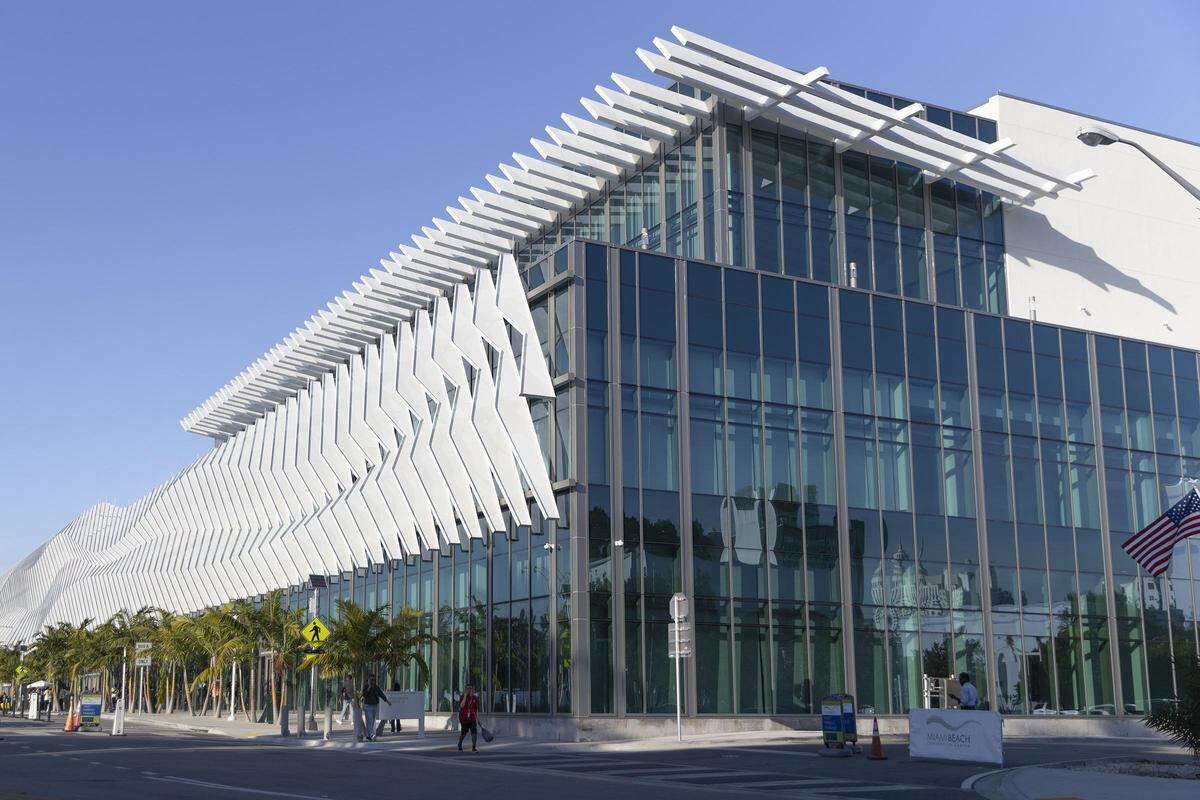
In 2018, Miami-Dade stepped up its convention game. The county invested $620 million in renovating the Miami Beach Convention Center, only to have conventions shut down for the better part of two years due to the coronavirus pandemic.
Now, the Greater Miami Convention and Visitors Bureau is under new leadership: David Whitaker was announced as the president and CEO of the bureau in July. And he’s set their convention sales goal at about double what it’s previously been.
Whitaker was hired as the GMCVB executive vice president in 1990. He stayed in the role for 17 years before leaving to head Toronto’s tourism marketing. He was then tapped as CEO of Chicago’s tourism agency in 2016 before returning to Miami in August.
The Miami Herald sat down with Whitaker at the Miami Beach Convention Center last week to hear about his plans for conventions and tourism. (This interview was edited for length and clarity.)
Miami Herald: What’s your role and what’s the role of the bureau?
David Whitaker: We’re a nonprofit destination marketing organization...We promote Miami and Miami Beach as a leisure destination through advertising, both digital platforms like Facebook, Instagram and other paid social media.
Our primary responsibility is to generate the leads, the opportunities to close sales, to book this building for future conventions, trade shows, and some mega events like the Superbowl, college football championships and we had a hand in the [2026] World Cup bid.
MH: What’s the economic impact of conventions and mega-events for Miami-Dade?
DW: After the $640+ million renovation and expansion of the Miami Beach Convention Center, we’re going to be one of the most competitive convention destinations in the country. We know the impact of having tens of thousands of convention delegates coming here — they stay in our hotels, ride in our taxis and shop in our stores. They eat out and they go to a club occasionally when no one’s looking. So it’s a huge economic impact for the region.
MH: How are you marketing Miami for conventions?
DW: We have a brand new canvas to work with in this incredible new facility [the Miami Beach Convention Center], it’s a game changer for us to add 60,000 square feet to the convention center. We also have a 19,000-square-foot event space with a view of the skyline for receptions and events...In our conversations with meeting planners, they would have never considered Miami Beach before because we just didn’t have the assets.
We recently announced the 800-room host hotel [to be built adjacent to the convention center]. The development for that is underway, we haven’t broken ground just yet but we anticipate it’ll be ready in three or four years...We’ve already generated a number of leads of people interested in bringing their events here because of the hotel.
Our accessibility...it’s a lot easier to fly here than some of the other places in the country. We’re in one of the most beautiful destinations in the world. And so, you work and you convene, but you also want to play a bit...whether it’s after the convention going on to Lincoln Road for a bite to eat, or walk on the beach sunrise or sunset...And there is no one that can compete with us there.
MH: Now that pandemic numbers are subsiding, what’s the outlook for conventions?
DW: We’ve already secured five major commitments to be in this building in the future, including a couple as soon as next year...There’s the Bitcoin Conference, with 35,000 delegates in April, we would have never had that opportunity to host that four or five years ago...Our goal next year, October through next September, is to win and confirm 17 major conventions...twice what it used to be.
MH: When do you expect business travel to ramp up?
DW: Looking at hotel performance is a great barometer, and I’m really quite pleased to say that this year...from January until today... we’re actually at 89% of the level we were in 2019 for that same period.
It speaks to the appeal of Miami and Miami Beach. What’s been missing...is as of Nov. 8, the world will be able to return with proof of vaccination [when travel restrictions are lifted]. Just under 7 million visitors [to Miami] are international visitors...and that represents 30% of all of our visitors, so for the last almost two years 30% of our customers have not been able to travel here. We know what an economic impact they have and the fact that we were able to go a year and a half without them....just shows the domestic popularity of Miami and Miami Beach.

MH: Many are doing business meetings and conventions online or using a hybrid model — does this worry you for the future of conventions? The Herald recently covered the SeaTrade cruise convention and in-person participation was low.
DW: It’s a convention of the cruise line industry, one of the hardest hit industries...So SeaTrade was a unique situation, but [the cruise industry] will be the first to tell you that people are missing in-person [gatherings]. We’re hearing this from our clients, they’re missing in-person meetings, the kind of things that happen at them — the conversation in the hallway at the sponsored client event, that personal touch.
I’m relatively new here, but in my previous work in Chicago, a lot of our largest conventions were going to have satellite conventions and maybe not everybody together all at once. There’s been a great disruption in conventions. You talked about the hybrid model, and there is the potential for new, smaller meetings. So we’ll have to see how the conditions change.
MH: Which cities do you see as your main competition?
DW: Because of our building’s expansion, now we’re able to compete with some buildings that we weren’t necessarily competitive with before, and that would include Washington, D.C., and would include Orlando. We’ll want to compete with [those cities] now that we have the size. We’re half the size of McCormick Place in Chicago, or Las Vegas. But the rest of the country, Look out, we’re coming for business, and we now have one of the finest convention centers and one of the most attractive destinations in the country. We have huge, huge expectations.
MH: Where do you think that you need to raise your game?
DW: One of the things we know is that we can never outdo ourselves, or excel enough in, is customer service. Because of the disruption to the workforce...restaurants are struggling to get all their employees back. Hotels are struggling to get all their employees back. We need to look at replenishing the workforce. [Restaurants, hotels and airlines] will share their absolute commitment to bring our service levels back and that’s going to require a lot of focus and commitment.
This story was originally published October 31, 2021 at 6:00 AM.