Will those skyscrapers sink? Miami researchers call for more oversight
An unlikely pair of researchers — a retired dental surgeon and the former dean of the University of Miami College of Engineering — are pushing for more scrutiny in the permitting process for skyscrapers in Miami.
In a newly published paper, Jean-Pierre Bardet and Jeffrey Dorfman say building on Miami’s uneven and sandy subsoil can come with engineering challenges that the city doesn’t account for when approving new high-rises. And as buildings in Miami are getting taller, they’re worried not enough attention is being paid to what’s underneath them.
Jean-Pierre Bardet served as the dean of the University of Miami College of Engineering and a vice provost at the university for several years, and he is now an engineering professor. Dorfman is a retired dental surgeon who moved from New York to Miami and has since taken an interest in the engineering and policy questions surrounding high-rise development in Miami. Their paper, “Emerging Risks and Housing Affordability Policy in Miami High-Rises,” was published Wednesday in the Journal of Critical Infrastructure Policy.
In it, they argue not enough is known about how much high-rises are sinking into Miami’s sandy, coastal soil. They point to recent research that shows buildings on Miami’s barrier island are sinking faster than engineers predicted. It highlights a “knowledge gap in predicting long-term settlement of slender high-rise towers,” they write.
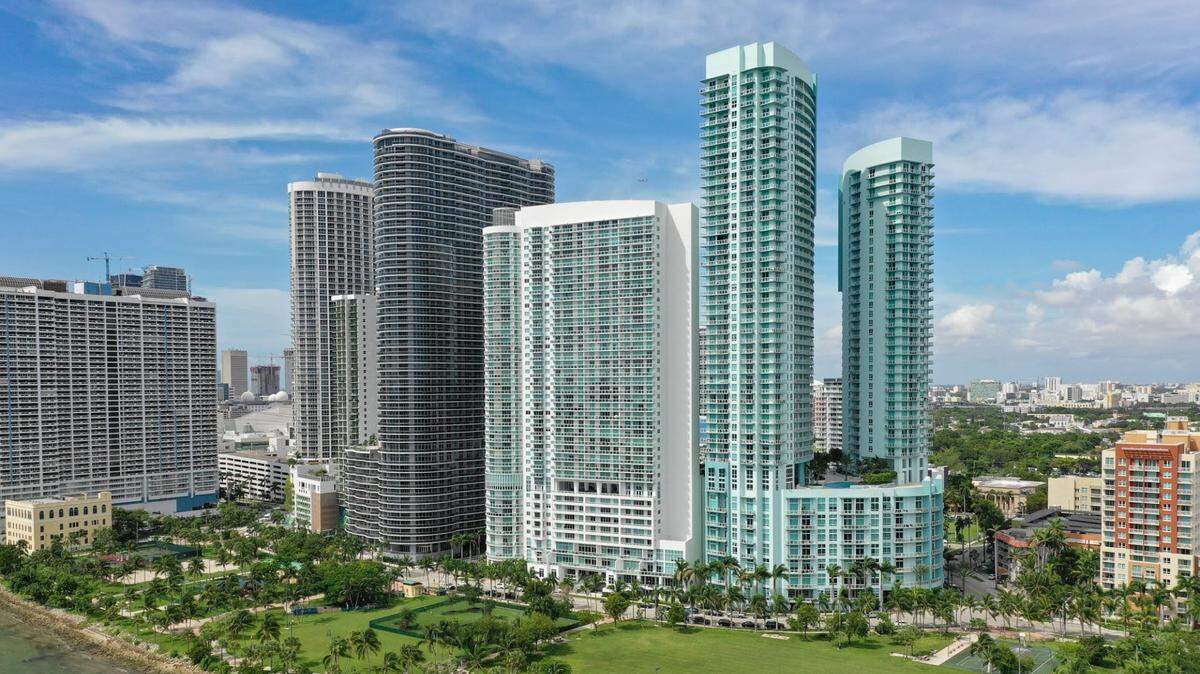
They’re worried about coastal areas like Miami Beach, but also Edgewater, where Dorfman lives. The neighborhood is right on Biscayne Bay and has become dense with luxury condo towers over the past two decades.
Miami’s subsoil is made up of uneven and non-uniform layers of porous limestone and sand, which makes it relatively unstable and unpredictable. This means buildings here are more prone to subsidence, or sinking, and differential foundation settlement, when different parts of the building’s foundation sink at different rates, both of which can cause major structural issues.
“This necessitates exceptionally conservative foundation designs, extensive in-situ testing, and — crucially for public policy — mandatory long-term monitoring regimes and surety measures,” they write in their paper.
Bardet and Dorfman say the city should pause approvals of new high-rises and reconsider its process. They write that the way the city approves buildings’ height and scale doesn’t align with the “geotechnical realities” of building a skyscraper in Miami.
For instance, in Miami, a developer can pay into a fund and be granted the right to build 20 extra stories, regardless of the size of the lot or the subsoil below. Bardet and Dorfman say the process for approving tall buildings should be more site-specific and involve extensive geotechnical testing to determine what can safely be built there.
Tall, slender buildings built on Miami’s subsoil are at a particularly high risk, they say. A smaller footprint puts more stress on a building’s foundation and can worsen the risk of settlement. To mitigate this risk, Bardet said builders must dig very deep foundations for slender buildings.
Some settlement is normal, and engineers know how to account for this when building. But research published by another UM professor, Farzaneh Aziz Zanjani, in the journal Earth and Space Science in 2024, found that buildings in Sunny Isles Beach, Surfside and other barrier island towns had been sinking at a faster rate than expected. Bardet credits this research for piquing his interest in this subject.
“I see a new phenomenon, something that we did not know before, and I’m trying to understand it,” Bardet said. “Why are these buildings moving when they should not?”
Dorfman became interested in the subject when he read a series of Miami Herald articles published late last year. The articles drew from Zanjani’s research, as well as interviews with Bardet. Dorfman, eager to learn more, called Bardet and set up a meeting.
MORE: Sinking skyscrapers? As buildings got bigger in Sunny Isles, so did engineering concerns
“I’m a geek,” Dorfman said. “I love this stuff.”
When the two men met, they became fast friends, despite their different personalities and backgrounds. Bardet, a reserved and cerebral Frenchman, and Dorfman, a gregarious and energetic New Yorker, soon decided to start writing a paper together.
“A team was born,” Dorfman said. He would focus on the policy side, while Bardet would focus on the engineering side.
As an Edgewater resident, the research was personal to Dorfman. Edgewater’s coastal subsoil is similar to that of the barrier island. And as Dorfman saw new condos going up in his backyard, including towers over 50 stories tall on fraction-of-an-acre lots, he wondered about the structural integrity of these tall, slender buildings.
In addition to pushing for a moratorium on new skyscraper approvals, Bardet and Dorfman write that the city should create an independent review panel for such proposals. They also write that the city should create a fund, paid into by developers to “place the financial liability for 40-year structural performance with the builder rather than unit owners, insurers, and taxpayers.”
They’ve also criticized state legislation that shortened the length of time a developer is liable for defects in a building, from 10 years to 7.
Now that their paper has been published, the pair is already planning to write another. They hope their recently published paper will lead to more scientific research into skyscrapers and subsoil in Miami, as well as more discussion about policy solutions at the city, county and state levels.
“We have discovered a problem,” Bardet said. “We want to find a solution, but the solution is not only technical.”
This story was originally published May 6, 2026 at 3:24 PM.