
Born in the Great Recession, Professional Bank now maneuvers through the pandemic
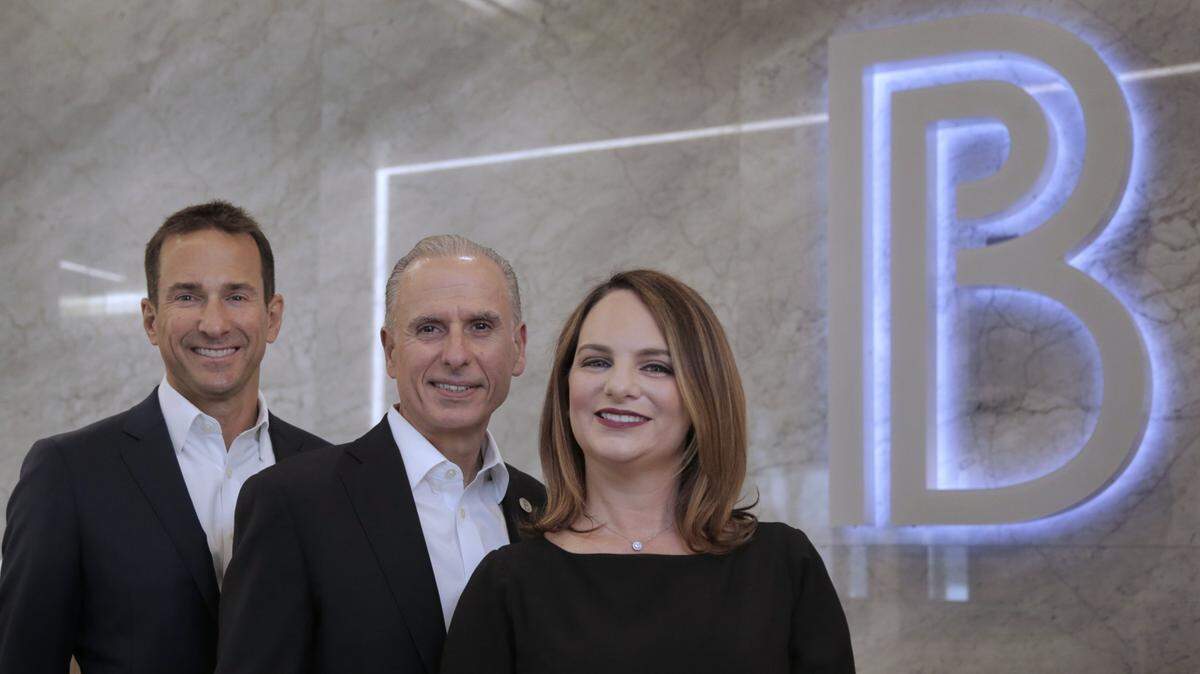
In 2008, as dozens of Florida banks were failing or sliding toward insolvency during the Great Recession, Professional Bank was starting up.
Now, with assets of $2 billion, Professional is the 12th-largest independent community bank in the state, with 170 employees, eight full-service branches and its headquarters in South Florida.
Since its founding, it has seen its assets grow as it cultivated small and midsized commercial and residential real estate clients, becoming known for nimble and personalized service. And it has also successfully attracted high-net worth individuals and professionals.
Earlier this year, the bank achieved another milestone when it went public and then acquired Marquis Bank in Coral Gables. These would be infrequent moves in any year, but they’re especially rare at a time when a pandemic and recession combine.
“I’m not aware of any other bank in the country that, in the same 90 days, went public, carried out an acquisition and had to face COVID-19,” said Daniel R. Sheehan, one of the original investors and now chairman and CEO of Professional Bank and its owner, Professional Holding Corp.
BANK’S ORIGINS
In the early 2000s, dissatisfaction with the way many banks — particularly big banks — dealt with small and midsize businesses was widespread.
There was frustration over loan processes that took too long, in the view of clients. Banks often did not give businesses the time they needed to discuss their problems. Often, too, banks did not have expert personnel who analyzed their sectors or their businesses. Real estate developers and professionals in particular often remarked that bankers didn’t understand their businesses.
In 2007, about 15 investors saw an opportunity in the market to satisfy small- and mid-size companies, particularly those involved with real estate, by providing top-notch service. The bank also worked to attract affluent professionals. The investors included investment bankers, medical experts, lawyers, business executives, CPAs and other professionals in the South Florida area.
Sheehan said recently that Professional has succeeded in its mission: to provide customers with a better experience, “high touch,” responsive contact and better communication with professional bankers who truly understood clients’ needs.
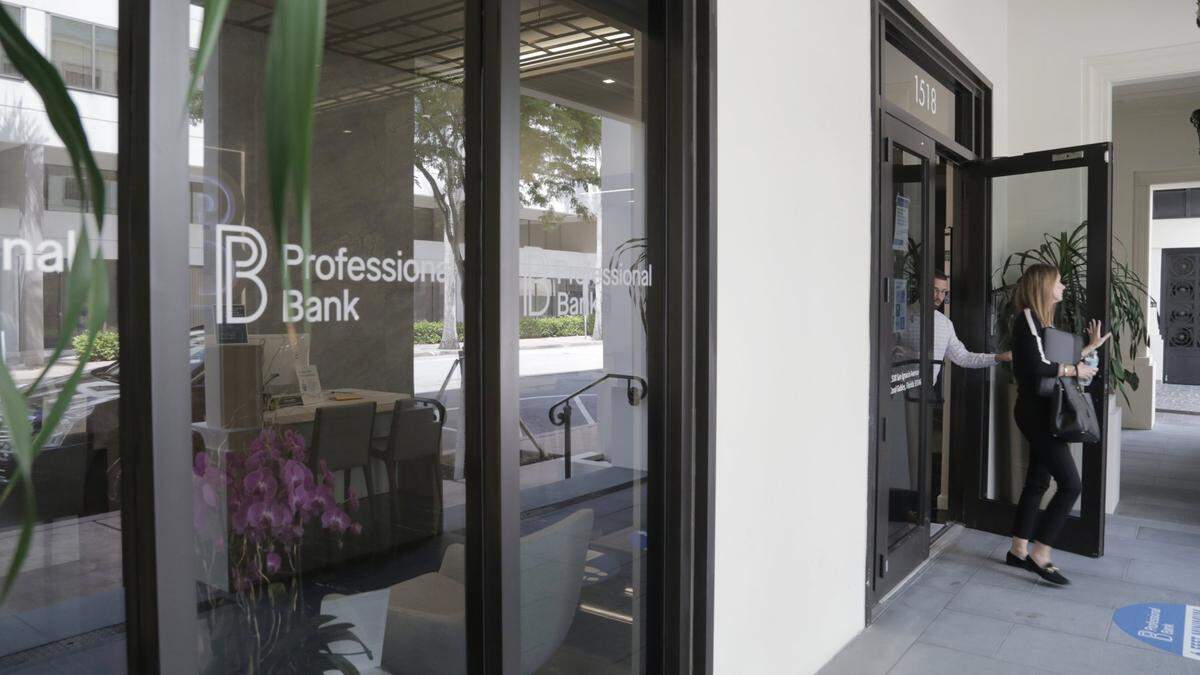
“We felt this kind of highly customized service was missing in South Florida,” he told the Miami Herald.
Sheehan was one of the bank’s original investors. He had begun his working life at investment banking company Bear Stearns but had transitioned into a career arranging capital for a variety of big real estate projects. Before working with Professional Bank, he was senior vice president and managing director at Walker & Dunlop’s Miami office. The firm works in real estate private equity and capital markets. One project Sheehan worked on at Walker & Dunlop was advising on a $285 million construction loan for the Paramount condo tower at the Miami Worldcenter, a large mixed-use development.
“When we started planning the bank in 2007, the economy was OK,” Sheehan said. “The real destruction began in 2008 and continued into 2009.”
The bank opened its first office on Sept. 8, 2008 in Coral Gables with 13 employees, just as the Great Recession was ravaging the economy.
But Professional’s timing proved to be fortunate: Businesses that were still standing were hungry for credit. And Professional had money to lend.
“We started to scale up and leverage out while our competitors were shrinking and failing, dying on the vine,” Sheehan said. “We were the only bank making deals at the time. We didn’t have any bad loans like other banks. We had no loans.”
Another way the bank benefited from the Great Recession: From the start, Sheehan said, Professional was able to add talented bank officers to its payroll as other regional banks failed or were acquired. And that practice has continued.
In 2013, Abel L. Iglesias joined the bank as the executive vice president and chief lending officer, bringing with him more than 40 years of South Florida banking experience. Iglesias had been president and chief executive officer of JGB Bank — a Miami-based financial institution that was acquired by Banco Sabadell — and senior executive vice president at BankUnited.
Iglesias was named president and chief operating officer of Professional Bank in 2016. That year, Professional suffered a sudden loss: Raul G. Valdes-Fauli, the president and CEO, died of an apparent suicide. Iglesias initially replaced him in both of those posts.
Today, Professional Bank’s board of directors includes three of the original investors: Sheehan; Herbert Martens, who is a principal at Advent Associates, a private investment firm and who has decades of experience in banking and investing; and Lawrence Schimmel, M.D., chief medical officer of Clinigence Holdings Co., former chairman of MegaBank and former CEO of Allied Health Group.
Recently, two more directors joined the bank’s board, which now has 12 members: Ava Parker, president of Palm Beach State College, and Margaret Blakey, executive vice president at Triple Five, a multinational real estate development firm.
Professional’s board of directors “is very experienced and impressive with several current and former bankers and investment professionals,” said Kenneth Thomas, a Miami-based financial expert, president of the Miami’s Community Development Fund Advisors and former lecturer at the Wharton School of the University of Pennsylvania.
BANK’S GROWTH
At the beginning, the bank’s challenge was attracting a solid client base.
Professional has concentrated on building its loan portfolio in commercial and residential real estate and other business loans, helping to finance projects. The bank will not comment on any clients.
In recent years, Professional’s main challenge has been to continue expanding its portfolio of high-quality clients in what has become an intensely competitive field: Many, if not most, banks now offer “concierge” services to high-net-worth individuals and other clients.
Professional Bank also faced a serious regulatory challenge from the Federal Deposit Insurance Corp. and the Florida Office of Financial Regulation in 2010.
As a result of the regulators’ concerns, Professional signed a “consent order” agreeing, among other things, to provide better board supervision of bank activities, ensure that the bank maintain and retain qualified management, prepare a three-year business/strategic plan, assure effective control over lending and establish a board committee to oversee compliance with the order.
Professional said it fully complied with the consent order, which was lifted the following year.
TransCapital Bank of Sunrise and First Bank of the Palm Beaches also were subjects of similar enforcement actions.
Thomas said that Professional is “more like a private bank, focusing on lending to the most affluent in its defined Miami-Dade community, rather than on the entire community, as is typically the case for a community bank.”
Professional would not say who its main competitors are. In fact, the bank competes with a wide range of financial institutions in South Florida, including large and small commercial and community banks based here, as well as out-of-state institutions. Possible competitors are First National Bank of South Miami, Grove Bank & Trust, International Finance Bank, Ocean Bank, Amerant Bank (formerly Mercantil Bank) and U. S. Century Bank.
And Professional has been successful: It ended the first half of 2020 with a net profit of $1.81 million. For full-year 2019, the bank reported a profit of $2.34 million and was in the black for the four previous years.
In its most recent report, Bauer Financial, a rating agency based in Coral Gables, assigned Professional Bank its highest classification — five stars — based on the bank’s data as of June 30.
The bank’s increasing asset base and history of profitability put it in a strong position to again consider expansion moves — as it had in 2015, when it was close to merging with FirstCity Bank of Commerce in Palm Beach County. FirstCity shareholders voted down the move.
This year, the bank made two big moves that had been under consideration since at least 2019.
First, Professional Holding Corp., which owns the bank, made an initial public offering.
Companies that are listed on NASDAQ and other big public exchanges gain the distinction of meeting the tough criteria established by the exchanges themselves and government securities agencies. Only companies that are perceived as financially strong by authorities like the U. S. Securities and Exchange Commission can qualify for an IPO.
Professional went public to raise capital for investing in future growth, expanding operations and achieving other corporate goals.
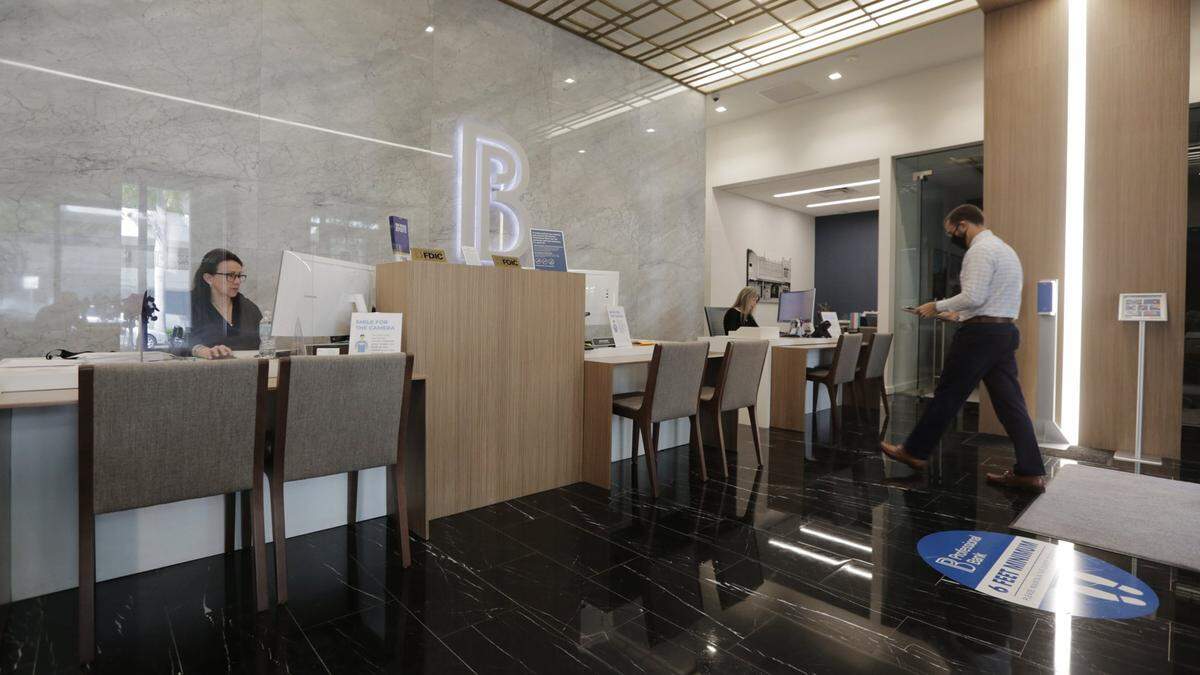
At the same time, there are drawbacks for Professional and all other public companies: They are subject to government regulations, shareholder pressures, and share prices that rise and fall.
Professional Holding Corp. began selling shares to the public in early February on NASDAQ, under the symbol PFHD. When Professional announced the close of the IPO on Feb. 11, it reportedly had obtained net proceeds of $59.7 million. Most of the shares were sold to investment funds and other institutional investors.
A little over a month after the IPO concluded, Professional acquired Marquis Bank, another community bank based in Coral Gables. The acquisition strengthened Professional’s balance sheet, expanding its loan portfolio and adding new clients and branches. In contrast to organic business growth, a successful acquisition provides an instant expansion.
The merger with Marquis Bank was an all-stock transaction worth about $64.3 million. It “was a good match of two Miracle Mile banks in Coral Gables, because both of them are not unlike private banks catering to the affluent,” Thomas said.
“I am hopeful that Professional Bank will become more responsive to their entire community, including lower- and middle-income households, rather than lending primarily to upper-income borrowers,” Thomas said.
“Bottom line: With their recent merger and very aggressive growth, which they proudly mention, and a board primarily made up of professional investors and former bank directors from outside our area, it is my opinion that this bank, like so many other banks we have seen come and go in South Florida, will be sold when the right opportunity comes along at the right price.”
Thomas went on to say that the bank received a “satisfactory” rating in the most recent performance evaluation under the Community Reinvestment Act, but that the share of loans to upper income borrowers was far greater than to lower-, moderate- and middle-income borrowers. The CRA encourages financial institutions to meet the needs of borrowers in all segments of their communities, whether they have high or low incomes.
A TECH EDGE
The bank has also invested heavily in technology. And that move continues to give Professional an edge in the pandemic crisis, Sheehan said. It has also helped to retain young talent.
“We would like to be considered one of the premier banks in the South Florida market, and one of the premier banks to work in and develop a career,” Sheehan said. “Banking in general has not done a good job in attracting young people to stay.”
In addition to online banking, Professional has introduced a person-to-person mobile electronic payment service that allows clients to send money immediately to anyone with a debit card. And Professional says it’s the first community bank in the nation to use Moody’s Analytics apps to simplify and speed up loan applications. It also offers an Apple Watch app that gives clients instant access to their accounts and to bank services.
As part of its ambitious long-term strategy, Professional in 2018 set up a digital innovation center in Cleveland, Ohio, to develop and introduce new digital banking and financial services for the bank, and eventually to sell these innovations to other organizations.
This is an unusual move for small banks, which typically acquire new technology from other sources.
“In this digital economy, if someone is going to disrupt our business, I want it to be us,” Sheehan said.
‘THEY UNDERSTAND OUR BUSINESS’
Two clients lauded Professional’s personal attention.
German Valencia, the CEO and president of Galleria Farms in Doral, has banked with Professional since 2014. The company grows and distributes cut flowers.

“We started with a line of credit, and then the bank structured a deal to purchase the building that is our headquarters in Doral,” Valencia said. Since COVID-19 began to affect his business in March, “Professional has been there for us,” whenever Galleria needed advice or assistance.
“They understand our business and give us personal attention,” Valencia said. “Fortunately, 2020 has been a good year for us.”

While some florists were forced to close temporarily or even permanently because of the pandemic, Galleria’s biggest clients — Walmart, Sam’s Club and major supermarkets — stayed open and continue to buy cut flowers.
Valencia had worked with Professional’s Iglesias when he was an executive at JGB Bank in Miami. Because of that long business relationship, Valencia decided to shift his business to Professional when Iglesias came on board.
“Professional provides very good service,” Valencia said. “They are there when we need them.”
Another small company also compliments Professional on its service.
CDM Windows & Door designs, manufactures and installs impact-resistant windows and doors and also is based in Doral. For many years, CDM worked with one of the largest national banks in the region.
But CDM found that the big bank’s service to their small business was lacking, said Aysen Marquez, the company’s CFO, in an email.
“We wanted to grow more in the manufacturing side of the glass and glazing world, but they did not provide the help we expected,” she said. “They were not interested in our desire to grow.”
CDM first met with representatives of Professional in 2018.
“From the first day, we received unique and personalized attention,” Marquez said.
.jpeg "Aysen_Marquez_PROBANK (1).jpeg")
Top Professional executives met with CDM’s team and offered: options for the windows company to grow; a seminar on how COVID-19 can affect the business; assistance to obtain the government’s PPP loan and loan forgiveness; and business connections to other companies.
CDM transferred their banking business to Professional that same year.
Professional continues to meet and communicate with the CDM team regularly.
A LOOK AHEAD
In the second quarter, Professional Bank reported a net profit of $3.1 million, following a loss of $1.3 million for the first quarter, giving it a six-month profit of $1.81 million. The first-quarter loss was due primarily to expenses related to the Marquis acquisition and to an increased provision for loan losses.
Sheehan, the bank’s CEO, said recently that he couldn’t discuss Professional’s current financial situation because it is in a “quiet period” until the bank releases its third-quarter report for the year after Wednesday.
Professional Holdings’ stock price on NASDAQ – ticker symbol PFHD – closed at $13.40 per share on Friday, Sept. 25. It began the year at $18.85 on Jan. 2.
Meanwhile, as the recession continues to hammer many businesses, Professional must deal with repayment problems for some of its customers.
Professional began taking steps in March to increase its financial reserves to cover bad loans. The bank is also working with clients to adjust repayment schedules on its own loans. And the bank is offering options to clients who want to repay or seek forgiveness on loans granted under the federal government’s Paycheck Protection Program. Professional processed and funded 1,478 small business loans under the PPP worth about $225 million.
The bank also is moving to prepare for possible loan defaults.
As of midyear, it had increased the total allowance for loan and lease losses to $9 million, up from $7.4 million at the end of March and $6.5 million at year-end 2019. The bank said that its current $9 million allowance covered 0.67% of total gross loans (excluding certain items) and covered 146.5 percent of nonperforming loans.
And how Professional’s recent acquisition of Marquis will affect the now-public company’s future is still unclear.
Marcos Kerbel, who teaches finance and banking at Florida International University and is co-author of a book on the history of international banking in Florida, said that local banks with a strong capital base will likely manage clients’ problems by turning short-term loans into medium-term loans.
“It is very difficult for a bank to remain profitable in South Florida unless they have assets of $1 billion or more,” he said. In this, Professional seems well-positioned: It reported assets of just over $2 billion as of June 30, 2020.
Kerbel also said that just as important, Miami-area banks will be affected by whatever happens in Latin America, and that the region is entering a period of “seven lean years,” a biblical reference to a period of hard times.
Overall, however, Sheehan is optimistic about finding solutions to client’s credit problems and growing the bank in the South Florida market as the economy improves. Despite the current crises, he sees the region as one of the most vibrant and rapidly expanding areas in the country.
“We’re 12 years old and we’ve already been through two major financial crises. We’ve developed our share of scar tissue,” he said. “We started this venture on the eve of the last recession, and continue to see opportunities for expansion in South Florida. We’re a small bank with big-bank talents.”
Joseph A. Mann Jr. can be reached at josephmannjr@gmail.com.
===
PROFESSIONAL BANK
Founded: Professional Bank was set up in 2008 by local private investors. Professional Holding Corp. (NASDAQ: PFHD), which owns the bank, was established in 2014.
Headquarters: 396 Alhambra Circle, Suite 255, Coral Gables.
Type of bank: Community and commercial bank. Professional says its clients are small and midsized businesses, the owners and operators of these businesses, as well as other professionals, entrepreneurs and high net worth individuals.
Branches and offices: Eight full-service branches (plus the main office) in Aventura, Boca Raton, Coral Gables, Fort Lauderdale, Kendall, Palm Beach Gardens, South Miami and Wellington. Also, there’s a loan processing office in Doral and a digital innovation center in Cleveland, Ohio.
Ownership: The bank is wholly owned by Professional Holding Corp., which went public in February. The holding company is traded on NASDAQ under the symbol PFHD.
Leadership: Daniel R. Sheehan, chairman and CEO of Professional Holding Corp. and of Professional Bank; Abel L. Iglesias, president and COO of Professional Bank.
Major acquisition: Professional took over Miami-based Marquis Bank in March 2020.
Employees: 170 now, up from 140 at year-end 2019, before the merger with Marquis.
FINANCIALS
For the first six months of 2020, ending June 30, 2020. In parentheses are data for the full-year 2019, prior to taking over Marquis Bank. Some figures are rounded.
Net income: $1.81 million ($2.34 million)
Net interest income: $24.4 million ($28 million)
Total assets: $2 billion ($1.1 billion)
==
A TRUMP CONNECTION
In 2019, Professional made headlines in an important financial trade publication. The American Banker ran an article saying that the bank in 2018 had loaned a company controlled by President Donald Trump between $5 million and $25 million to purchase a mansion formerly owned by Trump’s sister, retired federal appeals judge Maryanne Trump Barry, near Trump’s Mar-a-Lago resort in Palm Beach.
The article, which based its reporting on two stories covering the topic in other publications, also said that Trump had a money market account with Professional. The bank told the Herald that it “does not comment on or discuss any matters relating to its clients.”
The information, however, is correct. Trump’s official financial disclosures indicate that one of his companies did indeed receive such a loan (reportedly for a $11.2 million, 30-year mortgage, at 4.5% interest) from Professional, and that he held a money market account with the bank.
--JOSEPH A. MANN JR.
This story was originally published September 24, 2020 at 12:00 AM.