Miami-Dade’s jobless rate hits record low. Where have all the workers gone?
Miami-Dade’s unemployment rate has fallen to a record low. While that may sound like good news, if you’ve tried eating at a restaurant or shopping in a store in the county lately, you’ve probably noticed many establishments are now short-handed.
So where have all the workers gone?
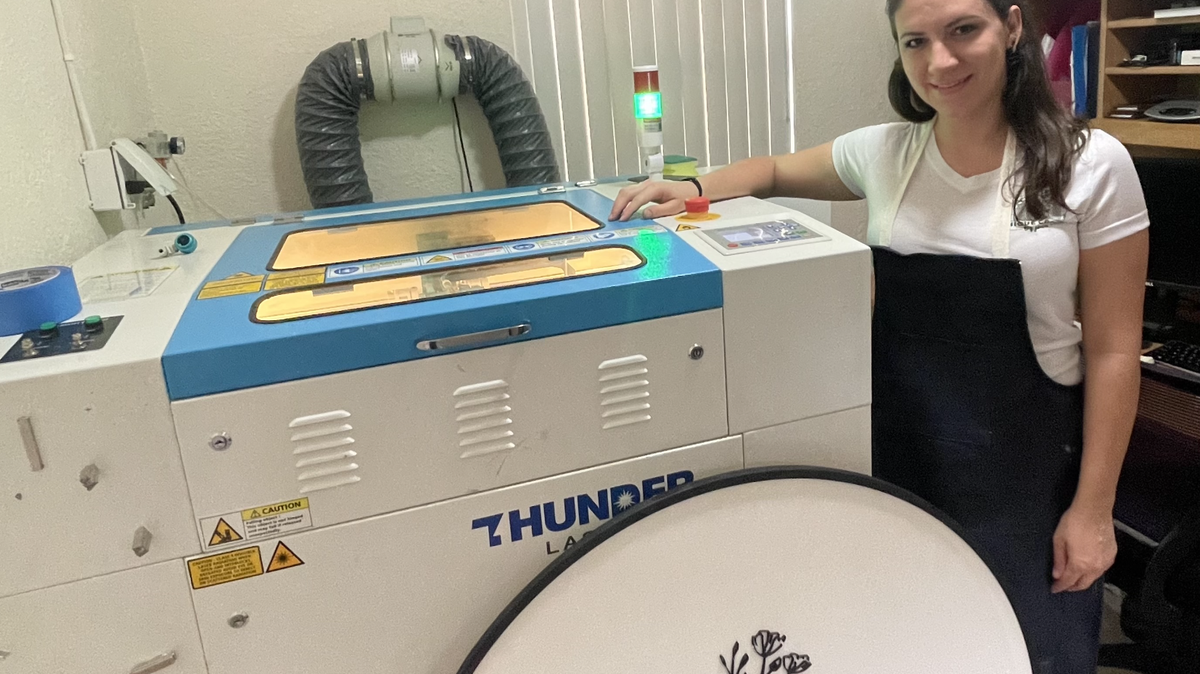
For Jennifer Arniella, a 29-year-old Kendall mother of two, the answer is: home to start a business.
In 2020, Arniella found herself graduating into the pandemic from the masters in business administration program at Florida International University. That meant striking out on job interview after job interview for what was then an increasingly shrinking number of available product manager jobs.
It did not help, she said, that she was pregnant while vying for those positions.
“As soon as they learned that, the conversation often stopped,” Arniella said.
She decided to start a venture at home, using the government assistance she received to support her children to help buy laser equipment to cut logos and signs for businesses. For marketing support, she calls on the Florida Small Business Development Center at FIU, which also helped launch the business itself. With her website, UniqueCraftsByJenn.com, she is now able to help provide for her family — though she is also fortunate that her husband’s job as a civil engineer pays the majority of the family’s bills.
It is former workers like Arniella that helped push Miami’s jobless level in December to 1.4%, the lowest mark since at least 1990 when the U.S. Bureau of Labor Statistics started compiling county unemployment figures. That is the latest data available and even lower than the 1.6% rate in February 2020, just before the pandemic.
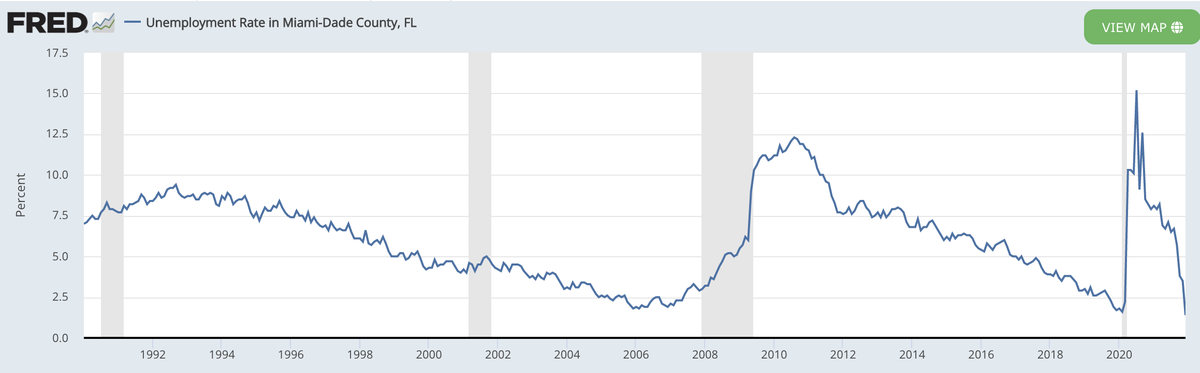
Experts say joblessness that low is ultimately a mixed blessing for the local economy. As workers like Arniella are moving on from the traditional labor force, local businesses are struggling to find qualified employees, even as the unemployment level declines. Data show that Miami-Dade’s civilian labor force remains well short of pre-pandemic levels — and may never fully recover.
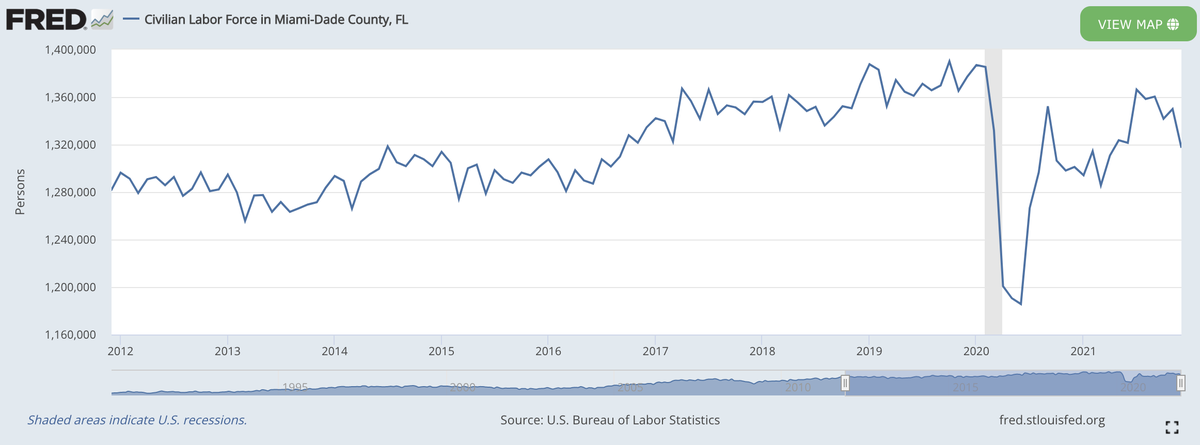
“(A low unemployment rate) is very deceiving because of the record number of people leaving their jobs,” said Ned Murray, an expert on economic and housing market issues and associate director of the Jorge M. Pérez Metropolitan Center at Florida International University.
The state, he said, is witnessing the “Great Resignation” phenomenon that has swept over the rest of the nation’s labor force. Federal labor data show Florida continues to have about 3% of its workforce walk off the job each month — equating to approximately 300,000 workers.
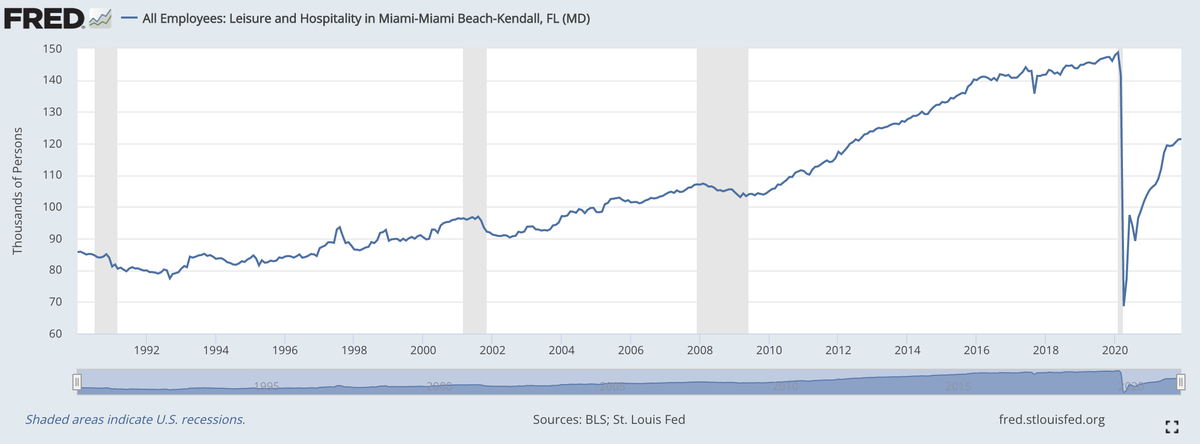
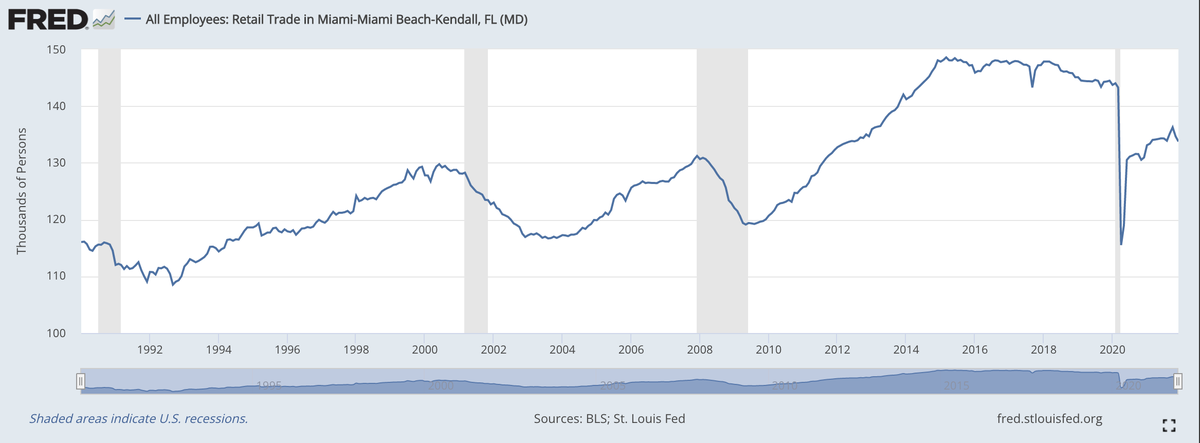
“These numbers are quite disturbing because, in the case of Miami-Dade, most of the job loss has been in leisure, hospitality, and retail” — industries that comprise the backbone of the local economy, Murray said.
Indeed, leisure and hospitality employment in Greater Miami remains 28,000 workers short of pre-pandemic levels.
It’s a similar story in the retail sector, which is down about 10,000 workers from pre-pandemic levels.
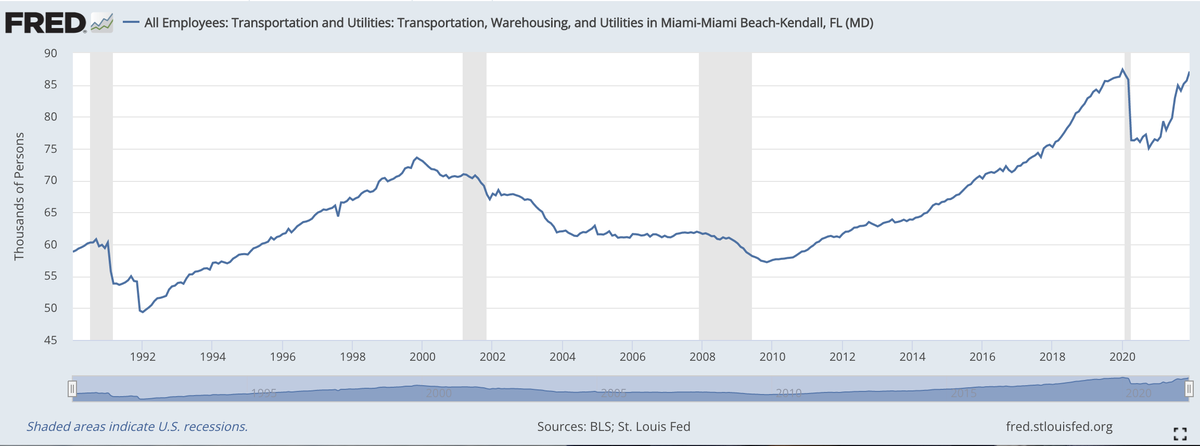
Carol Dover, CEO of the Florida Restaurant and Lodging Association, said many former workers in her industry have taken jobs in entirely different industries, especially packing positions at companies like Amazon and Walmart that have not faced the same pandemic-related business challenges. Local employment levels for warehousing jobs have fully recovered to pre-pandemic levels.
“It’s not a secret that as our industry was going through shutdowns and inconsistency, some went to other large companies where they maybe felt more stable,” Dover said.
Area employers hope to find workers at an upcoming JobNewsUSA.com job fair at FLA Live Arena in Sunrise March 17 from 10 a.m. to 2 p.m. Among those looking for workers is Shannon Maraj, director of sales at Senior Healthcare Advisors, a group that sells Medicare insurance policies. He is trying to hire as many as 30 sales representatives as he expands his business into Puerto Rico.
“I’m now considering hiring good sales people from any background and paying for their licensing, something I would have never considered two years ago,” Maraj said.
For Stephen Bittel, founder and chairman of Terranova Corporation real estate group, there is an easy fix to addressing staffing shortfalls, especially in front-line, customer-facing positions: easing immigration restrictions.
“We’ve had our borders closed for five years now, and I don’t know why anyone finds it a surprise that we have entry level jobs going unfilled, when the manner in which we’ve historically filled them is with immigrant labor,” Bittel said.
Dover agreed the labor squeeze caused by the immigrant shortage must now be addressed no matter which political party is in charge. She said most of her association’s members sent foreign-born workers back to their countries of origin as the pandemic bore down in March 2020.
Now, she said, it is clear that those hospitality jobs are going unfilled.
“I hope to never hear the argument that they are taking American jobs,” she said. “Americans have now had every opportunity to take them, and we’ve probably still got half a million jobs open and they’re not being taken. We need to get immigration fixed.”
Arniella, the stay-at-home mother and now business owner, said there are also countless others like her, pointing to a Facebook group she belongs to, That Mom With A Laser, that has about 25,000 members.
“I haven’t looked back,” she said.
This story was originally published February 12, 2022 at 6:00 AM.