Leaving downtown and Lincoln Road spaces behind, WeWork regroups in Miami
Don’t count WeWork out just yet: The future of office space in Miami and beyond is still very likely to include it.
In January, WeWork, the firm providing shared workspaces, was swept up in a foreclosure suit at downtown‘s Security Building, which had it had occupied since 2017. The company was also accused of falling behind on rent at its Lincoln Road location. Both situations were the product of a period of financial mismanagement that also led to a failed attempt at going public, and the ouster of founder Adam Neumann — now a Bal Habour resident — as CEO.
WeWork has since exited both those Miami-Dade sites. But its presence in the county remains robust, with six campuses, including two in Coral Gables. And it has at least one more in the pipeline, at 830 Brickell, the Class A office tower slated for completion in 2022. (By comparison, Atlanta has seven.)
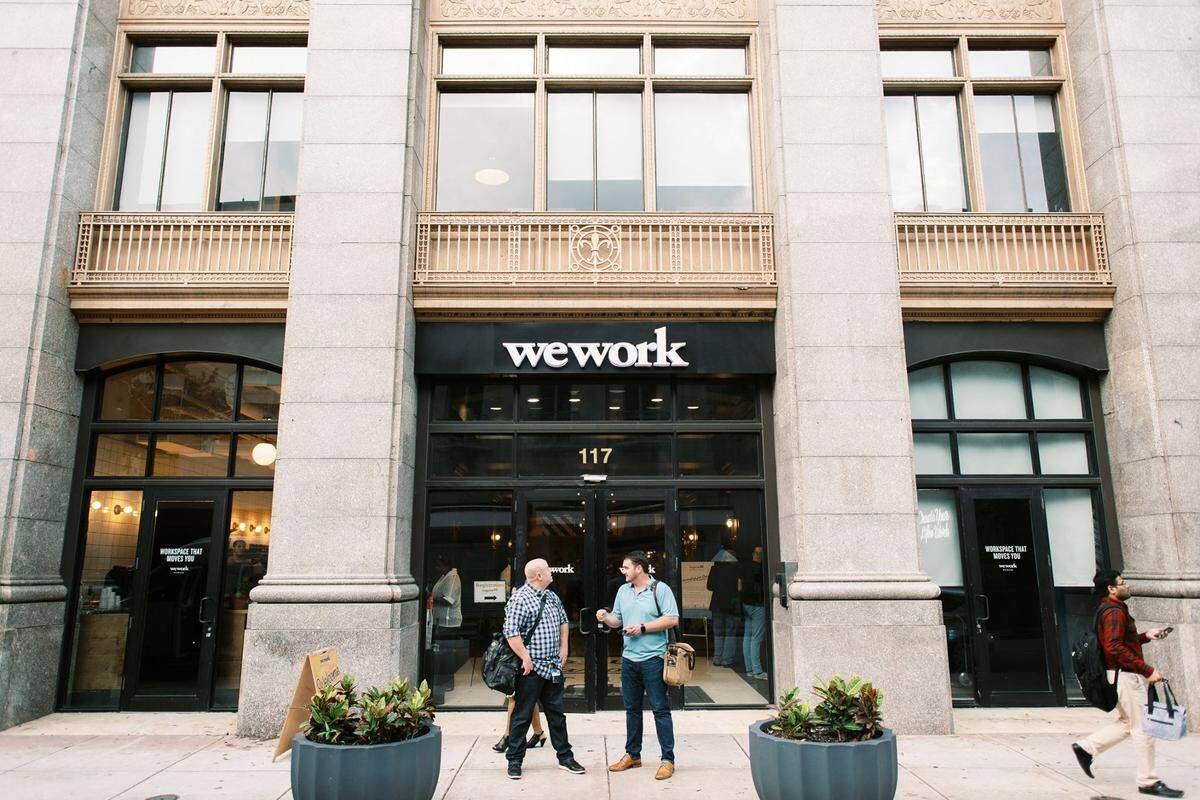
“Miami has been a strong market for WeWork historically, and it has ramped back up faster than many other markets in the country,” said Errol Williams, vice president of WeWork’s Atlantic territory detail, which includes Miami.
Williams said in an interview with the Herald that WeWork has benefited from the surge in new businesses arriving in Southern Florida from Silicon Valley, New York and elsewhere.
“Flex space is important,” Williams said, “either as a transition plan for these companies while they found a more permanent space or it is their long-term space and part of their overall real estate strategy or in providing options to employees now working from Miami.”
Miami’s performance is a bright spot even as the company finds its legs during the ongoing Covid pandemic: While revenues are stabilizing, the WeWork has continued to lose $1.3 billion over the past six months. It now projects to break even next year.
“There are signs that WeWork [has] overcome the worst — revenues have picked up again since the spring — but [it is] still losing money,” Bloomberg News’ Chris Bryant wrote last week. “The next weeks are therefore crucial: Even as virus worries re-emerge, they need to boost occupancy so their revenues better cover costs.”
Local brokers say co-working remains a viable concept, and that many new tenants are tapping WeWork — and others — as beach-heads while searching for more permanent digs in Greater Miami. The Delta variant has only made co-working more appealing as companies hold off returning en masse to established offices.
Tony Arellano, co-founder and managing partner at DWNTWN Realty Advisors, had assumed co-working spaces would be dead in the water given the realities of social distancing. Instead, he said, most co-working spaces in the area are operating at or near capacity, even as they maintain strict masking and social distancing requirements.
For a company that is just beginning to establish its presence in Miami, he said, co-working spaces “are pretty awesome options.”
Arellano said the failure of WeWork at the Security Building, which he now represents, was an anomaly. Demand for the Security Building’s turnkey space is already strong, he added.
The larger problem is simply a lack of quality inventory, for both old and new-to-market tenants alike, that may now be on the hunt for new office space in Greater Miami.
“Everybody’s getting priced out: We’re running out of cool space,” he said. “If you want a boring office, there’s plenty of that. But a cool office or building...used to be cheap, but now there’s 20-25% premium above boring office.”
According to real estate group Cushman and Wakefield, Class A rental rates in the Miami market climbed to $48.69 per square foot year-on-year in the second quarter, or a 6.5% increase. Rates in Brickell have hit $53.40 per square foot, up 12.4% year-on-year.
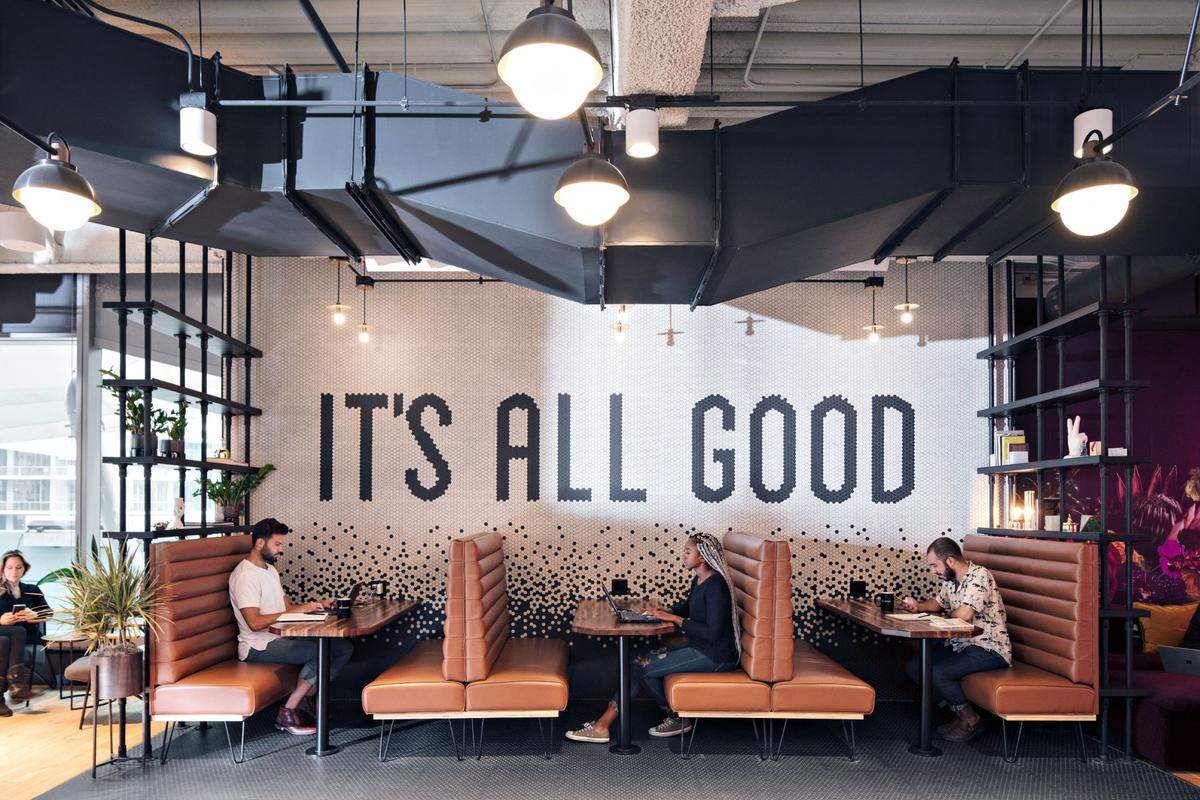
These days, even the most corporate of firms are taking up co-working spaces. Coral Gables-based Professional Bank, with nearly $3 billion in assets, has now leased a co-working space, Thrive, in St. Petersburg as part of its strategy to expand across Florida and beyond.
Darren Lydting, executive vice president and Tampa Bay regional market executive, said traditional bank branches are going extinct. Given that a bank’s core asset is its people, he said, it no longer makes sense to invest hundreds of thousands of dollars in real estate.
“We get a chance to be with people of all different industries in this building,” Lydting said, “and [fellow tenants] will very quickly understand our culture.”
Still, for as many firms looking to hedge on putting down roots, there appears to be an equal number ready to take the plunge on their own, independently leased space. As a result, some landlords are not as interested in signing up co-working spaces as a means of plugging vacancies as they have been in the past.
For now, WeWork’s strategy — backed by its own internal data — is to bank on employers seeking reduced square footage. Many are also adopting a hybrid model that sees their workers splitting time from home, a permanent office, and a flex shared space. It appears to be working in Miami: From January to July, WeWork’s bookings for its “All Access” global entry package in Miami grew 113%, while On Demand bookings — a new category that allows for daily rentals — grew 75% in Miami.
Meanwhile, it has signed Miami-based ghost kitchens company REEF up for 28,205 square foot space at WeWork Brickell City Centre, reserving 543 desks for REEF employees.
“In the current flexible workplace environment, we look for options that both meet our business and employee needs while giving us the ability to grow as we scale,” said Philippe Saint-Just, REEF co-founder and senior vice president of product. “We are thrilled to have our team members at HQ enjoy the WeWork facilities at Brickell City Centre and look forward to continue our growth within this office space.”
That partnership was easier than most: Both WeWork and REEF are backed by SoftBank. As part of their agreement, WeWork is tapping REEF for an exclusive food delivery partnership that will see food from REEF’s portfolio of restaurant brands delivered directly to WeWork members. The program is being rolled out in Miami, with the potential to scale nationally.
“It’s a growth market for us,” Williams said of Miami. “The focus is on how we continue to be in the right places and grow with the city.”
This story was originally published September 5, 2021 at 6:00 AM.