Five years later, how the Panama Papers pushed the U.S. to stop being a ‘haven’ for crooks
In the five years since publication of the Panama Papers on this day in 2016, the U.S. government and some U.S. states have taken significant steps to make money laundering and tax evasion more difficult.
Most notable was the Corporate Transparency Act, which became federal law earlier this year, and got over the finish line with a surprising push from Delaware and other states that backed bolstering the Treasury Department’s ability to fight dirty money.
The stories that came out of the leak of secret offshore documents from the Panamanian law firm Mossack Fonseca, part of a global reporting collaboration led by the International Consortium of Investigative Journalists, spotlighted how dirty money flooded into Miami real estate, aided drug traffickers and how Latin American kleptocrats, accused and in some cases convicted, stealthily moved their wealth.
Published by the Miami Herald and its parent McClatchy, the Panama Papers exposed the role of middlemen, showing how the United States was in some ways similar to the British Virgin Islands, Panama or the faraway Seychelles islands when it came to offering corporate secrecy for sale.
The stories revealed how Russians used tiny towns in Wyoming to incorporate businesses that shielded assets from public view and how Ecuadorians, with the help of the Panamanian law firm, flocked to Nevada for the same purpose.
They also showed how financial crooks in the U.S. and across the Americas were able to fleece investors, in part because of the anonymity provided by shell companies in the United States and abroad.
For compliance managers at banks and financial institutions who lead anti-money laundering (AML) efforts, it was an “I told you so” moment.
“The Panama Papers proved what the AML community clearly suspected — the constant use of secrecy in offshore havens enabled the movement of illicit funds,” said John J. Byrne, a veteran compliance expert and executive vice president of AML RightSource, a company that helps financial institutions anticipate and address risks. “It gave AML professionals a reason to get more resources for investigations and most received it.”
One of the most notable changes in the aftermath of the publication of the Panama Papers was the U.S. Treasury Department heightening its crackdown on anonymity in high-end real estate purchases in areas such as New York City and South Florida.
Starting in March 2016, Treasury required anonymous companies that paid $1 million or more in cash for Miami-Dade County homes and $3 million or more for homes in Manhattan to report their true owners to the government.
The move was met with scorn by the powerful real estate industry and South Florida politicians. But after the publication of the Panama Papers the following month, pressure intensified on federal officials to continue combating dirty money swirling through frothy housing markets.
Over time, Treasury expanded the disclosure requirements to counties in Texas, New York, California, Hawaii, Nevada, Washington, Massachusetts and Illinois, lowering the price point to $300,000.
Sen. Marco Rubio, R-Florida, strongly supported the initiative.
Its impacts were immediate. In Miami-Dade, the amount of cash shell companies and other corporate entities spent on homes plummeted 95 percent, according to a 2018 study by economists at the Federal Reserve Bank of New York and the University of Miami. The decline began immediately after the rules took effect, although the research suggested buyers were simply using new methods not subject to the federal order to buy homes without revealing their identities.
“The fact that there were a lot of real estate shell companies uncovered in the Panama Papers was one of the big factors in the policy changes we’re seeing both in the U.S. and abroad,” said Ville Rantala, a co-author of the study and an assistant professor of finance at UM. “Before this, we didn’t have a lot of direct evidence of these transactions. You had individual anecdotes. It’s difficult to base policy changes on speculation. In this case we had a big batch of data.”
Rantala pointed out that after the Panama Papers, several other governments around the world created or announced plans to create new registries for beneficial owners of corporations, including the United Kingdom, Germany and Canada’s British Columbia province.
“No one wants to be the remaining safe haven for potential dark money buyers,” he said.
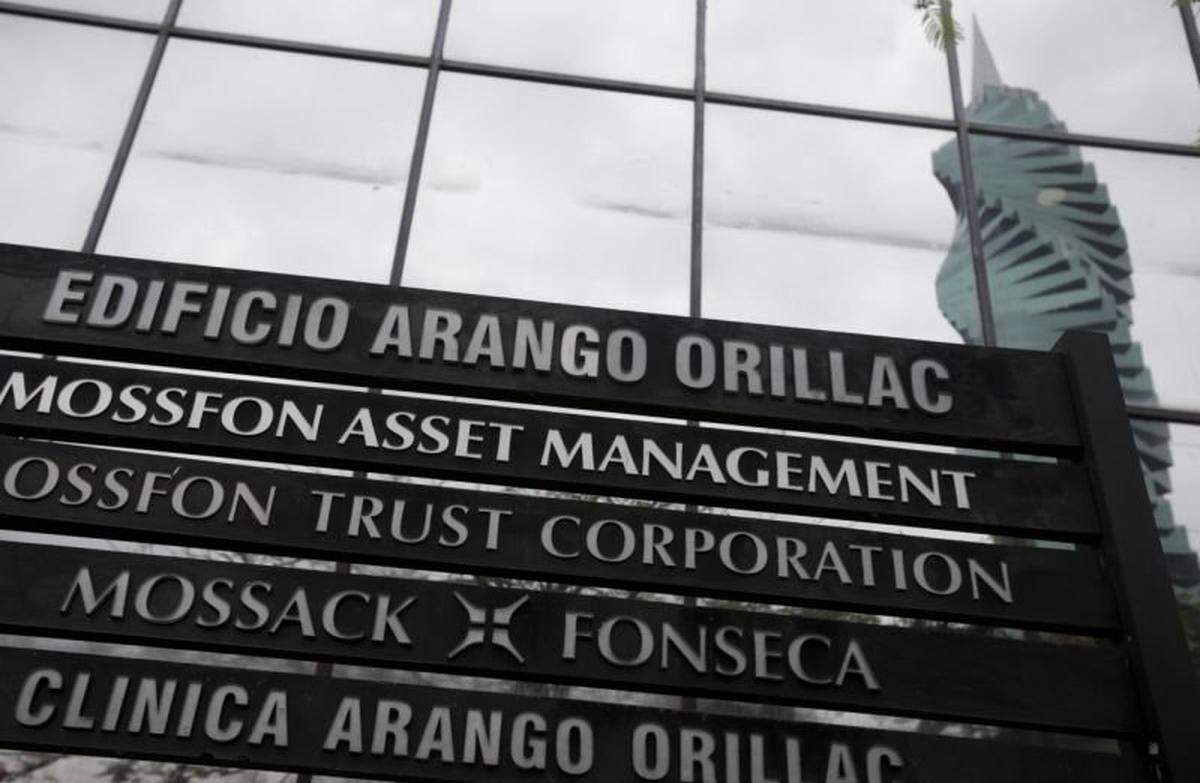
Some of the most immediate changes came in states featured in the reporting by the Miami Herald and McClatchy. Wyoming changed rules governing limited liability companies registered in the Cowboy State, requiring an actual contact and phone number for a person associated with a company. The Panama Papers showed how Mossack Fonseca listed the same fictitious company with no real person or number as a contact on thousands of corporations.
Nevada also moved to change its rules in the aftermath of the stories, which showed how the state wooed the unscrupulous by openly saying it would not look at any company incorporated there unless there was a subpoena. The state changed its rules to allow regulators to conduct random spot checks to verify compliance and enhance cooperation with law enforcement.
One state that changed less was Delaware, the nation’s leader in anonymous corporations. It resisted new rules on states but supported efforts to empower the IRS and Treasury to enforce the law.
Its support helped create the new federal law that expands the range of companies required to report beneficial, or true, ownership of U.S. shell companies.
It falls on the Treasury Department’s Financial Crimes Enforcement Network, or FinCEN, to create and implement new rules by the end of this year for a broad definition of ownership. It put out a request for public comment on Thursday. Shell companies whose existence predates the law will have two years to come into compliance.
The Panama Papers also pulled back the veil on secret operations by the Cuban dictatorship that allowed it to skirt the longstanding U.S. trade embargo and sanctions aimed to lock it out of the global financial system.
A story by the Herald identified some of the shell companies used by Cuba, and almost five years later that initial reporting led to more exhaustive reporting this year that showed how Cuba has used Luxembourg to camouflage its global shipping and tiny Liechtenstein as the tip of the pyramid in its network of shells and secret domiciles.
In short, said Byrne, the anti-money laundering expert, the Panama Papers confirmed the need for professionals to “focus on who is behind transactions even if difficult to discern.”
This story was originally published April 3, 2021 at 7:00 AM with the headline "Five years later, how the Panama Papers pushed the U.S. to stop being a ‘haven’ for crooks."